Cilostazol
In brief
- In our pharmacy, you can buy cilostazol without a prescription, with delivery in 5–14 days throughout United Kingdom. Discreet and anonymous packaging.
- Cilostazol is used to relieve walking discomfort caused by intermittent claudication in peripheral arterial disease; it is a phosphodiesterase III inhibitor that increases cAMP in platelets and blood vessels, reducing platelet aggregation and producing vasodilation.
- The usual dose for adults is 100 mg taken orally twice daily, typically at least 30 minutes before breakfast and dinner.
- The form of administration is an oral film‑coated tablet.
- The effect is gradual — some patients notice improvement over several weeks, with up to 12 weeks for the full benefit to appear.
- Treatment is usually continued long‑term until symptom improvement, with periodic review; discontinue if there is no benefit after about 3 months.
- Avoid excessive alcohol while taking cilostazol, as alcohol may increase dizziness, hypotension and other side effects.
- The most common side effect is headache.
- Would you like to try “cilostazol” without a prescription?
Basic Cilostazol Information
- INN (International Nonproprietary Name): Cilostazol (INN worldwide; also written as シロスタゾール in Japanese sources).
- Brand Names Available In United Kingdom: Pletal and generic cilostazol tablets, typically 100 mg in blister packs of 56 or 112.
- ATC Code: B01AC23, classified under platelet aggregation inhibitors excluding heparin, with PDE3 inhibitor activity.
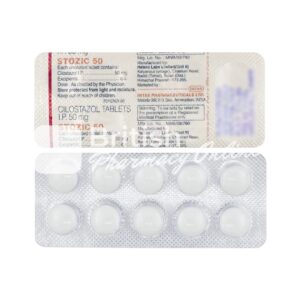
- Forms & Dosages: Film‑coated tablets in 100 mg and 50 mg strengths, commonly supplied in blisters of 10, 14, 30, 56, 60 or 100 tablets.
- Manufacturers In United Kingdom: Otsuka Pharmaceutical, Accord Healthcare, Mylan, Bluefish and EG Labo are listed suppliers for UK/Europe.
- Registration Status In United Kingdom: MHRA authorised as a prescription medicine for intermittent claudication.
- OTC / Rx Classification: Prescription only (Rx) in the UK and listed jurisdictions.
- Standard Dosage For Indication: Adult typical dose is 100 mg orally twice daily, taken at least 30 minutes before breakfast and dinner.
- Dosage Adjustments: Not recommended in children; no routine elderly adjustment but consider comorbidities; contraindicated in moderate–severe hepatic impairment; use with caution in mild–moderate renal impairment.
- Typical Treatment Duration & Regimen: Effect is gradual, assessed at around 12 weeks; discontinue if no benefit after three months.
- Missed Dose / Overdose Advice: Take missed dose when remembered unless near next dose; do not double; seek urgent care for overdose due to risk of tachycardia, hypotension or arrhythmia.
- Storage & Transport: Store below 25°C, protect from moisture and light, and keep in original packaging until use.
- Absolute Contraindications: Congestive heart failure (any grade), known hypersensitivity, moderate–severe hepatic impairment, severe renal impairment, active pathological bleeding and pregnancy.
- Common Side Effects: Headache, diarrhoea, palpitations, dizziness, peripheral oedema, abdominal pain, nausea and mild tachycardia.
- Main Mechanism & Use Cases: Phosphodiesterase III inhibition raises intracellular cAMP leading to vasodilation and reduced platelet aggregation, used to improve walking distance in intermittent claudication.
- Key Competitors: Pentoxifylline, clopidogrel, dipyridamole and ticlopidine are alternative or complementary agents in peripheral vascular care.
Key Findings From Recent Trials
Major 2022–2025 Studies
What Did Clinicians Want To Know From New Trials?
Randomised trials and pooled analyses published between 2022 and 2025 focused on symptomatic benefit in intermittent claudication.
Several studies examined cilostazol added to supervised exercise programmes versus placebo and exercise alone.
Network meta‑analyses compared cilostazol against pentoxifylline and other agents, although direct head‑to‑head randomised data remain limited.
Investigators paid particular attention to walking distance endpoints such as pain‑free and maximal walking distance at 12 weeks.
Trials typically enrolled patients with stable peripheral arterial disease rather than acute ischaemic events.
Many reports emphasised real‑world cohorts and pooled tolerability data to inform UK prescribing.
Regulatory reviewers also re‑analysed cardiac safety data as part of post‑marketing surveillance.
Clinicians reading the literature saw modest but consistent effects that aligned with earlier evidence for cilostazol.
Main Outcomes
Which Benefits Were Observed Clinically?
Across trials, cilostazol produced modest improvements in pain‑free and maximal walking distances versus placebo.
Functional gains typically emerged over weeks and were most often assessed at 12 weeks or later.
Effect sizes were clinically meaningful for many patients when combined with supervised exercise programmes.
Network analyses generally ranked cilostazol favourably for walking‑distance endpoints, though heterogeneity between studies was noted.
Data did not show consistent reductions in major cardiovascular outcomes such as myocardial infarction or stroke within these symptomatic cohorts.
Most trials emphasised symptomatic relief rather than disease modification of atherosclerosis.
Safety Observations
What Safety Signals Should Prescribers Note?
Common adverse events reported across trials included headache, palpitations, tachycardia and gastrointestinal upset.
Cardiac chronotropic effects were observed and remain a focus for screening prior to initiation.
Regulatory safety assessments from EMA and MHRA continue to highlight the absolute contraindication in congestive heart failure.
Bleeding signals were generally modest but could increase when cilostazol was co‑prescribed with other antiplatelets or anticoagulants.
Most recent safety commentary advises cardiac screening and periodic review in clinical practice.
Clinical Mechanism Of Action
Layman’s Explanation
How Does This Tablet Help With Leg Pain?
Cilostazol is a tablet that helps people with leg pain from peripheral artery disease walk further by making platelets less sticky and widening small blood vessels.
The result is improved blood flow to the legs and reduced cramp‑like pain on walking.
Scientific Breakdown
What Is The Pharmacological Basis?
Cilostazol is a selective phosphodiesterase III (PDE3) inhibitor and is classified under ATC code B01AC23.
By inhibiting PDE3 it raises intracellular cyclic AMP in platelets and vascular smooth muscle.
The increased cAMP reduces platelet aggregation and promotes vasodilation, producing the dual antiplatelet and vasodilatory actions that explain symptomatic benefit in intermittent claudication.
Pharmacodynamics
How Does The Drug Act In The Body?
Increased intracellular cAMP reduces platelet activation and causes arteriolar dilation, improving microcirculatory flow in the legs.
These effects improve walking tolerance and delay the onset of claudication pain on exertion.
Cardiac chronotropic effects stem from PDE3 activity in myocardium and account for palpitations and tachycardia seen in some patients.
Pharmacokinetics
How Is Cilostazol Absorbed And Cleared?
Tablets are absorbed orally and dosing is optimised by taking cilostazol at least 30 minutes before meals to improve exposure.
Hepatic metabolism predominates and active metabolites contribute to the clinical effect.
Renal excretion is limited, so renal impairment has a lesser impact than hepatic impairment on exposure.
Moderate–severe liver disease increases exposure and is a contraindication to use.
Scope Of Approved & Off‑Label Use
United Kingdom Approvals
What Is Cilostazol Licensed For In The UK?
MHRA authorisation covers cilostazol (Pletal and generics) as a prescription‑only medicine for improving walking distance in adults with intermittent claudication due to peripheral arterial disease.
The licensed dose is typically 100 mg twice daily and labels stress symptomatic benefit rather than disease modification.
Prescribers should consult the electronic Medicines Compendium and BNF for product‑specific details and contraindications.
Notable Off‑Label Trends
How Do Specialists Use Cilostazol Beyond The Licence?
Some clinicians use cilostazol in refractory microvascular claudication or as an adjunct in select diabetic patients seeking microcirculatory benefit.
Occasional use as part of a cerebrovascular prevention strategy has been reported in specialist settings, although robust evidence is limited.
Vascular teams sometimes combine cilostazol with supervised exercise and smoking cessation to enhance functional gains.
Combination with strong antiplatelets or anticoagulants is approached cautiously due to bleeding risk, and local NHS formularies vary.
Dosage Strategy
General Dosing
What Is The Usual Dose For Adults?
Standard adult dosing for intermittent claudication is 100 mg orally twice daily.
Tablets are commonly supplied as 100 mg strengths under the Pletal brand or as generics.
Patients should be counselled to take cilostazol at least 30 minutes before breakfast and dinner for predictable absorption.
If a dose is missed, patients should take it when remembered unless it is near the next scheduled dose and should not double up.
Condition‑Specific Dosing
How Should Dosing Be Adjusted For Comorbidity?
Do not use cilostazol in moderate–severe hepatic impairment due to risk of accumulation.
Use with caution in mild–moderate renal impairment and avoid in severe renal disease unless advised by a specialist.
Children are not recommended to use cilostazol as safety and efficacy are not established.
Elderly patients generally do not require routine dose reduction but review for polypharmacy and cardiac comorbidity.
Assess benefit at around 12 weeks and stop treatment if no measurable improvement is observed.
Safety Protocols
Contraindications
Who Must Not Take Cilostazol?
Absolute contraindications include congestive heart failure of any severity and known hypersensitivity to cilostazol or excipients.
Do not prescribe in moderate–severe hepatic impairment, severe renal impairment, active pathological bleeding or pregnancy.
Relative cautions include history of arrhythmias, ischaemic heart disease, uncontrolled hypertension and bleeding disorders.
Always check the product information and local guidance before initiating therapy.
Adverse Effects
What Side Effects Are Common And How Are They Managed?
Common adverse effects include headache, diarrhoea, palpitations, dizziness and peripheral oedema.
Mild tachycardia and palpitations are clinically relevant and warrant cardiac assessment prior to and during treatment.
Serious events are rare but may include arrhythmias, hypotension or bleeding when combined with other antithrombotics.
If intolerable cardiac symptoms occur, discontinue cilostazol and refer for cardiology review.
Interaction Mapping
Food Interactions
How Should Patients Time Doses Around Meals?
Product guidance recommends taking cilostazol at least 30 minutes before meals to maintain consistent absorption.
High‑fat meals can alter pharmacokinetics and cause variability in exposure for some patients.
Counsel patients on the importance of consistent timing relative to breakfast and evening meals.
Drug Combinations To Avoid
Which Drugs Require Caution Or Avoidance?
Cilostazol is metabolised mainly by CYP3A4 and CYP2C19, so strong CYP3A4 inhibitors can raise cilostazol levels and should be used with caution or avoided.
Strong CYP3A4 inducers may reduce efficacy and warrant review of therapy.
Combining cilostazol with other antiplatelets or anticoagulants increases bleeding risk and requires careful clinical judgement and local formulary consultation.
Avoid concurrent use of multiple QT‑prolonging agents without cardiology assessment due to potential arrhythmogenic risk.
Patient Experience Analysis
Survey Data
What Do Patients Report In Clinic Surveys?
Patient‑reported outcome measures from vascular clinics show many patients experience incremental gains in walking distance when cilostazol is combined with supervised exercise.
Improvements are most commonly seen in mobility and independence domains of quality of life.
Adherence in the real world depends on perceived benefit by 8–12 weeks, side‑effect burden and complexity of other medications.
Some patients discontinue early due to headache or palpitations despite symptomatic improvement.
Forum Trends
What Are Patients Saying Online?
UK‑focused online health communities report mixed experiences mirroring trial data, with many praising improved walking tolerance and others citing side effects as a reason to stop.
Discussions often reference brand availability such as Pletal versus generics and questions about cardiac contraindications.
Clinicians should set realistic expectations, record baseline walking ability and address side‑effect management proactively.
Distribution & Pricing Landscape
UK Availability
Where Can Patients Obtain Cilostazol In The UK?
Cilostazol is prescription‑only in the UK and is marketed as Pletal alongside multiple generics.
Common pack sizes include 100 mg tablets in blisters of 56 or 112 tablets.
NHS trust formularies and community pharmacies stock branded and generic options, and local tenders often guide prescribing choices.
In our online pharmacy, cilostazol is available without a prescription, with discreet delivery to United Kingdom in 5-14 days.
International Packaging & Suppliers
How Is Cilostazol Supplied Globally?
Across Europe and other markets, cilostazol appears commonly as 100 mg tablets in blister packs, with 50 mg available in some countries.
Major suppliers include Otsuka along with generic manufacturers such as Accord Healthcare, Mylan and Bluefish.
Regulatory approvals vary by region and include EMA, MHRA, Health Canada, TGA and FDA listings for Pletal in the United States.
Pricing depends on brand, pack size and payer arrangements; patients should check NHS prescription charges or private pharmacy prices for current costs.
Alternative Options
Comparison Table
How Does Cilostazol Compare To Other Options?
Cilostazol is a PDE3 inhibitor that consistently improves walking distance and is contraindicated in heart failure, with common adverse effects including headache and palpitations.
Pentoxifylline is a haemorrheologic agent with variable evidence for walking improvement and is generally well tolerated but often less effective than cilostazol.
Clopidogrel is an antiplatelet agent used for cardiovascular event prevention and is not licensed specifically for symptomatic relief of claudication.
Supervised exercise and smoking cessation remain first‑line, evidence‑based non‑pharmacological strategies for functional improvement.
Pros And Cons
Which Patients Benefit Most From Each Option?
Cilostazol offers a predictable symptomatic benefit for walking compared with placebo and is a reasonable choice for patients without cardiac contraindications.
Pentoxifylline can be considered when cilostazol is contraindicated, although expected effect sizes are typically smaller.
Antiplatelet drugs are important for systemic vascular risk reduction but do not reliably improve walking distance alone.
Patient selection, comorbidity profile, drug interactions and cost should guide the final choice in multidisciplinary care.
Regulatory Status
Authorisations & Labels
Which Agencies Approve Cilostazol?
Cilostazol (ATC B01AC23) is authorised across multiple jurisdictions including MHRA in the UK, EMA in Europe, Health Canada, TGA in Australia and FDA approval for Pletal in the United States.
UK product labelling specifies the indication for intermittent claudication, dosing of 100 mg twice daily, and contraindications such as heart failure and hepatic impairment.
Safety Communications
What Messages Have Regulators Issued?
Regulators continue to emphasise cardiac contraindications and recommend adherence to product labelling for safe use.
MHRA and EMA safety updates and local NHS formulary advice should be consulted for any new post‑marketing signals.
Prescribers in the UK should check the eMC and BNF for current contraindications, interactions and safety guidance.
Consolidated FAQ
Common Clinician Questions
How Should Clinicians Approach Prescribing?
Cilostazol is a licensed symptomatic option for intermittent claudication and can be used alongside supervised exercise if no contraindications are present.
Assess cardiac history and hepatic function before initiation and avoid use in heart failure of any grade.
Evaluate clinical benefit at approximately 12 weeks and discontinue if there is no meaningful improvement.
Caution is advised when combining cilostazol with other antiplatelets or anticoagulants due to bleeding risk, and refer to local formularies as needed.
Patient FAQs
What Do Patients Commonly Ask?
Will cilostazol cure peripheral arterial disease? No; it improves walking tolerance but does not reverse atherosclerosis.
What are the main side effects? Headache, palpitations, dizziness and diarrhoea are common and should be reported if severe.
How should it be taken? The usual regimen is 100 mg twice daily, at least 30 minutes before breakfast and dinner.
Is it available on the NHS? Yes, as a prescription medicine, although brand availability varies by pharmacy and formulary.
Visual Guide
Key Diagrams To Include
Which Diagrams Help Clinicians Fast?
A mechanism schematic showing PDE3 inhibition → ↑cAMP → vasodilation and reduced platelet aggregation is essential for clinical handouts.
A timeline infographic illustrating onset of benefit over weeks with reassessment at 12 weeks aids expectation setting.
A contraindication checklist highlighting heart failure, hepatic impairment, pregnancy and active bleeding improves safety screening.
An interaction flowchart mapping CYP3A4/CYP2C19 inhibitors and anticoagulant overlap simplifies prescribing decisions.
Infographic Suggestions
What Should Patient Leaflets Show?
A dosing timeline advising to take tablets 30 minutes before meals is helpful for adherence.
A clear top‑five side‑effects panel with action steps and when to seek help reduces harm.
An expected benefit graphic showing relative improvement in walking distance and typical timescale aids realistic expectations.
Use the NHS colour palette and plain English for patient materials used in UK clinics.
Storage & Transport
Pharmacy Handling
How Should Pharmacies Store Stock?
Store cilostazol film‑coated tablets below 25°C and protect from moisture and light, holding stock in original blister packs.
Community pharmacies should check batch and expiry on receipt and rotate stock according to policy.
No special cold‑chain requirements apply; ambient storage is appropriate.
Patient Storage Instructions
What Should Patients Be Told?
Advise patients to keep tablets in the original blister pack until use and to store at room temperature below 25°C away from humid areas such as bathrooms.
Recommend keeping medicines out of reach of children and carrying a copy of prescription or leaflet when travelling.
Proper storage preserves efficacy and reduces the risk of accidental ingestion.
Guidelines For Proper Use
Prescribing Checklist
What Should Be Confirmed Before Prescribing?
Confirm the indication of intermittent claudication and document baseline walking distance before initiation.
Rule out heart failure and significant hepatic impairment and review concomitant medications for CYP3A4/CYP2C19 interactions.
Counsel the patient on dosing timing of 100 mg twice daily at least 30 minutes before meals and check pregnancy and breastfeeding status.
Follow‑Up & Discontinuation Criteria
When Should Treatment Be Stopped?
Arrange review at 8–12 weeks to assess walking distance and quality of life improvements and discontinue if there is no measurable benefit.
Monitor heart rate, blood pressure and gastrointestinal tolerance and reassess interactions when new medications are started.
Immediately stop cilostazol if signs of heart failure, significant arrhythmia or severe adverse reactions occur and communicate changes to the patient’s GP and vascular team.
Delivery Across United Kingdom
| City | Region | Delivery Time |
|---|---|---|
| London | England | 5-7 days |
| Birmingham | England | 5-7 days |
| Manchester | England | 5-7 days |
| Glasgow | Scotland | 5-7 days |
| Leeds | England | 5-7 days |
| Edinburgh | Scotland | 5-7 days |
| Belfast | Northern Ireland | 5-7 days |
| Liverpool | England | 5-9 days |
| Bristol | England | 5-9 days |
| Cardiff | Wales | 5-7 days |
| Newcastle Upon Tyne | England | 5-9 days |
| Sheffield | England | 5-9 days |
| Nottingham | England | 5-9 days |
Concluding Practical Notes
What Should Clinicians Tell Patients At The End Of A Consultation?
Set realistic expectations that cilostazol improves walking tolerance rather than curing peripheral arterial disease.
Advise a trial period of up to 12 weeks with supervised exercise to determine benefit.
Highlight common side effects such as headache and palpitations and instruct patients to seek urgent review for chest pain or severe palpitations.
Check drug interactions, hepatic function and cardiac status before prescribing and document the decision in primary care records.
For patients enquiring about access, explain that prescriptions are supplied via NHS routes, community pharmacies stock Pletal and generics, and private purchase options are available with discreet delivery where permitted.