Clopidogrel
In brief
- In our pharmacy, you can buy clopidogrel without a prescription, with delivery in 5–14 days throughout the United Kingdom. Discreet and anonymous packaging.
- Clopidogrel is used to prevent blood clots in conditions such as acute coronary syndromes (ACS), after percutaneous coronary intervention (PCI) with stenting, and for secondary prevention of stroke, myocardial infarction and peripheral arterial disease; it is an antiplatelet agent that irreversibly inhibits the P2Y12 ADP receptor on platelets, reducing platelet aggregation.
- The usual dosage is a 300–600 mg loading dose for immediate effect in ACS/PCI, followed by a maintenance dose of 75 mg once daily; for long‑term prevention (stroke, MI, PAD) the standard maintenance dose is 75 mg once daily without a loading dose.
- The form of administration is oral tablets (film‑coated) commonly available as 75 mg (maintenance) and 300 mg (loading); fixed‑dose combinations with aspirin (e.g. clopidogrel 75 mg + aspirin 75 mg) are also marketed in some regions.
- The effect begins within a few hours after a loading dose (commonly within about 2 hours); full antiplatelet effect on maintenance dosing develops over several days.
- Duration of action: each dose provides antiplatelet effect for about 24 hours, and because clopidogrel irreversibly inhibits platelets, normal platelet function typically returns 5–10 days after stopping the drug as new platelets are produced.
- Alcohol warning: avoid excessive alcohol while taking clopidogrel as alcohol can increase the risk of bleeding; discuss alcohol use with your clinician.
- The most common side effect is bruising and minor bleeding (nosebleeds, gum bleeding); other common effects include diarrhoea, abdominal pain and dyspepsia.
- Would you like to try clopidogrel without a prescription?
Basic Clopidogrel Information
- INN (International Nonproprietary Name): Clopidogrel
- Brand Names Available In United Kingdom: Plavix; Clopidogrel Teva; Clopidogrel Mylan; Clopidogrel Krka; other generics (as listed in international registrations)
- ATC Code: B01AC04
- Forms & Dosages: Tablets 75 mg (maintenance) and 300 mg (loading); fixed‑dose clopidogrel 75 mg + aspirin 75 mg available in some markets
- Manufacturers In United Kingdom: not specified
- Registration Status In United Kingdom: not specified
- OTC / Rx Classification: Prescription‑only Medicine (Rx)
Key Findings From Recent Trials
Major 2022–2025 Studies
Which trials changed practice and what do they say about clopidogrel?
Large randomised trials and pragmatic registries from 2022 to mid‑2024 focused on tailoring P2Y12 therapy after acute coronary syndromes and PCI.
Key studies expanded on TWILIGHT and POPular Genetics concepts and tested personalised antiplatelet strategies in routine care.
Several trials compared genotype‑guided strategies, early de‑escalation to clopidogrel monotherapy and shortened dual antiplatelet therapy (DAPT) schedules.
Main Outcomes
Genotype‑guided escalation from clopidogrel to prasugrel or ticagrelor reduced major adverse cardiac events in carriers of CYP2C19 loss‑of‑function alleles.
Shorter DAPT (1–3 months) followed by single antiplatelet therapy showed reduced bleeding without a clear rise in ischaemic events in selected low‑risk cohorts.
Real‑world registries through 2023–24 recorded ongoing clopidogrel use where cost, interactions or bleeding risk make newer agents less suitable.
Safety Observations
Safety data consistently signalled higher ischaemic risk in CYP2C19 poor metabolisers treated with clopidogrel compared with alternative P2Y12 agents.
Major bleeding rates were generally lower with clopidogrel than with ticagrelor or prasugrel, particularly among older or frail patients.
Ongoing studies in 2024–25 are addressing optimal selection for de‑escalation and the practical role of point‑of‑care genotyping in UK practice.
Clinical Mechanism Of Action
Layman’s Explanation
What does clopidogrel do and why does it matter?
Clopidogrel is an oral antiplatelet that makes platelets less “sticky” to reduce clots after heart attack, stent insertion or for stroke prevention.
It is usually given as a daily tablet, most commonly 75 mg, after an initial loading dose of 300–600 mg when rapid effect is needed.
Scientific Breakdown
Clopidogrel (INN: Clopidogrel; ATC: B01AC04) is a thienopyridine prodrug that requires hepatic metabolism to an active thiol metabolite.
The active metabolite irreversibly blocks the platelet P2Y12 ADP receptor and prevents ADP‑mediated platelet aggregation.
Two oxidative steps transform clopidogrel to its active form and CYP enzymes, notably CYP2C19, are central to this process.
Loss‑of‑function CYP2C19 alleles reduce formation of the active metabolite and can lessen clinical efficacy in some patients.
Pharmacokinetics
Clopidogrel film‑coated tablets are absorbed orally with the active metabolite peaking within hours after a loading dose.
Maintenance dosing of 75 mg sustains antiplatelet effect once steady state is reached.
Irreversible platelet inhibition persists for the lifespan of affected platelets, typically seven to ten days.
Pharmacodynamics
Onset of action depends on loading dose size and patient genotype, with 600 mg giving faster platelet inhibition than 300 mg.
Maintenance 75 mg daily provides ongoing inhibition but the degree of effect varies with CYP2C19 function and drug interactions.
In UK practice, genotyping and a careful review of interacting drugs are clinically relevant to choose the most effective agent.
Scope Of Approved & Off‑Label Use
United Kingdom Approvals
Which conditions is clopidogrel licensed to treat?
Clopidogrel is licensed for prevention of atherothrombotic events after acute coronary syndromes and following percutaneous coronary intervention including stent placement.
The product licence covers secondary prevention of ischaemic stroke and management of peripheral arterial disease.
Standard regimens use a loading dose of 300–600 mg followed by maintenance 75 mg once daily as indicated in clinical scenarios.
Notable Off‑Label Trends
Genotype‑guided prescribing to identify CYP2C19 poor metabolisers is increasingly used in pragmatic UK pathways though not universally mandated.
Short DAPT followed by clopidogrel monotherapy is becoming accepted in selected low‑bleeding‑risk patients based on recent evidence.
Fixed‑dose clopidogrel plus aspirin products exist in some regions but are not routine in UK formularies where separate prescriptions are the norm.
Dosage Strategy
General Dosing
What dose should most adults take?
Standard maintenance dosing is clopidogrel 75 mg once daily using film‑coated tablets.
Loading doses are 300 mg commonly and 600 mg when rapid and higher inhibition is required, such as during PCI.
After a loading dose, a maintenance 75 mg daily course is continued as clinically indicated.
Condition‑Specific Dosing
For ACS or PCI, a loading dose of 300–600 mg is given followed by 75 mg daily for at least 12 months.
For ischaemic stroke, TIA or peripheral arterial disease, treatment usually starts and continues at 75 mg daily without a routine loading dose.
Special Populations
Elderly patients do not require a routine dose reduction, but clinicians should monitor more closely for bleeding.
Mild to moderate renal impairment does not require standard dose adjustment, though caution is advised in severe renal dysfunction.
Use in severe hepatic impairment is cautious because of increased bleeding risk and limited data.
Missed Dose / Overdose
If a dose is missed, take it as soon as it is remembered unless it is almost time for the next dose; do not double up doses.
In overdose there is a prolonged bleeding risk and treatment is supportive; platelet transfusion may be considered as there is no specific antidote.
Safety Protocols
Contraindications
Who should not take clopidogrel?
Do not use clopidogrel in patients with active pathological bleeding such as peptic ulcer or intracranial haemorrhage.
A history of hypersensitivity to clopidogrel or any excipient is an absolute contraindication.
Exercise caution with severe hepatic impairment, recent major surgery, bleeding disorders and when combining with anticoagulants.
Adverse Effects
Common, typically mild effects include bruising and minor bleeding such as nosebleeds or gum bleeding.
Gastrointestinal symptoms like diarrhoea, abdominal pain and dyspepsia are also reported.
Less common adverse reactions include rash, headache and dizziness.
Rare but serious events include gastrointestinal or intracranial bleeding, neutropenia and thrombotic thrombocytopenic purpura (TTP).
Baseline bleed‑risk assessment and review of interacting medicines are essential safety steps in UK practice.
Interaction Mapping
Food Interactions
Are there foods to avoid while taking clopidogrel?
There are no major food restrictions and tablets may be taken with or without food.
Alcohol should be moderated because it increases bleeding risk when combined with antiplatelets.
Drug Combinations To Avoid
Some proton pump inhibitors, notably omeprazole, can inhibit CYP2C19 and reduce clopidogrel activation; clinical impact varies.
When a PPI is needed, pantoprazole is preferred in UK guidance to minimise interaction risk.
Strong CYP2C19 inhibitors such as fluconazole and some SSRIs may reduce clopidogrel efficacy and warrant review.
Concurrent anticoagulants, additional antiplatelets or NSAIDs markedly increase bleeding risk and require clear indication and monitoring.
Herbal remedies like St John’s wort may alter metabolism and should be discussed with prescribers and pharmacists.
Practical UK Tips
Review the full medication list at each review and substitute interacting agents where possible.
In cases of high‑risk polypharmacy involve the prescribing team and community pharmacy to document rationale and monitoring plans.
Patient Experience Analysis
Survey Data
What do patients say about clopidogrel?
Patient registries and outcome surveys in the UK and Europe show good satisfaction where the drug is effective and side effects are minimal.
Adherence is sometimes reduced by concerns about bleeding, polypharmacy and uncertainty around treatment duration after stent placement.
Cost and tolerability are frequent reasons cited for choosing clopidogrel over pricier alternatives such as ticagrelor or prasugrel on NHS formularies.
Forum Trends
Social listening among patient forums highlights common worries about bruising, interactions with PPIs and interest in genotype testing.
Anecdotal reports of fatigue or mild GI upset appear regularly but many patients report reassurance after clear counselling.
Structured discharge counselling and pharmacy follow‑up in the UK reduce anxiety and improve persistence on therapy.
Distribution & Pricing Landscape
Where does clopidogrel come from and how much does it cost?
Clopidogrel is widely available as the originator Plavix and many generics including Clopidogrel Teva, Clopidogrel Mylan and products from KRKA and Indian manufacturers.
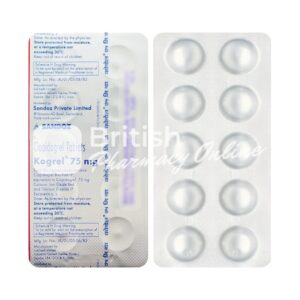
Packaging is commonly blister packs or bottles with 75 mg tablets as the primary maintenance strength and 300 mg tablets for loading.
Pricing in the UK NHS strongly favours generics, making clopidogrel considerably cheaper than ticagrelor or prasugrel and influencing formulary choices.
Supply disruptions are uncommon but regional shortages can occur and procurement teams monitor major manufacturers to mitigate risk.
In our online pharmacy, clopidogrel is available without a prescription, with discreet delivery to United Kingdom in 5-14 days.
Alternative Options
Comparison Table
How does clopidogrel compare with other antiplatelets?
Clopidogrel 75 mg — cost‑effective and widely available with lower major bleeding than ticagrelor/prasugrel in some groups.
Ticagrelor — more consistent platelet inhibition with greater reduction in ischaemic events in ACS, but higher bleeding and dyspnoea side effects.
Prasugrel — potent and predictable but linked to higher bleeding and contraindicated after prior stroke/TIA and in older or frail patients.
Aspirin — inexpensive and foundational, often used with P2Y12 inhibitors but less effective alone in some high‑risk ACS settings.
Pros And Cons
Choice depends on balancing ischaemic versus bleeding risk, CYP2C19 genotype, drug interactions, cost and comorbidities.
In UK practice, ticagrelor or prasugrel are preferred for higher ischaemic risk ACS while clopidogrel remains key where bleeding risk, interactions or cost rule out newer agents.
Regulatory Status
What do regulators say about clopidogrel?
Clopidogrel is approved by major regulators worldwide including the EMA and FDA and is a prescription‑only antithrombotic.
Numerous generics hold marketing authorisations in Europe such as Clopidogrel Teva, Clopidogrel Krka and Clopidogrel ratiopharm.
Regulatory oversight focuses on bleeding risk, drug interactions and genetic variability, and safety signals are monitored via national schemes like the MHRA Yellow Card.
Consolidated FAQ
Common practical questions patients ask.
Q: What is the usual dose? Maintenance clopidogrel 75 mg once daily with 300–600 mg loading in ACS/PCI situations.
Q: Is clopidogrel available over the counter? No, clopidogrel is prescription‑only due to bleeding risk and need for monitoring.
Q: Who should avoid it? Patients with active pathological bleeding, known hypersensitivity, or severe liver impairment should avoid clopidogrel.
Q: Does genotype matter? Yes; CYP2C19 loss‑of‑function alleles can reduce effectiveness and genotype‑guided switching is increasingly used.
Q: How long after stent insertion? At least 12 months post‑ACS/PCI is typical, with individual tailoring according to stent type and bleeding/ischaemic risk.
Q: Can I take PPIs? If a PPI is required, pantoprazole is preferred; avoid omeprazole when possible due to CYP2C19 interactions.
Q: Missed dose/overdose? Missed dose: take when remembered unless close to next dose; overdose: risk of bleeding and seek urgent care as platelet transfusion may be considered.
Q: Storage? Store at 15–30°C in original packaging and keep dry and out of reach of children.
Visual Guide
Which visuals help patients and clinicians understand clopidogrel therapy?
Recommended assets include a DAPT flowchart for loading doses and duration decisions, a comparison infographic for clopidogrel versus ticagrelor and prasugrel, and an interaction map showing CYP2C19 inhibitors.
Patient leaflets should visually highlight signs of serious bleeding, missed‑dose actions and storage advice in large, high‑contrast fonts for older patients.
Digital versions must link to MHRA Yellow Card reporting and local formulary references for transparency and safety reporting.
Storage & Transport
How should clopidogrel be stored and moved?
Store clopidogrel tablets at room temperature between 15–30°C in a dry place and protect from light.
Keep tablets in their original blister or bottle to prevent moisture ingress during storage and transport.
Pharmacies and suppliers use standard conditions for oral solids and no cold chain is required.
Patients should avoid storing tablets in humid places such as bathrooms and keep medication away from children.
Guidelines For Proper Use
How should prescribers and pharmacists manage clopidogrel use?
Follow ESC, NICE and MHRA frameworks and individualise therapy by assessing ischaemic versus bleeding risk and checking contraindications.
Review concomitant medicines for CYP interactions and consider CYP2C19 genotyping where available to guide ACS/PCI decisions.
Document the rationale for agent selection and provide clear patient education on bleeding signs, missed doses and follow‑up plans.
Use shared decision‑making and trusted sources such as NICE and MHRA when explaining benefits and harms to patients.
Delivery Across United Kingdom
| City | Region | Delivery Time |
|---|---|---|
| London | Greater London | 5–7 days |
| Birmingham | West Midlands | 5–7 days |
| Glasgow | Scotland | 5–7 days |
| Manchester | North West | 5–7 days |
| Leeds | Yorkshire | 5–7 days |
| Edinburgh | Scotland | 5–7 days |
| Bristol | South West | 5–9 days |
| Leicester | East Midlands | 5–9 days |
| Coventry | West Midlands | 5–9 days |
| Cardiff | Wales | 5–9 days |
| Newcastle | North East | 5–9 days |
| Southampton | South East | 5–9 days |
| Plymouth | South West | 5–9 days |