Diclofenac
In brief
- Diclofenac can be purchased from pharmacies and online shops; topical forms such as gels, patches and sprays are often available without a prescription in the UK and some other countries, whilst oral tablets, suppositories, injections and eye drops are usually prescription-only. Availability depends on local rules and strength.
- Diclofenac is a non-steroidal anti-inflammatory medicine used for pain and inflammation, including osteoarthritis, rheumatic pain, acute musculoskeletal pain and some eye conditions. It works by inhibiting cyclo-oxygenase (COX) enzymes, reducing prostaglandin production.
- The usual adult dose varies by form and indication: oral tablets are commonly 50–100 mg up to 2–3 times daily, with a maximum of 150 mg per day; topical gel is usually applied in a thin layer 3–4 times daily; suppositories and injections are used under medical supervision.
- Diclofenac is available as tablets, gastro-resistant or extended-release tablets, gel/cream, suppositories, injection, eye drops, spray and patches.
- It usually starts working within about 30–60 minutes when taken orally, while topical forms may begin easing pain within 1–2 hours, depending on the preparation and the condition being treated.
- The duration of action is typically several hours, with oral and topical forms often used multiple times a day; exact duration depends on the strength and formulation, and extended-release products last longer.
- Avoid or greatly limit alcohol, as it can increase the risk of stomach irritation, bleeding and liver side effects, especially when diclofenac is taken by mouth.
- The most common side effects are nausea, headache, dizziness, indigestion, abdominal pain and, with topical forms, rash or skin irritation.
- Would you like to try diclofenac without a prescription?
Basic Diclofenac Information
- INN (International Nonproprietary Name): Diclofenac
- Brand Names Available In United Kingdom: Voltarol
- ATC Code: M01AB05; M02AA15; S01BC03
- Forms & Dosages: Tablets 25mg, 50mg, 75mg, 100mg; gel/cream 1%, 2%, 3%; suppositories 12.5mg, 25mg, 50mg, 100mg; injection 25mg/ml, 75mg/3ml; eye drops 0.1%; spray/patch 4%, 5% (varies)
- Manufacturers In United Kingdom: Novartis (Voltarol) and generic suppliers including Teva, Sandoz, Mylan and ratiopharm
- Registration Status In United Kingdom: Marketed and approved globally by EMA, FDA, MHRA and ANMDMR for various indications in oral, topical and parenteral forms
- OTC / Rx Classification: OTC topical forms and low-dose oral in some countries; prescription oral, injectable, higher strength topical and eye drops
Recent Evidence And Prescribing Trends
Major 2022–2025 Studies
Looking at diclofenac today, the main question is not whether it works, but where it fits best against other NSAIDs such as ibuprofen, naproxen and celecoxib.
Comparative research through 2022 to 2025 has continued to examine pain control, tolerability and the balance between benefit and harm.
Diclofenac remains widely prescribed because it is potent for inflammatory pain, especially when stiffness and swelling are prominent.
At the same time, prescribing trends keep a close eye on cardiovascular risk and gastrointestinal safety, particularly for oral diclofenac sodium used beyond a short course.
Main Outcomes
Newer studies generally support short-term efficacy for osteoarthritic pain, acute musculoskeletal injury and dental pain.
In everyday UK practice, diclofenac gel and Voltarol gel are often favoured for localised pain because the systemic exposure is lower than with tablets.
That makes topical diclofenac a practical choice when a patient wants relief for a knee, hand or shoulder without the same level of whole-body NSAID burden.
Safety Observations
The stronger safety signals continue to appear with higher-dose or long-term oral use, especially in older adults and people with cardiovascular disease.
Regulators still advise the lowest effective dose for the shortest duration, which remains the safest way to use diclofenac tablets and diclofenac sodium tablets.
For many people, that means a short burst for a flare rather than open-ended daily use.
Clinical Mechanism Of Action
Layman’s Explanation
When pain is driven by inflammation, diclofenac helps by turning down the body’s chemical signals for swelling, stiffness and soreness.
That is why it is often chosen for arthritis, sprains and other inflammatory pain rather than pain alone.
Scientific Breakdown
Diclofenac is an NSAID in ATC group M01AB05, while topical forms sit under M02AA15 and eye drops under S01BC03.
It works through COX inhibition, reducing prostaglandins and dampening inflammatory signalling at the site of injury or throughout the body, depending on the formulation.
Why It Works Well In Joints
This mechanism is useful in osteoarthritis, rheumatoid-type pain and soft-tissue inflammation because prostaglandins play a central role in pain and swelling.
Topical diclofenac gel can provide local relief with fewer systemic effects than tablets, which is why many UK patients start with gel for a single painful joint.
Scope Of Approved And Off-Label Use
United Kingdom Approvals
In the UK, diclofenac is marketed as Voltarol and is available in tablets, suppositories, gel tubes and injection forms.
Approved uses include pain and inflammation in musculoskeletal conditions, acute pain and selected post-operative settings.
People often first notice it in a pharmacy aisle as Voltarol tablets or Voltarol gel, but the same active ingredient appears in several prescription formats too.
Notable Off-Label Trends
Clinicians may sometimes use diclofenac where rapid anti-inflammatory action is needed, although UK prescribing remains cautious because of safety concerns.
Topical diclofenac is commonly chosen for localised osteoarthritis, sprains and strains, especially where oral NSAIDs are not ideal.
For customers buying online, our pharmacy offers diclofenac without a prescription, with discreet delivery to the United Kingdom in 5-14 days, which can be helpful when a short course of Voltarol gel is needed quickly.
Form-Specific Use
Tablets are used for systemic pain and inflammation.
Gel is used for local joint or muscle pain.
Suppositories and injection are used when oral administration is unsuitable.
Dosage Strategy
General Dosing
Adult oral regimens commonly range from 50mg to 100mg up to 2–3 times daily, with 150mg/day as the stated maximum in the supplied data.
The key rule is simple: use the lowest effective dose for the shortest possible duration.
That applies whether the product is diclofenac 50mg tablets, diclofenac potassium, or another oral form.
Condition-Specific Dosing
For acute pain, a single 50mg–75mg oral dose or IM injection may be used, with repetition only if needed.
For topical use, apply 2–4g of gel to the affected area 3–4 times daily.
For eye drops, the usual dose is 1 drop 4–5 times daily depending on indication.
Adjustments For Special Groups
Children may use oral or rectal forms with weight-based dosing of 1–3mg/kg/day in divided doses.
Older adults should start lower and be monitored more closely for GI, renal and cardiovascular risks.
In renal or hepatic impairment, caution is needed, with dose reduction or avoidance in severe disease.
Safety Protocols
Contraindications
Diclofenac should not be used in people with hypersensitivity to diclofenac or other NSAIDs, active gastric or duodenal ulcer, GI bleeding or perforation, severe heart failure, severe liver or kidney dysfunction, third-trimester pregnancy, or a history of asthma, urticaria or allergic-type reactions after NSAID use.
Relative caution is needed in hypertension, diabetes, inflammatory bowel disease, anticoagulation, lactation and older age.
Adverse Effects
Common mild effects include nausea, headache, dizziness, indigestion, abdominal pain and rash with topical use.
More concerning effects include fluid retention, raised blood pressure, liver enzyme elevation, pruritus and injection-site pain.
UK Risk-Management Approach
Short courses are preferred wherever possible.
For oral therapy, GI protection and comorbidity review are sensible in higher-risk patients.
Renal, cardiovascular and hepatic risk should be monitored in vulnerable groups, especially if diclofenac sodium is used alongside other medicines.
Interaction Mapping
Food Interactions
Food may reduce stomach upset, but it does not remove the underlying GI risk from oral diclofenac.
Alcohol can worsen irritation and bleeding risk, particularly when tablets are taken regularly.
Drug Combinations To Avoid
Other NSAIDs, aspirin, anticoagulants and corticosteroids need careful review because they can raise the risk of bleeding or irritation.
Diuretics and ACE inhibitors or ARBs can increase renal risk when used with diclofenac interactions in mind.
Practical UK Advice
Always check over-the-counter products as well as prescriptions.
Patients should tell the pharmacist about all painkillers, including ibuprofen and low-dose aspirin, before starting diclofenac tablets or diclofenac gel.
Patient Experience Analysis
Survey Data
Patient preference often leans towards topical diclofenac when relief is needed without oral side effects.
Oral forms are generally valued for stronger systemic relief during inflammatory flares.
That split is easy to understand: a painful knee may do well with gel, while widespread stiffness can make tablets feel more effective.
Forum Trends
Common UK user themes include quick relief for joint pain, digestive upset with tablets and satisfaction with gels for knees, hands and shoulders.
Some users say it works better than ibuprofen, though individual response varies from person to person.
What Matters To Patients
Fast onset matters.
Convenience matters.
Tolerability matters.
Ease of application matters too, especially with Voltarol gel and other topical forms.
Distribution And Pricing Landscape
UK Availability
Diclofenac is widely available in the UK under Voltarol and generic labels depending on formulation and strength.
Common packaging includes tablet packs, gel tubes and injectable presentations, while other markets may use topical sizes from 10g to 100g.
For UK shoppers, the name on the box may change, but the active ingredient remains diclofenac sodium.
Pricing And Purchasing Patterns
OTC topical diclofenac is often bought for short-term self-care.
Prescription formulations are more common when dose, duration or clinical risk needs supervision.
Global suppliers named in the source data include Novartis, Teva, Sandoz, Mylan and ratiopharm, and patients often compare brand against generic cost before choosing a pack.
Market Context
Clinical suitability matters more than branding.
For most customers, the decision is less about the logo and more about whether diclofenac gel, tablets or another NSAID fits the pain pattern and risk profile.
Alternative Options
Comparison Table
| Medicine | Typical Position | Main Note |
|---|---|---|
| Diclofenac | Strong anti-inflammatory option | Broad formulation range, including topical use |
| Ibuprofen | Familiar first-line OTC option | Often used for short-term pain and fever |
| Naproxen | Systemic NSAID alternative | May be considered depending on risk profile |
| Ketoprofen | Another NSAID choice | Used where an NSAID is suitable |
| Piroxicam | Longer-acting NSAID | Needs careful safety consideration |
| Celecoxib | COX-2 selective NSAID | May suit selected patients |
| Etodolac | Systemic NSAID option | Chosen case by case |
Pros And Cons
The main advantages are effectiveness, a broad formulation range, topical options and well-established use.
The main drawbacks are greater concern for GI, cardiovascular and renal risk with oral use compared with some alternatives.
Choosing An Alternative
For local pain, diclofenac gel or a patch may be preferred.
For systemic pain, other NSAIDs such as ibuprofen or naproxen may be considered depending on the patient’s history and the reason for treatment.
Regulatory Status
UK Approvals
Diclofenac is approved globally by EMA, FDA, MHRA and ANMDMR for various oral, topical and parenteral forms.
In the UK, it sits in both OTC and prescription categories depending on formulation.
That is why a tube of Voltarol gel can be bought differently from diclofenac suppositories or an injection supplied under clinical supervision.
Compliance And Safety Updates
High-dose or long-term oral use remains closely watched because of safety concerns.
Healthcare professionals should stay up to date with product information leaflets and regulatory changes.
For prescribers and pharmacists, the practical rule is to match the formulation to the patient’s risk profile and the shortest sensible treatment plan.
Documentation Points
Brand name matters.
Strength matters.
Formulation matters.
Dose instructions, contraindications and storage requirements should all be clear on the pack and leaflet.
Consolidated FAQ
Common Questions
What is diclofenac used for?
Is Voltarol the same as diclofenac?
Can diclofenac gel be used with tablets?
How long should diclofenac be taken?
Short-Answer Guidance
Diclofenac is used for pain and inflammation, especially in musculoskeletal conditions.
Voltarol is a brand name for diclofenac in the UK.
Use should generally be short-term unless supervised by a clinician.
Combining topical and oral forms should only happen with medical or pharmacy advice.
Safety Reminder
Seek urgent help for black stools, vomiting blood, chest pain, breathlessness or severe allergic symptoms.
Visual Guide
Form Comparison Visual
| Form | Route | Usual Setting | Main Risk Note |
|---|---|---|---|
| Tablets | Oral | Systemic pain and inflammation | Higher GI, cardiovascular and renal concern |
| Gel | Topical | Local joint or muscle pain | Lower systemic exposure than tablets |
| Suppositories | Rectal | When oral use is unsuitable | Use only as directed |
| Injection | IM or IV slow infusion | Clinician-led acute use | Prescription setting only |
| Eye drops | Ophthalmic | Selected eye indications | Dosing varies by indication |
| Patch or spray | Topical | Localised pain | Follow product instructions |
Decision Flow Visual
Localised pain leads towards topical gel.
Systemic inflammation leads towards an oral tablet.
Unable to swallow or a rapid need for treatment may lead to suppository or injection under clinician direction.
Packaging Cues
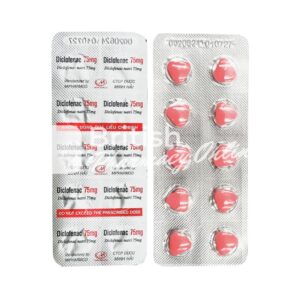
Blister packs usually indicate tablets.
Tubes usually indicate gels.
Ampoules or vials usually indicate injectable forms.
Storage And Transport
Storage Rules
Store diclofenac at 15–30°C and protect it from moisture, heat and light.
Topical products should not be refrigerated unless the label says so.
Transport Considerations
Keep the medicine in its original packaging, especially ampoules and vials.
Avoid extreme temperatures during transit.
Patient Handling Points
Keep out of sight and reach of children.
Always check the expiry date before use.
Guidelines For Proper Use
Practical Use Rules
Take oral diclofenac exactly as directed, and do not double a missed dose.
For gel, apply the prescribed amount to clean, intact skin and wash hands afterwards.
Use suppositories, injections and eye drops only as instructed.
When people ask about diclofenac sodium tablets, the safest answer is the same: follow the label, because the dose is tied to the formulation and the condition being treated.
When To Seek Help
Overdose symptoms may include gastrointestinal upset, central nervous system effects and renal impairment.
Get medical advice if pain persists, side effects develop, or there is cardiovascular, renal or liver disease.
UK Patient Counselling Points
Use the shortest effective course.
Do not mix with other NSAIDs without advice.
Review pregnancy status, age and comorbidities before use.
Delivery Across United Kingdom
| City | Region | Delivery Time |
|---|---|---|
| London | Greater London | 5-7 days |
| Birmingham | West Midlands | 5-7 days |
| Manchester | North West England | 5-7 days |
| Glasgow | Scotland | 5-7 days |
| Edinburgh | Scotland | 5-7 days |
| Liverpool | North West England | 5-7 days |
| Leeds | West Yorkshire | 5-7 days |
| Sheffield | South Yorkshire | 5-7 days |
| Bristol | South West England | 5-7 days |
| Cardiff | Wales | 5-7 days |
| Newcastle upon Tyne | North East England | 5-7 days |
| Nottingham | East Midlands | 5-9 days |
| Leicester | East Midlands | 5-9 days |
| Aberdeen | Scotland | 5-9 days |