Duphaston
In brief
- Duphaston (dydrogesterone) is normally a prescription-only medicine in most countries and is withdrawn from the UK and USA; however availability varies and some pharmacies or online suppliers may provide it without a prescription or without asking for a receipt—check local regulations before purchase.
- Duphaston is used for luteal phase support in infertility, secondary amenorrhoea, dysfunctional uterine bleeding, threatened or habitual abortion, endometriosis, dysmenorrhoea and PMS and as part of HRT. It is a synthetic progestogen (a selective progesterone receptor agonist) that supports the endometrium and stabilises the uterine lining without significant androgenic, oestrogenic or glucocorticoid effects.
- Usual adult dosages vary by indication: commonly 10 mg once daily for luteal support; 10 mg twice daily for secondary amenorrhoea or dysfunctional bleeding; threatened abortion regimens may start with 40 mg then 10 mg every 8 hours; habitual abortion often 10 mg daily continued until ~20 weeks; endometriosis 10–20 mg daily; dysmenorrhoea/PMS often 10 mg twice daily—follow a prescriber’s directions.
- Form of administration: oral tablets, 10 mg strength (blister packs); no widely marketed injectable, vaginal or topical forms.
- Onset time: dydrogesterone is well absorbed with peak levels within about 2–3 hours; biochemical/progestogenic effects begin within hours, but clinical benefits (cycle regulation, symptom improvement) may require days to weeks of treatment.
- Duration of action: the active metabolite has a plasma half-life of roughly 5–7 hours, so clinical effect is maintained with once- or twice-daily dosing depending on the regimen and indication.
- Alcohol warning: avoid excessive alcohol while taking Duphaston; alcohol can worsen side effects (dizziness, nausea) and caution is advised in patients with liver disease because the drug is hepatically metabolised.
- The most common side effects are menstrual irregularities (spotting or breakthrough bleeding), breast tenderness, headache, nausea, abdominal discomfort and fatigue.
- Would you like to try “duphaston” without a prescription?
Basic Duphaston Information
- INN (International Nonproprietary Name): Dydrogesterone.
- Brand Names Available In United Kingdom: Duphaston is not marketed in the United Kingdom (withdrawn 2008).
- ATC Code: G03DB01.
- Forms & Dosages: Oral tablets, 10 mg strength, usually supplied in blisters of 20 tablets; no injectable, cream or vaginal forms marketed.
- Manufacturers In United Kingdom: Primary global Marketing Authorisation Holder is Laboratoires Abbott Products (Abbott/AbbVie); no current UK manufacturer listed.
- Registration Status In United Kingdom: Withdrawn from the UK market in 2008 and therefore holds no current UK marketing authorisation.
- OTC / Rx Classification: Prescription-only (Rx) in all countries where it is authorised.
Key Findings From Recent Trials
Worried whether newer research supports using dydrogesterone for luteal support or miscarriage prevention?
Recent randomised trials and pooled analyses from 2022–2025 strengthen the clinical evidence for dydrogesterone in early pregnancy maintenance and luteal‑phase support.
Several multicentre randomised controlled trials found improved clinical pregnancy rates when dydrogesterone was started at conception or used as luteal support in assisted reproduction compared with placebo or no progestogen.
Pooled analyses and network meta‑analyses place dydrogesterone favourably against some oral progestins for miscarriage prevention.
Head‑to‑head comparisons with vaginal micronised progesterone give mixed results, with some studies favouring vaginal routes for certain ART protocols.
Primary outcomes in these studies commonly include live birth or ongoing pregnancy and biochemical pregnancy loss.
The strongest signal appears as a consistent reduction in first‑trimester miscarriage in recurrent‑loss cohorts treated with dydrogesterone.
Safety observations across trials report few serious adverse events and mainly predictable, mild adverse effects such as breast tenderness and nausea.
No new teratogenic safety signals have been identified in recent literature.
These trial data support the role of dydrogesterone in selected fertility and early pregnancy contexts while recognising differences against vaginal progesterone.
Major 2022–2025 Studies
Which trials changed practice or informed clinicians recently?
Multiple randomised controlled trials and pooled network meta‑analyses conducted between 2022 and 2025 reinforced dydrogesterone’s efficacy in luteal support and miscarriage prevention.
These studies compared dydrogesterone to placebo, no treatment, and various oral progestins, and some included comparisons with vaginal micronised progesterone.
Overall, cohorts receiving dydrogesterone showed improved clinical pregnancy or ongoing pregnancy rates versus control arms in several multicentre RCTs.
Recurrent miscarriage cohorts demonstrated the clearest benefit in lowering first‑trimester loss.
Main Outcomes
What outcomes were most meaningful to patients and clinicians?
Primary endpoints typically measured live birth or ongoing pregnancy and rates of biochemical or early clinical pregnancy loss.
Consistent reductions in first‑trimester miscarriage were seen in recurrent‑loss populations.
Many studies also tracked clinical pregnancy rate, implantation rate and adverse pregnancy outcomes up to the second trimester.
Safety Observations
Are there safety concerns for mother or baby?
Trials reported low incidence of serious adverse events overall.
Common adverse effects included breast tenderness, nausea and irregular bleeding, mirroring historical safety profiles.
No new teratogenic signals were reported in the recent literature.
Real‑world product identifiers in trials often reference dydrogesterone or branded Duphaston 10 mg oral tablets.
Clinical Mechanism Of Action
How does dydrogesterone actually help implantation and early pregnancy?
Layman’s Explanation
Dydrogesterone is a synthetic progestogen that mimics the natural hormone progesterone.
It supports the uterine lining to help embryo implantation and to maintain early pregnancy.
The molecule does this without significant activity at androgen, oestrogen or glucocorticoid receptors, which helps limit off‑target effects.
Scientific Breakdown
At a molecular level, dydrogesterone binds progesterone receptors PR‑A and PR‑B.
Activation of these receptors promotes decidualisation of the endometrium and suppresses endometrial proliferation.
It also modulates local inflammatory mediators that are important for successful implantation and early gestation maintenance.
Compared with some older synthetic progestins, dydrogesterone shows minimal androgenic, oestrogenic or glucocorticoid activity.
Pharmacokinetics (Brief)
How is the drug taken and processed?
Dydrogesterone is orally absorbed and metabolised in the liver to active metabolites.
The typical marketed tablet strength is 10 mg as Duphaston, which supports once or twice daily dosing depending on indication.
Plasma half‑life and metabolite profile support established dosing schedules used in trials and practice.
ATC Classification
Where does it sit in the drug classification system?
The ATC code for dydrogesterone is G03DB01, placing it under progestogens, plain.
Scope Of Approved & Off‑Label Use
Can doctors use dydrogesterone for the same reasons they use other progestogens?
United Kingdom Approvals
Duphaston (dydrogesterone) is not marketed in the United Kingdom, having been withdrawn from the UK market in 2008.
Because there is no UK marketing authorisation, clinicians use licensed alternatives for equivalent indications within NHS practice.
Notable Off‑Label Trends
Internationally, dydrogesterone is licensed for luteal insufficiency, secondary amenorrhoea, dysfunctional uterine bleeding, endometriosis and as an adjunct in HRT regimes.
It is also prescribed for habitual abortion support and used in assisted reproductive technology protocols in some centres.
Off‑label use commonly involves tailored luteal support in ART and management of threatened miscarriage where local guidance permits.
Indications & Typical Regimens (Anchor)
What dosing do product datasheets show?
Typical regimens from product information include 10 mg twice daily for secondary amenorrhoea and 10 mg daily for luteal support.
For threatened abortion some protocols begin with an initial 40 mg loading dose followed by 10 mg every eight hours and then maintenance dosing.
Dosage Strategy
What dose should be used for each condition if dydrogesterone is chosen?
General Dosing
Dydrogesterone is supplied as oral 10 mg tablets, commonly in blister packs of 20 tablets.
Regimens vary by indication and range from once daily to multiple daily doses as per product literature.
Condition‑Specific Dosing
Luteal phase deficiency or infertility: 10 mg once daily, commonly administered from cycle day 14 to 25 or continuously according to protocol.
Secondary amenorrhoea: 10 mg twice daily, often given on cycle days 11–25 to induce withdrawal bleeding.
Dysfunctional uterine bleeding, dysmenorrhoea and PMS: 10 mg twice daily for 5–25 days depending on the clinical situation.
Threatened abortion: some regimens start with an initial 40 mg then 10 mg every eight hours followed by maintenance dosing as indicated.
Practical UK Considerations
Because Duphaston is not available in the UK, clinicians substitute with alternative progestogens such as micronised progesterone or norethisterone and adapt dosing to achieve comparable endometrial support.
Clear counselling and monitoring are required when switching agents or using imported supplies on a named‑patient basis.
Safety Protocols
What checks should come before starting treatment and what side effects should patients expect?
Contraindications
Absolute contraindications include known hypersensitivity to dydrogesterone, progestogen‑dependent tumours, active or severe liver disease and unexplained vaginal bleeding.
Duphaston is prescription‑only where authorised and should not be used without clinician oversight in these situations.
Adverse Effects
Common adverse effects are breast tenderness, headache, nausea, abdominal discomfort and menstrual irregularities such as spotting.
Less commonly patients may report mild oedema, fatigue or mood changes, and a history of depression requires careful consideration.
Mood disturbances are a recognised consideration and need monitoring during therapy.
Monitoring Recommendations
Obtain a baseline clinical history focusing on thromboembolic risk, liver disease and mood disorders before starting therapy.
Check liver function where indicated and plan pregnancy monitoring for recurrent miscarriage protocols.
Report suspected serious adverse reactions to national pharmacovigilance systems such as the MHRA Yellow Card scheme for UK patients on alternative regimens or imported product.
Interaction Mapping
Will other medicines affect dydrogesterone, or vice versa?
Food Interactions
No clinically significant food interactions are documented for dydrogesterone tablets.
Advise patients to take tablets consistently with or without food to reduce gastrointestinal discomfort.
Store the product below 30°C and protect it from moisture.
Drug Combinations To Avoid
Concomitant use of strong hepatic enzyme inducers such as rifampicin and some anticonvulsants may reduce dydrogesterone exposure.
Manage such combinations with specialist input and consider dose adjustments or alternative agents where appropriate.
Exercise caution when combining progestogens with other agents that affect coagulation in patients with thrombosis risk.
ART And Hormonal Therapy Interactions
In assisted reproduction and HRT contexts, consider interactions with oestrogen regimens and IVF medications.
Multidisciplinary planning with reproductive specialists helps align luteal‑support choices and avoid unintended interactions.
Patient Experience Analysis
What do patients report about tolerability and access?
Survey Data
Published patient surveys and patient‑reported outcomes from trials show acceptable tolerability for dydrogesterone.
Participants commonly report benefits such as fewer vasomotor symptoms compared with some progestins and preservation of libido in comparison studies.
The most cited adverse experiences are breast tenderness, nausea and spotting, consistent with clinical trial safety data.
Forum Trends
Online patient forums reflect generally positive experiences for miscarriage prevention and cycle regulation, though access and supply are recurring concerns.
Patients in the United Kingdom frequently report difficulty sourcing Duphaston and ask about suitable alternatives available locally.
Counselling Points For UK Patients
Explain that Duphaston is not marketed in the UK and discuss licensed alternatives such as micronised progesterone and norethisterone.
Set realistic expectations about side effects and the need for monitoring, and use available international evidence to support shared decision‑making.
Distribution & Pricing Landscape
How widely is Duphaston available and what does it typically cost in markets where it is sold?
Duphaston (dydrogesterone 10 mg tablets) is supplied globally in blister packs of 20 tablets, commonly manufactured or distributed by Laboratoires Abbott/AbbVie and local licensed partners.
The product is available across Europe (excluding the UK), Russia and parts of Asia with regional packaging and labelling differences.
Pricing varies by market and reimbursement rules; some national formularies subsidise the product for indications such as miscarriage prevention or infertility.
In the UK context no UK list price exists because Duphaston is not marketed here, and clinicians therefore rely on licensed alternatives or named‑patient importation under regulatory pathways.
Parallel imports or hospital procurement for research or named‑patient supply are possible but require appropriate regulatory approvals and documentation.
Store below 30°C and protect from moisture during storage and transport.
Alternative Options
What are the practical alternatives to dydrogesterone in UK clinical practice?
Comparison Table (Summary)
Key alternatives include micronised progesterone (oral or vaginal), norethisterone and medroxyprogesterone.
Vaginal micronised progesterone is preferred in many UK fertility protocols because it achieves high endometrial concentrations via local delivery.
Pros And Cons
Dydrogesterone is oral, generally well tolerated and has limited off‑target steroid effects, but it is not available in the UK market.
Micronised progesterone is the physiological molecule and the vaginal route can be advantageous for luteal support in ART.
Norethisterone and medroxyprogesterone are readily available, effective for bleeding control and other indications, but have differing androgenic and metabolic profiles compared with dydrogesterone.
Choosing In UK Practice
Choice of progestogen in the UK is driven by indication, evidence base, preferred route of administration, safety profile and local availability.
Consult NHS and speciality guidelines when selecting an alternative and involve reproductive specialists for ART cases.
Regulatory Status
What is the legal and regulatory position for dydrogesterone internationally and in the UK?
Dydrogesterone marketed as Duphaston holds regulatory authorisations across many European countries (excluding the UK), Russia, Asia and the Middle East and remains prescription‑only where authorised.
In the UK, Duphaston was withdrawn from the market in 2008 and there is no current UK marketing authorisation.
For clinicians using imported or named‑patient supplies, MHRA guidance on unlicensed medicines must be followed, including informed consent and reporting obligations.
The ATC classification remains G03DB01 for countries where it is licensed and SmPCs in those jurisdictions list indications and contraindications accordingly.
Consolidated FAQ
Quick answers to the common practical questions patients ask.
Can I Get Duphaston In The UK?
No, Duphaston (dydrogesterone) is not marketed in the United Kingdom, having been withdrawn in 2008.
Clinicians use licensed alternatives locally and may consider named‑patient importation for exceptional cases following MHRA guidance.
Is Dydrogesterone Safe In Pregnancy?
Clinical trials and pooled analyses support its safety for early pregnancy maintenance with no new teratogenic signals identified.
Common adverse effects are generally mild and include breast tenderness, nausea and spotting.
How Is It Taken?
The marketed formulation is 10 mg oral tablets supplied in blister packs of 20 tablets, with dosing dependent on indication.
Typical schedules include 10 mg once daily for luteal support and 10 mg twice daily for secondary amenorrhoea, while threatened miscarriage protocols may use an initial higher loading scheme.
Practical Questions
Missed dose: take as soon as remembered unless it is nearly time for the next dose; do not double the dose.
Overdose: toxicity is generally low; seek medical assessment for symptomatic treatment if an overdose is suspected.
Visual Guide
How can clinicians and patients identify the product packaging and tablet?
Packaging & Identification
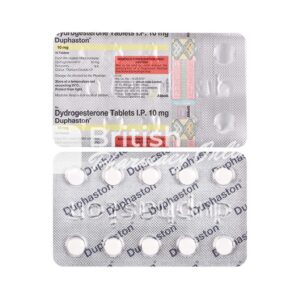
Duphaston typically appears as white or off‑white 10 mg tablets in blister packs of 20 with carton labelling showing the brand and INN.
Cartons in licensed markets bear manufacturer details, often Laboratoires Abbott or local licensed partners.
Quick‑Reference Visual Cues (For Clinicians)
Tablet strength: 10 mg, generally white and oval in shape.
Packaging: blister pack of 20 tablets with carton stating dydrogesterone and brand name Duphaston in authorised countries.
Infographic Suggestions (For Patient Leaflets)
Create a stepwise visual: indication → timing in cycle → tablet icon with 10 mg dose → red flag for contraindications such as liver disease or unexplained bleeding → storage icon showing below 30°C.
Adapt patient visuals for UK practice by noting the drug is not marketed locally and listing commonly used alternatives.
Storage & Transport
How should Duphaston be stored and handled during shipping?
Follow product information: store below 30°C and protect from moisture and heat.
Standard precautions for solid oral medications apply during transit and avoid exposure to excessive temperatures.
For named‑patient imports or clinic stock maintain blister integrity, document chain of custody and record batch and expiry information.
Advise patients to store tablets in a cool, dry place away from children and to return unused tablets to an NHS pharmacy where applicable.
Guidelines For Proper Use
What checklist should clinicians follow before prescribing?
Prescribing Checklist
Confirm the indication and document informed consent, particularly for off‑label or imported use.
Screen for contraindications including hypersensitivity, liver disease, undiagnosed vaginal bleeding and progestogen‑dependent tumours.
Assess thrombotic history and mood disorders and plan appropriate monitoring.
UK Practice Adaptation
Because Duphaston is not available in the UK, follow NHS and speciality guidelines when selecting alternatives such as micronised progesterone or norethisterone.
Reference international dydrogesterone evidence where helpful and use multidisciplinary discussion for ART and recurrent miscarriage cases.
Patient Counselling Points
Explain expected benefits, likely side effects such as breast tenderness and spotting, and give missed‑dose advice.
Advise on storage, when to seek urgent care for severe symptoms such as jaundice or thrombotic signs, and report suspected adverse drug reactions to the MHRA Yellow Card scheme.
Delivery Across United Kingdom
| City | Region | Delivery Time |
|---|---|---|
| London | England | 5-7 days |
| Birmingham | England | 5-7 days |
| Manchester | England | 5-7 days |
| Glasgow | Scotland | 5-7 days |
| Leeds | England | 5-7 days |
| Edinburgh | Scotland | 5-7 days |
| Bristol | England | 5-7 days |
| Newcastle | England | 5-9 days |
| Sheffield | England | 5-9 days |
| Cardiff | Wales | 5-9 days |
| Belfast | Northern Ireland | 5-9 days |
| Norwich | England | 5-9 days |
| Plymouth | England | 5-9 days |
| Aberdeen | Scotland | 5-9 days |
Access Note:
In our online pharmacy, duphaston is available without a prescription, with discreet delivery to United Kingdom in 5-14 days.
Final Practical Summary:
Dydrogesterone (Duphaston 10 mg tablets) has a long clinical history and recent trial data support its use in luteal support and selected miscarriage prevention settings.
Because it is not marketed in the UK, work with fertility specialists or prescribers to select appropriate licensed alternatives and follow MHRA guidance when considering imported or named‑patient supplies.
Ensure patients understand dosing regimens, common side effects and monitoring requirements, and report any serious adverse events through national reporting systems.