Aciclovir
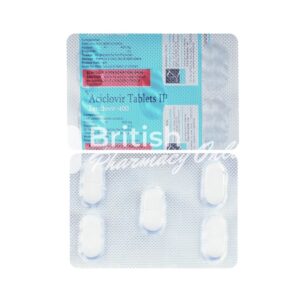
In brief
- In pharmacies and online drug stores, aciclovir is usually sold as a prescription-only medicine in the UK, EU and most other countries, although some pharmacies may offer it without a prescription depending on local regulations and the product form. It is commonly available as generic aciclovir or under brand names such as Zovirax.
- Aciclovir is used to treat herpes simplex infections, genital herpes, cold sores, herpes zoster (shingles) and chickenpox, and may also be used for suppression in people with recurrent infections. It works as an antiviral nucleoside analogue that inhibits viral DNA polymerase, helping to stop the herpes virus from multiplying.
- The usual dose depends on the condition: for herpes simplex or genital herpes, 200 mg five times daily for 5–10 days; for suppression, 400 mg twice daily or 200 mg 3–5 times daily; for shingles, 800 mg five times daily for 7–10 days; and for chickenpox, 800 mg four times daily for 5 days. Doses must be adjusted in children and in renal impairment.
- Aciclovir is administered as tablets, oral suspension, cream, ointment, or intravenous infusion. Topical cream is applied to affected skin, while ophthalmic ointment is used for eye infections under medical guidance.
- Aciclovir usually starts working within a few hours, but symptom relief may take 1–3 days, especially for active herpes outbreaks. Topical treatment may begin to reduce discomfort slightly sooner when used at the first sign of symptoms.
- The duration of action depends on the formulation and indication: oral doses are taken several times a day, topical cream is used for 4–5 days, shingles treatment usually lasts 7–10 days, and suppressive therapy may continue for up to 12 months.
- Alcohol does not directly interact with aciclovir, but it is best to avoid or limit alcohol because it can worsen dehydration and may increase the risk of side effects, especially if you are unwell or have kidney problems.
- The most common side effects are nausea, vomiting, diarrhoea, abdominal pain, headache, dizziness, tiredness, and local skin irritation when using the cream. Less commonly, kidney problems or confusion can occur, particularly in older adults or people with renal impairment.
- Would you like to try aciclovir without a prescription?
Basic Aciclovir Information
- INN (International Nonproprietary Name): Aciclovir
- Brand names available in United Kingdom: Zovirax, Aciclovir (generic)
- ATC Code: J05AB01
- Forms & dosages: Tablets: 200mg, 400mg, 800mg. Cream: 5%. Suspension: 200mg/5ml. Intravenous: 250mg, 500mg, 1000mg vials
- Manufacturers in United Kingdom: GlaxoSmithKline, Sandoz/Novartis, Mylan, Ranbaxy/Sun Pharma, Sanofi, and other generic suppliers
- Registration status in United Kingdom: Prescription only
- OTC / Rx classification: Rx — Prescription only
Aciclovir For Herpes Treatment In The United Kingdom
When a cold sore appears on a Friday evening, people usually want two things: fast relief and clear advice.
Aciclovir is one of the best-known antivirals used for herpes simplex, shingles and chickenpox-related viral replication in the UK.
It is widely available as generic aciclovir and as branded Zovirax, which is why many patients recognise it straight away at the pharmacy counter.
The main clinical question is not whether it works, but how early it is started, which formulation is chosen, and whether the dose fits the person’s kidney function and age.
Key Findings From Recent Trials And Evidence Base
Major 2022–2025 Studies
Recent comparative literature still supports oral aciclovir as a standard antiviral for HSV, VZV and varicella, especially when treatment begins early.
That timing matters because the best outcomes are seen when therapy starts in the first phase of an outbreak, rather than after lesions have fully declared themselves.
Evidence in recurrent genital herpes and shingles started within 72 hours continues to show meaningful benefit from prompt treatment.
In day-to-day practice, valaciclovir is often favoured for convenience because the dosing schedule is simpler, but aciclovir remains a strong option where cost, familiarity, and UK generic access matter.
That balance is particularly important for patients who need repeat courses or suppression therapy and want a medicine that is easy to recognise and affordable to repeat.
Main Outcomes
Studies consistently show faster symptom resolution, shorter lesion duration, and lower viral shedding when aciclovir is started early.
That is why clinicians often advise people with cold sores or shingles not to wait and see for too long before seeking treatment.
The best-supported oral regimens remain Aciclovir 200mg, Aciclovir 400mg, and Aciclovir 800mg tablets, with the strength chosen by indication.
For example, a patient with recurrent genital herpes may do well on a suppressive 400mg twice-daily regimen, while shingles generally needs the higher 800mg schedule.
Safety Observations
Renal handling is central to safe use because aciclovir is cleared through the kidneys.
Dehydration and high doses increase the risk of crystalluria and neurotoxicity, especially with intravenous treatment or in older adults.
Evidence supports dose adjustment in renal impairment, and extra caution is sensible in patients with reduced kidney function, frailty, or poor fluid intake.
In practice, that means a simple prescription check can prevent a lot of avoidable problems, particularly in patients already taking kidney-stressing medicines.
Clinical Mechanism Of Action
Layman’s Explanation
Aciclovir stops herpes viruses from copying themselves, which helps outbreaks settle sooner and reduces spread to other cells.
It does not remove the virus from the body completely, so it controls active replication rather than curing the infection permanently.
That is why some people need treatment only for an outbreak, while others need suppression to keep recurrences under control.
Scientific Breakdown
The International Nonproprietary Name is Aciclovir, and the primary ATC code is J05AB01.
It is a nucleoside analogue that becomes activated inside infected cells.
Once activated, it inhibits viral DNA polymerase and terminates chain elongation, which blocks viral DNA replication.
The selectivity for infected cells helps explain its long-established safety profile when used correctly.
Why It Matters Clinically
This selectivity is the reason aciclovir can be used across a wide range of patients when dose and hydration are managed properly.
Topical products are classified separately under D06BB for dermatological use, which is relevant when comparing cream with oral tablets.
In simple terms, cream is aimed at local cold sore or lesion management, while tablets and suspension are used when more systemic control is needed.
Scope Of Approved And Off-Label Use In The UK
United Kingdom Approvals
UK market examples include Zovirax and generic aciclovir in 200mg, 400mg, and 800mg tablets, plus 5% cream and 200mg/5ml suspension.
Aciclovir is prescription only in the UK.
That said, access pathways can still be straightforward, and in our online pharmacy aciclovir is available without a prescription, with discreet delivery to United Kingdom in 5-14 days.
For many people, that is useful when the outbreak is unpleasant but not severe enough to justify a same-day GP appointment.
Notable Off-Label Trends
In specialist practice, aciclovir may be used for prophylaxis in immunocompromised patients, recurrent severe HSV, and selected ophthalmic cases.
Hospitals may also use intravenous vials for severe infection when oral treatment is not enough.
That broader use reflects how well understood the medicine is across both primary care and hospital settings.
Common Indication Groups
Herpes labialis, genital herpes, herpes zoster, varicella, and neonatal or specialist settings are the main use groups.
Clinicians may choose Zovirax tablets, Aciclovir tablets UK, Aciclovir cream, or Aciclovir suspension depending on age and presentation.
For cold sores, topical treatment may be enough, while repeated recurrences are more likely to call for oral therapy.
Dosage Strategy
General Dosing
Dosing depends on indication, age, and renal function.
Oral therapy is typically short course for acute episodes and longer for suppression.
The practical issue is often adherence, because frequent dosing can be difficult for patients with busy workdays or interrupted routines.
Condition-Specific Dosing
For HSV skin and mucosa, the usual adult regimen is 200mg five times daily for 5-10 days.
For genital herpes, the initial episode is treated with 200mg five times daily for 5-10 days.
For recurrence or suppression, 400mg twice daily or 200mg three to five times daily may be used, with suppression continuing up to 6-12 months depending on recurrence rate and tolerability.
For shingles, the usual adult regimen is Aciclovir 800mg five times daily for 7-10 days.
For varicella, the adult regimen is 800mg four times daily for 5 days, started within 24 hours after the rash appears.
Paediatric And Renal Adjustments
Children are dosed by body weight, often 20mg/kg with maximum limits depending on the indication.
Lower strengths and suspension are often used for infants and smaller children.
In severe renal impairment, oral dosing frequency should be reduced, and for creatinine clearance below 10ml/min the frequency may be halved.
Elderly patients usually receive standard doses, but kidney function should be monitored closely because neurotoxicity is more likely if clearance is reduced.
Safety Protocols
Contraindications
The absolute contraindication is hypersensitivity to aciclovir, valaciclovir, or any formulation excipients.
Extra caution is needed in dehydration, renal impairment, neurological disorders, and older adults.
That is especially relevant if the patient is already taking other medicines that may affect kidney function.
Adverse Effects
Common side effects include nausea, vomiting, diarrhoea, headache, dizziness, fatigue, and abdominal pain.
Topical use may cause local irritation, itching, or a mild rash.
These effects are usually mild, but they can still lead to poor adherence if nobody warns the patient in advance.
Serious Safety Issues
High-risk settings include intravenous use, dehydration, and impaired renal clearance.
Neurotoxicity may present as confusion, agitation, or lethargy.
Crystalluria and raised creatinine are more likely when hydration is poor, particularly around IV treatment.
Interaction Mapping
Food Interactions
No major food interaction is usually required.
Adequate fluid intake is important, and taking doses with meals may help if nausea occurs.
That can make the schedule easier for patients who feel slightly queasy after the first day of treatment.
Drug Combinations To Avoid
Caution is needed with nephrotoxic medicines and other drugs that impair renal clearance.
Close monitoring is sensible if aciclovir is used alongside medicines that already stress kidney function.
That includes the common real-world situation where a patient is unwell, slightly dehydrated, and taking several regular medicines at the same time.
Clinical Note
IV aciclovir plus dehydration or renal-risk medicines increases the chance of creatinine rise and crystalluria.
That is why pharmacy teams often ask about fluid intake, kidney disease, and recent illness before supply or counselling.
Patient Experience Analysis
Survey Data
Patients often value aciclovir for familiarity, low generic cost, and broad pharmacy availability in the UK.
The downside is the frequent dosing, especially with five-times-daily schedules.
For someone working shifts or looking after children, remembering every dose can be a real challenge.
Forum Trends
Common themes include a wish for faster cold sore relief, frustration with late treatment starts, and regular comparison with the convenience of valaciclovir.
People also talk about how disappointing it feels when treatment is started too late to make a dramatic difference.
That is a useful reminder that the medicine works best when the first tingle or early rash is acted on quickly.
Practical Patient Concerns
Missed doses, dryness or irritation from cream, and recurrence anxiety are recurring issues.
Patients using Zovirax cream often want to know whether local stinging is normal, and it usually is if mild and short-lived.
What matters most is keeping the schedule as close to prescribed as possible and asking for advice if symptoms worsen.
Distribution And Pricing Landscape
UK Availability
Aciclovir is widely distributed through community pharmacies and prescription channels.
Common forms include Aciclovir tablets UK, Aciclovir cream, and Aciclovir suspension.
That broad supply helps keep treatment practical for both occasional outbreaks and longer suppression regimens.
Pricing Trends
Generic versions usually undercut branded Zovirax products.
Pack size and strength affect retail and NHS dispensing patterns.
In everyday terms, a larger tablet pack or a less common strength may be priced differently even when the medicine itself is the same.
Market Structure
Major suppliers include established multinationals and generic manufacturers.
Broad generic competition supports access across public and private sectors.
That competition is one reason aciclovir remains a mainstay option rather than a niche medicine.
Alternatives To Aciclovir
Comparison Table
| Medicine | Main Point | Typical Use |
|---|---|---|
| Valaciclovir | Better oral bioavailability and simpler dosing | HSV and shingles |
| Famciclovir | Similar antiviral class with a different schedule | HSV and shingles |
| Penciclovir | Topical option | Cold sores |
| Docosanol | OTC option in some markets, not a systemic antiviral | Cold sore topical management |
Pros And Cons
Aciclovir is trusted, affordable, and broad in use.
Its main limitation is frequent dosing and lower oral bioavailability than valaciclovir.
For many patients, that trade-off is acceptable when the medicine is readily available and clinically familiar.
Selection Factors
Choice depends on outbreak type, adherence, renal status, and cost.
A patient who misses doses easily may benefit from a simpler schedule, while someone sensitive to cost may prefer generic aciclovir tablets or cream.
Regulatory Status
United Kingdom And International Classification
Aciclovir is prescription only in the UK and most major markets.
In Europe it sits under systemic antivirals J05AB01, and topical products align with dermatological antiviral classification.
That means product selection should always be linked to the right route of administration.
Product Examples And Packaging
UK forms include 200mg, 400mg, and 800mg tablets, 5% cream, and 200mg/5ml suspension.
Hospital use includes IV vials for severe disease.
Brand and generic packs are both common, so patients may receive different-looking boxes across different pharmacies.
Compliance Note
National formularies and product information should be checked for brand-specific guidance.
That is particularly important if a patient switches between branded Zovirax tablets and a generic version.
Consolidated FAQ
Common Questions Patients Ask
What is aciclovir used for?
How quickly does it work for cold sores or shingles?
Can it be used in children?
Those are the questions people ask most often when they are trying to work out whether to order now or wait for symptoms to settle.
Practical Answers
Aciclovir treats HSV, shingles and chickenpox-related viral replication, but it does not permanently remove the virus from the body.
It works best when started early, and delayed starts reduce benefit.
Children can use it, but dosing is weight-based and usually guided by a clinician or pharmacist.
For parents, the suspension can be helpful when tablets are not suitable.
Safety And Adherence
Do not double missed doses.
Seek advice if renal disease, pregnancy, or severe side effects are present.
If confusion, marked lethargy, or reduced urine output appears, urgent assessment is sensible rather than waiting for the next routine review.
Visual Guide
Suggested Infographic Sections
A useful infographic would show a brand and form map with Zovirax, generic aciclovir, tablets, cream, suspension, and IV.
Another useful panel would show the main indication flow for cold sores, genital herpes, shingles, and varicella.
That kind of visual helps patients spot the right route and strength quickly.
Visual Decision Aids
A dose-by-condition matrix can simplify selection for patients and staff.
A red-flag safety box should highlight renal impairment and dehydration.
Simple icons for route, frequency, and treatment length work best in a UK patient leaflet or blog graphic.
Design Notes
Use UK spellings, dosage strengths, and simple icons for route and frequency.
Keep the language plain enough for a patient skimming on a mobile phone during a lunch break.
Storage And Transport
Storage Basics
Tablets and cream should be stored at room temperature, usually below 25°C.
The cream tube should be kept tightly closed and not frozen.
Those basics matter more than people think, especially when medicine is kept in a bathroom cabinet or car glove compartment.
Transport And Handling
Protect from light and moisture, especially for long-term storage.
Suspension and IV products may need stricter handling under pharmacy directions.
Before use, check expiry, packaging integrity, and batch details.
Safety Handling
If a pack looks damaged or has been stored badly, it should not be used without checking.
That is particularly relevant for families keeping repeat courses at home for future outbreaks.
Guidelines For Proper Use
How To Take It Correctly
Start treatment as early as possible in the outbreak.
Complete the full prescribed course even if symptoms improve.
That advice sounds simple, but it is the main reason some patients get good results and others feel the medicine did very little.
Missed Dose And Overdose Advice
Take a missed dose as soon as remembered if it is within a few hours.
If the next dose is nearly due, skip the missed one and continue as normal.
Never double up.
Overdose symptoms may include confusion, agitation, lethargy, and renal dysfunction.
When To Seek Urgent Help
Severe neurological symptoms, reduced urine output, or significant dehydration need prompt assessment.
If the person is elderly, frail, or already has kidney disease, the threshold for advice should be lower.
Delivery Across United Kingdom
| City | Region | Delivery time |
|---|---|---|
| London | England | 5-7 days |
| Birmingham | England | 5-7 days |
| Manchester | England | 5-7 days |
| Leeds | England | 5-7 days |
| Glasgow | Scotland | 5-7 days |
| Edinburgh | Scotland | 5-7 days |
| Liverpool | England | 5-7 days |
| Newcastle upon Tyne | England | 5-7 days |
| Bristol | England | 5-7 days |
| Cardiff | Wales | 5-7 days |
| Belfast | Northern Ireland | 5-7 days |
| Sheffield | England | 5-9 days |
| Nottingham | England | 5-9 days |
| Leicester | England | 5-9 days |
| Aberdeen | Scotland | 5-9 days |