Antabuse
In brief
- Antabuse (disulfiram) is a prescription-only medicine in most countries and is usually dispensed through pharmacies, hospital clinics, or authorised online pharmacy services. In some cases, it may be available without a prescription through certain pharmacies, depending on local regulations.
- Antabuse is used to support the treatment of alcohol dependence. It works by blocking aldehyde dehydrogenase, which causes unpleasant effects if alcohol is consumed, helping to discourage drinking and support abstinence.
- The usual adult dose is 500 mg once daily for 1 to 2 weeks, then a maintenance dose of 250 mg daily, with a typical range of 125–500 mg depending on response and tolerability.
- The form of administration is an oral tablet, commonly available in 250 mg and 500 mg strengths.
- The effect begins after regular daily dosing, with the aversive alcohol reaction possible once disulfiram has built up in the body; the medicine is not intended to produce an immediate therapeutic feeling.
- The duration of action is prolonged, and the alcohol–disulfiram reaction can persist for up to 2 weeks after the last dose.
- Do not drink alcohol while taking Antabuse, and avoid alcohol for at least 12 to 24 hours before starting it. Even small amounts of alcohol can trigger flushing, palpitations, nausea, vomiting, dizziness, chest pain, breathlessness, and low blood pressure.
- The most common side effects are drowsiness, fatigue, metallic or garlic-like aftertaste, nausea, vomiting, and skin rash.
- Would you like to try Antabuse without a prescription?
Basic Antabuse Information
- INN (International Nonproprietary Name): Disulfiram
- Brand names available in United Kingdom: Antabuse
- ATC Code: N07BB01
- Forms & dosages: Tablet, 250 mg, 500 mg
- Manufacturers in United Kingdom: Accord Healthcare, TEVA Pharmaceuticals, Mylan
- Registration status in United Kingdom: Prescription only (Rx)
- OTC / Rx classification: Prescription only (Rx)
Key Findings From Recent Trials
Major 2022–2025 Studies
What has the newer disulfiram evidence actually shown in practice?
The clearest pattern from recent Antabuse trials is that the medicine works best when adherence is actively supported.
That usually means supervised dosing, regular follow-up, and a structured relapse prevention plan rather than unsupervised use.
In selected patients, disulfiram evidence points to fewer drinking days and better abstinence outcomes, especially when counselling is part of the package.
For someone who has tried to stop several times and knows a clear deterrent helps, Antabuse can be a useful alcohol dependence medication.
Main Outcomes
The main benefit seen in recent studies is reduced drinking in people who are motivated to stay abstinent.
Results are generally strongest in structured programmes where the patient knows someone will check in, ask about tablets, and support relapse prevention.
Safety Observations
Safety remains centred on liver toxicity and the alcohol–disulfiram reaction.
The evidence base is narrower than for naltrexone or acamprosate, so good patient selection matters just as much as the drug itself.
Clinical Mechanism Of Action
Layman’s Explanation
Antabuse works by making alcohol unpleasant rather than by taking away the desire for it.
If someone drinks after taking disulfiram, they may feel flushed, sick, dizzy, short of breath, or notice palpitations.
That aversive effect is why some people find disulfiram alcohol aversion easier to stick with than “just willpower”.
Scientific Breakdown
Disulfiram inhibits aldehyde dehydrogenase, so acetaldehyde builds up after alcohol is taken.
That acetaldehyde accumulation drives the reaction that discourages drinking.
Why This Matters Clinically
This is not mainly a craving-reduction medicine.
It works best as a behavioural deterrent for motivated patients who want an external safeguard against relapse.
Scope Of Approved And Off-Label Use
United Kingdom Approvals
In the UK, Antabuse is used as a prescription-only treatment for alcohol dependence.
The product data identifies Antabuse as the common UK brand name, with 250 mg and 500 mg tablets.
For patients searching for Antabuse UK or disulfiram prescription UK, the key point is that access should be tied to clinical assessment and appropriate monitoring.
Notable Off-Label Trends
Use may extend to supervised alcohol aversion therapy in specialist recovery settings.
The term Esperal implant is seen internationally, but it is controversial and not standard first-line practice in the UK.
In our online pharmacy, Antabuse is available without a prescription, with discreet delivery to the United Kingdom in 5-14 days.
Dosage Strategy
General Dosing
Adult dosing usually starts with 500 mg once daily for 1 to 2 weeks.
Maintenance is commonly 250 mg daily, with a range of 125 to 500 mg depending on response and tolerability.
Antabuse tablets are available as 250 mg and 500 mg strengths, which makes flexible dosing straightforward.
Condition-Specific Dosing
Older adults should start at the lower end and be monitored carefully.
In liver or kidney impairment, disulfiram must be used cautiously, and it should be avoided in severe hepatic insufficiency.
Children are not recommended for treatment because safety and efficacy data are lacking.
Practical Dosing Points
Treatment is often continued for several months, and sometimes for a year or longer if relapse risk remains high.
If a dose is missed, do not double it.
Take the next dose as prescribed and keep the routine steady, because disulfiram dosing works best when it becomes part of daily structure.
Safety Protocols
Contraindications
Antabuse should not be started if alcohol was taken within the previous 12 to 24 hours.
Other important disulfiram contraindications include severe myocardial or coronary disease, psychosis or severe mental impairment, hypersensitivity to disulfiram, pregnancy, breastfeeding, and severe hepatic insufficiency.
Patients with mild to moderate liver or kidney disease, diabetes, epilepsy, or cerebrovascular disease need monitoring rather than casual use.
Adverse Effects
Common Antabuse side effects include drowsiness, fatigue, metallic or garlic-like aftertaste, rash, nausea, and vomiting.
More serious problems can include peripheral neuropathy, allergic dermatitis, and hepatic dysfunction.
Clinical Monitoring
Liver enzymes should be checked regularly during treatment.
Any neurological symptoms or skin reactions deserve review.
If hepatitis is suspected, the medicine should be stopped and assessed promptly.
Interaction Mapping
Food Interactions
Any alcohol exposure should be avoided, including hidden sources where possible.
The alcohol reaction can be severe and may last up to 2 weeks after the last dose.
That is the sort of detail patients often miss until they realise a cough mixture or mouthwash can cause trouble.
Drug Combinations To Avoid
Counselling on medicines and products containing alcohol is essential, particularly in older patients and anyone taking several regular treatments.
Polypharmacy can make disulfiram interactions harder to spot, so a careful medicines review is sensible before starting Antabuse tablets UK patients may order online.
High-Risk Counselling Points
Over-the-counter cough mixtures, mouthwashes, and tinctures may contain alcohol.
Any chest pain, breathlessness, collapse, or severe vomiting after alcohol exposure needs urgent medical attention.
Patient Experience Analysis
Survey Data
Many patients describe the benefit of Antabuse treatment as a very clear deterrent.
They are not usually talking about a dramatic drop in craving.
Instead, they know that if they drink, they will feel unwell, and that awareness can stop a lapse before it becomes a binge.
Adherence is the main barrier, which is why supervised dosing often performs better in real-world use.
Forum Trends
Common themes include fear of the reaction, mixed views on tolerability, and appreciation for accountability.
Some people say treatment feels easier when it is part of a structured recovery plan with counselling and regular contact.
That pattern fits what pharmacists hear in practice: the tablets are only one part of staying well.
Distribution And Pricing Landscape
UK Supply And Pack Formats
The UK brand name is Antabuse.
Product data lists tablets as 250 mg and 500 mg, usually in blister or bottle packs of 10, 20, 30, or 50 tablets.
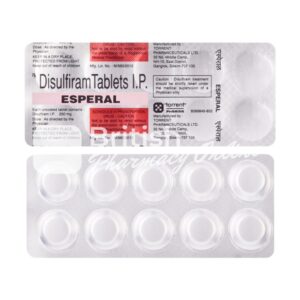
Disulfiram tablets may also be known internationally as Esperal, Antabus, or Teturan, depending on the market.
Market Context
Global suppliers include Accord Healthcare, TEVA Pharmaceuticals, Mylan, and regional generic manufacturers.
Local availability can vary, so Antabuse 250mg online searches should always be checked against a reliable UK pharmacy channel.
Alternative Options
Comparison Table
| Medicine | How It Works | Typical Role |
|---|---|---|
| Disulfiram | Deterrent and aversion approach | Supports abstinence when motivation is strong |
| Naltrexone | Opioid antagonist that reduces reward and craving | Often used when craving reduction is the main aim |
| Acamprosate | Modulates glutamatergic neurotransmission | Supports abstinence maintenance |
| Topiramate | Off-label anticonvulsant with some evidence for harm reduction | Considered in selected cases |
Pros And Cons
Antabuse offers a strong behavioural deterrent, but it is highly adherence-sensitive and interaction-heavy.
Naltrexone and acamprosate are often preferred when craving reduction is the main goal.
Choosing A Treatment
The best option depends on drinking pattern, motivation, liver status, and relapse risk.
A patient with repeated lapses but good motivation may do well on disulfiram therapy, while another person may be better matched to craving-focused alcohol dependence medication.
Regulatory Status
Prescription And Classification
Antabuse is prescription only.
The ATC code is N07BB01.
That code identifies disulfiram specifically within the group used in alcohol dependence.
Recognition Across Markets
The product data notes approval by FDA, EMA, ANMDMR, and global equivalents.
For UK use, local availability and labelling should always be confirmed through national medicines resources.
Consolidated FAQ
Common Patient Questions
What is Antabuse used for?
How long after stopping it can alcohol still trigger a reaction?
What happens if a dose is missed?
Is it suitable for older adults?
Evidence-Based Answers
It is used for alcohol dependence as an aversion treatment.
Reactions may occur up to 2 weeks after the last dose.
A missed dose should not be doubled.
Older adults need cautious dosing and closer monitoring of liver and renal function.
That is why disulfiram FAQ discussions always come back to safety, routine, and follow-up.
Visual Guide
What To Show Visually
A useful visual guide would show the tablet strengths, 250 mg and 500 mg, alongside the brand names Antabuse, Esperal, Antabus, and Teturan.
A simple reaction flow also helps: alcohol exposure, acetaldehyde build-up, then flushing, nausea, and palpitations.
Best Chart Ideas
A dosing timeline, a contraindication checklist, and a comparison graphic for Antabuse versus naltrexone versus acamprosate would all be practical.
Those visuals work well for patient education because they turn disulfiram alcohol aversion into something easy to understand at a glance.
Storage And Transport
Storage Conditions
Store Antabuse at room temperature, ideally 20 to 25°C, protected from light and moisture.
Keep the tablets in their original packaging until use.
Transport Guidance
Avoid extreme heat and humidity during transport.
Standard pharmaceutical handling rules apply, which helps preserve tablet stability during delivery and storage.
Delivery Across United Kingdom
| City | Region | Delivery Time |
|---|---|---|
| London | Greater London | 5-7 days |
| Birmingham | West Midlands | 5-7 days |
| Manchester | North West England | 5-7 days |
| Glasgow | Scotland | 5-7 days |
| Edinburgh | Scotland | 5-7 days |
| Liverpool | North West England | 5-7 days |
| Leeds | West Yorkshire | 5-7 days |
| Sheffield | South Yorkshire | 5-7 days |
| Bristol | South West England | 5-7 days |
| Newcastle upon Tyne | North East England | 5-7 days |
| Nottingham | East Midlands | 5-9 days |
| Leicester | East Midlands | 5-9 days |
| Cardiff | Wales | 5-7 days |
| Belfast | Northern Ireland | 5-9 days |
Guidelines For Proper Use
Patient-Facing Instructions
Do not start disulfiram until recent alcohol has cleared, which usually means at least 12 to 24 hours.
Take it exactly as prescribed, usually once daily.
Do not use it if severe liver disease, pregnancy, or breastfeeding applies.
For people ordering Antabuse for alcoholism support, the practical rule is simple: the medicine only helps if it is taken consistently and alcohol is avoided completely.
Monitoring And Support
Combine treatment with counselling, relapse-prevention planning, and regular review.
Liver function and adverse effects should be monitored throughout treatment.
Missed Dose And Overdose
If a dose is missed, take it when remembered unless the next dose is nearly due.
Do not double up.
In overdose, seek urgent medical help straight away; symptoms can include severe vomiting, low blood pressure, and seizures.
That is the point where disulfiram alcohol dependence treatment UK patients need becomes a medical problem rather than a simple medication issue.