Escitalopram
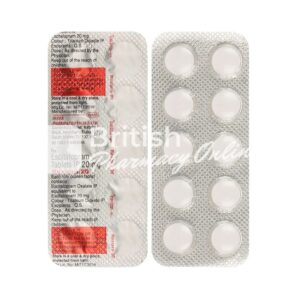
In brief
- Escitalopram can be purchased from pharmacies and online suppliers in many countries; however, it is prescription-only in major regulated markets, including the UK and EU. Some pharmacies may offer it without a prescription, but this is not compliant with standard regulatory requirements.
- Escitalopram is an antidepressant used to treat major depressive disorder, generalised anxiety disorder, panic disorder, obsessive-compulsive disorder and social anxiety disorder. It is a selective serotonin reuptake inhibitor (SSRI), working by increasing serotonin levels in the brain.
- The usual adult dose is 10 mg once daily, with the dose sometimes increased to a maximum of 20 mg daily depending on response and tolerability. In older adults or people with liver problems, a lower starting dose of 5 mg daily may be used.
- It is available as film-coated tablets, oral drops/solution, and orally disintegrating tablets.
- Escitalopram does not work immediately; some improvement may be noticed within 1–2 weeks, but full antidepressant benefit usually takes 4–6 weeks.
- Its effects last for about 24 hours, so it is usually taken once daily.
- Alcohol is best avoided, as it can worsen drowsiness, dizziness, poor concentration and mood symptoms.
- The most common side effects are nausea, headache, dry mouth, dizziness, fatigue, sleep disturbance, sweating and sexual dysfunction.
- Would you like to try escitalopram without a prescription?
Basic Escitalopram Information
- INN (International Nonproprietary Name): Escitalopram
- Brand Names Available In United Kingdom: Cipralex
- ATC Code: N06AB10
- Forms & Dosages: Film-coated tablets 5 mg, 10 mg, 15 mg, 20 mg; oral drops/solution 20 mg/mL; orodispersible tablets 10 mg, 15 mg
- Manufacturers In United Kingdom: Lundbeck, Orifarm, Ecosse, Elaiapharm
- Registration Status In United Kingdom: Prescription only; EU EMA registration approved; recognised in public pharma registers
- OTC / Rx Classification: Prescription only, not OTC in any major market
Key Findings From Recent Trials
Major 2022–2025 Studies
People looking at escitalopram usually want one straight answer first: does it still work well enough to be a first-choice treatment?
The recent trial and review pattern from 2022 to 2025 continues to support escitalopram for depression and escitalopram for anxiety, especially when symptoms overlap and tolerability matters.
Across major depressive disorder and generalised anxiety disorder, the consistent message is symptom reduction with a useful chance of remission, usually with benefit building over several weeks rather than overnight.
Main Outcomes
In practical terms, escitalopram remains one of the SSRIs most often chosen in primary care because it is effective, straightforward to dose, and generally well tolerated.
Adult starting treatment is usually 10 mg once daily, with a maximum of 20 mg/day if needed.
That matters for real patients, because many do not stop treatment for lack of effect alone, but because they cannot get on with the early side effects of an antidepressant.
Recent comparative reviews still tend to place escitalopram among the better-tolerated SSRIs, with many patients staying on treatment compared with more activating or more troublesome alternatives.
For depression, the main outcome remains a reduction in core symptoms such as low mood, loss of interest, poor concentration, and sleep disruption.
For anxiety, it is often chosen when the person has persistent worry, physical tension, and trouble switching off at night.
That mix is common in UK general practice, and it is one reason escitalopram for depression and escitalopram for anxiety both stay clinically relevant.
Time to response is usually measured in weeks, not days, and patients are often told to look for early signs such as a bit more sleep, less panic, or easier mornings before the mood fully lifts.
Acute depression treatment should continue for at least 6 months after symptom relief, which helps reduce relapse risk.
That guidance is still consistent with current UK practice, especially where there is comorbidity, prior relapse, or ongoing stress.
Safety Observations
The most recent safety trend is reassuring rather than dramatic.
Escitalopram continues to score well on tolerability, but it is not side-effect free.
Nausea, sleep disturbance, headache, and sexual dysfunction remain the issues most likely to affect adherence early on.
Discontinuation rates are often driven more by the first few weeks of treatment than by long-term failure of efficacy.
In a UK setting, that is exactly why the medicine review matters: if a patient says they feel worse, more wired, or unable to sleep, the dose, timing, and concurrent medicines should all be checked.
For primary care, the trial pattern supports ongoing first-line use, particularly when anxiety symptoms, sleep disturbance, and mixed depressive-anxious presentations are present.
It is not the answer for every patient, but the evidence still supports its place as a dependable SSRI with a balanced efficacy-tolerability profile.
Clinical Mechanism Of Action
Layman’s Explanation
People often ask, “How does Cipralex work?”
In simple terms, escitalopram helps more serotonin stay active in the brain, which can ease low mood, reduce worry, and make emotional symptoms feel less overwhelming.
It is not a stimulant and it does not sedate everyone, but it can help the brain settle into a steadier pattern over time.
That is why it is used for both depression and anxiety, and why some patients notice sleep improves only after the mind is less “switched on” at night.
Scientific Breakdown
Escitalopram tablets contain escitalopram oxalate, the S-enantiomer of citalopram.
That means it is the active mirror-image component, with higher selectivity for the serotonin transporter than citalopram itself.
By blocking serotonin reuptake, it increases serotonin signalling in key brain pathways involved in mood regulation, fear processing, and stress response.
Because it is more selective, it also tends to have fewer CYP450 drug–drug interactions than some alternatives, although interaction screening is still essential.
From a dosing point of view, the usual range of 5 mg, 10 mg, 15 mg, and 20 mg helps clinicians titrate gradually if a person is sensitive at the start.
That flexibility is useful with escitalopram 10 mg as the common starting point, then stepping up if needed.
Escitalopram 20 mg is usually reserved for patients who need more benefit and can tolerate the medicine well.
Oral drops and orodispersible formulations can also support practical flexible dosing, especially when swallowing tablets is difficult.
In pharmacy counselling, this is where the choice between Cipralex tablets, oral drops, and orodispersible tablets can matter just as much as the brand name itself.
Scope Of Approved & Off-Label Use
United Kingdom Approvals
In the UK, escitalopram is prescription only and is mainly used in depression and anxiety management.
Its standard adult indications include major depressive disorder at 10 mg once daily, with a maximum of 20 mg/day, and generalised anxiety disorder at the same starting and maximum doses.
Specialist-guided use also covers panic disorder, obsessive-compulsive disorder, and social anxiety disorder, although local practice can vary.
Children and adolescents are not routinely recommended for treatment, but select cases may start at 5 mg under specialist care.
That is an important point for families who search for Cipralex for depression or Cipralex for anxiety and expect a simple one-size-fits-all answer.
Notable Off-Label Trends
In real-world UK practice, the medicine is often used where anxiety and depression are mixed together, because that combination is very common.
It is also often considered when someone has not tolerated another SSRI and needs a better-balanced option.
For some patients, especially those with physical anxiety symptoms and disrupted sleep, escitalopram for anxiety can be a more workable starting point than a more activating alternative.
That said, off-label use should still be guided by clinical judgement, history, and monitoring rather than by the search for the “best SSRI for depression” alone.
For online access, some patients want convenience and ask about prescription supply routes; in our online pharmacy, escitalopram is available without a prescription, with discreet delivery to United Kingdom in 5-14 days.
Dosage Strategy
General Dosing
The usual UK adult regimen begins at 10 mg once daily for depression or anxiety.
If the response is not enough and the medicine is tolerated, the dose may be increased to 20 mg/day after at least one week.
That stepwise approach helps reduce early nausea, jitteriness, and sleep disruption.
Escitalopram 5 mg, escitalopram 10 mg, escitalopram 15 mg, and escitalopram 20 mg are the common tablet strengths used in practice.
Oral drops are also available as 20 mg/mL, which can be useful when dose precision matters.
Condition-Specific Dosing
For panic disorder, OCD, and social anxiety, the general starting point is also 10 mg once daily, though specialist advice may differ.
The same maximum of 20 mg/day is usually used, but titration is often slower when the patient is highly anxious at baseline.
That slower build can reduce early activation and help with adherence.
Dose Adjustments By Age And Organ Function
Older adults often start at 5 mg daily because they may be more sensitive to side effects.
In hepatic impairment, the usual advice is half the initial dose with a maximum of 10 mg/day.
Mild or moderate renal impairment often needs no adjustment, but severe impairment calls for caution.
Children and adolescents are not routinely recommended for treatment, and only select specialist cases may start low at 5 mg.
For someone using oral drops or a low-strength tablet, that lower start can make the first fortnight much easier to manage.
Safety Protocols
Contraindications
There are three absolute reasons not to use escitalopram.
These are concomitant use with monoamine oxidase inhibitors, known allergy to escitalopram, citalopram, or the SSRI class, and prolonged QT interval because of arrhythmia risk.
Other situations need monitoring rather than automatic avoidance.
Those include epilepsy, bipolar disorder, hyponatraemia risk, a history of bleeding disorders, significant liver or renal impairment, and use with other QT-prolonging agents.
This is the point where ECG risk and medicine review become important, particularly if a patient has palpitations or a previous heart rhythm problem.
Adverse Effects
The common side effects are usually the ones patients notice first: nausea, dry mouth, headache, dizziness, sweating, fatigue, sleep disturbance, diarrhoea, insomnia, sexual dysfunction, agitation, and weight changes.
Sexual dysfunction is one of the more frequent reasons people quietly stop treatment unless they are asked about it directly.
Insomnia and early agitation can also happen, especially if the dose is raised quickly.
More concerning reactions need urgent review.
If a patient reports palpitations, fainting, severe agitation, confusion, or symptoms suggestive of serotonin syndrome, the medicine should be reviewed urgently.
That advice applies whether the patient is taking Cipralex 10 mg or a higher dose.
Interaction Mapping
Food Interactions
Food is not usually a major issue with escitalopram tablets.
Most people can take it with or without food, which helps with routine use.
Alcohol is the main practical concern because it may worsen drowsiness, poor judgement, or mood symptoms.
For people who take their medicine in the evening, that advice matters even more if sleep is already disturbed.
Drug Combinations To Avoid
The highest-risk combinations are MAOIs, other serotonergic medicines, QT-prolonging agents, and drugs that raise bleeding risk.
Escitalopram has fewer CYP450 interactions than some antidepressants, but that does not remove the need for careful screening.
Examples in UK practice include checking the repeat prescription list, asking about over-the-counter remedies, and confirming whether a patient is already on another antidepressant or migraine treatment.
A pharmacy medicine review before initiation should always look for serotonin syndrome risk, additive QT effects, and anticoagulant or antiplatelet use.
That is especially important when a person is switching from another SSRI or SNRI, or when they have bought medicines independently.
Patient Experience Analysis
Survey Data
Patients commonly say the benefits do not appear straight away.
That is not a failure of the medicine; it is how SSRIs usually work.
Many people first notice better sleep, less physical tension, or fewer panic spikes before mood lifts properly.
Early nausea or sleep disturbance is a frequent reason for concern in the first weeks.
The side effects that come up most often in patient reports match the clinical profile: nausea, dry mouth, headache, dizziness, increased sweating, fatigue, sleep disturbances, insomnia, diarrhoea, sexual dysfunction, agitation, and weight changes.
Adherence improves when patients know what is temporary and when to seek help.
Forum Trends
In forum-style discussions, the recurring UK themes are very consistent.
People want a clear timeline, they worry about emotional blunting, and they ask whether withdrawal will be difficult.
They also want reassurance that escitalopram for anxiety is not meant to work instantly, and that dose changes should be gradual.
Those comments are useful, but they are anecdotal rather than proof of how the medicine will affect one individual.
Experience varies with dose, duration of treatment, and whether co-existing anxiety is present.
That is why one patient may tolerate Cipralex tablets well while another finds the first week uncomfortable.
Distribution & Pricing Landscape
UK Supply And Brand Patterns
In the UK and wider EU market, the best-known brand is Cipralex.
Manufacturers and packagers include Lundbeck, Orifarm, Ecosse, and Elaiapharm.
Global supply also includes Lexapro, with manufacturers such as Teva, Abbvie, Torrent, Zydus, Amneal, Aurobindo, Hetero, Macleods, and others.
That is why searches for Cipralex price or Lexapro 10 mg in stock usually come down to prescription channel availability rather than a single fixed retail figure.
Generic escitalopram availability can also vary by pharmacy and wholesaler stock.
Packaging And Formulation Trends
The UK and EU market commonly offers 5 mg, 10 mg, 15 mg, and 20 mg tablets, plus melts and oral drops.
Orodispersible tablets are helpful when a patient struggles with swallowing.
Blister packs remain the norm for tablets, while oral drops support more flexible dosing in young or older patients.
For anyone comparing buying options, stock changes from one supplier to the next are normal, so it is better to think in terms of prescribed formulation and supply route rather than brand loyalty alone.
Alternative Options
Comparison Table
| Medicine | Class | Typical Strengths | Usual Clinical Position |
|---|---|---|---|
| Escitalopram | SSRI | 5 mg, 10 mg, 15 mg, 20 mg | Often chosen for anxiety and depression with good tolerability |
| Sertraline | SSRI | Common NHS titration range | Frequently used first-line, especially where anxiety is prominent |
| Paroxetine | SSRI | Common titration range | May be effective but can be harder to tolerate for some patients |
| Fluoxetine | SSRI | Common titration range | Useful in selected patients, sometimes more activating |
| Citalopram | SSRI | Common titration range | Related medicine, but escitalopram is the S-enantiomer |
| Duloxetine | SNRI | Common titration range | Useful where pain symptoms also matter |
| Venlafaxine | SNRI | Common titration range | Can be effective, but tolerability and withdrawal need attention |
Pros And Cons
Escitalopram is often chosen because it has a strong evidence base, a favourable side-effect profile, and fewer CYP450 interactions than some alternatives.
That makes it a very practical SSRI for depression and anxiety in primary care.
The main drawbacks are the familiar SSRI issues: sexual dysfunction, nausea, insomnia, and QT considerations.
So when people ask for the best SSRI for depression, the honest answer is that it depends on symptoms, previous response, comorbidities, and what the patient can actually stick with.
Regulatory Status
United Kingdom Approvals
Escitalopram is classified as an SSRI antidepressant with ATC code N06AB10.
It is approved in the EU through EMA registration and recognised in public pharma registers in Europe, including Romania via products such as Cipralex.
UK prescribing should still follow local formulary and monitoring rules, especially where QT risk or interacting medicines are involved.
That is standard NHS practice and it helps keep treatment safe.
Prescription-Only Status
Escitalopram is prescription only and not classed as OTC in any major market.
That status reflects the need for dose selection, interaction checking, and follow-up monitoring rather than because it is unusually hard to use.
For patients, it simply means the medicine should be started and reviewed properly, particularly if they have cardiac risk, bipolar history, or other complex medication use.
Consolidated FAQ
Common Patient Questions
What Is Escitalopram Used For?
It is used mainly for major depressive disorder and generalised anxiety disorder.
Specialist use can also include panic disorder, OCD, and social anxiety.
How Long Does It Take To Work?
Most people need several weeks before the full benefit is clear.
Early changes often show up in sleep, physical tension, or panic symptoms before mood improves fully.
Can It Be Taken With Food?
Yes, it can usually be taken with or without food.
That makes it easy to fit into a daily routine.
Missed Dose
Take the missed dose as soon as remembered unless it is close to the next dose.
Do not double up.
Overdose
Overdose can cause serotonin syndrome, cardiac effects, and seizures.
Immediate medical attention is required.
Escitalopram should not be combined with MAOIs.
Stopping treatment should usually be gradual rather than abrupt, because sudden stopping can bring withdrawal symptoms and symptom return.
Visual Guide
Dosage Timeline
Start with the indication.
Choose the starting dose, usually escitalopram 10 mg once daily.
If the patient is older or more sensitive, consider escitalopram 5 mg.
Review after at least one week if an increase is needed.
Move to 15 mg or escitalopram 20 mg only if clinically appropriate and tolerated.
Keep monitoring for QT interval issues, sleep disturbance, and mood changes.
Decision Flow
Does the patient have depression or anxiety symptoms?
If yes, check for bipolar risk, prolonged QT interval, severe liver impairment, renal impairment, and interacting medicines.
If any of those are present, extra caution is needed before starting.
Ongoing review should also cover older adults, hyponatraemia risk, bleeding risk, and suicidal thoughts early in treatment.
Storage & Transport
Storage Conditions
Store escitalopram at room temperature, between 15 and 30°C.
Keep it protected from moisture and light.
That means no damp bathroom cupboard and no loose tablets left in hot sunlight.
Blister packs are useful because they help keep the tablets dry and easy to count.
Transport Guidance
Standard transport is fine because escitalopram is a non-refrigerated pharmaceutical.
No cold chain is needed.
For travel, keep tablets or oral drops in original packaging where possible, especially if you need to show the label at security or to a clinician abroad.
Leaving medicines in a car is a bad idea in summer or winter because temperature swings can be extreme.
Guidelines For Proper Use
Daily Administration
Take escitalopram once daily at the same time each day.
Swallow tablets as directed, or use the oral drops or orodispersible form if that better suits the patient.
Do not change the dose without medical advice.
Do not stop abruptly, even if you feel better after the first few weeks.
Small adherence details make a real difference, especially when life is already busy and symptoms are improving slowly.
Treatment Duration And Monitoring
Acute depression treatment should continue at least 6 months after symptom relief.
Longer maintenance may be needed depending on relapse risk.
That is why follow-up should not stop once the patient feels a bit better.
Review sleep disturbance, suicidal thoughts, hyponatraemia risk, sexual side effects, and bleeding risk during treatment.
Older adults and patients with liver impairment should start lower and titrate more carefully.
For most people, the safest plan is simple: take it consistently, keep the review appointments, and report side effects early rather than quietly struggling with them.
Delivery Across United Kingdom
| City | Region | Delivery Time |
|---|---|---|
| London | Greater London | 5-7 days |
| Birmingham | West Midlands | 5-7 days |
| Manchester | North West England | 5-7 days |
| Liverpool | North West England | 5-7 days |
| Leeds | West Yorkshire | 5-7 days |
| Sheffield | South Yorkshire | 5-7 days |
| Bristol | South West England | 5-7 days |
| Newcastle upon Tyne | North East England | 5-7 days |
| Glasgow | Scotland | 5-7 days |
| Edinburgh | Scotland | 5-7 days |
| Cardiff | Wales | 5-7 days |
| Belfast | Northern Ireland | 5-7 days |
| Nottingham | East Midlands | 5-9 days |
| Coventry | West Midlands | 5-9 days |
| Leicester | East Midlands | 5-9 days |