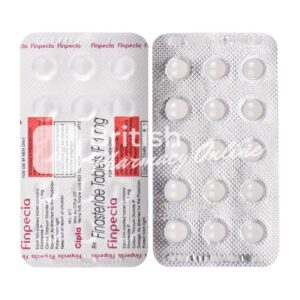
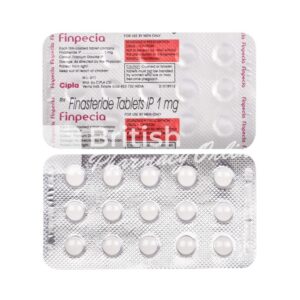
Finpecia
In brief
- In our pharmacy, you can buy finpecia without a prescription, with delivery in 5–14 days throughout the United Kingdom. Discreet and anonymous packaging.
- Finasteride is used for male pattern hair loss (androgenetic alopecia) at 1 mg and for benign prostatic hyperplasia (BPH) at 5 mg; it is a 5α‑reductase inhibitor that reduces the conversion of testosterone to dihydrotestosterone (DHT), lowering scalp DHT and prostate volume.
- The usual dose is 1 mg orally once daily for hair loss (Finpecia/Propecia) and 5 mg orally once daily for BPH (Proscar/Finast).
- The form of administration is an oral tablet; take whole and do not split or crush tablets (to avoid risk of exposure, particularly for pregnant women handling them).
- Effects for hair loss are typically noticeable after about 3 months, with clearer benefits by 6–12 months; for BPH, a minimum of around 6 months is usually required to see full effect.
- The clinical benefits persist only while treatment is continued; cessation leads to gradual reversal of effect over months.
- There is no specific ban on moderate alcohol use with finasteride, but avoid excessive alcohol and use caution if you have liver disease as the drug is hepatically metabolised.
- The most common side effect is reduced libido.
- Would you like to try finpecia without a prescription?
Basic Finpecia Information
- INN (International Nonproprietary Name): Finasteride
- Brand Names Available In United Kingdom: Propecia 1 mg (Merck), Proscar 5 mg (Merck), licensed generics from Eurogenerics, Teva and other EU suppliers; generic finasteride products may be supplied in the market.
- ATC Code: D11AX10 (androgenetic alopecia) and G04CB01 (benign prostatic hyperplasia)
- Forms & Dosages: 1 mg tablet for male pattern hair loss; 5 mg tablet for benign prostatic hyperplasia.
- Manufacturers In United Kingdom: not specified
- Registration Status In United Kingdom: Licensed by MHRA for Propecia 1 mg and Proscar 5 mg; numerous generics are available and finasteride is prescribed for alopecia and BPH per product information.
- OTC / Rx Classification: Prescription Only (Rx) in the United Kingdom and other major markets.
Key Findings From Recent Trials
Major 2022–2025 Studies
Are you wondering what the latest trials say about finasteride and hair loss or BPH?
Recent randomised trials and systematic reviews from 2022 to 2025 reaffirm finasteride 1 mg as standard therapy for male pattern hair loss and finasteride 5 mg for BPH.
Contemporary comparative work has concentrated on head‑to‑head efficacy versus dutasteride, real‑world adherence and long‑term safety surveillance.
Across studies finasteride demonstrates consistent hair‑count stabilisation and regrowth when taken daily.
Benefits typically appear after around three months and require continued dosing to persist.
Main Outcomes
What should patients expect to see and when?
Most trials show measurable improvement in hair counts and patient satisfaction by six months and maximal benefit at around 6–12 months for alopecia.
For BPH, symptom improvement and prostate volume effects are usually assessed after a minimum of six months.
Evidence contrasts finasteride with dutasteride where dutasteride often causes a greater DHT reduction and sometimes larger clinical responses, especially in BPH studies.
Safety Observations
Is finasteride safe in routine use?
Pharmacovigilance analyses and cohort studies emphasise sexual adverse events as the principal safety signal.
There is ongoing discussion about a minority of patients reporting persistent symptoms after stopping finasteride.
Regulatory bodies including the MHRA, EMA and FDA maintain finasteride as prescription‑only and monitor post‑marketing safety closely.
Clinical Mechanism Of Action
Layman’s Explanation
How does finasteride work in plain terms?
Finasteride blocks the enzyme that converts testosterone into dihydrotestosterone, usually called DHT.
DHT is the hormone most responsible for male pattern hair loss and prostate enlargement.
Lowering DHT slows hair‑follicle miniaturisation and can allow thicker hairs to regrow over months.
Scientific Breakdown
What is happening at a biochemical level?
Finasteride is a selective 5α‑reductase inhibitor that preferentially inhibits the type II isoenzyme present in hair follicles and prostate tissue.
The drug reduces intrafollicular and serum DHT concentrations and thereby reduces androgen receptor activation in target tissues.
ATC classification reflects its dual indications with D11AX10 for androgenetic alopecia and G04CB01 for BPH.
Enzyme Targets & Downstream Effects
Which enzymes and downstream effects matter clinically?
Type II 5α‑reductase inhibition reduces follicular miniaturisation, stabilises hair counts and slows prostate growth.
Dutasteride inhibits both type I and II isoenzymes and therefore usually produces a larger DHT reduction, which explains differences seen in comparative studies.
Finasteride tablets are metabolised hepatically and caution is advised in significant liver impairment.
Onset of effect is predictable—expect around three or more months—and continued dosing is necessary to maintain benefit.
Scope Of Approved And Off-Label Use
United Kingdom Approvals
Can men in the UK get finasteride for hair loss or BPH?
MHRA licences Propecia 1 mg for male pattern hair loss and Proscar 5 mg for benign prostatic hyperplasia in the United Kingdom.
Finasteride is not approved for women or individuals under 18 years of age.
The classification is prescription‑only across MHRA, EMA and other major agencies.
Notable Off‑Label Trends
What off‑label uses do clinicians sometimes consider?
Some UK urologists and dermatologists assess divided dosing or alternate strategies for patients who have both BPH and hair‑loss concerns, though 1 mg remains the standard for alopecia.
Internationally clinicians trial combination therapy with topical minoxidil or off‑label use of dutasteride for resistant hair loss.
Pregnancy is an absolute contraindication and women of childbearing potential must avoid handling crushed tablets.
Prescribers increasingly document consent about potential persistent sexual or mood adverse events following MHRA safety communications.
Dosage Strategy
General Dosing
How should finasteride be taken for each condition?
The standard product‑info regimens are 1 mg orally once daily for male pattern hair loss and 5 mg orally once daily for BPH.
Take the tablet at about the same time each day for best adherence.
Do not double the next dose if you miss one; take any missed dose the same day when remembered.
Condition‑Specific Dosing
How long will I need to stay on treatment?
For alopecia continuous long‑term treatment is required and measurable improvements are typically noted after three months with maximal benefit around 6–12 months.
For BPH clinicians usually reassess after a minimum of six months and treatment may be indefinite or tailored following urological review.
No routine dose adjustment is required for older men, while hepatic impairment calls for caution and severe liver disease is a relative contraindication.
Renal impairment usually does not require adjustment for mild to moderate disease.
Safety Protocols
Contraindications
Who must not use finasteride?
Absolute contraindications include pregnancy, women and children, and known hypersensitivity to finasteride or any excipient.
Do not crush or split tablets because handling residues poses a teratogenic risk to pregnant women.
Use with caution in significant hepatic impairment and in those with prior allergic reactions.
Adverse Effects
What are the common side effects to look out for?
Common sexual side effects include reduced libido, erectile dysfunction and ejaculatory disorders.
Less common events include testicular pain, breast tenderness or enlargement and dermatologic reactions such as rash.
Post‑marketing data show psychiatric effects including depression in some patients.
A small subset report persistent sexual and neuropsychiatric symptoms after discontinuation—sometimes described as post‑finasteride syndrome—which remains under investigation.
Baseline sexual and mood histories and follow‑up reviews at three to six months are recommended, with prompt review for new or worsening symptoms.
Interaction Mapping
Food Interactions
Will food affect finasteride absorption?
There are no clinically significant food interactions and tablets may be taken with or without food.
Drug Combinations To Avoid
Which drugs require caution with finasteride?
Finasteride is hepatically metabolised but does not strongly induce or inhibit CYP enzymes, so pharmacokinetic interactions are uncommon.
Concurrent use with other 5α‑reductase inhibitors such as dutasteride is generally redundant and may increase adverse‑effect risk, so combinations are usually avoided unless specifically indicated and monitored.
Anticoagulants, antihypertensives and PDE5 inhibitors do not have direct contraindications, but prescribers should review the full medication list for androgen‑modulating agents and document potential interactions.
Avoid prescribing during teratogenic drug regimens where partner pregnancy risk exists, and counsel on tablet handling hygiene.
Patient Experience Analysis
Survey Data
Do patients find finasteride effective and acceptable?
Dermatology clinic surveys and prescription registries show that patients who continue finasteride beyond six months report hair stabilisation and reasonable satisfaction rates.
Primary‑care audits in the UK note a drop‑off in prescriptions within the first year for some men, often driven by perceived lack of benefit or side effects.
Forum Trends
What are men saying online about finasteride?
Online forums and social media contain both success stories of thicker hair and strong concerns about sexual side effects and mood changes.
Anecdotal reports of persistent symptoms have increased media attention and pharmacovigilance reporting.
Clinicians should set realistic expectations about the three‑month onset and engage in shared decision making, signposting reliable MHRA and NHS resources rather than anecdotal forum claims.
In our online pharmacy finpecia is available without a prescription, with discreet delivery to United Kingdom in 5-14 days.
Distribution And Pricing Landscape
Where does finasteride come from and how much does it cost?
Finpecia from Cipla is a widely circulated 1 mg generic in India and export markets and is commonly found in online pharmacies and international supply chains.
Merck’s Propecia remains the originator brand in many regions and branded formulations often command higher prices than generics.
Licensed generics from Eurogenerics, Teva, Hexal and others coexist in the UK market to meet demand for Propecia 1 mg and Proscar 5 mg alternatives.
Regulatory Rx‑only status in the UK prevents over‑the‑counter sale and reputable pharmacies will verify a prescription before supply.
Packaging usually shows manufacturer, batch and expiry details and should include security seals on exported packs such as Finpecia from Cipla.
Alternative Options
Comparison Table
Which alternatives to finasteride should patients consider?
Dutasteride inhibits both 5α‑reductase type I and II and often produces greater DHT suppression, but it is not universally licensed for hair loss in the UK and its off‑label use carries additional monitoring considerations.
Topical minoxidil is a non‑hormonal option available over the counter for hair loss and is commonly used in combination with finasteride.
Herbal supplements such as saw palmetto or pumpkin seed oil have variable evidence and are unlicensed with inconsistent dosing and product quality.
Pros And Cons
How do the main options compare in simple terms?
Finasteride 1 mg: Pros include a robust evidence base and MHRA licensing for male pattern hair loss; cons include sexual and mood adverse effects and strict pregnancy contraindications.
Dutasteride: Pros include higher DHT suppression and effectiveness in some refractory cases; cons are stronger adverse‑effect signals and off‑label hair‑loss use in the UK.
Minoxidil: Pros include topical administration and complementary efficacy; cons include variable response and the need for ongoing application.
Regulatory Status
What do regulators require and monitor?
Finasteride’s INN is finasteride with ATC codes D11AX10 for alopecia and G04CB01 for BPH in international classification systems.
The MHRA licenses Propecia 1 mg and Proscar 5 mg in the United Kingdom, and finasteride is classified as prescription‑only by major regulatory agencies including the EMA and FDA.
Product labelling includes contraindications for pregnancy and instructions not to crush tablets, reflecting teratogenic risk to a male foetus.
Post‑marketing surveillance continues through systems such as the MHRA Yellow Card Scheme to monitor suspected persistent sexual and psychiatric adverse events.
Prescribers are advised to obtain informed consent and report suspected serious or persistent reactions to pharmacovigilance channels.
Consolidated FAQ
Common Patient Questions
How long until I see results?
Expect initial changes at around three months, with more pronounced benefit at six to twelve months and continued use required to maintain gains.
Is finasteride available in the UK without a prescription?
Licensed finasteride is prescription‑only in the UK; however, some online suppliers advertise finpecia without prescription and offer discreet delivery to the United Kingdom in 5‑14 days.
Can women take finasteride?
Finasteride is not approved for women and is contraindicated in pregnancy due to risk to a male foetus.
What are the main side effects?
Sexual dysfunction (reduced libido, erectile dysfunction, ejaculatory changes), mood changes and rare breast changes are recorded adverse effects.
What happens if I stop treatment?
Benefits decline over months and hair typically returns to baseline within about 12 months after stopping finasteride.
What is the difference between Finpecia and Propecia?
Finpecia is Cipla’s 1 mg generic product and Propecia is Merck’s originator brand; both contain finasteride 1 mg as the active ingredient.
How should I store finasteride?
Store below 30°C in the original packaging and do not split or crush tablets.
Visual Guide
Suggested Infographics
What visuals help patients and prescribers understand finasteride quickly?
Use a timeline infographic showing onset of effect from 0–3 months, 3–6 months and 6–12 months for alopecia.
Create a mechanism diagram showing testosterone conversion to DHT and how 5α‑reductase inhibition reduces DHT.
Include a risk‑profile chart indicating frequency and reversibility of common adverse effects and a packaging verification checklist displaying brand, batch and expiry details.
Clinician Handouts
What should be in a one‑page clinician handout?
Include indications (1 mg alopecia; 5 mg BPH), absolute contraindications (pregnancy), handling precautions and a monitoring schedule at baseline, three months and six months.
Provide links to MHRA Yellow Card reporting and NHS patient information in the handout and use plain English for patient versions.
Storage And Transport
How should finasteride be stored and transported in the UK supply chain?
Store finasteride below 30°C in original packaging away from moisture and light and follow product‑information guidance on storage.
Do not split or crush tablets because tablet residue can pose a teratogenic risk to pregnant women who might handle them.
Finpecia from Cipla is often supplied in foil strip packs of 10 or 30 tablets while Propecia is usually in blister packs of 28 or 30 tablets.
Pharmacies should maintain chain‑of‑custody documentation for imported generics and verify authenticity before dispensing.
Expired or unwanted tablets should be returned to a pharmacy for safe disposal and must not be thrown in household waste.
Guidelines For Proper Use
Prescribing Checklist
What should prescribers document before starting finasteride?
Confirm the patient is male and aged 18 or older with a diagnosis of androgenetic alopecia or BPH where indicated.
Discuss benefits and risks including sexual and mood adverse effects and obtain informed consent.
Verify pregnancy exposure risks for partners and ensure the correct formulation is selected—1 mg for alopecia and 5 mg for BPH.
Provide written information and MHRA resources and ensure dispensing in original packaging.
Follow‑Up & Monitoring
How should patients be followed after initiation?
Schedule a review at three months to assess efficacy and adverse events, a six‑ to twelve‑month review for ongoing benefit assessment and annual reviews for long‑term therapy.
Use standardised questionnaires for sexual function and mood where indicated and report serious or persistent adverse effects to the MHRA Yellow Card Scheme.
Document all counselling, consent and monitoring in the clinical record.
Delivery Across United Kingdom
| City | Region | Delivery Time |
|---|---|---|
| London | Greater London | 5-7 days |
| Birmingham | West Midlands | 5-7 days |
| Manchester | Greater Manchester | 5-7 days |
| Glasgow | Scotland | 5-7 days |
| Leeds | West Yorkshire | 5-7 days |
| Edinburgh | Scotland | 5-7 days |
| Bristol | South West England | 5-7 days |
| Liverpool | Merseyside | 5-9 days |
| Sheffield | South Yorkshire | 5-9 days |
| Cardiff | Wales | 5-9 days |
| Belfast | Northern Ireland | 5-9 days |
| Newcastle Upon Tyne | North East England | 5-9 days |
| Nottingham | East Midlands | 5-9 days |
Final Notes For Clinicians And Patients
What are the bottom‑line takeaways?
Finasteride is an evidence‑based option for male pattern hair loss at 1 mg daily and for BPH at 5 mg daily with clearly defined dosing and storage guidance.
Sexual and mood adverse events are the most reported safety concerns and prescribers should document informed consent and perform early follow‑up.
Do not prescribe or advise finasteride to women who are or may become pregnant, and ensure tablets are not crushed or handled by pregnant people.
For patients seeking cost‑effective options, licensed generics such as Finpecia (internationally supplied) and EU generics are widely available, though MHRA‑licensed products remain prescription‑only in the UK.
Report suspected serious or persistent adverse events to the MHRA Yellow Card Scheme and keep records of counselling and prescriptions in the patient file.