Glucovance
In brief
- In our pharmacy, you can buy glucovance without a prescription, with delivery in 5–14 days throughout the United Kingdom. Discreet and anonymous packaging.
- Glucovance is used to treat type 2 diabetes as an adjunct to diet and exercise; it combines glyburide (a sulfonylurea that stimulates insulin secretion) and metformin (which reduces hepatic glucose production and improves peripheral glucose uptake and insulin sensitivity).
- The usual dose is one tablet of 2.5 mg/500 mg or 5 mg/500 mg once or twice daily with meals, titrated cautiously (increase by no more than one tablet or 2.5 mg/500 mg every 2+ weeks); the common maximum is 20 mg glyburide / 2000 mg metformin per day in divided doses.
- The form of administration is oral tablets (film‑coated, biconvex/capsule‑shaped), taken with food to reduce gastrointestinal side effects.
- Onset time: the glyburide component typically begins to lower blood glucose within 1–2 hours (peak effect around 2–4 hours); the metformin component’s full glucose‑lowering effect develops over days to weeks.
- Duration of action: glyburide effects can persist up to about 24 hours after a dose; metformin produces sustained glucose control with regular dosing, with maximal benefit over weeks.
- Alcohol warning: avoid excessive alcohol intake — it increases the risk of metformin‑associated lactic acidosis and can potentiate hypoglycaemia from glyburide; take care and discuss alcohol use with your clinician.
- The most common side effect is hypoglycaemia (from the glyburide component); gastrointestinal effects such as nausea, diarrhoea and abdominal discomfort (from metformin) are also common.
- Would you like to try glucovance without a prescription?
Basic Glucovance Information
- INN (International Nonproprietary Name): Glyburide and Metformin Hydrochloride.
- Brand Names Available In United Kingdom: Not uniformly available; compositionally equivalent branded generics and generic glyburide/metformin combinations may be found (original brand name Glucovance marketed in other regions).
- ATC Code: A10BD02.
- Forms & Dosages: Tablets commonly supplied as 2.5 mg/500 mg (pale orange, biconvex) and 5 mg/500 mg (yellow, biconvex); other generics may offer alternative strengths such as 1.25/250 mg.
- Manufacturers In United Kingdom: Not specified in source; originator developer: Bristol-Myers Squibb; regional manufacturers include USV Ltd, Sun Pharma and various generic houses.
- Registration Status In United Kingdom: National listings vary; EU/UK availability is inconsistent and may rely on branded generics or generic equivalents.
- OTC / Rx Classification: Prescription-only (Rx) according to manufacturer/regulatory listings.
Key Findings From Recent Trials
Major 2022–2025 Studies
Worried whether a combined pill gives better control than stepping up metformin alone?
Recent trial activity between 2022 and 2025 has focused on fixed-dose combinations versus stepwise add-on therapy in type 2 diabetes.
Analyses compared sulfonylurea additions to metformin uptitration and alternative add-ons such as DPP‑4 or SGLT2 inhibitors.
Most studies report better short-term glycaemic control with combination therapy compared with simple uptitration of metformin alone.
Headline trial endpoints were reductions in HbA1c, rates of hypoglycaemia and adherence measures.
Main Outcomes
Across analyses the mean HbA1c fall when adding a sulfonylurea to metformin averaged around 0.6–1.0%.
Fixed‑dose combinations tended to show modest improvements in adherence compared with separate pills or stepwise escalation.
Direct cardiovascular outcome trials for glyburide (glibenclamide) plus metformin are sparse in the 2022–2025 period.
When compared with incretin‑ or SGLT2‑based combos, glyburide combinations gave no clear cardiorenal advantage in available analyses.
Safety Observations
Safety signals were consistent with established pharmacology: higher rates of any hypoglycaemia where glyburide was used.
Older patients were at particular risk of prolonged hypoglycaemia due to glyburide and its active metabolites.
Metformin precautions centred on renal function monitoring and avoidance below eGFR 30 mL/min/1.73m².
Regulatory and pharmacoepidemiology reports emphasise baseline and periodic renal checks during chronic use.
Summary
Fixed‑dose glyburide/metformin offers modest HbA1c benefit and adherence gains versus simple metformin escalation.
Hypoglycaemia risk is greater than with DPP‑4 or SGLT2 add‑ons, so NICE‑aligned prescribing should weigh benefits against potential harm.
Use glibenclamide and metformin combinations cautiously in older adults and monitor renal function regularly.
Clinical Mechanism Of Action
Layman’s Explanation
Are you wondering how two drugs in one tablet actually help lower blood sugar?
Glucovance pairs two complementary actions to tackle high blood glucose in type 2 diabetes.
One part (glyburide) helps the pancreas release more insulin when blood sugar rises.
The other part (metformin) reduces the liver’s glucose production and helps the body use insulin better.
Together they address both insulin secretion and insulin sensitivity, which can lead to better sugar control than either alone.
Scientific Breakdown
On a molecular level, glyburide (a sulfonylurea) binds to sulfonylurea receptors on pancreatic beta cells.
This binding closes KATP channels and triggers insulin exocytosis, increasing circulating insulin levels.
Metformin primarily activates AMP‑activated protein kinase (AMPK) and reduces hepatic gluconeogenesis.
Secondary metformin effects include improved peripheral glucose uptake and changes in gut glucose handling.
Pharmacokinetic Notes
Glyburide produces active metabolites that can prolong hypoglycaemia, especially in older patients with reduced clearance.
Metformin is renally cleared and can accumulate if eGFR falls, increasing lactic acidosis risk.
Interaction Of Mechanisms
The two drugs have additive glucose‑lowering effects, so HbA1c reductions are stronger than metformin alone.
This additive effect also raises hypoglycaemia risk compared with metformin monotherapy or incretin‑based combinations.
Product ATC classification is A10BD02 for glyburide and metformin combinations.
Scope Of Approved And Off‑Label Use
United Kingdom Approvals
Is Glucovance an approved option locally and who is it intended for?
Approved use is for adults with type 2 diabetes inadequately controlled with diet, exercise and monotherapy.
Formulations commonly found globally are 2.5/500 mg and 5/500 mg tablets; UK availability varies by market and may rely on generics.
Prescribers in the UK are expected to follow MHRA and NICE principles when selecting combination therapy.
Notable Off‑Label Trends
Clinicians occasionally select glyburide/metformin combinations to simplify regimens where two mechanisms are required and cost or tolerability limit newer agents.
Use in the elderly is limited by hypoglycaemia concerns and renal considerations.
Contraindications such as renal impairment (eGFR <30 mL/min/1.73m²), hepatic disease and metabolic acidosis strongly limit off‑label expansion.
Stewardship emphasises renal monitoring and favouring alternatives with lower hypoglycaemia risk where appropriate.
Dosage Strategy
General Dosing
How should a starting dose be chosen and adjusted safely?
Start with one tablet of 2.5/500 mg or 5/500 mg once or twice daily, taken with meals.
Titrate slowly, increasing by no more than 2.5 mg/500 mg every two or more weeks.
The usual maximum total daily dose is 20 mg glyburide with 2000 mg metformin, given in divided doses.
Condition‑Specific Dosing
For frail or elderly patients begin at the lowest strength and titrate cautiously because of hypoglycaemia risk.
Renal impairment: contraindicated if eGFR is below 30 mL/min/1.73m²; for eGFR 30–45 consider avoiding metformin or using lower metformin doses with close monitoring.
Hepatic impairment: do not use.
Pediatrics: not approved.
Pregnancy: avoid combinations containing sulfonylureas and do not switch without specialist advice.
If a dose is missed, take it when remembered unless it is near the next dose; do not double doses.
Safety Protocols
Contraindications
Which patients must not take this combination?
Absolute contraindications include renal dysfunction (eGFR <30 mL/min/1.73m²), metabolic acidosis (including diabetic ketoacidosis or lactic acidosis) and known hypersensitivity to glyburide, metformin or sulfonylureas.
Avoid use during acute states that may alter renal function such as severe infection, dehydration or shock.
Exercise caution with heart failure, hepatic impairment and alcohol misuse.
Adverse Effects
Common side effects include gastrointestinal symptoms—nausea, diarrhoea and abdominal discomfort—mainly attributable to metformin.
Hypoglycaemia is the hallmark adverse effect from the glyburide component and is more frequent than with metformin alone or with incretin agents.
Other adverse events reported include headache, dizziness and a metallic taste.
Overdose requires urgent medical attention for severe hypoglycaemia or suspected lactic acidosis and standard hospital supportive care.
UK primary care safety protocol: baseline and periodic renal function checks, patient education on hypoglycaemia signs and dose review during intercurrent illness.
Interaction Mapping
Food Interactions
Should Glucovance be taken with food?
Yes — take with meals to reduce metformin‑related gastrointestinal upset and to blunt post‑prandial hypoglycaemia risk from glyburide.
Avoid excessive alcohol as it increases the risk of lactic acidosis and hypoglycaemia.
Drug Combinations To Avoid
Combine cautiously with other hypoglycaemic agents (insulin, other sulfonylureas) because of additive hypoglycaemia risk.
Certain antibiotics such as fluoroquinolones and some CYP inhibitors may potentiate hypoglycaemia and require monitoring.
Drugs that impair renal function (high‑dose NSAIDs, diuretics, ACE inhibitors in AKI settings) increase metformin accumulation risk.
For intravascular contrast studies follow local protocols and temporarily stop metformin to avoid contrast‑induced kidney injury and lactic acidosis.
Patient Experience Analysis
Survey Data
What do patients say about single‑tablet combinations?
Survey data and clinic feedback commonly note improved adherence when two agents are combined into one tablet.
Many patients report modest improved blood glucose readings after switching from monotherapy to a combination.
Frequent complaints reflect known adverse effects: GI upset from metformin and hypoglycaemic episodes when meals are missed.
Forum Trends
Online forums in the UK and Europe discuss availability problems — branded Glucovance is not always stocked and generics are common.
Price sensitivity shows up in patient searches and e‑pharmacy queries, with users often asking where to buy Glucovance or generic glyburide/metformin combinations.
Clinicians emphasise counselling on renal monitoring and hypoglycaemia action plans as recurring patient education needs.
Distribution And Pricing Landscape
Global Packaging & Manufacturers
How is Glucovance packaged and who makes it?
Original Glucovance tablets in the United States are supplied in bottles of 100 with 2.5/500 mg tablets pale orange and 5/500 mg tablets yellow, film-coated and debossed by BMS.
Global manufacturers include Bristol‑Myers Squibb (originator), repackagers in the US, and regional manufacturers such as USV Ltd and Sun Pharma in Asia.
International generics and branded alternatives vary in imprint, colour and secondary packaging.
UK Market Notes
Post‑EU transition, branded Glucovance availability in the UK is inconsistent and clinicians often prescribe compositionally equivalent generics.
Pricing depends on brand versus generic choice and NHS formulary preferences; cost pressures usually favour generics.
Storage guidance is to keep products at controlled room temperature, protect from moisture and light and dispense in light‑resistant containers.
In our online pharmacy, glucovance is available without a prescription, with discreet delivery to United Kingdom in 5-14 days.
Alternative Options
Comparison Table
Which alternatives should prescribers consider?
Common comparisons are metformin plus a DPP‑4 inhibitor (for example sitagliptin), metformin plus an SGLT2 inhibitor, metformin plus a thiazolidinedione and metformin plus insulin where required.
Pros And Cons
Sulfonylurea plus metformin combinations produce good HbA1c reductions but carry higher hypoglycaemia risk and may promote weight gain.
SGLT2 inhibitors offer weight loss and proven cardiovascular and renal benefits that glyburide combos do not show in trial data.
DPP‑4 inhibitors have lower hypoglycaemia risk but smaller HbA1c reductions than sulfonylureas for some patients.
Advantages of glyburide/metformin include lower cost and single‑tablet convenience.
Disadvantages include contraindications in renal and hepatic impairment and lack of proven cardiorenal outcome advantages.
Regulatory Status
International Approvals
Where is the combination approved and regulated?
Glucovance and glyburide+metformin combinations are approved and prescription‑only in the United States and Canada.
In the EU and UK availability is inconsistent and relies on national approvals of branded generics or generic equivalents.
ATC classification is A10BD02.
Prescription & Legal Classification
Legal classification across listed markets is prescription‑only (Rx).
UK prescribers should align use with MHRA licensing and NICE guidance and report suspected adverse reactions via the Yellow Card scheme.
Consolidated FAQ
Top Practical Questions
Is Glucovance available in the UK?
Brand presence varies; compositionally equivalent generics are commonly used — check local NHS formulary and pharmacy stock.
Quick Answers
What strengths exist?
Common strengths are 2.5/500 mg and 5/500 mg tablets as supplied by originator and many generics.
How should I start treatment?
Begin one tablet of 2.5/500 mg or 5/500 mg once daily with a meal and titrate no more than 2.5/500 mg every two weeks if needed.
What are the main risks?
Hypoglycaemia from glyburide and lactic acidosis risk related to metformin if renal function is compromised.
What are renal limits?
Contraindicated if eGFR <30 mL/min/1.73m²; monitor renal function before and during therapy.
Can elderly patients take it?
Use the lowest dose and monitor closely because of higher hypoglycaemia and renal risks.
How should it be stored?
Store at up to 25°C and protect from moisture and light; dispense in light‑resistant containers.
What to do in an emergency?
For severe hypoglycaemia or suspected lactic acidosis seek urgent medical attention.
Visual Guide
Tablet Appearance And Labelling
What does each tablet look like?
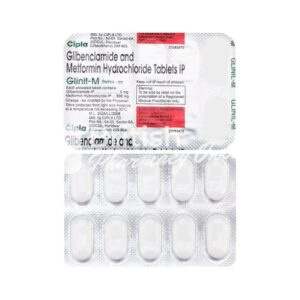
Typical 2.5/500 mg tablets are pale orange, biconvex and capsule‑shaped; 5/500 mg tablets are yellow and biconvex with originator debossing in US packs.
International generics vary in imprint, colour and bottle or blister presentation.
Patient‑Facing Diagrams
Which simple graphics help patients most in UK practice?
Provide a two‑panel “How It Works” diagram: pancreas (glyburide → more insulin) and liver/muscle (metformin → less glucose production, more uptake).
Include a “When To Call” red‑flag panel covering hypoglycaemia symptoms and lactic acidosis signs.
Include a monitoring timeline: baseline eGFR, repeat at three months, then annually or more often if elderly or comorbid.
Storage And Transport
Packaging Requirements
How should pharmacies keep stock to preserve potency?
Store at controlled room temperature up to 25°C and protect from moisture and light.
Maintain original blister or bottle until dispensing and use light‑resistant containers as required.
Handling Guidance
For distribution use room‑temperature logistics and protect stock from prolonged heat exposure during transit.
Pharmacies should rotate stock and inspect seals and tablet appearance for discoloration or damage.
Advise patients to keep medicines away from bathroom humidity, out of reach of children and not in a hot car.
Return unused medicines to the pharmacy for safe disposal; do not flush down the toilet.
Guidelines For Proper Use
Prescriber Checklist
What should clinicians confirm before prescribing?
Confirm indication (T2DM uncontrolled on monotherapy), review contraindications, obtain baseline eGFR and LFTs, and document informed consent regarding hypoglycaemia risk.
Start at the lowest dose for patients with risk factors and schedule renal monitoring and review for hypoglycaemia episodes.
Avoid concomitant nephrotoxins and plan for temporary discontinuation around radiographic contrast per local protocol.
Patient Counselling Points
How should patients be counselled at dispensing?
Advise taking the tablet with food, recognise and treat hypoglycaemia with fast‑acting carbohydrate and carry a source when away from home.
Warn against excessive alcohol intake and tell patients to report severe GI symptoms, persistent dizziness or signs of lactic acidosis.
Instruct patients not to double missed doses and to attend scheduled renal checks.
Explain that branded Glucovance may not be available in every UK pharmacy but generics with the same active ingredients are acceptable substitutes.
Delivery Across United Kingdom
| City | Region | Delivery Time |
|---|---|---|
| London | England | 5-7 days |
| Birmingham | England | 5-7 days |
| Manchester | England | 5-7 days |
| Glasgow | Scotland | 5-7 days |
| Leeds | England | 5-7 days |
| Edinburgh | Scotland | 5-7 days |
| Liverpool | England | 5-7 days |
| Bristol | England | 5-7 days |
| Sheffield | England | 5-9 days |
| Newcastle | England | 5-9 days |
| Nottingham | England | 5-9 days |
| Belfast | Northern Ireland | 5-9 days |
| Plymouth | England | 5-9 days |