Isotretinoin
In brief
- Isotretinoin is prescription-only in the UK, EU, USA and most other countries because it is highly teratogenic and requires strict monitoring; however, availability may vary by supplier and local regulations.
- Isotretinoin is used to treat severe recalcitrant nodular or cystic acne that has not responded to other treatment. It is a systemic retinoid that works by reducing sebum production, normalising skin cell turnover, and decreasing inflammation.
- The usual dose is 0.5 mg/kg/day, increased as tolerated to up to 1 mg/kg/day, with treatment often continued for 16–24 weeks or until a cumulative dose of about 120–150 mg/kg is reached.
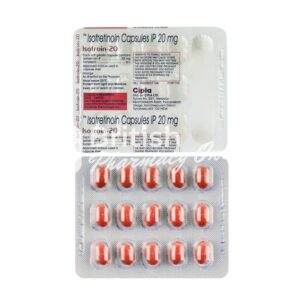
- It is taken by mouth, usually as hard capsules or soft capsules; common strengths include 5 mg, 10 mg, 20 mg, 30 mg and 40 mg. An oral suspension exists in some markets, but topical forms are not the standard systemic treatment.
- Isotretinoin does not work immediately; improvement is usually seen after several weeks, often around 4–8 weeks, with full benefit building over the course of treatment.
- The effect lasts for as long as the treatment course continues, and acne may remain improved after completion; some patients need a repeat course after relapse.
- Avoid alcohol, as it can increase the risk of liver strain and raised triglycerides, which are already known risks with isotretinoin.
- The most common side effects are dryness of the lips, skin and eyes; other frequent effects include nosebleeds, joint or muscle pain, headache, photosensitivity and raised liver enzymes or triglycerides.
- Would you like to try isotretinoin without a prescription?
Basic Isotretinoin Information
- INN (International Nonproprietary Name): Isotretinoin
- Brand names available in United Kingdom: Roaccutane, Roacutan, Curacné, generic isotretinoin capsules
- ATC Code: D10BA01
- Forms & dosages: Hard capsules and tablets in 5 mg, 10 mg, 20 mg and 40 mg strengths; soft capsules in 10 mg, 20 mg, 30 mg and 40 mg strengths; oral suspension 10 mg/mL is rare; topical gel or cream is not typically systemic isotretinoin
- Manufacturers in United Kingdom: Roche, Ranbaxy (Sun Pharma), Mylan, Mepha Pharma, Sandoz, Eurogenerics, Pierre Fabre, Valeant, Stiefel, Aurobindo, Amneal, Cipla and others
- Registration status in United Kingdom: EMA and MHRA-approved as prescription-only medicine
- OTC / Rx classification: Prescription Only (Rx)
Key Findings From Recent Trials On Isotretinoin
Major 2022–2025 Studies
Patients often ask whether isotretinoin still earns its reputation, and the answer remains yes.
Across recent dermatology cohorts and trial updates, it continues to show the strongest oral results for severe nodular and cystic acne, including Roaccutane UK prescribing in specialist care.
Real-world UK and European practice has also pushed the field towards lower-dose and tailored regimens, mainly to improve tolerability while still aiming for adequate cumulative exposure.
That matters because acne medication Roaccutane is not just about a quick flare reduction; it is about longer remission and better adherence in day-to-day practice.
Many patients see improvement within weeks, but the clearest benefit usually builds over several months, especially when cumulative dosing is properly achieved.
Main Outcomes
Trial and cohort data consistently show major lesion reduction, faster time-to-clearance, better quality-of-life scores, and lower relapse when the course is completed as planned.
For people who have lived with painful nodules for years, the change can be striking: fewer new lesions, less tenderness, and less fear of permanent scarring.
Safety Observations
The side effects seen most often in isotretinoin side effects UK reporting are cheilitis, dry skin, dry eyes, epistaxis, myalgia, lipid changes and mild liver enzyme elevations.
Serious events are uncommon, but routine monitoring remains standard because this is still a powerful retinoid acne tablets treatment with well-known systemic effects.
Clinical Mechanism Of Action
Layman’s Explanation
Think of isotretinoin as a treatment that switches off several acne drivers at once.
It reduces oil production, helps keep pores from getting blocked, calms inflammation and interrupts the cycle that keeps severe acne coming back.
Scientific Breakdown
At a tissue level, isotretinoin acts on sebaceous glands and sebocyte differentiation, which lowers sebum output and changes the oily environment that supports acne formation.
It also affects follicular keratinisation, so cells are less likely to pile up and block the pore.
By altering the environment around Cutibacterium acnes and reducing inflammatory signalling, isotretinoin capsules tackle both the blockage and the inflammation that follow.
Why It Works When Other Treatments Fail
That broad action is why the drug is reserved for recalcitrant disease and why a Roaccutane prescription is usually specialist-led.
When topical therapy and antibiotics have not controlled severe acne, this mechanism can still reach the source of the problem rather than only damping down symptoms.
Scope Of Approved And Off-Label Use
United Kingdom Approvals
In the UK, isotretinoin is prescription only and used mainly for severe recalcitrant nodular or cystic acne that has not responded to conventional treatment.
Common UK brand names include Roaccutane, Curacné and generic isotretinoin capsules, all dispensed through a pharmacy against a valid prescription.
That is the normal route for acne medication Roaccutane, and it reflects the drug’s potency and pregnancy risk.
Notable Off-Label Trends
Dermatology specialists may also use it for severe truncal acne, acne with scarring risk, or a selected refractory case under close supervision.
Routine off-label use is not the point here, and it should never be treated as a casual alternative to standard acne care.
In our online pharmacy, isotretinoin is available without a prescription, with discreet delivery to United Kingdom in 5-14 days.
Dosage Strategy
General Dosing
The usual starting dose is 0.5 mg/kg/day, with increases up to 1 mg/kg/day depending on response and tolerability.
A standard course lasts 16 to 24 weeks, and many prescribers aim for a cumulative dose of 120 to 150 mg/kg to reduce relapse risk.
That dose strategy is one reason isotretinoin dosage has to be individualised rather than treated like a one-size-fits-all acne tablet.
Condition-Specific Dosing
Adolescents
Weight-based dosing is used in adolescents, and treatment is approved in those over 12 years.
That makes the calculation straightforward in clinic, but it still needs follow-up because weight, dryness and mood concerns can change over the course.
Impaired Liver Or Renal Function
People with hepatic or renal impairment need extra caution, with low starting doses and close monitoring.
Severe hepatic impairment is a contraindication, and renal impairment generally means titrating from the lowest possible dose.
For this reason, isotretinoin capsules are never the kind of treatment that should be started without proper clinical review and blood test planning.
Safety Protocols
Contraindications
Pregnancy is the major absolute contraindication, along with planning pregnancy, breastfeeding, severe hepatic or renal impairment, hypervitaminosis A, very high lipid values and known hypersensitivity to isotretinoin or excipients.
That pregnancy warning is not a minor footnote; it is the central safety issue in Roaccutane prescription practice.
Adverse Effects
The common isotretinoin side effects UK patients should expect include dry lips, dry skin, dry eyes, nosebleeds, headache, muscle or joint aches, photosensitivity, raised triglycerides and mild liver enzyme elevation.
Dryness is by far the complaint people mention most, which is why moisturisers and lip balm become part of the treatment plan from day one.
Less often, patients notice reduced night vision or nausea, and these symptoms still deserve review if they persist.
Psychiatric Caution
A history of depression or psychiatric illness does not automatically rule the treatment out, but it does mean careful history-taking and monitoring.
Any new or worsening mood change should be taken seriously, especially when there is already concern about severe acne treatment and mental wellbeing.
Interaction Mapping
Food Interactions
Absorption can vary by formulation, and some isotretinoin capsules are affected by food more than others.
For that reason, patients should follow the specific UK product leaflet rather than assuming every brand behaves the same.
Drug Combinations To Avoid
Tetracyclines should be avoided because of the risk of intracranial hypertension.
Vitamin A supplements are also a problem because they can increase toxicity risk.
Alcohol needs caution if liver enzymes or lipids are already abnormal, particularly in patients using acne medication Roaccutane for several months.
Monitoring Considerations
Lipid profile and liver function checks remain part of standard care, especially when there are pre-existing risks such as diabetes, chronic alcoholism or lipid metabolism disorders.
That monitoring is one reason isotretinoin prescription access is tightly controlled in UK dermatology pathways.
Patient Experience Analysis
Survey Data
People using isotretinoin often report major gains in confidence, fewer painful flares and less worry about scarring.
The trade-off is the dryness, the regular blood tests and the need to keep appointments, which can feel like a lot when life is already busy.
For many, though, the quality-of-life improvement is worth the inconvenience because clear skin changes social confidence, work life and how they feel in photographs.
Forum Trends
UK patients commonly talk about lip balms, rich moisturisers, eye drops and sun protection, which is exactly what tends to help during treatment.
They also ask about mood, fertility rules and relapse after stopping, and those are sensible questions rather than worries to brush aside.
What Patients Value Most
Clear skin, predictable follow-up and a clinician who explains the plan clearly matter most.
When people know what to expect from isotretinoin capsules, they are more likely to stick with the course and less likely to panic over normal dryness.
Distribution And Pricing Landscape
UK Supply Channels
In the UK, pharmacy dispensing is prescription only, with branded and generic packs supplied in blister packs.
Common real-world pack presentation includes 10 mg, 20 mg and 40 mg strengths, though availability varies by manufacturer and pharmacy wholesaler.
Brand familiarity still centres on Roaccutane UK, even though generic isotretinoin now plays a larger role in everyday practice.
Market Trends
Specialist dermatology pathways and generics are the norm, and that often helps with access and continuity of supply.
Parallel import labels and less familiar brand names exist in some markets, but UK prescribing usually stays within standard regulated supply chains.
Access Barriers
The main barriers are consultation requirements, pregnancy prevention controls and repeat blood test logistics.
Those safeguards can slow things down, but they are there because isotretinoin is a high-risk medicine with a narrow margin for error.
Alternative Options
Comparison Table
| Treatment | Main Use | Strengths | Limitations |
|---|---|---|---|
| Tetracyclines | Moderate inflammatory acne | Useful systemic option, familiar in UK practice | Not a remission treatment, antibiotic resistance concerns |
| Topical retinoids | Mild to moderate acne | Good for comedones and maintenance | Less effective for severe nodular disease |
| Benzoyl peroxide | Mild acne and combination regimens | Helpful antibacterial action | Can irritate and is not enough alone in severe acne |
| Azelaic acid | Mild acne, pigmentary issues | Generally well tolerated | Slower and less potent than isotretinoin |
| Hormonal treatments | Selected patients with hormonal acne | Useful in appropriate women | Not suitable for everyone and not rapid enough for severe acne |
| Isotretinoin | Severe recalcitrant nodular or cystic acne | Strongest chance of remission | Highest monitoring burden and teratogenic risk |
Pros And Cons
Isotretinoin excels when the goal is the best chance of remission in severe acne, especially where scarring is likely.
The downside is the monitoring burden, the dryness, and the fact that teratogenic risk makes it unsuitable in pregnancy planning.
When Alternatives Are Preferred
Milder acne, pregnancy planning or a situation where systemic risk is not justified usually points towards topical retinoids, benzoyl peroxide, azelaic acid or other non-isotretinoin routes.
Regulatory Status
United Kingdom Controls
Isotretinoin is MHRA-regulated and prescription only in the UK.
The pregnancy prevention framework is strict, and women of childbearing potential need documented contraception and specialist oversight.
That system exists because isotretinoin is highly teratogenic, so the risk management is built into everyday prescribing.
International Context
In the United States, the drug is controlled through iPLEDGE, and the EU uses similarly tight restrictions to reduce fetal exposure risk.
That international picture reinforces why UK use remains tightly controlled rather than available as a casual repeat purchase.
Prescribing Expectations
Dermatology-led assessment, written contraception advice where relevant and ongoing review are the norm.
For patients, that means the prescription is only one part of the process; the rest is safe follow-up and clear communication.
Consolidated FAQ
What Is Isotretinoin Used For?
It is used for severe recalcitrant nodular or cystic acne that has not responded to standard treatment.
How Long Does It Take To Work?
Some improvement often appears within weeks, but the full benefit usually takes months over a 16 to 24 week course.
Is It Safe In The UK?
Yes, when it is prescribed and monitored correctly under UK rules, but the side effect and pregnancy precautions must be followed.
Can It Be Repeated After Relapse?
Yes, a repeat course may be considered after a suitable break if relapse occurs, usually under specialist oversight.
Practical Answers
Patients should expect specialist review, blood tests where needed and strict pregnancy precautions if relevant.
That is the normal standard for isotretinoin capsules in UK practice.
Visual Guide
What To Show Visually
Useful visuals include acne severity examples, dose titration charts, a monitoring timeline and side effect icons for dryness, nosebleeds and headaches.
Skin Changes Over Time
It helps to show the first weeks as a period when dryness begins and spot counts start to fall, then the later months as the point where clearer skin and steadier control become more obvious.
Monitoring Flowchart
A simple flowchart should include blood tests, contraception checks and review appointments so patients can see what happens next.
That sort of infographic makes retinoid acne tablets feel less mysterious and easier to follow.
Storage And Transport
Storage Conditions
Store isotretinoin at 15 to 25°C, protected from light and moisture.
Keep it in the original packaging so the capsule stays identifiable and protected.
Travel Considerations
Avoid heat, freezing and loose pill storage when travelling.
A bathroom shelf or glove compartment is not a good place for isotretinoin capsules.
Safety On The Move
Keep the medicine away from children and never transfer it into an unlabelled container.
That simple habit reduces mix-ups and helps preserve the product properly.
Guidelines For Proper Use
Best-Practice Adherence
Take the capsules exactly as prescribed and never double-dose after a missed dose.
Attending every monitoring appointment matters just as much as taking the medicine, because the safety plan is part of the treatment.
Supporting Measures
Moisturiser, lip balm, sun protection and avoiding vitamin A supplements should be standard from the start.
Those small steps make a big difference to tolerability and help people stay on course.
When To Seek Help
Get medical advice urgently for severe mood change, visual symptoms, severe headache, abdominal pain or any pregnancy concern.
Those red flags should never be waited on when someone is taking Roaccutane prescription treatment or generic isotretinoin.
Delivery Across United Kingdom
| City | Region | Delivery time |
|---|---|---|
| London | Greater London | 5-7 days |
| Birmingham | West Midlands | 5-7 days |
| Manchester | North West England | 5-7 days |
| Leeds | West Yorkshire | 5-7 days |
| Glasgow | Scotland | 5-7 days |
| Liverpool | North West England | 5-7 days |
| Bristol | South West England | 5-7 days |
| Edinburgh | Scotland | 5-7 days |
| Cardiff | Wales | 5-7 days |
| Belfast | Northern Ireland | 5-7 days |
| Sheffield | South Yorkshire | 5-9 days |
| Coventry | West Midlands | 5-9 days |
| Nottingham | East Midlands | 5-9 days |
| Leicester | East Midlands | 5-9 days |
| Newcastle upon Tyne | North East England | 5-9 days |