Warticon
In brief
- In many pharmacies warticon (podophyllotoxin 0.5% cream/gel) can be purchased without a prescription, but availability varies by country and higher‑concentration podophyllum resin solutions (10–25%) are normally prescription‑only and should be applied by a healthcare professional.
- Warticon is used to treat external warts (including genital, anal and plantar warts); podophyllotoxin is an antimitotic agent that inhibits microtubule assembly in wart cells leading to local destruction of the lesion (podophyllum resin is a crude, more irritant extract with similar cytotoxic effects).
- Usual dosages are: podophyllotoxin 0.5% cream/gel — self‑apply twice daily for 3 days then 4 days off, repeat up to 4 cycles; podophyllum resin solutions (10–25%) — professional application, often once weekly with wash off after 1–4 hours, for up to 6 weeks.
- The drug is administered topically to the wart only (cream/gel applied by the patient to external warts; resin solutions are applied by a clinician and should not be applied to surrounding healthy skin or mucous membranes).
- Initial local effects (burning, erythema, erosion) can occur within hours and the first visible reduction in wart size is often seen within 1–2 weeks, with clearer improvement over several weeks.
- The typical treatment course lasts up to 4 cycles (3 days on/4 days off) or up to 6 weeks for professionally applied resin; therapeutic effects may continue after completion of treatment but do not exceed recommended duration to avoid toxicity.
- There is no specific alcohol interaction, but avoid excessive alcohol if systemic symptoms occur and never use warticon during pregnancy because it is teratogenic.
- The most common side effects are local burning, redness, swelling, itching and mild erosion or ulceration at the application site; systemic toxicity (nausea, vomiting, neurological symptoms, bone marrow suppression) is rare but possible with excessive or inappropriate use.
- Would you like to try “warticon” without a prescription?
Basic Warticon Information
- INN (International Nonproprietary Name): Podophyllotoxin; Podophyllum Resin (Podophyllin).
- Brand Names Available In United Kingdom: Condyline, Warticon, Wartec (podophyllotoxin 0.5% cream/gel/solution).
- ATC Code: D06BB04.
- Forms & Dosages: Topical cream/gel 0.5% (3–5 g tubes) and topical solutions/resin 10%–25% in 3–10 mL vials; resin solutions are clinician‑applied and more irritant.
- Manufacturers In United Kingdom: Not specified in the provided data.
- Registration Status In United Kingdom: 0.5% podophyllotoxin formulations (Condyline, Warticon, Wartec) are licensed for external genital wart treatment in the UK/EU; resin solutions are used internationally and clinic‑applied.
- OTC / Rx Classification: Prescription (Rx) only in most jurisdictions due to toxicity risks; not an over‑the‑counter medicine in standard practice.
Key Findings From Recent Trials
Which treatment performs best for small external genital warts and what did recent trials show?
Recent randomised trials and pragmatic cohort studies from 2022–2025 focused on head‑to‑head comparisons between topical podophyllotoxin 0.5% and professional podophyllum resin (10–25%).
These studies show that podophyllotoxin 0.5% offers comparable short‑term lesion clearance for small external warts while providing a substantially better safety and tolerability profile compared with resin.
Patient adherence was consistently higher with self‑applied 0.5% regimens using twice‑daily application for three days followed by four days off.
Resin remains valuable when applied by clinicians to larger or recalcitrant lesions where stronger caustic action and debridement are required.
Regulatory reviews and post‑marketing surveillance reaffirm resin’s role in clinic settings but favour podophyllotoxin for patient self‑care because of fewer severe local reactions.
Keywords such as podophyllotoxin 0.5% and Warticon are commonly used in trial reports and product labelling to differentiate the safer, patient‑applied formulations.
Main Outcomes
Are patients more likely to finish a course of podophyllotoxin than a clinic treatment?
Primary endpoints in the recent studies emphasised wart clearance, patient‑reported pain scores, and treatment adherence.
Self‑applied podophyllotoxin 0.5% produced faster and higher adherence rates compared with clinic‑only approaches, largely because patients could complete treatment at home on a set 3‑on/4‑off schedule.
Clearance rates for small external lesions were similar between 0.5% podophyllotoxin and clinician‑applied resin at short‑term follow‑up.
Patient‑reported pain and severe local tissue damage were lower with 0.5% formulations than with resin solutions, supporting use of Warticon or Condyline for suitable lesions.
Clinicians note that larger, thicker or refractory warts may still require resin or procedural removal despite good adherence to topical podophyllotoxin.
Safety Observations
What safety signals should clinicians and patients watch for?
Across trials the common safety concerns centred on local irritation and, rarely, systemic toxicity when resin was overused or applied over large areas.
Both product labelling and regulatory guidance emphasise an absolute contraindication in pregnancy because of teratogenic and embryotoxic risk.
Post‑marketing reports continue to recommend prescription supervision for all but 0.5% podophyllotoxin preparations intended for self‑use.
UK practice aligns with these findings: Condyline and Warticon (0.5%) are the preferred self‑care options, while podophyllum resin is reserved for clinician application to larger or stubborn lesions.
Clinical Mechanism Of Action
How do podophyllotoxin and podophyllum resin actually remove warts?
Applied to a wart, the active agent prevents the infected skin cells from dividing so treated warts shrivel and fall off.
That means visible wart tissue is destroyed locally, with minimal systemic effects when the product is used as directed.
Scientific Breakdown
What is happening at a cellular level after application?
Podophyllotoxin is a cytostatic lignan that binds tubulin and inhibits microtubule assembly, arresting cells at metaphase and causing mitotic block in rapidly dividing keratinocytes that harbour HPV.
Podophyllum resin contains podophyllotoxin plus other cytotoxic constituents and is less refined and more irritant than the pure 0.5% formulations.
Pharmacodynamics And Pharmacokinetics
The pharmacological action is primarily local with minimal systemic absorption when 0.5% podophyllotoxin is applied to limited areas.
Resin formulations at 10–25% are more volatile and irritant and are applied in clinic then washed off after one to four hours to limit systemic exposure.
Clinical implication: podophyllotoxin 0.5% gel/cream is preferable for patient self‑application in the UK, while resin is reserved for supervised clinic procedures.
Scope Of Approved And Off‑Label Use
What is licensed in the UK and where is off‑label use seen?
In the UK/EU the standard licensed podophyllotoxin products are Condyline, Warticon and Wartec, all podophyllotoxin 0.5% cream/gel/solution for external genital warts and typically prescription‑only.
Professional podophyllum resin solutions (10–25%) are available internationally but tend to be clinician‑applied and are less common in UK retail markets.
Notable Off‑Label Trends
Do clinicians ever use podophyllotoxin for other warts?
Off‑label applications include selected cutaneous warts such as plantar and common warts when first‑line options have failed, but clinicians exercise caution because resin carries higher irritation and systemic risk.
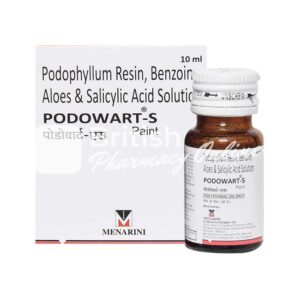
Some regions import Podowart or Podofilină (20% resin) for clinic use, for example in parts of Eastern Europe.
Importantly, podophyllotoxin does not clear latent HPV infection and must never be used on mucosal or internal genital surfaces.
In UK practice off‑label use is limited, documented, and undertaken with patient consent and clinic supervision.
Dosage Strategy
How should patients and clinics dose podophyllotoxin and resin safely?
Two clinical patterns are standard and appear consistently in product information and trial regimens.
General Dosing
Podophyllotoxin 0.5% gel or cream is self‑applied twice daily for three consecutive days then stopped for four days, with up to four cycles allowed (maximum about six weeks total).
Podophyllum resin 10–25% is applied by a clinician to the wart only, left for one to four hours and then washed off; this may be repeated weekly for up to six weeks.
Resin is supplied in small vials (3–10 mL) while 0.5% podophyllotoxin comes in 3–5 g tubes or dropper bottles.
Condition‑Specific Dosing
How do dosing choices vary by wart type and patient group?
For genital or anal warts in adults follow the regimens above, favouring 0.5% podophyllotoxin for small external lesions and reserving resin for clinic debridement or resistant disease.
For plantar or common warts resin may be used in a clinic setting; podophyllotoxin is not usually the first‑choice for thick plantar lesions.
Children are generally not treated with podophyllotoxin or resin because of systemic absorption risk; alternative modalities or clinician supervision are preferred.
Never exceed recommended treated area sizes or apply to mucosa, and avoid occlusion unless instructed by a clinician.
Safety Protocols
Who must not use podophyllotoxin or resin, and what adverse events occur?
Absolute contraindications include pregnancy, known hypersensitivity to the active agents, and application to mucous membranes or open wounds.
Contraindications
Do not use podophyllotoxin or podophyllum resin during pregnancy because both are teratogenic and embryotoxic.
Avoid application to the vagina, cervix, rectum or urethra, and do not use on inflamed or broken skin.
Relative contraindications include HIV infection, very extensive lesions, and poor skin barrier conditions such as eczema or psoriasis because systemic absorption risk rises.
Adverse Effects
What side effects should be expected and how serious can they be?
Local effects are common and include burning, erythema, swelling, itching, pain and mild erosion or ulceration; these are more frequent and severe with resin.
Systemic toxicity is rare but can occur with overdose or large‑area application and may present as nausea, vomiting, diarrhoea, neurological symptoms or bone marrow suppression.
Overdose or concerning systemic signs require urgent medical attention.
Elderly patients may be more susceptible to severe local irritation, so counsel and document carefully in UK clinical records.
Interaction Mapping
Are there food or drug interactions to worry about with topical podophyllotoxin?
Because systemic absorption from correctly applied 0.5% podophyllotoxin is minimal there are no clinically significant food interactions documented.
Drug Combinations To Avoid
Which topical or systemic combinations increase risk?
Avoid concurrent use on the same lesion of other topical caustics such as trichloroacetic acid, salicylic acid or cantharidin, since combination use increases the risk of severe local necrosis.
Exercise caution in patients receiving systemic myelosuppressive or neurotoxic chemotherapy; theoretical additive systemic risks exist if large areas are treated.
Do not use occlusive dressings unless specifically advised, as occlusion increases absorption.
Obtain a full medication and treatment history, including chemotherapy and immunosuppressants, and consider clinic‑applied resin when patient risk warrants supervision.
Patient Experience Analysis
What do patients say about using podophyllotoxin at home?
Surveys from sexual health and dermatology clinics show that patients value the convenience and discretion of self‑applied podophyllotoxin 0.5% and that adherence rates are higher than for clinic‑only options.
Common patient‑reported outcomes include moderate short‑term local discomfort and satisfaction linked to visible improvement within a few weeks.
Forum Trends
What do online forums report and how should clinicians respond?
UK and EU forums tend to prefer products such as Warticon or Condyline for at‑home treatment but include frequent reports of local burning and occasional erosions.
Resin products generate more concern about pain and scabbing after treatment.
Popular advice threads stress strict pregnancy avoidance, careful single‑lesion application and prompt clinic review for severe irritation; clinicians should proactively address these lived experiences during counselling to improve adherence and safety.
Distribution And Pricing Landscape
Where can patients source podophyllotoxin or resin and how much does it cost?
In the UK/EU licensed brands Condyline, Warticon and Wartec (0.5% podophyllotoxin) are prescription products dispensed through pharmacies and sexual health clinics.
Manufacturers and suppliers in global supply data include Meda, Glenmark, Taro, Mylan and Dr. Reddy’s, while Podowart/Podofilină (resin solutions) are commonly supplied from Eastern Europe and some Asian manufacturers.
Pricing varies by brand, pharmacy and whether supply is via NHS sexual health services; private prescriptions typically cost more and online wholesaler prices may undercut retail but can raise legality and safety concerns.
Podophyllum resin products (10–25%) are clinic‑oriented and less often retail‑sold in the UK.
Storage and transport requirements (store at 15–30°C and protect from light) influence supply chain handling and can affect availability and price.
In our online pharmacy, Warticon is available without a prescription, with discreet delivery to United Kingdom in 5–14 days.
Alternative Options
What are safe and effective alternatives when podophyllotoxin is unsuitable?
Imiquimod (Aldara) is an immune response modifier useful for some genital warts and is non‑caustic but usually requires a longer course to work.
Cryotherapy with liquid nitrogen delivers immediate freezing destruction and may be done in single or repeated sessions but causes pain and blistering.
Trichloroacetic acid is clinician‑applied chemical cautery and can be effective for superficial warts.
Cantharidin is a blistering agent used selectively for cutaneous warts and may be less systemically toxic than resin when used properly.
Podophyllotoxin 0.5% remains convenient and effective for small external lesions, while resin is more potent but more irritant and better suited to clinic use.
Regulatory Status
How are these products regulated in the UK and abroad?
Podophyllotoxin 0.5% cream and gel formulations (Condyline, Warticon) are licensed in the UK/EU for external genital wart treatment and are classified under ATC code D06BB04.
Regulators emphasise prescription control because of toxicity risk and restricted indications to external cutaneous warts only.
Globally, resin and podophyllotoxin products have varied registration—Podowart/Podofilină is registered in Romania with ANMDMR as a wart solution, and higher‑concentration resin solutions are used under prescription in the USA and parts of Asia.
Across jurisdictions pregnancy avoidance and clear patient information on teratogenic risk are universal regulatory priorities.
Consolidated FAQ
What do patients ask most about warticon and podophyllotoxin?
Q: Can I buy Warticon over the counter in the UK?
A: No; podophyllotoxin 0.5% is prescription‑only in standard UK practice, though supply models vary by provider.
Q: Which is safer for home use, 0.5% podophyllotoxin or 25% resin?
A: Podophyllotoxin 0.5% is generally safer for self‑use; resin is more irritant and should be clinician‑applied.
Q: Is it safe in pregnancy?
A: No; podophyllotoxin and resin are absolutely contraindicated in pregnancy because of teratogenic risk.
Q: What if I miss a dose?
A: Skip the missed application and continue the scheduled 3‑days‑on/4‑days‑off regimen; do not double dose.
Q: How long before warts clear?
A: Many lesions clear within four treatment cycles (about six weeks), but some require additional clinic procedures.
Q: Can podophyllotoxin cure HPV?
A: No; topical podophyllotoxin treats visible warts only and does not eradicate latent HPV infection.
Q: What should I do for severe irritation?
A: Stop treatment immediately and seek clinical assessment.
Q: Is systemic toxicity a real concern?
A: It is rare when used correctly but becomes a risk with large area application or prolonged use of resin solutions.
Visual Guide
How should patients apply Warticon correctly to reduce harm?
Step 1: Clean and dry the affected area thoroughly before application.
Step 2: Apply a thin film of 0.5% podophyllotoxin gel or cream to the wart only, avoiding surrounding healthy skin.
Step 3: Allow the product to air dry and avoid covering the area with an occlusive dressing unless instructed by a clinician.
Step 4: Repeat twice daily for three days, then stop for four days; repeat cycles up to four times as needed.
Step 5: For clinician‑applied resin expect an in‑clinic application with a timed wash‑off after one to four hours and weekly review.
Warning Signs Illustrated
When should patients seek medical help after using podophyllotoxin or resin?
Seek urgent care for excessive blistering, deep ulceration, fever, persistent nausea, dizziness or unexplained bleeding.
If local irritation worsens after stopping treatment, arrange clinician review for assessment and possible alternative therapy.
Visual Cues For Clinicians
Mark lesion borders before treatment and photograph baseline for follow‑up review and documentation of adverse local reactions.
Storage And Transport
How should Warticon and resin products be stored and moved?
Store podophyllotoxin and podophyllum resin products between 15–30°C, protected from light and out of the reach of children.
Keep products in the original, tightly closed container and discard if discoloured or contaminated.
Avoid exposing bottles and tubes to extreme heat or freezing during transport, and secure small vials to prevent leakage in clinic stock.
When ordering internationally, verify supplier handling practices and regulatory compliance to ensure product integrity.
At dispensing, provide clear patient leaflets that stress storage, child safety and proper cap replacement to limit evaporation and photodegradation.
Record batch numbers to support pharmacovigilance should adverse events occur.
Guidelines For Proper Use
What checks should clinicians complete before prescribing warticon or resin?
Confirm the diagnosis and that lesions are suitable for topical therapy and external use only.
Exclude pregnancy in those of child‑bearing potential, using a pregnancy test where appropriate.
Assess lesion size and number; multiple or large lesions may be better managed in clinic with resin or procedural methods.
Review concurrent medications and immune status, particularly chemotherapy or other myelosuppressive agents.
Document counselling on correct application technique, dosing schedule, expected local reactions and when to stop or seek care.
Patient Counselling Points
What practical advice improves safe use and outcomes in the UK?
Emphasise external use only and avoidance of mucosa or broken skin.
Advise patients to apply to the wart only, allow to dry, and follow the 3‑days‑on/4‑days‑off schedule for up to four cycles (maximum c.6 weeks).
Tell patients to stop immediately and seek assessment for severe irritation and to avoid pregnancy during treatment.
Recommend obtaining products via NHS services or licensed pharmacies and caution against unregulated online purchases.
Delivery Across United Kingdom
| City | Region | Delivery Time |
|---|---|---|
| London | Greater London | 5-7 days |
| Birmingham | West Midlands | 5-7 days |
| Manchester | Greater Manchester | 5-7 days |
| Glasgow | Scotland | 5-7 days |
| Leeds | West Yorkshire | 5-7 days |
| Sheffield | South Yorkshire | 5-7 days |
| Liverpool | Merseyside | 5-7 days |
| Bristol | South West England | 5-9 days |
| Newcastle Upon Tyne | North East England | 5-9 days |
| Nottingham | East Midlands | 5-9 days |
| Belfast | Northern Ireland | 5-9 days |
| Cardiff | Wales | 5-9 days |
| Coventry | West Midlands | 5-9 days |
| Leicester | East Midlands | 5-9 days |
| Southampton | South East England | 5-9 days |