Orlistat
In brief
- In our pharmacy, you can buy orlistat without a prescription in 60 mg strength in many regions, while 120 mg capsules are usually prescription-only. It is also commonly available online and in UK/EU pharmacies as Alli, Xenical, or generic orlistat, with discreet delivery.
- Orlistat is used for weight loss and weight maintenance as part of a reduced-calorie, low-fat diet. It works by inhibiting gastric and pancreatic lipases in the gut, reducing the absorption of dietary fat.
- The usual dose is 60 mg three times daily with main meals for OTC use, or 120 mg three times daily with main meals for prescription treatment of obesity.
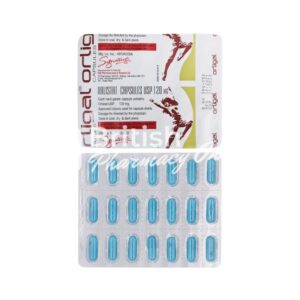
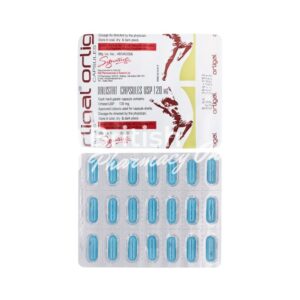
- The form of administration is a hard gelatin capsule taken orally.
- Orlistat starts working within a few hours after the first dose, as it acts during digestion with meals rather than building up in the body.
- The duration of action lasts for the period of fat digestion after each meal, and it is used long-term as part of a weight-management programme.
- Alcohol does not have a specific direct interaction with orlistat, but drinking alcohol may add extra calories and make weight loss harder; it is best to limit alcohol while following a weight-loss plan.
- The most common side effects are oily spotting, flatulence, urgent or frequent bowel movements, fatty or oily stools, abdominal discomfort, diarrhoea, and abdominal cramping.
- Would you like to try orlistat without a prescription?
Basic Orlistat Information
- INN (International Nonproprietary Name): Orlistat
- Brand names available in United Kingdom: Alli, Xenical
- ATC code: A08AB01
- Forms & dosages: Capsule, 60 mg, oral; Capsule, 120 mg, oral
- Manufacturers in United Kingdom: Roche; GlaxoSmithKline; generic suppliers including Luxpharma
- Registration status in United Kingdom: Approved; 60 mg capsules over-the-counter in many regions; 120 mg capsules prescription-only in most jurisdictions
- OTC / Rx classification: 60 mg capsules over-the-counter; 120 mg capsules prescription-only
What Recent Trials Suggest
Major 2022–2025 Studies
People often ask whether orlistat still has a place when newer anti-obesity medicines are getting so much attention.
The short answer is yes, especially for patients who want an oral, non-stimulant option that acts locally in the gut.
Post-2022 evidence continues to support orlistat UK use as part of real-world obesity management, particularly when it is paired with a reduced-calorie, lower-fat diet.
In day-to-day practice, Xenical 120 mg and Alli 60 mg remain relevant because they are familiar, widely available, and non-systemic.
That matters for people who are cautious about injections, central appetite suppressants, or medicines with broader body-wide effects.
Main Outcomes
Typical results are modest, but they are clinically meaningful for some patients.
When adherence is good, orlistat tablets can add further weight loss on top of lifestyle changes and can help with weight-loss maintenance over the longer term.
The best outcomes are usually seen in people who genuinely follow the lower-fat plan, because that is when the medicine fits the diet rather than working against it.
Safety Observations
Expected gastrointestinal effects remain the main limitation, and they are closely linked to dietary fat intake.
The more fat in the meal, the more likely oily stools, urgency, and leakage become.
Because orlistat is not absorbed in significant amounts systemically, safety is shaped mainly by gut-related effects rather than whole-body exposure.
That non-systemic profile is one reason many patients still consider Xenical and Alli after hearing about newer obesity treatment evidence.
How Orlistat Works
Layman’s Explanation
People are often relieved to hear that this medicine does not work in the brain.
Orlistat works in the gut by blocking some of the fat from food from being absorbed into the body.
The unabsorbed fat is passed out in the stool, which explains oily spotting, urgent toilet trips, and fatty stools.
Scientific Breakdown
At a pharmacological level, it inhibits gastric and pancreatic lipases.
That reduces the hydrolysis of triglycerides, so fewer free fatty acids and monoglycerides are available for absorption.
In practice, that makes orlistat 120 mg a peripherally acting anti-obesity product rather than a central appetite suppressant.
Why The ATC Code Matters
The ATC code A08AB01 places it in the anti-obesity section of the alimentary tract and metabolism group.
That classification helps explain why orlistat tablets are considered a lipase inhibitor with local action in the bowel.
UK Relevance
For UK patients, the mechanism supports use as an adjunct to diet rather than as a stand-alone weight-loss solution.
In other words, the capsule is there to support a structured plan, not replace it.
Where Orlistat Fits In Licensed Use
United Kingdom Approvals
In the UK, Alli 60 mg is the lower-dose option commonly available over the counter, while Xenical 120 mg is the prescription-strength product.
Both are marketed as hard gelatin capsules.
People sometimes search for orlistat prescription UK or buy orlistat online UK, but the key point is that use should stay within licensed obesity and weight-maintenance indications.
Notable Off-Label Trends
Some patients ask about general weight control because they have seen generic orlistat listings online.
That does not change the clinical position: it is best used within the approved obesity and maintenance framework, with diet and lifestyle support.
In our online pharmacy, orlistat is available without a prescription, with discreet delivery to United Kingdom in 5-14 days.
Form And Pack Details
Common pack sizes are 21, 42, 84, and 90 capsules, depending on brand and market.
Online listings may also use generic names such as Orlipastat or Tetrahydrolipstatin, along with the standard Orlistat name.
That is normal search behaviour, especially when patients are comparing Xenical capsules with generic options.
How It Is Usually Dosed
General Dosing
The standard prescription regimen is orlistat 120 mg three times daily with main meals.
The OTC option is orlistat 60 mg three times daily with main meals.
Patients often find it easiest to link the dose to breakfast, lunch, and dinner, which reduces missed doses.
Condition-Specific Dosing
For weight loss and weight maintenance, the capsule should be taken alongside a moderately low-fat, reduced-calorie diet.
If a meal is missed, or if the meal contains no fat, the dose should be skipped.
There is no benefit in doubling up later, and that only increases the chance of side effects.
Adjustments And Populations
Use is not recommended for children under 12 years.
No specific adjustment is generally required in the elderly.
Caution is sensible in hepatic or renal impairment because data are limited.
Treatment Duration
Orlistat is often used long term for weight loss and maintenance.
Continuation usually depends on whether clinically meaningful weight loss is being maintained.
That is why orlistat 60 mg and orlistat 120 mg are best reviewed as part of an ongoing programme rather than a one-off purchase.
Safety Checks Before Starting
Contraindications
There are a few clear situations where orlistat should not be used.
Chronic malabsorption syndromes, hypersensitivity to orlistat or excipients, and pregnancy are the main absolute contraindications.
It is also not recommended for children under 12 years.
Adverse Effects
The common orlistat side effects oily stools pattern is well known, and patients should be warned about it before starting.
Typical effects include oily spotting, flatulence, frequent or urgent defecation, fatty or oily stool, abdominal discomfort, diarrhoea, fecal incontinence, abdominal pain or cramping, and headache.
For many people, the nuisance is manageable if the diet is kept lower in fat.
Monitoring Priorities
If diarrhoea is significant, dehydration becomes a practical concern.
Monitoring is also worth considering in people with diabetes, thyroid disease, or a history of oxalate kidney stones.
That is especially true in obese patient safety conversations, where weight change can alter other treatment needs.
Interactions And Food Effects
Food Interactions
High-fat meals increase gastrointestinal adverse effects, so a lower-fat eating plan is the best match for treatment.
That is why many patients do better when they think about the capsule as part of meal planning rather than a quick fix.
Drug Combinations To Avoid
Ciclosporin is the interaction clinicians pay closest attention to, because levels may fall and efficacy can drop.
Weight loss itself can also alter diabetes medicine needs, so blood glucose treatment may need adjustment.
Other Clinical Cautions
Thyroid disease deserves review too, because changing body weight can alter requirements.
Even though orlistat acts locally and is not significantly systemically absorbed, orlistat interactions still matter clinically.
That point is easy to miss when patients assume a gut-acting medicine cannot affect anything else.
What Patients Commonly Report
Survey Data
Patient satisfaction usually tracks with early visible progress and with how well the person settles into the diet.
In many discussions, the main reason for stopping treatment is gastrointestinal discomfort rather than lack of understanding.
When the first few weeks go smoothly, adherence is often better, and people are more likely to keep going.
Forum Trends
UK search and discussion phrases often include “orlistat side effects oily stools”, “Xenical vs orlistat”, and “buy orlistat online UK”.
Those searches reflect the same mixed feeling: the medicine is attractive because it is non-stimulant, but the social inconvenience can be hard.
What Patients Value
Many like the non-systemic action and the fact that it is not a stimulant.
Some also value the availability of Alli 60 mg for over-the-counter use.
Common Frustrations
The biggest complaints are oily stools, sudden urgency, and the need to keep meals consistently low in fat.
That can be awkward at work, on trains, or during family meals, so counselling really matters.
Supply, Access, And Market Position
UK Supply Channels
In practice, Xenical 120 mg may be supplied through GPs or private clinics, while Alli 60 mg and generic orlistat are also seen through pharmacies and approved e-shops.
Patients often start by comparing Xenical weight loss tablets with lower-dose OTC options before deciding what fits their budget and routine.
Packaging And Brands
Capsules are usually supplied in blister packs or bottles, with 21, 42, 84, and 90 capsule packs commonly seen.
That makes repeat ordering straightforward for people who are staying on treatment over time.
Market Notes
Xenical is associated with Roche, while Alli is associated with GlaxoSmithKline.
Generic suppliers are widely represented, and online pharmacy listings may use a range of spellings and brand references.
How It Compares With Other Options
Comparison Table
| Medicine | Class | Main Action | Key Point |
|---|---|---|---|
| Orlistat | Lipase inhibitor | Reduces fat absorption | Oral, non-systemic, OTC or Rx depending on strength |
| Liraglutide | GLP-1 agonist | Appetite and satiety effects | Prescription medicine |
| Semaglutide | GLP-1 agonist | Appetite and satiety effects | Often greater weight loss, but different access and cost factors |
| Phentermine | Sympathomimetic | Central appetite suppression | Not a stimulant-free option |
| Bupropion/Naltrexone | CNS/opioid antagonist combo | Central appetite and reward effects | Prescription medicine |
Pros And Cons
Orlistat’s strengths are its non-systemic profile, familiar safety pattern, and OTC option in the case of Alli 60 mg.
Its main weaknesses are gastrointestinal effects and more modest efficacy than some newer injectables.
UK Positioning
For many patients, it suits the person who wants an oral, non-stimulant choice and accepts the diet requirement.
Newer agents may achieve greater weight loss, but they bring different access and cost considerations.
That is why Xenical vs orlistat comparisons still come up so often in clinic and online.
How It Is Regulated
UK And International Status
Orlistat is approved in the US, EU, and UK contexts.
In most jurisdictions, the 60 mg strength is OTC and the 120 mg strength is prescription-only.
That split explains why Alli and Xenical sit in different access categories even though they share the same INN.
Local Data Points
Romania market listings include Orlistat and Xenical, which matters for international search intent but is secondary to UK practice.
For pharmacy stock control and patient counselling, the standard dosage form remains the hard gelatin capsule.
ATC And Classification
The code A08AB01 is useful because it places the medicine squarely in the anti-obesity group of alimentary tract and metabolism products.
That classification supports the standard view of orlistat as a peripherally acting anti-obesity product.
Frequently Asked Questions
Common Questions
Is orlistat prescription only in the UK?
Not always, because Alli 60 mg is available over the counter, while Xenical 120 mg is generally prescription-only.
What is the difference between Alli 60 mg and Xenical 120 mg?
The difference is the strength, with the lower-dose OTC option and the higher-dose prescription option using the same active ingredient.
How quickly does orlistat work?
It works gradually, alongside diet, so the effect builds over time rather than appearing overnight.
Can you take it long term?
Yes, it is used long term for weight loss and maintenance, but only while the treatment remains clinically beneficial.
Practical Answers
People searching “buy orlistat online UK” usually want a simple, safe route to treatment.
The right answer is still the same: it should be used with a lower-fat plan, and stopped or reviewed if benefit is not being maintained.
If “orlistat side effects oily stools” is the main concern, meal fat reduction is usually the first thing to address.
What To Show In A Patient Infographic
Suggested Infographic Sections
A useful graphic should show how orlistat works, the difference between 60 mg and 120 mg, and what to eat with treatment.
Those three pieces answer most first-time questions in a glance.
Patient-Facing Visuals
A meal-based dosing diagram works well because it makes the three-times-daily routine obvious.
Side-effect warning icons can also help patients recognise oily stools and urgent defecation before they are surprised by them.
Key Data To Show
The visual should clearly state that the product comes as capsules in hard gelatin form.
It should also show the common pack sizes of 21, 42, 84, and 90 capsules.
How To Store It Correctly
Storage Guidance
Orlistat storage is straightforward.
Keep it below 25°C and protect it from moisture and direct sunlight.
Transport Notes
No special transport conditions are usually needed unless the packaging says otherwise.
That makes it convenient for normal home delivery and routine pharmacy supply.
UK Practical Note
Keep the medicine in the original container and out of reach of children.
Always check the expiry date and the integrity of the blister pack before use.
How To Use It Properly
Best-Practice Administration
Take the capsule with each main fat-containing meal, up to three times daily.
If the meal is missed or fat-free, skip the dose.
That simple rule helps reduce unnecessary side effects and keeps treatment sensible.
Lifestyle Pairing
Orlistat works best when combined with a reduced-calorie, lower-fat diet and regular activity.
It is best thought of as part of a weight-management programme, not a replacement for it.
When To Review Treatment
If weight loss is not clinically meaningful, adherence, diet, and suitability should be reassessed.
Monitoring is especially important in diabetes, thyroid disease, stone history, and ciclosporin use.
E-E-A-T Note
For the most reliable results, treatment should sit within a structured plan with professional support from a pharmacist, GP, or obesity service.
Delivery Across United Kingdom
| City | Region | Delivery Time |
|---|---|---|
| London | England | 5-7 days |
| Birmingham | England | 5-7 days |
| Manchester | England | 5-7 days |
| Liverpool | England | 5-7 days |
| Leeds | England | 5-7 days |
| Newcastle upon Tyne | England | 5-7 days |
| Bristol | England | 5-7 days |
| Sheffield | England | 5-7 days |
| Nottingham | England | 5-9 days |
| Leicester | England | 5-9 days |
| Edinburgh | Scotland | 5-7 days |
| Glasgow | Scotland | 5-7 days |
| Cardiff | Wales | 5-7 days |
| Aberdeen | Scotland | 5-9 days |
| Belfast | Northern Ireland | 5-7 days |