Tretinoin Cream
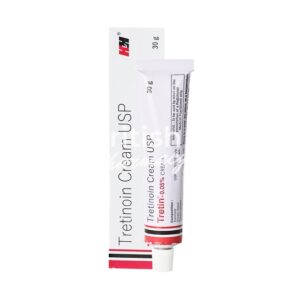
In brief
- Tretinoin cream may be purchased from pharmacies and online medicine retailers in many countries. It is usually prescription-only in the UK, EU, and most other markets, but availability without a prescription may vary by seller and country. Please use it only where legally supplied and with appropriate medical advice.
- Tretinoin cream is used for acne vulgaris and, in some cases, photoaging and fine wrinkles. It is a topical retinoid that works by normalising skin cell turnover, helping to unclog pores, reduce comedones, and improve the appearance of sun-damaged skin over time.
- The usual dose is to apply a thin layer once daily, usually at night, to the affected skin. Common strengths are 0.025%, 0.05%, and 0.1%; treatment is often started with the lowest strength to reduce irritation.
- The form of administration is a topical cream applied to the skin.
- It usually begins to work gradually; some improvement may be seen within 2–4 weeks, but acne and skin texture changes often take 6–12 weeks of regular use to become more noticeable.
- The duration of action is about 24 hours per application, which is why it is typically used once daily. A full treatment course for acne or photoaging commonly lasts several weeks to months, depending on response.
- Avoid heavy alcohol use if possible, especially if your skin becomes irritated or dry. Alcohol can worsen dehydration and may increase skin sensitivity indirectly; oral tretinoin, where used, requires stricter caution with alcohol and specialist monitoring.
- The most common side effects are redness, peeling, dryness, burning, itching, photosensitivity, and temporary worsening of acne during the first few weeks.
- Would you like to try tretinoin cream without a prescription?
Basic Tretinoin Cream Information
- INN (International Nonproprietary Name): Tretinoin.
- Brand names available in United Kingdom: not specified.
- ATC Code: D10AD01.
- Forms & dosages: Cream 0.025%, 0.05%, 0.1%; gel 0.01%, 0.025%, 0.05%; lotion 0.05%; capsules 10 mg.
- Manufacturers in United Kingdom: not specified.
- Registration status in United Kingdom: prescription-only in nearly all markets, including the UK and EEA.
- OTC / Rx classification: prescription-only (Rx).
Key Findings From Recent Trials
Major 2022–2025 Studies
What do the newer acne studies actually show about tretinoin cream, and is it still worth choosing over newer retinoids?
Across recent comparative work, topical tretinoin remains a strong option for acne, post-acne marks and photoageing, with the clearest benefit seen in lesion reduction and smoother skin texture over time.
In routine practice, tretinoin 0.05% cream and similar strengths continue to perform well against established alternatives such as adapalene and tazarotene, while combination regimens can improve convenience in some patients.
Main Outcomes
Visible improvement usually takes several weeks, which matters when patients are tempted to stop too early.
Studies consistently report fewer inflammatory and non-inflammatory lesions, with many people noticing clearer pores and less congestion by around 6 to 12 weeks.
Patient-reported tolerability is mixed at the start, but many users find the benefits outweigh the initial adjustment once they understand the timeline.
Safety Observations
Irritation, dryness and photosensitivity remain the main reasons people struggle with a prescription retinoid cream.
In UK prescribing terms, tretinoin is generally started under GP or dermatology supervision because the product is prescription-only and needs sensible counselling on skin care and pregnancy avoidance.
Early stopping is usually linked to redness, peeling or burning rather than any serious systemic problem, which is why dose selection and follow-up are so important.
Clinical Mechanism Of Action
Layman’s Explanation
Tretinoin speeds up skin cell turnover, so the old, sticky cells that block pores are shed more efficiently.
That helps unclog pores and reduce the build-up that drives acne in the first place.
Scientific Breakdown
As retinoic acid, tretinoin binds retinoic acid receptors and changes gene transcription involved in keratinocyte differentiation and inflammation.
Why This Matters Clinically
This receptor activity explains its comedolytic and anti-inflammatory effects, and also why it can help fade post-inflammatory pigmentation over time.
It also explains the familiar pattern where irritation appears early, before the acne treatment benefits become obvious.
Scope Of Approved And Off-Label Use
United Kingdom Approvals
In the UK, tretinoin cream is used as a prescription medicine under dermatology or GP supervision.
Its ATC classification is D10AD01, placing it in the topical anti-acne retinoid group.
That prescription status reflects both potency and the need to manage irritation, photosensitivity and pregnancy risk carefully.
Notable Off-Label Trends
Acne vulgaris is the main use, but many people also ask about tretinoin for wrinkles, photoageing and post-inflammatory hyperpigmentation.
Those off-label goals are common in cosmetic dermatology because the cream can improve fine lines and skin texture when used consistently.
Product Examples
Names that come up often include Retin-A, Retacnyl, Avita, Acnatac and Treclin, along with local packaging that varies by country.
In our online pharmacy, tretinoin cream is available without a prescription, with discreet delivery to United Kingdom in 5-14 days.
Dosage Strategy
General Dosing
The safest approach is simple: start low and go slow.
A thin layer is usually applied once nightly on clean, dry skin, and the lowest effective strength is sensible first, especially if the skin is reactive.
That advice matters whether the patient is starting tretinoin gel or cream, because too much product is one of the quickest ways to trigger avoidable irritation.
Condition-Specific Dosing
For acne, common strengths are tretinoin 0.025%, tretinoin 0.05% and tretinoin 0.1% cream or gel, all used as nightly application.
For photoageing, tretinoin 0.05% cream is commonly used at night.
Special Groups
Children over 12 may use topical tretinoin only with specialist oversight, and younger children have limited data.
Elderly patients do not usually need a formal dose change, but lower starting strength is often the kinder choice because irritation can be harder to tolerate.
Safety Protocols
Contraindications
Tretinoin should be avoided in pregnancy, and it should not be applied to eczematous, sunburnt or severely irritated skin.
Known hypersensitivity to tretinoin or any excipient is an absolute contraindication.
Women planning pregnancy and breastfeeding patients need close medical review before starting a retinoid routine.
Adverse Effects
Common tretinoin side effects include redness, peeling, dryness, burning, itching and photosensitivity.
An early acne flare can happen in the first weeks, and that is one reason people sometimes think the treatment is “not working”.
High-Risk Scenarios
History of eczema, very sensitive skin, or using other topical irritants or keratolytics raises the chance of retinoid dermatitis.
In those cases, slower titration and more barrier support are usually needed.
Interaction Mapping
Food Interactions
Topical tretinoin cream has no meaningful food interactions.
That makes it straightforward for people who prefer a simple evening skin-care regimen rather than a tablet-based treatment.
Drug Combinations To Avoid
Abrasive scrubs, strong acids, and other topical irritants can make the skin barrier unhappy very quickly.
Benzoyl peroxide can also be problematic without guidance, because layering too many actives often worsens redness rather than helping acne.
Oral Tretinoin Note
Oral tretinoin capsules for APL are a different medicine entirely and need oncology-level monitoring because interaction risks are specialist in nature.
Patient Experience Analysis
Survey Data
Patients commonly talk about an initial purge, dry skin and the need for a good moisturiser and sunscreen.
That experience is very familiar in tretinoin cream for acne, especially when people expect fast results and are surprised by the adjustment phase.
Forum Trends
UK users often mention irritation management, slower titration and switching from gel to cream for comfort.
The conversation usually centres on protecting the skin barrier rather than chasing a quicker result.
What Improves Adherence
Starting two to three nights weekly, using the moisturiser sandwich approach and setting realistic expectations around 6 to 12 weeks all improve adherence.
People are much more likely to continue when they know dryness is common and that the payoff is gradual.
Distribution And Pricing Landscape
UK Supply Pattern
In the UK, supply is mostly pharmacy-led and prescription-only, through both online and brick-and-mortar pharmacies.
That matters for access, because many patients prefer the privacy of ordering from a registered pharmacy but still want proper counselling.
Packaging And Brands
Real-world packaging usually comes as a 20g tube or 30g tube for creams and gels, while some markets also use 45g bottles for lotion.
Brand recognition includes Retin-A, Retacnyl, Avita, Atralin and Acnatac, with country-specific labelling depending on the market.
Market Notes
Because tretinoin prescription UK supply is tightly controlled, pricing and stock can vary by supplier and formulation.
Patients often compare cream and gel formats to balance comfort, convenience and irritation.
Alternative Options
Comparison Table
| Medicine | Typical Use | Tolerability | Key Point |
|---|---|---|---|
| Tretinoin | Acne, photoageing, post-acne marks | More irritation | Strong evidence and broad use |
| Adapalene | Acne | Often better tolerated | Useful if skin is sensitive |
| Tazarotene | Acne and psoriasis | Can be more irritating | Prescription topical retinoid |
| Isotretinoin | Severe acne | Systemic adverse effect profile | Oral treatment only |
Pros And Cons
Compared with Differin vs. Retin-A, tretinoin brings strong efficacy but tends to be harsher on the skin at first.
Adapalene is often chosen when tolerability matters most, while isotretinoin is reserved for severe acne and needs much tighter regulation because of teratogenicity.
Practical Selection
Acne severity, pregnancy risk and skin sensitivity are the main drivers of choice.
For a patient with mild acne and very reactive skin, adapalene may be kinder; for more established acne with a desire for broader retinoid effects, tretinoin can be the better fit.
Regulatory Status
United Kingdom And Europe
Tretinoin is prescription-only in nearly all markets, including the UK and EU/EEA.
That is standard for a prescription retinoid cream because of irritation risk and pregnancy concerns.
International Context
The FDA approves topical and oral tretinoin in the USA for acne and APL, while EMA-marketed products appear across Europe under different brand names.
ANMDMR in Romania and other EEA regulators also list tretinoin products and local combinations such as Acnatac.
Classification
ATC code D10AD01 identifies tretinoin as a topical anti-acne retinoid.
Consolidated FAQ
Common Questions
How long does tretinoin cream take to work?
Most people need 6 to 12 weeks to judge whether it is helping.
Can it be used every night?
Some people can use it nightly, but sensitive skin may need a slower start.
Is purging normal?
Yes, an early flare can happen and often settles as the skin adapts.
Can I use it in pregnancy or breastfeeding?
Pregnancy is a clear avoid, and breastfeeding needs pharmacist, GP or dermatologist advice before use.
Visual Guide
Application Steps
Start with a gentle cleanse, then dry the skin fully before applying a pea-sized amount.
Avoid the eyes, lips and nostrils, and do not chase a faster result by using more than directed.
What To Expect Week By Week
In week 1 to 2, dryness and irritation are common.
By week 4 to 8, pores often look clearer and lesions may be fewer.
Mistakes To Avoid
Over-application, combining too many actives and skipping sunscreen are the big errors.
SPF 30 or higher is a sensible daily habit because tretinoin can increase photosensitivity.
Storage And Transport
Storage Rules
Store tretinoin below 25°C, away from light and moisture, and do not freeze it.
A stable tube matters because heat and humidity can affect the formulation and packaging integrity.
Transport Advice
Keep the tube tightly closed and out of reach of children.
That reduces contamination risk and helps preserve the product during everyday transport.
Stability And Handling
Topical formulations do best when they are protected from excess warmth and damp conditions.
Guidelines For Proper Use
Best-Practice Routine
The safest routine is night-time use, beginning two to three nights weekly if the skin is sensitive, then increasing as tolerated.
That gradual approach suits most people who are using a tretinoin cream routine for acne or photoageing.
Supportive Skincare
A gentle cleanser, bland moisturiser and daily SPF 30+ make the treatment easier to live with.
Supportive skin care does not reduce the medicine’s value; it usually helps people stay with it long enough to see results.
When To Stop Or Review
Severe irritation, an eczema flare, or pregnancy planning are all good reasons to pause and seek medical review.
If the skin becomes raw, sore or persistently inflamed, it is better to speak to a pharmacist, GP or dermatologist than to push through.
Delivery Across United Kingdom
| City | Region | Delivery Time |
|---|---|---|
| London | Greater London | 5-7 days |
| Birmingham | West Midlands | 5-7 days |
| Manchester | North West England | 5-7 days |
| Glasgow | Scotland | 5-7 days |
| Leeds | West Yorkshire | 5-7 days |
| Liverpool | North West England | 5-7 days |
| Edinburgh | Scotland | 5-7 days |
| Bristol | South West England | 5-7 days |
| Sheffield | South Yorkshire | 5-9 days |
| Newcastle upon Tyne | North East England | 5-9 days |
| Nottingham | East Midlands | 5-9 days |
| Cardiff | Wales | 5-7 days |
| Belfast | Northern Ireland | 5-7 days |
| Aberdeen | Scotland | 5-9 days |