Amitriptyline
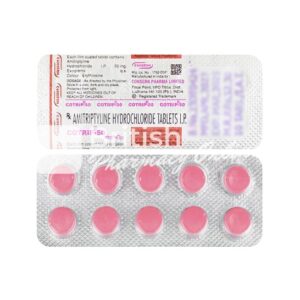
In brief
- You can buy amitriptyline in many countries only with a prescription, as it is a prescription-only medicine (Rx) worldwide in most regions. It is widely available as a generic and under brand names such as Elavil, Endep, Sarotex, Tryptanol and Laroxyl. Some pharmacies may offer access without a prescription, but this is not the standard legal status.
- Amitriptyline is used for depression, neuropathic pain, migraine prevention, fibromyalgia, and other off-label conditions such as insomnia or some anxiety-related disorders. It is a tricyclic antidepressant that works by inhibiting the reuptake of noradrenaline and serotonin, which increases their levels in the brain and can improve mood and reduce pain signalling.
- The usual dose depends on the condition: for depression, adults often start at 25–50 mg daily and may increase to 75–150 mg daily; for nerve pain or migraine prevention, treatment commonly starts at 10–25 mg at bedtime and may rise to 25–75 mg daily. Older adults usually need lower starting doses, and doses should be adjusted cautiously.
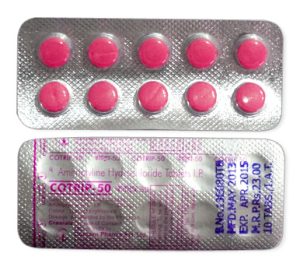
- Amitriptyline is taken by mouth as tablets or oral drops. Common strengths include 10 mg, 25 mg, 50 mg, 75 mg and 100 mg tablets; oral drops may be 25 mg/mL; prolonged-release tablets are also available in some markets.
- It usually starts to have some sedating or pain-relieving effect within a few hours to a few days, but the full antidepressant effect may take 2–4 weeks or longer.
- The duration of action is generally about 24 hours, which is why it is often taken once daily at bedtime; the therapeutic effect for depression may last as long as treatment is continued.
- Do not drink alcohol while taking amitriptyline, as alcohol can increase drowsiness, dizziness and impaired coordination, and may worsen side effects or safety risks.
- The most common side effects are drowsiness, dry mouth, constipation, dizziness, blurred vision, weight gain and orthostatic hypotension. Some people also experience urinary retention, increased appetite, sweating or palpitations.
- Would you like to try amitriptyline without a prescription?
Basic Amitriptyline Information
- INN (International Nonproprietary Name): Amitriptyline
- Brand Names Available In United Kingdom: Amitriptyline is supplied as a generic medicine in the UK; global brand examples include Elavil, Endep, Sarotex, Tryptanol, Laroxyl, Redomex, Syneudon, Abitrip, Amitrip, Amitie, Amitiptilina Andromaco, and Amiplin.
- ATC Code: N06AA09
- Forms & Dosages: Tablets 10 mg, 25 mg, 50 mg, 75 mg, 100 mg; oral drops 25 mg/1 mL in some markets; prolonged-release tablets 50 mg and 75 mg; injectable forms are rare.
- Manufacturers In United Kingdom: Amitriptyline is a widely distributed generic medicine in the UK; global suppliers include Lundbeck, East West Pharma, Bio-Techne, Vasudha Pharma, and Cayman Chemical Company for raw material supply.
- Registration Status In United Kingdom: Prescription medicine (Rx) in most countries; in the UK it is a prescription-only medicine.
- OTC / Rx Classification: Prescription Only (Rx)
Wondering why an older medicine is still prescribed so often in UK practice?
Amitriptyline remains a familiar option because it is effective, low cost, and widely available as a generic.
That matters in day-to-day prescribing, especially when someone needs a medicine that can help with nerve pain, migraine prevention, or depression and the choice has to balance benefit against tolerability.
Key Findings From Recent Trials
Major 2022–2025 Studies
Main Outcomes
Recent studies have kept amitriptyline in the conversation because the best modern signal is still for symptom relief, not for glamour.
Systematic reviews and pragmatic studies continue to support its place in chronic pain, migraine prophylaxis, and selected depression treatment.
In UK practice, the strongest current use is low-dose treatment for neuropathic pain and headache prevention, while use for depression is now more selective because tolerability can be limiting.
That fits with what pharmacists see every week: the medicine is a first-generation tricyclic antidepressant, but it stays in use because it works, it is inexpensive, and generic supply is reliable.
The modern evidence is less about proving it beats every newer drug and more about showing it still gives meaningful relief for the right patient at the right dose.
Safety Observations
The side-effect pattern has not changed much over time.
Sedation, anticholinergic burden, postural hypotension, and overdose toxicity remain the main concerns.
For that reason, clinicians increasingly start with lower doses in older adults and use extra caution in patients with cardiac disease.
That cautious approach is sensible, because the benefit can be excellent in pain syndromes, but the treatment margin is narrower than with many newer agents.
Evidence Hierarchy And Certainty
The evidence base is strongest for symptom relief, especially in neuropathic pain evidence and migraine prophylaxis.
It is weaker when the question is whether amitriptyline is superior to newer options across the board.
The research signal is often clearest at lower doses for pain, rather than at antidepressant-dose regimens.
That helps explain why a patient with nerve pain may feel better on 10 mg or 25 mg at night, even when those same doses would be too low for major depression.
Clinical Mechanism Of Action
Layman’s Explanation
Amitriptyline changes the way the brain and spinal cord process pain and mood signals.
That is why it may help with depression, nerve pain, and migraine prevention.
In the UK it is usually prescribed as tablets, and less commonly as oral drops.
People often notice the sleepiness first, which is also why bedtime dosing is common.
Scientific Breakdown
Neurotransmitter Effects
Amitriptyline hydrochloride inhibits reuptake of serotonin and noradrenaline, so signalling in those pathways increases.
This is the key pharmacological reason it can lift mood and reduce pain processing.
Secondary Receptor Effects
It also has strong antihistamine, anticholinergic, and alpha-adrenergic blocking activity.
Those actions explain sedation, dry mouth, constipation, blurred vision, and dizziness.
Its ATC classification is N06AA09.
In practical terms, the mechanism is helpful, but the receptor activity is also why dose selection matters so much.
Scope Of Approved And Off-Label Use
United Kingdom Approvals
Amitriptyline is a prescription medicine in the UK and is commonly used as a generic.
The official INN is amitriptyline, while US usage often specifies amitriptyline hydrochloride.
In UK prescribing, it is usually chosen for recognised clinical reasons rather than as a casual sleep aid.
Notable Off-Label Trends
Pain And Headache Use
Common off-label and pragmatic uses include neuropathic pain, chronic pain syndromes, migraine prophylaxis, and selected fibromyalgia cases.
These are the situations where amitriptyline for pain often makes sense, particularly at low dose.
Other Uses
It is sometimes used for insomnia and a few anxiety-related symptoms, but those are not its primary indications.
Across the world it has been sold under brands such as Elavil, Endep, Sarotex, Tryptanol, Laroxyl, and Redomex, which shows how widely this medicine has travelled.
In our online pharmacy, amitriptyline is available without a prescription, with discreet delivery to United Kingdom in 5-14 days.
Dosage Strategy
General Dosing
Doses are usually started low and increased slowly to reduce sedation and anticholinergic effects.
That is especially important with amitriptyline tablets, because the available strengths range from 10 mg up to 100 mg.
Common tablet strengths include 10 mg, 25 mg, 50 mg, 75 mg, and 100 mg.
Oral drops may be 25 mg/1 mL in some markets, and prolonged-release tablets are available in 50 mg and 75 mg forms.
Condition-Specific Dosing
Depression
Typical adult starting dose is 25–50 mg a day, taken at night or in divided doses.
Usual maintenance is 75–150 mg a day, titrated as tolerated.
Neuropathic Pain, Migraine, And Fibromyalgia
Typical adult starting dose is 10–25 mg at bedtime.
Usual range is 25–75 mg a day.
That bedtime dose is one reason patients searching for amitriptyline 10 mg tablets or amitriptyline 25 mg tablets often receive those lower strengths first.
Special Populations
In older adults, start at 10–25 mg at night, titrate slowly, and often cap treatment at 75 mg a day.
Children are rarely treated with it and only under specialist supervision.
In liver impairment, reduce the dose or avoid treatment where possible.
Renal impairment usually does not require adjustment, but monitoring is sensible.
For a patient asking about a dosing schedule on a Friday evening, the key message is simple: take exactly what is prescribed and do not increase the dose just because the medicine seems gentle at first.
Safety Protocols
Contraindications
Absolute contraindications include hypersensitivity, recent myocardial infarction, and use with MAOIs unless separated by at least 14 days.
Caution is needed in seizure disorders, angle-closure glaucoma, urinary retention, prostatic hypertrophy, cardiovascular disease, and suicidal risk.
That last point matters because tricyclic antidepressants are highly toxic in overdose.
Adverse Effects
Common Effects
Very common effects include drowsiness and sedation.
Dry mouth, constipation, weight gain, blurred vision, dizziness, orthostatic hypotension, and increased appetite are also frequent.
Higher-Risk Events
Cardiac conduction effects, arrhythmias, and overdose toxicity are the key serious risks.
In UK practice, ECG consideration is common in older adults or anyone with a cardiac history.
That is not because the drug is unusable, but because safety is better when the background risk is assessed properly.
Interaction Mapping
Food Interactions
There are no major food prohibitions in routine use.
Alcohol is the main lifestyle issue, because it can worsen sedation and impaired coordination.
That is also why bedtime dosing is often preferred.
Drug Combinations To Avoid
High-Risk Combinations
MAOIs should be avoided, and other medicines that increase serotonin toxicity risk need specialist oversight.
Additive Effects
Sedation can build when amitriptyline is combined with hypnotics, opioids, antihistamines, or benzodiazepines.
There is also increased risk with QT-prolonging or arrhythmia-associated medicines, particularly in patients with cardiovascular disease.
Anyone taking several medicines at once should treat this as a proper medication review, not a quick glance.
Patient Experience Analysis
Survey Data
Patient-reported benefit often appears first for pain or sleep, before mood improves.
That is especially true at low doses.
In real-world use, sedation is very common, and dry mouth and constipation are frequent enough to affect adherence.
People do not always stop because the medicine fails; often they stop because the side effects are more noticeable than the original problem.
Forum Trends
Common Positives
Users often mention better sleep continuity, reduced nerve pain, and fewer migraine attacks.
Common Negatives
Morning grogginess, weight gain, dry mouth, and feeling hung over after dosing are regular complaints.
In a UK setting, daytime sedation can limit driving or interfere with work, which is one reason dose timing and careful review matter.
Patient experience with amitriptyline is often a balance between relief and tolerability rather than a simple yes-or-no response.
Distribution And Pricing Landscape
UK Supply Chain
Amitriptyline is widely distributed as a generic medicine in UK pharmacies and primary care.
It is supported by a broad international supply base, including Lundbeck, East West Pharma, Bio-Techne, Vasudha Pharma, and raw material suppliers such as Cayman Chemical Company.
That wide manufacturing footprint helps keep availability stable even when branding changes.
Price And Packaging Trends
Off-patent status usually keeps prices low, but pack size, strength, and manufacturer vary.
Packaging may be in blisters, bottles, oral drops, or prolonged-release tablets.
In practice, the lowest-cost option is often the most familiar one, though the exact pack a patient receives can differ between pharmacies and suppliers.
Alternative Options
Comparison Table
| Option | Typical Role | Main Advantage | Main Limitation |
|---|---|---|---|
| Other tricyclics | Depression or pain | Familiar and effective | Similar anticholinergic burden |
| SSRIs | Depression | Lower anticholinergic burden | Less useful for pain and sleep |
| SNRIs | Depression and pain | Useful across both areas | Not always sedating |
| Gabapentin or pregabalin | Neuropathic pain | Pain-focused alternatives | Different side-effect profile |
| Duloxetine | Pain and depression | Often preferred in some pain syndromes | Not a tricyclic |
For Depression
SSRIs and SNRIs are often preferred first because of lower anticholinergic burden.
That does not mean amitriptyline has no place; it just means the modern sequence is more selective.
For Pain
Gabapentin, pregabalin, duloxetine, and sometimes nortriptyline may be considered.
The pros of amitriptyline are that it is cheap, familiar, and useful for pain and sleep.
The cons are sedation, anticholinergic effects, overdose toxicity, and poorer tolerance in older adults.
Regulatory Status
UK Status
Amitriptyline is prescription-only in the UK and is available as a regulated generic medicine.
Internationally it is recognised by agencies such as the FDA, EMA, and TGA.
That broad regulatory history reflects its long use and established role in central nervous system prescribing.
Classification Details
Its ATC code is N06AA09.
The medicine is listed as Amitriptilina in Romania, and French-language branding may appear as Laroxyl in some markets.
However it is labelled, the pharmacology is the same, so the same safety checks still apply.
Consolidated FAQ
Common Questions
How Long Does It Take To Work?
Depression may need 4–8 weeks for full effect.
Pain and migraine use are often assessed after 2–4 weeks.
Can It Be Stopped Suddenly?
No.
It should be tapered slowly to reduce withdrawal effects.
What If A Dose Is Missed?
Take it when remembered unless it is close to the next dose.
Do not double up.
What About Overdose?
Overdose is a medical emergency because of arrhythmias, seizures, and CNS depression.
If there is any concern, urgent medical help is needed immediately.
Visual Guide
What To Show In An Infographic
A useful infographic would show the tablet strengths of 10 mg, 25 mg, 50 mg, 75 mg, and 100 mg.
It should also show a simple pathway: start low, titrate slowly, review benefit, and monitor side effects.
Safety Icons
Warning Symbols
Icons for sedation, dry mouth, constipation, orthostatic hypotension, and overdose danger would be the most practical.
Use By Indication
Separate blocks for depression, neuropathic pain, and migraine prophylaxis make the chart easier to follow.
That kind of visual guide is particularly helpful for amitriptyline tablets because the same medicine is used for very different reasons.
Storage And Transport
Storage Instructions
Store at room temperature, ideally 15–30°C.
Keep tablets dry and away from light.
Blisters and bottles should be closed properly to protect tablet integrity.
Transport Advice
Avoid excess heat and moisture during travel.
Keep the medicine in its original packaging for identification and stability.
That is especially useful if a patient needs to travel with several medicines at once.
Guidelines For Proper Use
How To Take It Safely
Amitriptyline should be taken exactly as prescribed, usually at night because of sedation.
Depression regimens often continue for 6–9 months after remission.
Pain regimens are usually reviewed after a 2–4 week trial.
If the medicine is helping, do not change the dose without advice, even if the effect feels subtle at first.
Monitoring And Follow-Up
What Clinicians Watch
Clinicians look at mood response, pain control, sleep quality, blood pressure, anticholinergic symptoms, falls risk, and cardiac history.
When To Seek Help
New palpitations, fainting, severe confusion, urinary retention, or worsening suicidal thoughts need prompt assessment.
Medication reviews are especially important in older adults and in people taking several medicines, because polypharmacy raises the risk of problems.
Amitriptyline can be very useful when matched to the right patient, but it works best with proper monitoring rather than guesswork.
Delivery Across United Kingdom
| City | Region | Delivery Time |
|---|---|---|
| London | England | 5-7 days |
| Birmingham | England | 5-7 days |
| Manchester | England | 5-7 days |
| Leeds | England | 5-7 days |
| Liverpool | England | 5-7 days |
| Newcastle upon Tyne | England | 5-7 days |
| Sheffield | England | 5-7 days |
| Bristol | England | 5-7 days |
| Glasgow | Scotland | 5-7 days |
| Edinburgh | Scotland | 5-7 days |
| Cardiff | Wales | 5-7 days |
| Belfast | Northern Ireland | 5-7 days |
| Aberdeen | Scotland | 5-9 days |
| Plymouth | England | 5-9 days |
| Norwich | England | 5-9 days |