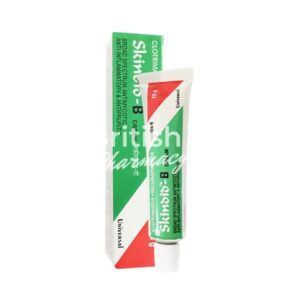
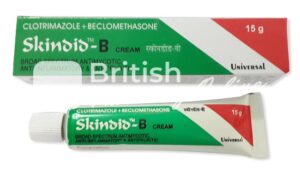
Betamethasone Clotrimazole
In brief
- In most countries (including the UK, EU, USA, Canada and Australia) betamethasone clotrimazole is officially a prescription (Rx) medicine, but availability varies and some community or online pharmacies may supply it without a prescription; local rules differ and medical advice is recommended before use.
- Betamethasone clotrimazole combines an antifungal (clotrimazole, which disrupts fungal cell membranes by inhibiting ergosterol synthesis) with a potent topical corticosteroid (betamethasone dipropionate, which suppresses local inflammation and itching) to treat inflamed superficial fungal skin infections.
- Usual dosage for adults: apply a thin layer of cream (commonly clotrimazole 1% / betamethasone 0.05%) to the affected area twice daily (morning and evening); treat tinea corporis/cruris for about 2 weeks and tinea pedis for up to 4 weeks, or as directed by a prescriber.
- Form of administration: topical application (cream is standard; a lotion formulation exists rarely).
- Onset time: anti‑inflammatory itch relief is often noticeable within hours to a day; antifungal improvement (reduction in scaling/clearance of infection) typically becomes apparent over several days.
- Duration of action: symptomatic anti‑inflammatory effects generally last until the next application (hence twice‑daily dosing, roughly 12–24 hours); complete antifungal cure requires continuing the course for days to weeks as above.
- Alcohol warning: there is no specific prohibition on drinking alcohol with topical use, but avoid applying alcohol‑based products to treated skin; if signs of systemic steroid effects occur (rare), discuss alcohol intake with your doctor.
- The most common side effec is local skin irritation (burning, stinging, redness, dryness or itching); prolonged or inappropriate use can cause skin atrophy, hypopigmentation or, rarely, systemic corticosteroid effects.
- Would you like to try betamethasone clotrimazole without a prescription?
Basic Betamethasone Clotrimazole Information
- INN (International Nonproprietary Name): Betamethasone and Clotrimazole (often as betamethasone dipropionate + clotrimazole).
- Brand Names Available In United Kingdom: Lotriderm (GSK), commonly marketed in 30g tubes.
- ATC Code: D01AC01 (clotrimazole) and D07XC01 (betamethasone combinations).
- Forms & Dosages: Cream—clotrimazole 1% with betamethasone 0.05% in tubes commonly 15g, 20g, 30g, 45g or 50g; lotion formulations are rare.
- Manufacturers In United Kingdom: GSK is the primary marketer for Lotriderm in the UK; generic manufacturers are also present in Europe.
- Registration Status In United Kingdom: MHRA‑licensed; classified as prescription medication (Rx) in major markets.
- OTC / Rx Classification: Prescription-only (Rx) in the UK and other major regulatory regions.
Key Findings From Recent Trials
Worried that evidence is thin or confusing?
High-quality randomised controlled trials specifically comparing the betamethasone + clotrimazole combination across 2022–2025 remain limited.
Most contemporary evidence comes from comparative studies of topical antifungal plus corticosteroid combinations, systematic reviews, and regulatory post‑marketing surveillance.
UK regulators and EU product labels continue to rely on historical pivotal studies supplemented by safety reporting after launch.
Across the modern literature the consistent finding is faster symptomatic relief—itch and inflammation settle more quickly with combination products than with antifungal monotherapy.
Mycological cure rates over the longer term are typically equivalent or marginally lower with steroid combination creams compared with antifungal alone.
That outcome supports short‑term use in inflamed tinea but argues against routine long‑term therapy for uncomplicated infections.
Typical product composition on labels is clotrimazole 1% with betamethasone 0.05% cream, marketed in the UK as Lotriderm.
Safety signals in recent surveillance focus on misuse—prolonged application, use on the face or skin folds and paediatric exposure.
Reported local steroid effects and rare systemic HPA axis suppression prompt stewardship advice.
Regulatory status in the UK remains prescription-only and labels emphasise limited duration and contraindicated sites.
Clinical Mechanism Of Action
What actually happens when you put the cream on?
The product pairs an antifungal that weakens the fungus with a potent steroid that quickly settles inflammation and itching.
Clotrimazole is an imidazole antifungal (ATC D01AC01) that inhibits ergosterol synthesis in fungal cell membranes and thereby arrests growth or causes fungal death.
Betamethasone dipropionate is a high‑potency topical corticosteroid (ATC D07XC01) that binds glucocorticoid receptors to reduce cytokine release and immune cell migration in the skin.
Short‑term pharmacodynamic synergy comes from the steroid reducing inflammation and itch so patients feel rapid relief while clotrimazole exerts its antifungal effect.
The key clinical risk is that prolonged steroid action can mask symptoms and delay recognition of ongoing infection or mycological cure.
Pharmacodynamic Interaction
The steroid’s anti‑inflammatory effect improves comfort and adherence during the early days of treatment.
That same effect, when extended beyond recommended duration, may hide persistent fungal activity and lead to inappropriate longer use.
Balancing short‑term symptomatic control with definitive antifungal therapy is therefore essential.
Scope Of Approved & Off-Label Use
Can this cream be used for all rashes? Not quite.
In the UK the licensed indications cover tinea pedis, tinea cruris and tinea corporis, and sometimes inflamed cutaneous candidiasis when inflammation is prominent.
The cream formulation is clotrimazole 1% with betamethasone 0.05%, typically supplied in 30g tubes under the Lotriderm brand.
Off‑label trends include use in mixed superficial infections with significant inflammation or in conditions misdiagnosed as tinea.
Clinical stewardship guidance discourages routine use for non‑inflamed tinea or for cosmetic skin lightening.
Paediatric use is restricted in many jurisdictions and is generally avoided in younger children; UK prescribers use caution and specialist advice when necessary.
Dosage Strategy
How should patients apply the cream and for how long?
Per product labels, apply a thin film of clotrimazole 1%/betamethasone 0.05% cream twice daily (morning and evening) to the affected skin after washing and drying.
Avoid occlusive dressings unless specifically directed by a clinician.
Standard tube sizes range from 15g to 50g for community dispensing.
Condition-Specific Dosing
Tinea cruris and tinea corporis are usually treated with a twice‑daily application for up to two weeks.
Tinea pedis (athlete’s foot) is usually treated twice daily for up to four weeks.
If there is no improvement after the recommended period—two weeks for body/groin or four weeks for feet—reassess the diagnosis and consider microbiological confirmation or an alternative antifungal such as topical terbinafine.
Special Populations
Paediatrics: many labels restrict use under 17 years in some countries; exercise caution and seek specialist advice for children.
Elderly: no formal dose change but monitor for thinner skin and higher risk of atrophy.
Renal/hepatic impairment: no formal adjustments, but avoid extensive or prolonged application due to possible increased absorption.
Safety Protocols
What should worry patients and prescribers?
Absolute contraindications include known hypersensitivity to clotrimazole, betamethasone or other azoles or corticosteroids.
Do not use on viral, bacterial or tubercular skin lesions, or for perioral dermatitis, acne or rosacea.
Face, axillae and skin folds are contraindicated because of increased absorption and steroid risk.
Adverse Effects
Common local reactions include burning, stinging, dryness, erythema and pruritus.
Moderate effects can include oedema, paresthesia, secondary infection, striae, skin atrophy and hypopigmentation.
Systemic risks are rare but can occur with misuse or prolonged use—examples include HPA axis suppression, Cushingoid features, hyperglycaemia and blurred vision.
Monitoring & Mitigation
Limit duration to the recommended periods and avoid application to large surface areas or under occlusion.
Counsel diabetic patients to monitor glucose if extended use cannot be avoided.
Monitor children and those on chronic topical steroids for signs of adrenal suppression and stop treatment if systemic effects are suspected.
Interaction Mapping
Are there interactions to worry about with a topical cream?
There are no expected food–drug interactions with topical application.
Avoid concurrent use of other potent topical corticosteroids on the same area because of additive steroid exposure.
Be cautious when patients are already taking systemic corticosteroids or other immunosuppressants—systemic additive effects are possible if topical absorption increases.
Avoid combining with other topical medicaments, such as retinoids, without specialist advice because irritation may be increased.
Practical Interaction Risks
Occlusive dressings, keratolytics or emollients that increase skin penetration can raise steroid absorption and should be avoided unless directed.
Concurrent topical antifungals with differing mechanisms are usually redundant and add cost or irritation rather than benefit.
Patient Experience Analysis
What do patients report after using the cream?
Surveys and post‑marketing feedback consistently emphasise rapid symptomatic improvement, especially reduced itch and redness.
Adherence is generally good for short courses because relief is swift.
Forum discussions and patient communities often balance praise for quick relief with frustration at recurrence after stopping treatment.
Anecdotal reports highlight misuse for cosmetic purposes, confusion over prescription status, and worry about steroid side effects such as skin thinning and pigment changes when used long‑term or on the face.
Patient Education Gaps
Many patients expect over‑the‑counter access and are unaware of the risks associated with prolonged steroid use.
Clear counselling by GPs and pharmacists reduces misuse and improves outcomes in UK practice.
Distribution & Pricing Landscape
Where can UK patients get this medicine and how much does it cost?
Lotriderm is the common UK brand distributed by GSK in 30g tubes, and generics are available in Europe.
Distribution is by prescription through GP or dermatology clinics, dispensed by community pharmacies or NHS services.
Private clinics and legitimate online pharmacies may also supply the product, though a prescription is normally required.
Prices vary according to tube size and pharmacy; NHS prescription charges apply where patients are not exempt.
Online searches commonly include “buy” and price comparison queries, so always verify legitimacy—true supply should respect Rx status.
In our online pharmacy, betamethasone clotrimazole is available without a prescription, with discreet delivery to United Kingdom in 5-14 days.
Alternative Options
When should clinicians choose something else?
Alternatives include combination products with different antifungal or steroid partners, for example Travocort, Daktacort, Canesten HC, or Fucicort, though formulations and indications differ.
Antifungal monotherapy (clotrimazole alone or topical terbinafine) is preferred for uncomplicated, non‑inflamed tinea to maximise mycological cure and avoid steroid exposure.
Pros And Cons
Combination creams offer rapid symptom relief when inflammation is significant.
They carry the risk of masking infection, steroid adverse effects with prolonged use, and are not first‑line for uncomplicated tinea.
Practically, reserve combinations for short courses in inflamed tinea and use antifungal monotherapy for definitive eradication in non‑inflamed cases.
Regulatory Status
Is this cream legal and regulated in the UK?
The betamethasone plus clotrimazole combination is prescription‑only across major markets and is MHRA‑licensed in the UK.
Globally it is regulated by authorities such as the EMA, FDA, TGA and Health Canada, and historical FDA approvals date back to the 1980s and 2000s for some formulations.
Post‑marketing surveillance is ongoing, with regulators emphasising limits on duration and warnings against facial or fold application due to steroid risks.
For regulatory references see the FDA Orange Book (US) for historical approval details and national databases for local marketing authorisations.
Consolidated FAQ
Is Lotriderm available over the counter in the UK?
No—betamethasone plus clotrimazole is prescription-only in the UK; consult a GP or pharmacist for assessment.
How long can I use it?
Typically up to two weeks for body/groin infections and up to four weeks for feet; stop and reassess if there is no improvement.
Can I use it on my face?
No—application to the face is contraindicated due to increased absorption and risk of steroid adverse effects.
Is it safe in pregnancy or while breastfeeding?
Use only if the expected benefit outweighs potential risk; consult the prescriber for individual advice.
What about children?
Labels often restrict use in under‑17s in some regions; avoid except under specialist instruction.
Visual Guide
Want a quick visual to show patients?
Panel 1 should show a simple mechanism schematic: clotrimazole disrupting fungal membrane via ergosterol inhibition and betamethasone reducing inflammatory signals.
Panel 2 should show application steps: wash and dry → apply thin layer twice daily → do not occlude → limit duration.
Suggested image captions include “Apply thin layer twice daily to affected skin (do not use on the face).”
Alt text example: “Tube of Lotriderm cream and finger applying thin layer to foot.”
A safety infographic should list contraindications (face, children, pregnancy caution) and signs to seek GP review such as no improvement after the recommended duration or systemic symptoms.
Storage & Transport
How should the cream be stored and transported?
Store at room temperature, ideally 20–25°C, and do not freeze.
Protect the tube from excessive heat, moisture and light.
Transport for short periods is acceptable in a 15–30°C range; pharmacy dispensing practices in the UK maintain ambient conditions.
Shelf Life & Disposal
Observe the expiry date printed on the tube and do not use expired cream.
Dispose of unused medicinal cream according to local NHS pharmacy guidance or household hazardous waste schemes; do not flush down the toilet.
Guidelines For Proper Use
What steps should prescribers and patients follow?
Confirm the diagnosis clinically and consider microscopy or culture if atypical or recurrent.
Reserve the clotrimazole plus betamethasone cream for inflamed tinea where rapid symptom control is required.
Prescribe the cream to be applied thinly twice daily and limit treatment to two weeks for body/groin and four weeks for feet.
Counsel patients about contraindications such as face and skin folds, potential adverse effects including skin thinning, and signs of systemic steroid exposure.
Arrange follow‑up at the end of the course and, if response is incomplete, switch to antifungal monotherapy or refer to dermatology.
Stewardship And Documentation
Document indication and intended duration on the prescription, provide clear application instructions, and warn against cosmetic misuse.
Advise diabetic patients to monitor blood glucose if prolonged use is unavoidable and arrange review if symptoms recur.
Delivery Across United Kingdom
| City | Region | Delivery Time |
|---|---|---|
| London | Greater London | 5-7 days |
| Birmingham | West Midlands | 5-7 days |
| Manchester | Greater Manchester | 5-7 days |
| Glasgow | Scotland | 5-7 days |
| Leeds | West Yorkshire | 5-7 days |
| Edinburgh | Scotland | 5-7 days |
| Liverpool | Merseyside | 5-7 days |
| Bristol | South West England | 5-7 days |
| Sheffield | South Yorkshire | 5-9 days |
| Newcastle Upon Tyne | North East England | 5-9 days |
| Belfast | Northern Ireland | 5-9 days |
| Cardiff | Wales | 5-9 days |
| Norwich | East of England | 5-9 days |
Final Practical Notes
When patients ask for a quick fix, explain that rapid relief is real but not the whole story.
Use the combination cream for short courses when inflammation is prominent and switch to antifungal monotherapy for definitive treatment where possible.
Always check for contraindications before prescribing and document indication and duration on the prescription.
Signpost patients to return if symptoms persist beyond the recommended period or if they develop unexpected local or systemic effects.
For clinicians wanting regulatory detail, national databases and regulatory listings provide product‑specific authorisations and label wording.