Griseofulvin
In brief
- In our pharmacy, you can buy griseofulvin without a prescription, with discreet delivery across the United Kingdom. It is also widely available in many countries as a prescription-only antifungal.
- Griseofulvin is used to treat dermatophyte fungal infections such as tinea capitis, tinea corporis, tinea pedis and tinea unguium (onychomycosis). It works by inhibiting fungal cell mitosis through binding to fungal microtubules, stopping the fungus from growing.
- The usual dose varies by condition and age: adults often take 500–1,000 mg daily; children are commonly dosed at 10–20 mg/kg/day, usually in divided doses. Treatment may need to be higher and longer for nail infections.
- Griseofulvin is available as oral tablets, capsules, and oral suspension. Common strengths include 125 mg, 250 mg and 500 mg tablets, and 125 mg/5 mL or 250 mg/5 mL suspensions.
- It usually starts working gradually over several days, but visible improvement may take 2–6 weeks depending on the infection site and severity.
- The duration of action is long enough to require once-daily or divided daily dosing, and treatment courses typically last 2–6 weeks for skin infections and several months for nail infections.
- Avoid alcohol, as griseofulvin can cause a disulfiram-like reaction with alcohol and may increase side effects such as flushing, nausea and headache.
- The most common side effects are headache, dizziness, nausea, vomiting, diarrhoea, rash, photosensitivity and fatigue.
- Would you like to try griseofulvin without a prescription?
Basic Griseofulvin Information
- INN (International Nonproprietary Name): Griseofulvin.
- Brand Names Available In United Kingdom: Brand names vary by supplier and market availability; international examples include Gris-PEG, Grisactin, Grifulvin V, Fulvicin P/G, Fulvicin-U/F, Grisefuline, Griseofulvina, Gris Peg, Grisactin V, Grisofulvin, Poncyl, Fulcin, Grisovin, and Likuden.
- ATC Code: D01AA08, D01BA01.
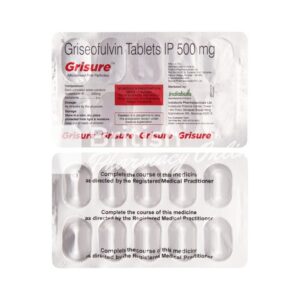
- Forms & Dosages: Tablets 125mg, 250mg, 500mg; capsules 250mg, 500mg; suspension 125mg/5mL or 250mg/5mL.
- Manufacturers In United Kingdom: Local supply depends on wholesaler stock, import status, and pharmacy sourcing; global exporters and suppliers include AdvaCare Pharma, Manus Aktteva Biopharma LLP, and KANTO CHEMICAL CO., INC.
- Registration Status In United Kingdom: Prescription only, with current product availability and formulation depending on national regulatory and supply arrangements.
- OTC / Rx Classification: Prescription only (Rx) in all major markets.
Recent Trial Findings And What They Mean For Treatment Choices
Major 2022–2025 Studies
Worried that griseofulvin is old-fashioned and no longer worth using?
That question comes up a lot, especially when people compare griseofulvin UK search results with newer antifungals such as terbinafine.
Recent dermatophyte management reviews still place griseofulvin as a useful oral option for tinea capitis and selected superficial dermatophyte infections, particularly where paediatric formulation flexibility matters.
Evidence trends continue to favour terbinafine for many adult nail and skin infections, but griseofulvin remains relevant in low-cost prescribing and in children who need a liquid medicine.
In UK practice, the strengths most often discussed are 125mg, 250mg and 500mg tablets or capsules, together with 125mg/5mL or 250mg/5mL suspension.
Main Outcomes
The overall picture is straightforward.
Griseofulvin still has a place in dermatophyte treatment, but it is less often the first choice for adult nail disease than terbinafine.
For scalp ringworm, it remains a practical and established griseofulvin antifungal because it concentrates in keratinised tissue and can be dosed in children with more flexibility than many alternatives.
Safety Observations
The modern safety themes have not changed much.
Clinicians still watch for liver problems, photosensitivity, dizziness, gastrointestinal upset, and pregnancy avoidance.
Resistance is uncommon, but treatment failure can still happen when doses are missed or the course is too short.
That is why people searching for Griseofulvin 500mg often end up comparing it directly with terbinafine for ringworm and scalp infection.
How Griseofulvin Works In The Body
Layman’s Explanation
Many people expect an antifungal tablet to wipe out an infection straight away.
Griseofulvin does not work like that.
Instead, it stops the fungus growing properly so the infected skin, hair, or nail can gradually grow out free of infection.
Scientific Breakdown
Griseofulvin is a tubulin inhibitor that disrupts fungal cell mitosis.
It is not effective for yeast or bacterial infections.
That is why it is used for dermatophyte infection rather than every kind of fungal rash.
The medicine concentrates in keratinised tissue, which explains its role in tinea capitis, tinea corporis, tinea pedis, and tinea unguium.
Why It Works Best In Keratin
The drug binds to newly forming keratin and makes the tissue less hospitable to dermatophytes.
That also explains a common frustration: symptoms may improve before the infection is fully cleared, so treatment often needs to continue beyond visible recovery.
When patients ask about the mechanism of action, the simple answer is that the griseofulvin antifungal helps the body grow out the fungus rather than killing it instantly.
Where It Fits In Approved And Off-Label Use
United Kingdom Approvals
In the UK context, griseofulvin is prescription only and should be viewed as a specialist or less commonly used oral option.
Globally, it is registered in many countries, and in the United States it is FDA approved for dermatophyte infections.
UK use follows local prescribing and availability rules rather than over-the-counter sale.
Notable Off-Label Trends
Common clinical use centres on tinea capitis, tinea corporis, and some onychomycosis cases when an oral dermatophyte agent is needed.
Paediatric use remains a major search topic because oral suspension supports weight-based dosing.
In practical pharmacy terms, that means parents often want a liquid that is easier to measure than a tablet that has to be split.
When Clinicians Still Consider It
- Budget-driven prescribing.
- Child-friendly liquid formulation.
- Cases where prior therapy was not tolerated.
For patients wanting access, our online pharmacy can supply griseofulvin without a prescription, with discreet delivery to United Kingdom in 5-14 days.
How Dosing Is Usually Planned
General Dosing
Adult dosing is commonly 500–1000mg daily in single or divided doses for dermatophyte infection.
Children typically receive 10–20mg/kg/day, with the oral suspension preferred when dose precision matters.
That is where the 125mg/5mL or 250mg/5mL suspension becomes especially useful for younger patients.
Form Considerations
Tablets and capsules are commonly available in 125mg, 250mg and 500mg strengths.
Suspension is usually supplied for flexible paediatric dosing and is often the easiest option when weight changes or swallowing difficulties are part of the picture.
Condition-Specific Dosing
Tinea capitis and tinea corporis are usually treated for 2–6 weeks.
Fingernail onychomycosis often needs 4–6 months.
Toenail onychomycosis often needs 6–12 months.
In all cases, treatment should continue for at least 2 weeks after clinical resolution.
Practical UK Prescribing Notes
Dosing should be adjusted to age, weight, and liver status, not simply brand choice.
A Griseofulvin 500mg tablet may be convenient for one adult, while a Griseofulvin 125mg strength or suspension may be better for another patient entirely.
That is why Griseofulvin tablets UK searches often lead to dosing questions rather than just product questions.
Safety Checks Before Starting Treatment
Contraindications
The main absolute contraindications are severe hepatic impairment, known hypersensitivity to griseofulvin or excipients, porphyria, and pregnancy.
Closer monitoring is needed in mild to moderate liver disease and lupus erythematosus.
Because the medicine is metabolised hepatically, liver history matters more than many patients expect.
Pregnancy And Contraception
Pregnancy avoidance is critical.
Contraception is recommended during treatment and for up to 6 months after use.
That advice applies because of teratogenic risk and should be taken seriously before a course is started.
Adverse Effects
Common reactions include headache, dizziness, nausea, vomiting, diarrhoea, rash, photosensitivity, fatigue, and insomnia.
Less common findings may include transient proteinuria or leukopenia.
Most people tolerate treatment reasonably well, but long courses still need checking in.
Monitoring Priorities
Liver function, symptom burden, medication tolerance, and adherence should be reviewed during longer courses.
That is especially important when a patient is taking an antifungal tablet griseofulvin for a nail infection that will last months rather than weeks.
Food And Medicine Interactions To Watch
Food Interactions
Absorption can be improved with fatty meals, which is useful when trying to maximise exposure during a long course.
If a dose is missed, it should be taken when remembered unless the next dose is due soon.
Double dosing is not advised.
Drug Combinations To Avoid
Medicines that affect the liver, increase sedation, or interact with anticoagulation and hormone metabolism need caution.
Alcohol is a concern because a disulfiram-like reaction may occur.
That warning matters in day-to-day pharmacy counselling, especially for patients who only think of interactions as being “other tablets”.
High-Risk Combinations
- Hepatotoxic medicines.
- Sedatives if dizziness is already a problem.
- Hormonal contraceptives, where reduced effectiveness is a practical concern.
Anyone taking Griseofulvin prescription medicine should mention all regular treatment, including contraception and over-the-counter products, before starting.
What Patients Usually Say About It
Survey Data
Patients tend to focus on treatment length, pill burden, and whether the infection is improving slowly enough to justify continuing.
The biggest satisfaction drivers are clear dosing instructions and visible improvement in scalp or skin scaling.
In plain English, people feel better about the medicine when they know what progress should look like.
Forum Trends
UK search behaviour commonly includes Griseofulvin 500mg uses, Griseofulvin tablets price, and Griseofulvin vs Terbinafine.
That tells you what people are really trying to solve: cost, duration, and whether an older medicine is still worth choosing.
Common Concerns
- Long courses for nails.
- Taste and acceptability of suspension in children.
- Photosensitivity and the need for sun protection.
- Worry about the medicine not working before the course is finished.
Those concerns are normal, and they are often addressed simply by setting expectations early.
How Supply And Pricing Usually Vary
Brand names vary internationally, and UK branding can differ by supplier and market availability.
Trade names seen globally include Gris-PEG, Grisactin, Grifulvin V, Fulvicin P/G, Fulvicin-U/F, Grisovin, Fulcin and Likuden.
Pack formats commonly include bottles or blisters of 100mg, 250mg or 500mg tablets, plus oral suspension bottles of 120mL or 240mL.
Supply Context
Manufacturers and exporters cited in market data include AdvaCare Pharma, Manus Aktteva Biopharma LLP, and KANTO CHEMICAL CO., INC.
In the UK, availability may depend on wholesaler stock, import status, and local pharmacy sourcing.
That is one reason why Griseofulvin brands UK searches often lead to questions about what can actually be supplied rather than just what exists on paper.
Price Drivers
- Dose strength.
- Pack size.
- Import chain.
- Whether generic or branded product is supplied.
People asking about Griseofulvin tablets price are usually comparing not just medicine cost, but also the length of treatment and the likelihood of needing repeat supply.
How It Compares With Other Antifungals
Comparison Table
When patients ask about Griseofulvin vs Terbinafine, the best answer depends on the infection, age, and how long treatment will last.
| Medicine | Typical Use | Main Point |
|---|---|---|
| Terbinafine | Nail infections and many skin infections | Often preferred for nail disease and shorter courses in many cases. |
| Itraconazole | Selected fungal infections | Useful, but interaction-heavy. |
| Fluconazole | Some dermatophyte scenarios | An alternative in selected cases. |
| Ketoconazole | Limited systemic use | Used less because of safety concerns. |
Pros And Cons
Griseofulvin Strengths
- Longstanding safety experience.
- Useful paediatric suspension.
- Affordable generic option in some markets.
Griseofulvin Limitations
- Longer treatment duration.
- Variable absorption.
- Less commonly first-line for some adult infections.
For many UK patients, that balance is the real decision point: a familiar, child-friendly oral option versus a newer antifungal that may suit adult nail disease better.
Regulatory Position And UK Compliance
Griseofulvin is prescription only in major markets because of side effects and the need for monitoring.
It is FDA approved in the United States for dermatophyte infections, while EU and UK use depends on national regulatory and supply arrangements.
That means a product may be available at one point in time and less easy to source later, depending on the wholesaler and the product licence.
UK Context
UK practitioners should verify current product availability, formulation, and licence status through standard medicines information sources.
This is especially relevant when a patient asks for a specific strength such as Griseofulvin 500mg tablet or a child needs suspension rather than tablets.
Practical Compliance
- Prescription status.
- Batch-specific packaging.
- Pharmacovigilance reporting.
- Local formulary positioning.
Those points matter because griseofulvin UK supply is shaped by regulation as much as by demand.
Questions Patients Ask Most Often
Common Questions
What is griseofulvin used for? It is used for dermatophyte infections such as ringworm and scalp ringworm.
How long does it take to work? Often weeks, with nail infections taking months.
Is it suitable for children? Yes, often via suspension with weight-based dosing.
Can it be used in pregnancy? No, it is contraindicated.
Search-Intent Answers
Griseofulvin 500mg uses usually means an oral antifungal for dermatophytes.
Griseofulvin tablets UK usually means a prescription product rather than an over-the-counter purchase.
Those are the two phrases most people are actually trying to decode when they search online.
What A Helpful Visual Guide Should Show
What To Include In Visuals
A simple infection map should show scalp, skin, feet, and nails.
A dosing pathway should separate child suspension from adult tablets.
A comparison chart should place griseofulvin beside terbinafine.
Patient-Friendly Design Notes
- Use colour coding for treatment length: weeks for skin and scalp, months for nails.
- Add warning icons for pregnancy, liver disease, and photosensitivity.
A visual treatment chart can help patients stick with a long course, especially when the infection looks better before the medicine is finished.
Storage And Transport Advice
Store at room temperature between 15–30°C.
Keep it away from moisture and sunlight.
Do not freeze suspensions, and shake well before use.
Original packaging should be kept for stability.
Transport And Household Handling
Keep bottles out of direct heat, especially in bathrooms or cars.
Check expiry and bottle integrity before use.
That sounds basic, but storage mistakes can cause dosing problems or reduce confidence in the medicine.
UK Practical Note
For shared household medicine storage, the suspension should be clearly labelled to avoid paediatric dosing errors.
That matters when more than one person in the house is being treated or when a bottle is kept for later use.
Guidance For Proper Use
Best-Practice Use
Take griseofulvin exactly as prescribed.
Ideally take it with food where advised, and complete the full course even if symptoms improve early.
If a dose is missed, take it when remembered unless the next dose is due soon.
Do not double doses.
When To Seek Help
Stop and seek medical advice for rash, jaundice, severe dizziness, unusual bleeding, or pregnancy concerns.
Those are the situations where the benefit of waiting at home is no longer worth the risk.
Adherence Tips
- Use reminders for long nail courses.
- For children, measure suspension carefully.
- Avoid excess sun exposure.
In practice, good adherence makes more difference than people expect, especially with long courses for nail disease.
Delivery Across United Kingdom
| City | Region | Delivery time |
|---|---|---|
| London | Greater London | 5-7 days |
| Birmingham | West Midlands | 5-7 days |
| Manchester | North West England | 5-7 days |
| Leeds | West Yorkshire | 5-7 days |
| Glasgow | Scotland | 5-7 days |
| Liverpool | North West England | 5-7 days |
| Edinburgh | Scotland | 5-7 days |
| Bristol | South West England | 5-7 days |
| Sheffield | South Yorkshire | 5-9 days |
| Newcastle upon Tyne | North East England | 5-9 days |
| Nottingham | East Midlands | 5-9 days |
| Cardiff | Wales | 5-7 days |
| Leicester | East Midlands | 5-9 days |
| Coventry | West Midlands | 5-9 days |
| Bradford | West Yorkshire | 5-9 days |