Hydroquinone
In brief
- Hydroquinone can be purchased from pharmacies and online skincare retailers in some countries without a prescription for low-strength products (usually 2%), although in many regulated markets higher strengths such as 4% and above require a prescription. Availability and legal status vary by country, so local pharmacy rules should always be checked.
- Hydroquinone is used to treat melasma, hyperpigmentation, age spots and post-inflammatory dark marks. It works by inhibiting tyrosinase, the key enzyme involved in melanin production, thereby reducing new pigment formation and gradually lightening darkened skin.
- The usual dose is a thin layer applied to the affected areas 1–2 times daily, typically using 2–4% cream. Treatment is usually limited to 2–4 months and should be reviewed if continued longer.
- The form of administration is topical, as a cream, gel or lotion. It should be applied only to cleansed, intact skin, avoiding the eyes, lips and mucous membranes.
- It usually starts working gradually, with early improvement often seen after 2–4 weeks of regular use, although fuller results may take several weeks longer.
- The duration of action lasts as long as treatment is continued; the lightening effect can persist for some time, but pigmentation may return if the underlying cause is not controlled or if sun protection is not used.
- Alcohol does not have a major direct interaction with topical hydroquinone, but heavy alcohol use may worsen skin irritation or affect adherence to treatment. It is best to avoid applying the product on irritated or dehydrated skin.
- The most common side effects are mild redness, burning, stinging, dryness, peeling and temporary skin lightening. Less commonly, allergic or irritant dermatitis can occur.
- Would you like to try hydroquinone without a prescription?
Basic Hydroquinone Information
- INN (International Nonproprietary Name): Hydroquinone
- Brand Names Available in United Kingdom: Not specified
- ATC Code: D11AX11
- Forms & Dosages: Cream 2%, 4%, 5%; gel 2%, 4%; lotion 2%, 4%; combination products with tretinoin, corticosteroids and sunscreen
- Manufacturers in United Kingdom: Not specified
- Registration Status in United Kingdom: Prescription assessment is usually needed; local supply depends on current regulation and product type
- OTC / Rx Classification: Prescription in most regulated markets for 2% to 4% and higher strengths; OTC for ≤2% in some regions
Hydroquinone For Hyperpigmentation: What The Latest Evidence Means
Major 2022–2025 Studies
People usually ask a simple question first: does hydroquinone still work, and is it still worth using?
The short answer is yes, but only when it is used properly and for a limited time.
Recent reviews from 2022 to 2025 continue to support hydroquinone cream as one of the most effective topical depigmenting agents for melasma and post-inflammatory hyperpigmentation, especially when the pigment sits in the epidermis rather than deeper in the skin.
Results are strongest with 2% to 4% strengths, and the best outcomes are usually seen when treatment is paired with strong photoprotection and, where needed, a dermatologist-led combination such as hydroquinone tretinoin fluocinolone cream.
In practice, the main benefit is gradual fading of dark patches over 8 to 12 weeks, with review at about 2 to 4 months rather than open-ended use.
Main Outcomes
Patients with epidermal melasma, sun-related spots, or post-acne marks tend to notice a more even tone before they see full clearance.
That is why hydroquinone for melasma remains common in specialist care, and why it is still discussed alongside hydroquinone hyperpigmentation treatment in dermatology clinics.
Safety Observations
The newer literature is also very clear about the safety message.
Short courses are preferred because irritation, rebound darkening and rare exogenous ochronosis become more of a concern when the treatment is used for too long, at too high a strength, or without supervision.
For that reason, hydroquinone is best treated as a targeted medicine, not a daily cosmetic cream for indefinite use.
How Hydroquinone Works In The Skin
Layman’s Explanation
Think of hydroquinone as a switch that turns down pigment production in the treated area.
It is a phenol derivative used topically only, and its job is to slow the process that makes dark patches look darker over time.
That is why a patient may use a skin lightening cream with hydroquinone for a few months and then stop once the skin tone has evened out.
Scientific Breakdown
Tyrosinase Inhibition
Hydroquinone inhibits tyrosinase, the key enzyme needed to make melanin, and it also affects melanocyte function.
With less new pigment being formed in the treated patch, the existing discoloration can fade gradually.
Why It Works Best On Epidermal Pigment
Because hydroquinone acts mainly at the epidermal level, it works best when excess pigment is superficial.
That includes some cases of melasma, lentigines and post-inflammatory hyperpigmentation.
It sits in ATC code D11AX11 and belongs to the phenols group, which fits its strong dermatological action.
That mechanism also explains why a hydroquinone cream 4% often performs better than many cosmetic brighteners, but only when the diagnosis is right.
Where Hydroquinone Is Used, And Where It Is Not
United Kingdom Approvals
In the UK, hydroquinone is generally handled as a specialist ingredient rather than a routine retail cosmetic.
For most patients, hydroquinone prescription UK access means a clinician needs to assess the patch, the cause, and the risk of irritation before treatment starts.
That is especially true when patients are asking about treatments for melasma UK or seeking prescription hydroquinone UK after trying over-the-counter products without benefit.
Notable Off-Label Trends
Most real-world use focuses on melasma, post-inflammatory hyperpigmentation and solar lentigines.
Triple-combination creams that include hydroquinone, tretinoin and a corticosteroid are widely used for stubborn melasma, especially in specialist practice.
That approach is common in patients who have already failed simpler regimens.
Real-World Product Context
Internationally, patients may see names such as Eldoquin, Lustra, Melalite, Movate and Obagi formulations, but local availability differs a lot by market.
In our online pharmacy, hydroquinone is available without a prescription, with discreet delivery to United Kingdom in 5-14 days.
That does not replace medical judgement, though, and anyone with facial pigment changes, pregnancy, or sensitive skin should still seek advice before starting.
How To Use It Safely And Correctly
General Dosing
The usual method is straightforward: apply a thin layer to clean, dry, affected skin once or twice daily, and keep it away from the eyes, lips, nostrils and broken skin.
Daily sunscreen with SPF 30+ is not optional, because UV exposure can undo progress and make pigmentation worse again.
Condition-Specific Dosing
Melasma And Hyperpigmentation
For melasma and general hyperpigmentation, 2% to 4% cream is the most common strength.
Use is usually limited to 2 to 4 months before review.
This is the pattern most patients mean when they search for hydroquinone melasma treatment or hydroquinone cream 4%.
Lentigines And Age Spots
For lentigines, the cream is usually applied once daily until the spot fades, with a practical maximum of around 3 months unless a clinician says otherwise.
Post-Inflammatory Hyperpigmentation
For PIH, treatment may continue for 2 to 6 months, but the response should be reassessed if there is little improvement.
Paediatric And Special Populations
Safety and efficacy in children under 12 years are not established.
No formal dose change is specified for older adults, but sensitive skin may react more easily.
There is also no formal dosing data for liver or kidney impairment, so caution and dermatology input are sensible where needed.
What Safety Checks Matter Most
Contraindications
Hydroquinone should not be used on eczema, sunburnt, broken or irritated skin.
It is also unsuitable for people with a known allergy or hypersensitivity to hydroquinone or the excipients in the formulation.
Pregnancy and breastfeeding need specialist advice because controlled safety data are limited.
Adverse Effects
Common Reactions
The reactions people most often report are redness, burning, stinging, dryness and mild peeling.
A temporary lightening of the treated patch can happen early on, which is one reason patients should only apply to the target area.
Less Common But Important Risks
Allergic contact dermatitis, irritant dermatitis and nail discolouration can occur.
Exogenous ochronosis is rare, but it is the complication clinicians worry about most when hydroquinone is used for too long or too strongly.
Hazard Notes
Hydroquinone carries serious hazard warnings, including the potential for allergic skin reactions and eye damage if misused.
It is also flagged in safety systems for possible mutagenic and carcinogenic concern, which is another reason short supervised courses are preferred.
If someone develops swelling, blistering, severe rash or eye exposure, treatment should stop and advice should be sought promptly.
What To Avoid When Combining Treatments
Food Interactions
There are no meaningful food interactions because hydroquinone is applied to the skin.
The real issue is consistency, especially if the person also follows a skincare routine that affects inflammation or photosensitivity.
Drug Combinations To Avoid
Irritant Stacking
It is sensible to avoid layering hydroquinone with several strong irritants on the same site unless a clinician has advised it.
That includes retinoids, acids and harsh exfoliants, which can push the skin into dermatitis.
Combination Therapy
Hydroquinone is often deliberately used with tretinoin and a corticosteroid in triple combination cream for resistant melasma.
That approach can work well, but it should be specialist-supervised rather than improvised at home.
Clinical Caution
Caution is needed in patients already using depigmenting agents, prescription retinoids or procedures that weaken the skin barrier.
That is especially relevant when someone is comparing hydroquinone tretinoin fluocinolone cream with other topical regimens.
What Patients Say In Real Life
Survey Data
Patients generally report the first visible change within 8 to 12 weeks, particularly when hydroquinone is used correctly and sunscreen is taken seriously.
Satisfaction is highest when expectations are realistic and the pigment is epidermal rather than deep dermal.
Forum Trends
Common Positives
Online discussions often describe hydroquinone as stronger than many over-the-counter brightening products for stubborn dark marks.
Short treatment cycles tend to be viewed more favourably than prolonged use.
Common Concerns
The main worries are burning, dryness, uneven lightening and anxiety about rebound pigmentation or ochronosis.
Those concerns are valid, and they are part of why hydroquinone should be treated as a monitored medicine.
UK Context
UK users often compare prescription hydroquinone with personalised digital dermatology services such as Skin+Me, Dermatica and Monderma.
That comparison usually comes down to access, convenience and how closely the regimen is supervised.
Where It Fits In The Market
Market Availability
Hydroquinone supply varies by country, strength and format.
Global brand examples include Eldoquin, Lustra, Melanex, Melquin, Melalite, Melquin, Iluma, Benoquin, HQderm and Iklen, with tube sizes commonly ranging from 15 g to 60 g.
People looking to buy hydroquinone ointment online should check whether the product is a cream, gel or lotion, and whether the advertised strength matches the prescription or treatment plan.
UK Purchasing Reality
Prescription And Private Supply
In the UK, access is usually through specialist or private dermatology channels rather than routine shop-bought retail.
That means supply can be more variable than for standard skincare products, especially for hydroquinone for hyperpigmentation or hydroquinone for melasma.
Market Trend
Demand is driven by melasma, post-acne pigmentation and interest in combination regimens.
The strongest commercial interest tends to be in hydroquinone cream 4% and related specialist formulations.
Commercial Note
International wholesalers and API suppliers still support the supply chain, but local availability can change with regulation and safety concerns.
That is one reason patients sometimes see different packaging, different brand names and different rules in different countries.
How Hydroquinone Compares With Alternatives
Comparison Table
When hydroquinone is not suitable, the next question is usually which alternative makes sense.
| Option | Typical Role | Practical Point |
|---|---|---|
| Hydroquinone | Targeted epidermal pigment | Best-studied topical depigmenting agent |
| Azelaic acid | Hyperpigmentation and acne-prone skin | Often better tolerated |
| Kojic acid | Cosmetic brightening | Popular, but usually less potent |
| Arbutin | Cosmetic routine support | Milder effect |
| Tranexamic acid | Melasma | May help when pigment is difficult to control |
| Tretinoin | Cell turnover and combination regimens | Often used with hydroquinone under supervision |
Pros And Cons
Hydroquinone Strengths
Hydroquinone remains one of the most effective topical options for targeted pigment reduction, especially when the patch is superficial.
That is why clinicians still use it when the diagnosis is melasma, post-inflammatory hyperpigmentation or age spots.
Limitations
The main drawbacks are irritation, prescription barriers in some markets and restrictions on prolonged use.
Those limits are important because long, unsupervised courses raise the risk of chronic side effects.
When Alternatives May Be Better
Azelaic acid may be a better first step if the skin is very sensitive.
Tranexamic acid can be considered for melasma.
Arbutin and kojic acid are common in cosmetic routines, but they are generally less potent than hydroquinone.
That is why hydroquinone alternatives are often chosen for tolerance, while hydroquinone is chosen for strength.
Regulation And Access In The UK And Abroad
United Kingdom Approvals
Hydroquinone’s UK status is shaped by safety concerns and prescription governance rather than broad over-the-counter availability.
Patients should assume specialist assessment is needed before use.
International Context
Europe And ANMDMR Note
In parts of Europe, including Romania, hydroquinone products are monitored through national medicines databases such as ANMDMR, where brand names and listings can change.
That is why hydroquinone prescription Romania ANMDMR searches can give different answers depending on the date and the product line.
Global Differences
The US, India, Africa and the Middle East show wide variation in OTC and prescription status.
Even so, many regulated markets are tightening control because of safety concerns.
Why Regulation Matters
The restrictions reflect concern about allergic reactions, long-term misuse and chronic pigment complications.
In other words, hydroquinone is effective, but it needs careful boundaries.
Common Questions About Hydroquinone
Common Questions
What Is Hydroquinone Used For?
It is used to treat melasma, hyperpigmentation, age spots and post-inflammatory dark marks.
How Long Should It Be Used?
Usually 2 to 4 months for melasma and hyperpigmentation, with reassessment rather than indefinite use.
Is It Safe For Everyone?
No.
It should be avoided on broken skin, in eczema, and used cautiously in pregnancy and breastfeeding.
Can It Be Bought Online?
Availability depends on country and regulation.
In the UK it is generally not treated like a casual retail item, although private access routes do exist.
That is why patients often search for hydroquinone FAQ before deciding whether to order or request a consultation.
What The Packaging Usually Tells You
What Patients Should Look For
Packaging Cues
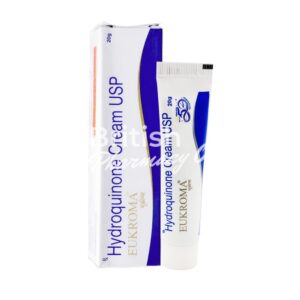
Hydroquinone commonly appears as a cream, gel or lotion in tubes, with strengths such as 2%, 4% and 5%.
Global examples include Eldoquin, Lustra, Melalite, HQderm and Iklen.
Correct Application Areas
Use it only on localised pigment patches unless a clinician has directed otherwise.
It should not be spread across the whole face by default.
Warning Signs
Stop and seek advice if there is severe redness, swelling, blistering, eye exposure or rapid patchy lightening.
A visual guide for safe use should also remind patients that sunscreen is essential and that improvement is gradual rather than immediate.
How To Store And Travel With It
Storage Rules
Hydroquinone should be stored below 25°C, protected from light and moisture, and kept in the original sealed tube.
It should not be frozen.
Transport Advice
Travelling With The Product
When travelling, keep it away from heat sources and direct sunlight.
If temperature control is a concern, hand luggage is usually the safer place for it.
Shelf-Life Caution
Because hydroquinone can degrade with poor storage, expiry dates matter.
Do not keep using a tube if the colour has changed or the product has separated.
That advice is especially relevant for UK patients ordering privately or receiving compounding pharmacy deliveries.
How To Use It Properly Day To Day
Step-By-Step Application
Apply a thin layer to clean, dry affected skin once or twice daily as directed.
Use it only on the prescribed area, wash hands afterwards, and avoid the eyes, lips and nostrils.
Practical Safety Rules
Sun Protection
Daily SPF 30+ is essential because UV exposure worsens pigmentation and may reduce treatment success.
Missed Dose And Overdose
If a dose is missed, apply it when remembered unless the next dose is near.
Do not double apply.
If too much is used, wash off the excess and watch for irritation.
If a large amount is swallowed or spread over a very large area, urgent medical help is needed because severe toxicity can occur.
When To Stop
Stop and seek medical advice if there is significant burning, rash, swelling, severe peeling or no visible benefit after an appropriate review period.
That is the safest way to keep hydroquinone treatment effective without letting the risks build up.
Delivery Across United Kingdom
| City | Region | Delivery Time |
|---|---|---|
| London | Greater London | 5-7 days |
| Birmingham | West Midlands | 5-7 days |
| Manchester | North West England | 5-7 days |
| Leeds | West Yorkshire | 5-7 days |
| Glasgow | Scotland | 5-7 days |
| Edinburgh | Scotland | 5-7 days |
| Liverpool | North West England | 5-7 days |
| Bristol | South West England | 5-7 days |
| Sheffield | South Yorkshire | 5-7 days |
| Newcastle upon Tyne | North East England | 5-7 days |
| Nottingham | East Midlands | 5-9 days |
| Leicester | East Midlands | 5-9 days |
| Cardiff | Wales | 5-7 days |
| Belfast | Northern Ireland | 5-7 days |
| Norwich | East of England | 5-9 days |