Naltrexone
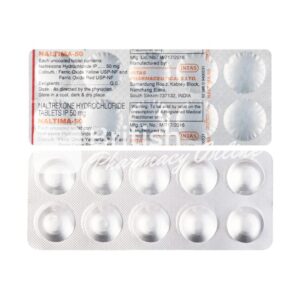
In brief
- Naltrexone is a prescription-only medicine in most major jurisdictions, although some online pharmacies may offer it without a prescription. It is available under brand names such as Revia, Vivitrol and Naltrexone Accord, depending on the country.
- Naltrexone is used to help treat alcohol dependence and opioid dependence after detoxification. It works as an opioid receptor antagonist, blocking opioid effects and helping reduce cravings and the rewarding effects of alcohol and opioids.
- The usual oral dose is 50 mg once daily; some regimens use 25 mg as a test dose followed by 50 mg daily, or 100 mg on three non-consecutive days per week. For alcohol dependence, 50 mg daily is commonly used. The extended-release injection is usually 380 mg intramuscularly every 4 weeks.
- Naltrexone is taken as an oral tablet or given as a long-acting intramuscular injection.
- When taken by mouth, it starts working within about 1 hour, although the full clinical benefit may take several days to develop. The injectable form begins to provide sustained effect after administration.
- The oral effect lasts about 24 hours per dose, while the extended-release injection lasts for around 4 weeks.
- You should not drink alcohol while taking naltrexone, as it is used to support alcohol reduction or abstinence and alcohol may worsen side effects such as nausea, dizziness and liver strain.
- The most common side effects are nausea, headache, dizziness, abdominal pain, insomnia and tiredness; injection-site reactions can occur with the depot injection.
- Would you like to try naltrexone without a prescription?
What Recent Trials Say About Naltrexone
- INN (International Nonproprietary Name): Naltrexone
- Brand names available in United Kingdom: Naltrexone Accord
- ATC Code: N07BB04
- Forms & dosages: Tablet (oral) 25 mg, 50 mg, 100 mg; extended-release injection 380 mg per vial (monthly IM)
- Manufacturers in United Kingdom: Accord Healthcare
- Registration status in United Kingdom: Prescription Only (Rx)
- OTC / Rx classification: Prescription Only (Rx)
Recent naltrexone trials from 2022 to 2025 have kept the focus on what matters in day-to-day addiction care: people staying on treatment, drinking less, and avoiding relapse.
In alcohol dependence treatment, oral naltrexone and depot naltrexone both continue to show benefit, especially when patients are detoxed first and supported in a structured programme.
Real-world studies also suggest that extended-release injections can improve monthly adherence compared with tablets, but that advantage depends on people actually attending appointments for the injection.
That is where treatment often falters in practice, particularly for patients juggling work, transport, stigma, or unstable routines.
Across studies, the most clinically meaningful outcomes have been fewer heavy drinking days, better relapse-free survival, and improved persistence when medication is paired with counselling or psychosocial support.
For opioid relapse prevention, naltrexone works best after full detoxification and a confirmed opioid-free status, because starting too early can trigger withdrawal.
Safety signals in the recent evidence remain familiar: nausea, headache, insomnia, injection-site reactions, and the need to keep an eye on liver enzymes.
In short, the evidence base is stronger than ever, but access, adherence, and correct patient selection still decide whether naltrexone performs well in the real world.
How Naltrexone Works In The Body
Are you wondering why one medicine can be used in both alcohol dependence and opioid relapse prevention?
Naltrexone hydrochloride is an opioid antagonist, which means it blocks opioid receptors in the brain rather than activating them.
That receptor blockade reduces the rewarding effect people may feel from alcohol and prevents opioids from producing their usual effect.
It does not treat withdrawal, and it is not an opioid, so it will not relieve the symptoms of opioid detox on its own.
Scientifically, its main action is μ-opioid receptor antagonism, with downstream effects on reward pathways and craving.
That is why the ATC code N07BB04 sits within the alcohol dependence group, even though the drug is also used after opioid detoxification.
In practice, tablets are taken daily, while a depot injection gives steady blockade for about four weeks.
For UK use, the key point is simple: the medicine only makes sense when the patient is truly opioid-free before starting.
What Uses Are Licensed And What Is Off Label?
People often search for naltrexone tablets and Low Dose Naltrexone at the same time, but those are very different topics.
In the UK, Naltrexone Accord is a recognised branded product, with oral tablets typically supplied as 50 mg.
It is prescription only and used mainly in specialist addiction settings for alcohol dependence and opioid dependence after detoxification.
Standard-dose treatment is usually combined with counselling, relapse-prevention planning, and monitoring, because medication alone rarely carries the whole recovery plan.
Low-dose naltrexone, often called LDN, is an off-label topic that is frequently searched online, but it is separate from licensed dependence treatment.
Evidence, dosing, and prescribing standards for LDN are not the same as those for standard naltrexone hydrochloride used in alcohol harm reduction or relapse prevention.
For many patients, access is shaped by whether they are being managed in a community service, an addiction clinic, or via a structured private route.
In our online pharmacy, naltrexone is available without a prescription, with discreet delivery to United Kingdom in 5-14 days.
How Dosing Is Usually Set Up
What does a typical start look like, especially if someone is nervous about side effects?
The standard adult oral regimen is usually a 25 mg test dose, followed by 50 mg daily if tolerated.
For selected patients, supervised regimens such as 100 mg on Monday, Wednesday, and Friday, or 150 mg on Friday, may be used.
For alcohol dependence, 50 mg a day is the usual maintenance dose, often for at least 3 to 6 months, and longer if benefit continues.
For opioid dependence, treatment should only begin after full detoxification and a negative opioid screen.
The extended-release injection is a different regimen entirely.
Vivitrol injection is given as 380 mg intramuscularly every 4 weeks, and it needs clinic administration rather than home dosing.
That depot approach can help with adherence, but it also means appointments must be kept, which is where some patients struggle.
When naltrexone is working well, the goal is steady maintenance rather than a dramatic feeling from the medicine itself.
What Safety Checks Matter Most?
Could naltrexone cause a problem if opioids are still in the system?
Yes, and that is why the safety checks matter so much.
Current opioid dependence, a positive opioid urine test before starting, acute hepatitis, liver failure, and hypersensitivity are absolute contraindications.
If opioids are still present, naltrexone can precipitate acute withdrawal, which may be severe and distressing.
Common naltrexone side effects include nausea, vomiting, abdominal pain, headache, dizziness, insomnia, anxiety, joint pain, and raised liver enzymes.
Depot therapy can also cause injection-site reactions.
In practice, baseline liver function tests are sensible before treatment, with follow-up monitoring in people with hepatic impairment or those taking hepatotoxic medicines.
Caution is also needed in severe renal impairment, pregnancy, and lactation, where the benefits and risks need to be weighed carefully.
If acute hepatitis, severe overdose, or unexpected opioid exposure is suspected, urgent medical review is needed rather than a watch-and-wait approach.
What Interactions Should Be Checked?
Does naltrexone need to be taken away from food?
No major food interaction is usually highlighted, although nausea can feel worse on an empty stomach.
That is why practical advice often focuses on tolerability rather than strict dietary rules.
The more important issue is medicine safety.
Opioids must be avoided, including opioid painkillers and opioid-containing cough remedies, because naltrexone blocks their effect.
That becomes especially relevant if a patient needs acute analgesia, surgery, or emergency pain control.
Every other medicine should still be reviewed, including over-the-counter products and supplements, because hepatotoxic combinations can raise the risk of liver problems.
Prescribers need to plan ahead for any situation where opioid analgesia might be required, since naltrexone can blunt the expected response to pain relief.
When patients understand this early, it prevents a lot of last-minute confusion in urgent care settings.
What Patients Usually Say In Real Life
Why do some patients stop naltrexone even when it is clinically appropriate?
Survey and forum themes are fairly consistent.
People often mention nausea, not feeling an immediate effect, missed appointments for monthly injections, and uncertainty about whether they truly want to stop alcohol or opioids.
That last point matters more than many people expect.
Naltrexone is usually described as reducing cravings or the reward from drinking, not as a medicine that produces a strong sensation of treatment.
When expectations are too high, disappointment is common.
On the other hand, reports are much more positive when the medicine is used within structured support, with counselling and clear relapse-prevention planning.
In the UK, access to specialist addiction services can make a real difference, particularly for patients who need monitoring and help staying engaged.
People searching for Low Dose Naltrexone often want a gentler or different experience, but that should not be confused with standard-dose relapse prevention.
How Naltrexone Sits In The UK Market
Is it easy to get naltrexone in the UK?
Availability can vary by wholesaler, manufacturer, and region, even when the brand is established.
Naltrexone Accord is the main UK-branded reference from the source data, usually in local 50 mg tablet packs.
Depot formulations generally need a clinic supply chain rather than a normal community pharmacy shelf.
Globally, the product is supplied by companies such as Accord Healthcare, Apotex, Sun Pharma, Mallinckrodt, Elite, Sterinova, Mylan, Chiesi, Norameda, Intas, and Synmedic.
Because naltrexone is prescription only, pricing depends on NHS and private pharmacy routes rather than standard over-the-counter retail pricing.
That is why the final cost to the patient can vary depending on the prescribing pathway and dispensing setting.
How Naltrexone Compares With Other Options
Which medicine fits best depends on whether the main problem is alcohol, opioids, or both.
| Medicine | Main Use | Strengths | Limitations |
|---|---|---|---|
| Naltrexone | Alcohol relapse prevention; detoxed opioid dependence | Reduces reward and cravings | Must start opioid-free |
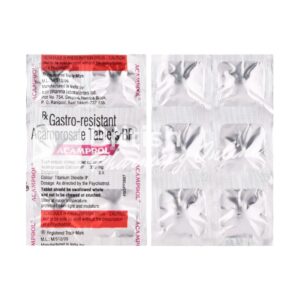
| Acamprosate | Abstinence support in alcohol dependence | Useful for maintenance | Different adherence burden |
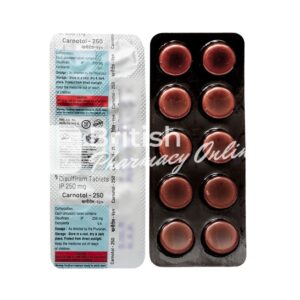
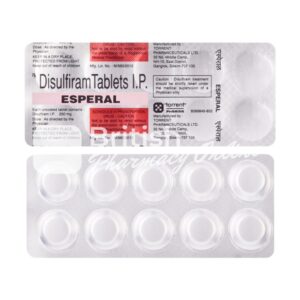
| Disulfiram | Alcohol aversion therapy | Deterrent approach | Relies on supervision and motivation |
| Nalmefene | Alcohol dependence | Another harm-reduction option | Not the same as naltrexone |
| Methadone | Opioid dependence treatment | Opioid substitution therapy | Not an antagonist |
| Buprenorphine | Opioid dependence treatment | Harm reduction and maintenance | Requires different prescribing approach |
Naltrexone is useful when reducing the rewarding effect is the goal, but it is not suitable if opioids are still being used.
Acamprosate is often chosen for abstinence maintenance, while disulfiram works more as a deterrent and needs strong motivation.
Methadone and buprenorphine are more appropriate when opioid agonist treatment is needed.
The right choice depends on substance type, detox status, liver profile, and the patient’s own goals.
What The Regulatory Picture Looks Like
In major jurisdictions, naltrexone is prescription only.
That includes the UK, where branded and generic pathways exist, including Naltrexone Accord.
The oral formulation has been FDA-approved since 1984, and the injection since 2006, while the medicine is also marketed in Europe, Canada, India, Australia, and Romania under national registrations.
Those approvals do not change the fact that prescribing is still best handled in specialist settings or under local formulary access.
For UK patients, that usually means the prescriber needs to be comfortable with addiction medicine, opioid screening, and liver monitoring.
As a prescription medicine, it should be used with the same care as any other long-term treatment for dependence.
Quick Answers To Common Questions
What is naltrexone used for?
It is used for alcohol dependence treatment and relapse prevention in detoxed opioid dependence.
How long does it take to work?
It starts blocking opioid receptors after dosing, but the clinical benefit is usually judged over days and weeks, not minutes.
Can I take it if I use opioid painkillers?
No, because naltrexone blocks opioids and can precipitate withdrawal if opioids are already present.
What if I miss a dose?
Take it as soon as remembered unless it is close to the next dose, and do not double up.
Is Low Dose Naltrexone the same as standard treatment?
No, LDN is a separate off-label topic and is not the same as standard-dose dependence treatment.
How The Treatment Pathway Looks Visually
A simple infographic works well for patients who want the big picture at a glance.
One useful flowchart is: opioid-free screening, then a 25 mg test dose if appropriate, then maintenance tablets or monthly depot therapy.
A second graphic can compare oral tablets with the monthly Vivitrol injection, showing dosing frequency, attendance needs, and clinic contact points.
Icons help as well.
Good choices include liver monitoring, opioid avoidance, and monthly clinic visits.
A “who it suits” diagram can show detoxed alcohol dependence, detoxed opioid dependence, and supervised maintenance as the main pathways.
That sort of visual guide helps patients understand why naltrexone is not simply another tablet, but part of a structured treatment plan.
How It Should Be Stored And Transported
Storage is straightforward, but it is worth getting right.
Tablets should be kept at 20°–25°C and protected from moisture in the original pack.
Injectable products should be refrigerated according to the specific label and must not be frozen.
During travel, the medicine should be kept away from excessive heat or cold.
For clinic-based depot supply, cold-chain handling and stock control matter because the product needs reliable storage conditions before administration.
A patient carrying tablets home from a Friday evening order should still keep them in the original packaging and away from bathroom humidity.
How To Use Naltrexone Properly
What makes the difference between a good result and a poor one?
Good prescribing starts with confirmed opioid-free status.
When appropriate, a 25 mg test dose helps check tolerability before moving to the full maintenance dose.
Treatment works best when it is paired with counselling and relapse-prevention planning rather than used as a stand-alone fix.
For tablets, daily adherence matters.
For depot therapy, monthly attendance is essential.
If an oral dose is missed, it should be taken promptly unless the next one is nearly due, and doses should never be doubled.
Follow-up should include liver function, mental state, adherence, and adverse effects.
Urgent escalation is needed if there are signs of acute hepatitis, severe overdose, or unplanned opioid exposure.
That steady, practical approach is what usually keeps treatment on track.
Delivery Across United Kingdom
| City | Region | Delivery time |
|---|---|---|
| London | Greater London | 5-7 days |
| Birmingham | West Midlands | 5-7 days |
| Manchester | North West England | 5-7 days |
| Glasgow | Scotland | 5-7 days |
| Edinburgh | Scotland | 5-7 days |
| Leeds | West Yorkshire | 5-7 days |
| Liverpool | Merseyside | 5-7 days |
| Cardiff | Wales | 5-7 days |
| Bristol | South West England | 5-7 days |
| Newcastle upon Tyne | North East England | 5-7 days |
| Sheffield | South Yorkshire | 5-9 days |
| Nottingham | East Midlands | 5-9 days |
| Leicester | East Midlands | 5-9 days |
| Coventry | West Midlands | 5-9 days |
| Sunderland | North East England | 5-9 days |
Safe Storage And Travel Tips
Tablets should be stored at 20°–25°C, in the original packaging, and away from moisture.
Injectable products should be kept refrigerated according to the product label, with freezing avoided.
For transport, protecting the medicine from heat and cold is the main priority.
That matters for patients who travel for work, use clinic-based depot therapy, or need medicine carried between home and appointment settings.
Before You Start Treatment
Confirm the patient is opioid-free.
Use the 25 mg test dose where appropriate.
Check liver function before and during treatment.
Reinforce counselling, relapse-prevention planning, and regular follow-up.
Never combine treatment with active opioid use.
Seek urgent medical help if there are signs of acute hepatitis, overdose, or unexpected opioid exposure.