
Aricept
Aricept
- Available from community pharmacies and authorised online suppliers in many countries; Aricept (donepezil) is a prescription-only (Rx) medicine and should be supplied on a clinician’s prescription — although some vendors or pharmacies may offer it without a prescription, obtaining or using prescription medicines without medical supervision is unsafe and not recommended.
- Aricept is used to treat symptoms of mild, moderate and severe Alzheimer’s dementia; it is a centrally acting reversible cholinesterase inhibitor that increases acetylcholine levels in the brain to provide symptomatic cognitive and behavioural improvement for some patients.
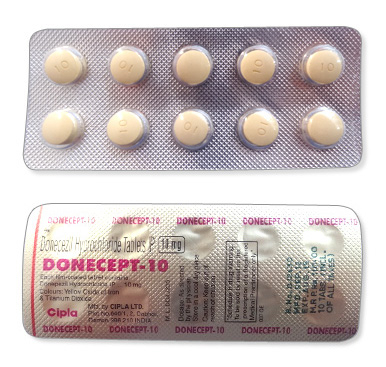
- The usual dosing regimen starts at 5 mg once daily; after 4–6 weeks this may be increased to 10 mg once daily for mild–moderate disease, and for moderate–severe disease patients may be titrated from 5 mg → 10 mg and, after at least 3 months on 10 mg, increased to 23 mg once daily if required (maximum 23 mg daily).
- Administered orally as tablets (5 mg, 10 mg, 23 mg) or orally disintegrating tablets (ODT 5 mg, 10 mg); a transdermal patch formulation (Adlarity) is available in some markets (US); there are no parenteral forms — dosing is once daily.
- Clinical effects may begin within 1–4 weeks, with clinicians typically assessing response after about 4–12 weeks of treatment.
- Effect is maintained with once-daily dosing (around 24 hours); donepezil has a relatively long elimination half-life (approximately 70 hours) and reaches steady state over a number of days to weeks.
- Avoid excessive alcohol — alcohol can worsen dizziness, sedation and cognitive impairment and may increase the risk of adverse effects.
- The most common side effect is nausea (gastrointestinal upset such as diarrhoea and vomiting are also frequent), with other common effects including insomnia, vivid dreams, dizziness and, less commonly, bradycardia.
- Would you like to try aricept without a prescription?
Aricept


Basic Aricept Information
- INN (International Nonproprietary Name): Donepezil (also referred to as donepezilum in Eastern Europe).
- Brand Names Available In United Kingdom: Aricept and multiple generics supplied by manufacturers such as Eisai and Pfizer; generic suppliers include Teva, Sandoz, Mylan, Zentiva and Alvogen.
- ATC Code: N06DA02 — Donepezil (Anti‑dementia, Cholinesterase Inhibitors).
- Forms & Dosages: Tablets 5 mg, 10 mg, 23 mg; Orally Disintegrating Tablets (ODT) 5 mg and 10 mg; transdermal patch available as Adlarity in the US (not UK licensed).
- Manufacturers In United Kingdom: not specified.
- Registration Status In United Kingdom: Authorised and supplied in the UK as prescription‑only medicine; widely used in dementia care pathways.
- OTC / Rx Classification: Prescription only (Rx) in the United Kingdom.
Key Findings From Recent Trials
Major 2022–2025 Studies
Recent meta‑analyses and investigator‑led trials from 2022 to 2025 continued to evaluate donepezil in real‑world and controlled settings.
These studies focused on symptomatic outcomes using tools such as ADAS‑Cog and global function scales.
Trials included patients across mild, moderate and moderate–severe Alzheimer’s disease and compared donepezil to placebo or alternative cholinesterase inhibitors.
Several investigator analyses looked at dose strategies including escalation to 10 mg and 23 mg for more advanced disease.
Comparative observational work assessed persistence versus rivastigmine and galantamine in routine care.
Main Outcomes
Overall effect sizes versus placebo were generally small to moderate, reflecting modest cognitive benefit on ADAS‑Cog scores.
Higher‑dose strategies showed incremental stabilisation in moderate–severe cohorts after appropriate titration.
Real‑world studies reported similar treatment retention for donepezil and other cholinesterase inhibitors, with differences driven by tolerability.
Clinically, benefits are mainly symptomatic—improvements in attention, memory retrieval and everyday function for some patients.
Safety Observations
Gastrointestinal adverse events remained the commonest—nausea, diarrhoea and appetite loss were dose related.
Observational safety cohorts flagged bradycardia and syncope as important concerns in older patients with multimorbidity.
Transdermal approaches and fixed combinations were evaluated as strategies to improve tolerability and adherence.
These findings support NHS‑style stepwise titration and periodic re‑evaluation in UK clinical practice.
Clinical Mechanism Of Action
Layman’s Explanation
Patients often ask, “How does Aricept actually help?”
Donepezil works by raising acetylcholine levels in the brain, which can help with attention and memory retrieval in some people with Alzheimer’s disease.
The benefit is symptomatic and typically temporary rather than altering the underlying disease process.
Scientific Breakdown
Donepezil is a centrally acting reversible acetylcholinesterase inhibitor that crosses the blood–brain barrier.
At therapeutic doses it inhibits acetylcholinesterase selectively over butyrylcholinesterase, increasing synaptic acetylcholine in cortex and hippocampus.
The pharmacokinetic profile supports once‑daily dosing with available tablets (5 mg, 10 mg, 23 mg) and ODT formats.
Binding is reversible and non‑competitive, improving cholinergic neurotransmission without directly agonising cholinergic receptors.
Receptor/Enzymatic Detail
Donepezil reduces AChE activity, prolonging acetylcholine presence at synapses in areas most affected by Alzheimer’s pathology.
The long plasma half‑life enables stable daily exposure and predictable dosing changes from 5 mg to 10 mg and, in selected patients, 23 mg.
Clinicians must balance dose‑dependent efficacy against higher rates of GI and cardiac adverse effects observed at larger doses.
Scope Of Approved & Off‑Label Use
United Kingdom Approvals
Donepezil is licensed for symptomatic treatment of mild, moderate and severe Alzheimer’s dementia.
In UK practice it is usually initiated by memory clinics or specialist dementia services and continued when clinical benefit is apparent.
Formulations in use include Aricept and generics, with tablets and ODTs commonly prescribed.
Notable Off‑Label Trends
Clinicians sometimes consider donepezil off‑label for mixed dementia, vascular cognitive impairment or other neurodegenerative causes when cholinergic deficit is suspected.
Such off‑label use is typically based on small studies or extrapolation and requires documented rationale and informed consent in the UK.
Combination therapy with memantine (Namzaric) is used in moderate–severe disease where NMDA antagonism is indicated.
Dosage Strategy
General Dosing
Standard initiation is 5 mg once daily, usually increased after 4–6 weeks to 10 mg once daily for mild–moderate Alzheimer’s.
For moderate–severe disease, escalation to 23 mg once daily can be considered after at least three months at 10 mg and only if tolerated.
These regimens align with product information and UK specialist guidance on titration.
Condition‑Specific Dosing
Start low and increase cautiously while monitoring symptoms and side effects.
Older adults generally require no routine dose adjustment but clinical review is important given comorbidity.
Liver impairment: mild–moderate usually needs no change but severe disease warrants caution.
Renal impairment does not usually require dose adjustment but monitoring is advised.
If a dose is missed, the patient should take it when remembered unless close to the next dose and must not double the next dose.
Safety Protocols
Contraindications
Absolute contraindication is known hypersensitivity to donepezil hydrochloride or piperidine derivatives.
Severe liver impairment is a situation for caution and careful clinical judgement.
Relative cautions include cardiac conduction abnormalities, severe COPD or asthma, active peptic ulcer disease, seizure disorders and urinary retention or prostatic hypertrophy.
Adverse Effects
Gastrointestinal effects—nausea, diarrhoea, vomiting and appetite loss—are the most commonly reported and are dose related.
CNS adverse events include insomnia, vivid or abnormal dreams, dizziness, fatigue and headache.
Muscle cramps and weight loss may be seen, and observational data report symptomatic bradycardia and syncope particularly in older patients with cardiac disease.
Baseline medication review and pulse monitoring are recommended, and consider ECG if conduction disease is suspected.
Interaction Mapping
Food Interactions
Donepezil has no specific dietary restrictions and is commonly taken at bedtime to reduce daytime nausea.
Consistent timing supports adherence and steady plasma levels with once‑daily dosing.
Drug Combinations To Avoid
Avoid combining multiple acetylcholinesterase inhibitors; additive cholinergic effects raise adverse event risk.
Concomitant cholinomimetics and drugs that slow cardiac conduction such as beta‑blockers, verapamil or digoxin can compound bradycardia risk and require pulse monitoring and possible ECG.
Anticholinergic medicines (for example oxybutynin, some antipsychotics or tricyclic antidepressants) may antagonise donepezil’s effects and should be reviewed.
Because donepezil is metabolised by CYP2D6 and CYP3A4, potent inhibitors or inducers may alter levels; monitor for tolerability changes with drugs such as ketoconazole or carbamazepine.
Comprehensive medication reconciliation at prescription and on handover reduces interaction risk in UK primary and secondary care.
Patient Experience Analysis
Survey Data
Registry and survey data show many carers and patients describe stabilisation or slower functional decline as the most meaningful outcome from donepezil.
Patient‑reported benefits often include improved orientation and reduced caregiver burden where responders are identified.
Response is heterogeneous; not every patient will notice measurable change despite prescription of Aricept or generic donepezil.
Forum Trends
Online carer forums commonly report initial GI side effects during titration and vivid dreams or sleep disturbance as frequent complaints.
ODT formulations receive positive comments from patients with swallowing difficulties.
Discontinuation is often driven by nausea or cardiac symptoms such as marked bradycardia reported by carers.
Clinicians should set realistic expectations and document measurable goals, reassessing at 3–6 month intervals to decide on continuation.
Distribution & Pricing Landscape
Market Players And Supply
Aricept is produced by Eisai and co‑marketed with Pfizer, while multiple generics are supplied by Teva, Sandoz, Mylan, Zentiva and Alvogen.
Formulations include 5 mg, 10 mg and 23 mg tablets and ODTs, with the US offering a transdermal patch (Adlarity).
Namzaric, the fixed combination of donepezil and memantine, is available where clinically indicated.
UK Pricing & Availability
Donepezil is prescription‑only but widely available via the NHS, and generic competition keeps dispensing costs moderate.
Private purchase prices vary by supplier, dose and pack size, and ODTs may attract a small premium.
Supply interruptions are uncommon due to multiple manufacturers but local shortages can occur; clinicians and pharmacies should identify therapeutic equivalents to maintain continuity.
In our online pharmacy, aricept is available without a prescription, with discreet delivery to United Kingdom in 5-14 days.
Alternative Options
Comparison Table
Primary pharmacologic alternatives include rivastigmine, galantamine and memantine, each with distinct formulation and pharmacokinetic profiles.
Rivastigmine is available as capsules and a transdermal patch which can reduce gastrointestinal intolerance for some patients.
Galantamine has additional nicotinic receptor modulation and requires renal dosing considerations.
Memantine, an NMDA antagonist, is used for moderate–severe disease and is frequently combined with donepezil in fixed and free combinations.
Pros And Cons
Donepezil: once‑daily dosing, ODT options and broad evidence across AD stages make it convenient, but GI and cardiac monitoring are needed.
Rivastigmine: patch option reduces GI side effects but requires different titration and may suit those with swallowing problems.
Galantamine: potential cognitive benefits via nicotinic modulation but needs consideration for renal impairment.
Memantine: different mechanism that targets glutamatergic pathways and helps in more advanced disease or behavioural symptoms.
Choice depends on stage of Alzheimer’s, comorbidities, swallowing ability and treatment goals.
Regulatory Status
Global Approvals
Donepezil (Aricept) has long‑standing global approval for mild, moderate and severe Alzheimer’s disease.
The FDA approved Aricept in the 1990s and EMA member states authorise branded and generic donepezil via national and mutual recognition procedures.
Transdermal patches and combination products have specific market approvals; Adlarity is currently a US transdermal option and Namzaric is an approved fixed‑dose combination in the US.
UK/EMA Specifics
In the UK donepezil is prescription‑only and incorporated into dementia care pathways and NHS formularies.
Prescribers should align use with licensed indications and document rationale for any off‑label prescribing.
Suspected adverse reactions should be reported via the MHRA Yellow Card scheme to maintain safety surveillance.
Consolidated FAQ
Common Patient/Carer Questions
What benefits can I expect?
Some patients experience symptomatic cognitive and functional stabilisation, but effects are typically modest and variable.
How quickly does it work?
Some improvements may be seen within weeks, with a full clinical assessment usually at 3–6 months.
Can I stop if there’s no benefit?
Yes—if no meaningful benefit is seen or side effects are unacceptable, stopping under clinical supervision is appropriate.
Is Aricept available in the UK?
Yes—Aricept and generic donepezil in 5 mg, 10 mg and 23 mg strengths and ODT forms are available on prescription and via NHS formularies.
What about driving and safety?
Discuss driving with the clinician because cognitive impairment and side effects such as dizziness or syncope may affect ability to drive, and follow DVLA guidance.
Clinician Queries
Is a baseline ECG necessary?
Consider ECG and pulse monitoring if there is a history of conduction disease or concurrent medications that slow cardiac conduction.
How often should I monitor?
Reassess tolerability 4–6 weeks after initiation or titration and again at around three months for clinical response, then every 6–12 months.
How to report adverse events?
Report suspected reactions to the MHRA Yellow Card and ensure medication changes are communicated across primary and secondary care.
Visual Guide
Charts & Decision Aids (Suggested)
Create a titration flowchart that shows 5 mg to 10 mg at 4–6 weeks, then option to 23 mg after ≥3 months at 10 mg with monitoring checkpoints.
Design a side‑effect versus management infographic covering GI, cardiac and CNS symptoms with straightforward actions for carers and clinicians.
Develop an interaction map highlighting anticholinergics, beta‑blockers and CYP2D6/CYP3A4 modulators to support medication reconciliation.
Patient‑Facing Visuals
Provide a simple ODT versus tablet visual and a what‑to‑expect timeline spanning weeks to months for benefits and side effects.
Include red‑flag graphics for syncope, severe bradycardia and marked weight loss with clear instructions to contact healthcare services.
Use NHS‑style templates and large fonts for readability and include QR codes linking to MHRA Yellow Card reporting and local memory clinic contacts.
Storage & Transport
Best Practices
Store donepezil tablets and ODTs at room temperature between 15–30°C and protect from moisture and excessive heat.
Keep medicines in original packaging until use to preserve labelling and batch information for pharmacovigilance.
No parenteral formulations exist and transdermal patch handling follows separate manufacturer guidance where applicable.
Pharmacy/Clinic Handling
Maintain accurate stock records for 5 mg, 10 mg and 23 mg strengths and ODTs and provide clear dispensing labels stating usual dosing time, often at bedtime.
When supplying to care homes, audit storage conditions and ensure secure access to prevent medication errors.
Domestic UK deliveries generally do not require cold‑chain transport for donepezil, but record batch numbers for safety reporting.
Guidelines For Proper Use
Prescribing Checklist
Confirm diagnosis and stage of Alzheimer’s and review comorbidities that increase risk, such as conduction disease, COPD, peptic ulcer or seizures.
Reconcile all medicines, especially anticholinergics, beta‑blockers and CYP modulators, and counsel patient and carer on aims and likely side effects.
Choose formulation appropriate to swallowing ability and start with 5 mg once daily unless contraindicated.
Monitoring Schedule
Baseline checks should include weight and pulse and ECG where conduction disease is suspected.
Reassess at 4–6 weeks after initiation or dose change and again at approximately three months to confirm clinical response and tolerability.
Continue periodic review every 6–12 months and document ongoing benefit; stop or change treatment if adverse effects outweigh benefit.
Report adverse reactions to the MHRA Yellow Card and communicate all changes across primary and secondary care teams.
Delivery Across United Kingdom
| City | Region | Delivery Time |
|---|---|---|
| London | England | 5-7 days |
| Manchester | England | 5-7 days |
| Birmingham | England | 5-7 days |
| Glasgow | Scotland | 5-7 days |
| Leeds | England | 5-7 days |
| Liverpool | England | 5-7 days |
| Edinburgh | Scotland | 5-7 days |
| Bristol | England | 5-9 days |
| Newcastle | England | 5-9 days |
| Sheffield | England | 5-9 days |
| Nottingham | England | 5-9 days |
| Cardiff | Wales | 5-9 days |