Dapsone
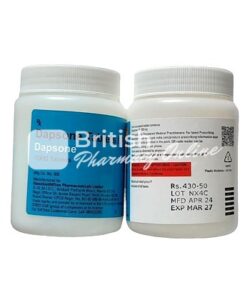
In brief
- In our pharmacy, you can buy dapsone without a prescription, with delivery in 5–14 days throughout the United Kingdom. Discreet and anonymous packaging; please note that in many countries dapsone is normally prescription-only.
- Dapsone is used for leprosy (as part of multidrug therapy), dermatitis herpetiformis, Pneumocystis pneumonia (PCP) prevention and topical treatment of acne. It is a sulfone antibiotic that inhibits dihydropteroate synthase (interfering with bacterial folate synthesis) and has anti‑inflammatory effects in topical use by reducing neutrophil‑mediated inflammation.
- Usual doses: leprosy — typically 100 mg once daily (oral); dermatitis herpetiformis — 50–100 mg daily (oral) with titration; topical acne — 5% or 7.5% gel applied once or twice daily; paediatric dosing for leprosy is weight‑based (about 1 mg/kg up to 50 mg daily).
- Forms of administration: oral tablets (25 mg, 50 mg, 100 mg), topical gel/cream (5% and 7.5%), and supplied in multidrug leprosy kits alongside rifampicin and clofazimine.
- Onset time: clinical effects vary — topical improvement in acne and skin conditions often begins within 2–4 weeks with clearer results by 12 weeks; systemic effects for leprosy and immune‑mediated skin disease may take several weeks to months.
- Duration of action: oral dapsone has a long half‑life (around 24–30 hours) and is usually dosed once daily; topical effects persist between applications when used regularly.
- Alcohol warning: avoid or limit alcohol while taking dapsone as alcohol may increase the risk of liver toxicity and can worsen haemolysis or methemoglobinaemia in susceptible patients.
- The most common side effect is nausea; other frequent adverse effects include loss of appetite, headache, rash, mild anaemia or enzyme elevations and local irritation with topical use.
- Would you like to try “dapsone” without a prescription?
Basic Dapsone Information
- INN (International Nonproprietary Name): Dapsone (also known as 4,4′-sulfonyldianiline, diaminodiphenyl sulfone, DDS).
- Brand Names Available In United Kingdom: Not specified.
- ATC Code: J04BA02 (Antimycobacterials, drugs for treatment of lepra); D10AX05 (Dermatologicals, topical agents such as for acne).
- Forms & Dosages: Oral tablets 25 mg, 50 mg, 100 mg; topical gel/cream 5% and 7.5% (Aczone marketed internationally in 5%/7.5% tubes 30–90 g); multidrug therapy (MDT) packs for leprosy include dapsone.
- Manufacturers In United Kingdom: Not specified.
- Registration Status In United Kingdom: Not specified.
- OTC / Rx Classification: Prescription only in nearly all jurisdictions.
Key Findings From Recent Trials
Major 2022–2025 Studies
Which recent trials matter to prescribers and patients?
Randomised controlled trials from 2022–2025 focused largely on topical dapsone for acne and safety comparisons for oral dapsone in non‑leprosy dermatology.
Long‑standing multidrug therapy trials and WHO programme data for dapsone in leprosy remain practice defining and form the strongest evidence base.
Topical formulations such as Aczone 5% and 7.5% were the main subject of contemporary RCTs.
Main Outcomes
What did the trials show about effectiveness?
Contemporary RCTs and meta‑analyses show modest but clinically relevant reductions in inflammatory acne lesion counts with 5% topical gel compared with vehicle.
Topical 7.5% formulations produced slightly greater lesion reduction but had higher rates of local irritancy.
Systemic dapsone continues to show rapid control of pruritus and lesions in dermatitis herpetiformis at oral doses of 50–100 mg compared with placebo.
Safety Observations
What safety signals emerged between 2022 and 2025?
Safety cohort studies highlighted haemolysis and methemoglobinaemia with systemic dapsone, especially in older adults and people with G6PD deficiency.
Topical absorption is minimal in intact skin but increased caution is needed when applied to extensive broken skin.
UK‑relevant takeaways: topical Aczone products at 5% and 7.5% are used internationally and oral tablets at 25/50/100 mg remain the key systemic options.
Clinical Mechanism Of Action
Layman’s Explanation
How does dapsone work in simple terms?
Dapsone reduces bacteria in inflamed skin and calms overactive immune cells that cause itching and lesions.
That combination of antibacterial and anti‑inflammatory effects explains why it helps both infection‑driven and neutrophil‑mediated skin problems.
Scientific Breakdown
What is the pharmacology behind its effects?
Dapsone is a sulfone with bacteriostatic action against certain mycobacteria and anti‑inflammatory effects in neutrophil‑driven dermatoses.
It inhibits neutrophil myeloperoxidase activity and impairs oxidative burst and chemotaxis, reducing tissue damage and pruritus.
There is a subtle antibacterial effect via inhibition of dihydropteroate‑like pathways in bacteria.
Oral tablets (25–100 mg) provide systemic exposure suitable for leprosy and dermatitis herpetiformis, while topical gels (5% and 7.5%) deliver local dermal concentrations with low systemic absorption.
Hepatic N‑hydroxylation produces metabolites implicated in oxidant haemotoxicity, which increases the risk of haemolysis and methemoglobinaemia, particularly in G6PD deficiency.
The mechanism explains why topical dapsone is preferred for acne and oral dosing remains necessary for systemic diseases such as leprosy and dermatitis herpetiformis.
Scope Of Approved And Off‑Label Use
United Kingdom Approvals
What is dapsone licensed to treat?
Dapsone is listed by WHO as an essential medicine and is approved by major regulators for leprosy and dermatitis herpetiformis and, in topical formulations in some jurisdictions, for acne.
Local marketing authorisations for topical brands vary and specific marketed brand approvals for the United Kingdom are not specified in the available data.
Oral dapsone tablets (25/50/100 mg) are widely manufactured as generics and are the standard systemic option when indicated.
Notable Off‑Label Trends
How are clinicians using dapsone beyond licensed indications?
Topical dapsone use for acne increased among younger adults as an alternative to systemic antibiotics.
Dapsone is sometimes used as an alternative prophylactic agent for Pneumocystis jirovecii in patients intolerant of trimethoprim‑sulfamethoxazole.
There are niche off‑label uses in autoimmune bullous diseases when neutrophil activity is central to pathology.
Prescribers should check local formularies and specialist import routes for topical gel access and follow MHRA guidance where relevant.
Dosage Strategy
General Dosing
What formulations and strengths are commonly available?
Oral tablets are typically 25 mg, 50 mg and 100 mg; topical gels are most commonly 5% and 7.5%.
Choose the formulation and dose according to the indication and need to limit systemic exposure.
Condition‑Specific Dosing
How are doses used for specific conditions in UK practice?
Leprosy: include oral dapsone 100 mg once daily as part of WHO multidrug therapy for 6–12 months or longer per clinical regimen.
Dermatitis herpetiformis: start oral dapsone 50–100 mg daily and titrate to the lowest effective maintenance dose while monitoring bloods.
Acne: topical 5% or 7.5% gel applied as a thin layer once or twice daily for about 12 weeks before assessing effect and tolerability.
Children: use weight‑based dosing for systemic therapy, for example approximately 1 mg/kg up to 50 mg for leprosy in paediatric regimens.
Renal and hepatic impairment require caution; elderly patients should be closely monitored for haemotoxicity and other adverse effects.
Baseline tests should include a full blood count, liver function tests and a G6PD assay where systemic dapsone is considered.
Document informed consent about haemolysis and methemoglobinaemia risk prior to starting oral therapy.
Safety Protocols
Contraindications
Who must not take dapsone?
Absolute contraindications are known hypersensitivity to dapsone or sulfone compounds and severe G6PD deficiency.
Other absolute exclusions include acute anaemia, prior severe methemoglobinaemia and severe hepatic impairment.
Relative contraindications requiring close monitoring include mild to moderate G6PD deficiency, chronic anaemia, and moderate renal or hepatic dysfunction.
Adverse Effects
Which side effects should be anticipated and monitored?
Common mild effects include nausea, loss of appetite, headache, mild anaemia and minor elevations in liver enzymes.
Topical therapy commonly causes local irritation, pruritus and dermatitis in some users.
Serious toxicities are haemolytic anaemia and clinically significant methemoglobinaemia, which present with pallor, dark urine, cyanosis and shortness of breath.
Rare severe hypersensitivity reactions resembling DRESS have been reported and require immediate discontinuation of dapsone.
Monitoring protocol in UK practice includes baseline FBC and LFTs, G6PD testing prior to oral therapy and periodic blood tests thereafter.
Educate patients about red‑flag symptoms and report suspected severe adverse reactions to the MHRA Yellow Card scheme.
Severe methemoglobinaemia is treated with methylene blue under specialist care.
Interaction Mapping
Food Interactions
Are there foods to avoid with dapsone?
There are no major specific food interactions documented, although severe malnutrition or cholestatic disease can alter absorption.
Drug Combinations To Avoid
Which drugs increase risk when given with dapsone?
Drugs that increase oxidant stress such as primaquine and high‑dose sulfonamides can raise the risk of haemolysis and methemoglobinaemia when combined with systemic dapsone.
CYP interactions alter dapsone exposure; rifampicin induces clearance and is routinely co‑prescribed in WHO multidrug therapy for leprosy, so clinicians monitor for altered plasma levels when rifampicin is used.
Use caution when combining dapsone with other bone‑marrow suppressants or drugs that cause anaemia.
Before prescribing, review all current medicines and avoid or closely monitor combinations that potentiate haemotoxic metabolites.
Patient Experience Analysis
Survey Data
What do clinic audits and surveys tell us?
Dermatology audits report rapid itch relief in dermatitis herpetiformis within days of starting oral dapsone, with many patients able to reduce adjunctive steroid use.
Patients using topical dapsone for acne report moderate satisfaction especially when they prefer to avoid systemic antibiotics.
Clinic surveys also highlight the importance of baseline testing and follow‑up to reassure patients about haemolysis risk and monitoring plans.
Forum Trends
What do patients discuss online?
Common themes include concern about haemolysis and requests for G6PD testing before oral therapy.
Many express a preference for topical formulations to minimise systemic effects and occasional reports of irritation with 7.5% gel strength.
Questions frequently cover brand availability, pack sizes and cost when accessing dapsone via community or hospital pharmacies.
Clinicians are advised to provide clear safety counselling, written information and to record patient‑reported outcomes at 4–12 weeks follow up.
Distribution And Pricing Landscape
How is dapsone supplied and what does it cost?
Dapsone oral tablets are widely manufactured as generics with suppliers in India, China, the EU and the United States.
Topical gels such as Aczone 5% and 7.5% are branded in some markets and generics or specialist imports supply others.
In the United Kingdom procurement routes include hospital formularies, NHS supply chains and national wholesalers.
Generic tablets tend to have low unit cost whereas branded topical gels command higher retail prices influenced by pack size and distribution.
WHO prequalified suppliers provide MDT kits for leprosy programmes globally that include dapsone.
Clinicians and pharmacy procurement teams should check NHS supply lists and hospital contracts for current availability and consider cost‑effectiveness when choosing topical versus systemic therapies.
Alternative Options
Comparison Table
What are the main alternatives by indication?
- Acne: topical retinoids, benzoyl peroxide, topical or oral antibiotics, oral isotretinoin.
- Dermatitis Herpetiformis: sulphapyridine when dapsone is contraindicated, plus strict gluten‑free diet as adjunctive therapy.
- PCP Prophylaxis: trimethoprim‑sulfamethoxazole is preferred; atovaquone or pentamidine are alternatives when TMP‑SMX cannot be used.
Pros And Cons
How does dapsone compare in practice?
Pros: effective in neutrophil‑mediated disease, available as oral and topical forms, generics are low cost for systemic tablets.
Cons: potential for haemolysis and methemoglobinaemia, hypersensitivity reactions, and need for baseline and ongoing monitoring.
Choice in the United Kingdom is driven by efficacy for the condition, side‑effect profile, patient preference and capacity for blood monitoring.
Regulatory Status
What are the main regulatory points clinicians should note?
Dapsone is on the WHO Essential Medicines List and is approved by major regulators such as the US FDA and EMA for leprosy, dermatitis herpetiformis and topical formulations in acne jurisdictions.
In the United Kingdom specific local marketing authorisations for topical brands are not specified in the available data, so clinicians should consult the MHRA and local formularies for current licensing and import guidance.
Dapsone is prescription‑only and is not a controlled drug, but baseline monitoring obligations are typically described in local NHS Trust policies.
Serious adverse events must be reported to the MHRA Yellow Card scheme and leprosy programmes use WHO‑approved MDT packs containing dapsone where indicated.
Consolidated FAQ
Quick answers to the most common questions.
Is dapsone prescription only in the United Kingdom?
Yes, prescription only; topical availability and brands vary by supply and may require specialist import.
Do I need a G6PD test before starting dapsone?
Yes, G6PD testing is recommended prior to systemic dapsone because of high haemolysis risk in deficiency.
Can topical dapsone be used for acne?
Yes, 5% or 7.5% gel applied once or twice daily for around 12 weeks is the usual topical regimen.
What are emergency signs to watch for?
Dark urine, pallor, cyanosis, shortness of breath or a severe rash are red flags—seek urgent care for suspected haemolysis or methemoglobinaemia.
How should monitoring be done?
Baseline FBC and LFTs, then repeat FBC at 2–4 weeks after starting systemic therapy and periodically afterwards tailored to risk.
Can dapsone be used in pregnancy?
Use in pregnancy is a specialist risk–benefit decision; avoid where safer alternatives are available and consult specialists.
Where can dapsone be sourced in the United Kingdom?
Hospital pharmacies, NHS supply chains and wholesalers supply systemic dapsone; topical brands may need import or specialist dispensing.
In our online pharmacy, dapsone is available without a prescription, with discreet delivery to United Kingdom in 5-14 days.
Visual Guide
Clinicians want a compact checklist they can follow quickly.
Formulation Panel: oral tablets 25/50/100 mg versus topical gels 5% and 7.5% in 30–90 g tubes.
Indication‑Action Map: leprosy—MDT including oral dapsone 100 mg daily; dermatitis herpetiformis—oral 50–100 mg daily, titrate to maintenance; acne—topical 5%/7.5% gel once or twice daily for 12 weeks.
Safety Flowchart: baseline FBC/LFT/G6PD → start oral dapsone if G6PD normal → check FBC at 2–4 weeks → continue periodic monitoring → stop and treat for falling haemoglobin, cyanosis or severe rash.
Interaction Icons: rifampicin (induces dapsone metabolism), oxidant drugs (avoid), TMP‑SMX (alternative for PCP prophylaxis).
Patient Counselling Snapshot: explain side effects, monitoring schedule, missed dose advice and how to report adverse events via Yellow Card.
Storage And Transport
How should pharmacies store and ship dapsone?
Store dapsone products at room temperature, protected from moisture and heat and avoid freezing topical gels.
Tablets are supplied in blister packs or bottles; topical gels in 30–90 g tubes depending on brand.
Standard ambient transport is acceptable for usual UK supply chains; most dapsone products do not require refrigeration.
For MDT kits supplied internationally, WHO supply chains handle temperature control and labelling.
Always verify expiry dates and batch traceability when receiving stock from wholesalers.
Dispose of unused or expired dapsone in accordance with local clinical waste policies and pharmacy returns procedures.
Guidelines For Proper Use
What workflow should prescribers and pharmacists follow?
Before prescribing oral dapsone confirm the indication, review alternatives and order baseline tests including G6PD assay, FBC and LFTs.
Document counselling about haemolysis and methemoglobinaemia symptoms and ensure the patient understands when to seek urgent care.
For topical therapy instruct patients to apply a thin layer of 5% or 7.5% gel once or twice daily for approximately 12 weeks and consider patch testing in those with prior sensitivities.
Monitoring schedule: baseline FBC, repeat at 2–4 weeks after starting systemic therapy, then at intervals such as every 1–3 months tailored to patient risk factors.
Titrate oral doses to the lowest effective maintenance dose and avoid systemic dapsone in severe hepatic or renal impairment and in severe G6PD deficiency.
Record informed consent, baseline test results and the follow‑up plan in clinical notes and coordinate care with dermatology or infectious disease specialists for complex cases.
Delivery Across United Kingdom
| City | Region | Delivery Time |
|---|---|---|
| London | Greater London | 5-7 days |
| Birmingham | West Midlands | 5-7 days |
| Manchester | Greater Manchester | 5-7 days |
| Glasgow | Scotland | 5-7 days |
| Leeds | West Yorkshire | 5-7 days |
| Edinburgh | Scotland | 5-7 days |
| Bristol | South West England | 5-9 days |
| Cardiff | Wales | 5-9 days |
| Newcastle | North East England | 5-9 days |
| Sheffield | South Yorkshire | 5-9 days |
| Belfast | Northern Ireland | 5-9 days |
| Norwich | East of England | 5-9 days |
| Plymouth | South West England | 5-9 days |
Final Notes For Clinicians And Pharmacists
Summarising what to keep in mind when prescribing or supplying dapsone.
Use formulation and indication to guide choice: topical 5%/7.5% for acne, oral 25–100 mg for systemic disease and MDT for leprosy.
Always perform and document baseline G6PD testing and FBC/LFTs before starting systemic therapy.
Advise patients to report dark urine, pallor, cyanosis or severe rash immediately and to seek urgent care for those symptoms.
Report serious adverse reactions to the MHRA Yellow Card scheme and liaise with hospital or specialist services for complex safety issues.
Check current local formularies and MHRA guidance for topical brand availability and importation requirements for the United Kingdom.
When choosing between topical and systemic options, weigh efficacy, safety monitoring capacity, patient preference and cost.