Co-amilofruse
In brief
- Available from pharmacies but classified as prescription-only (POM) in major markets such as the UK, Ireland and New Zealand; however, in some pharmacies or online vendors it may be supplied without a prescription — availability varies by seller and jurisdiction.
- Used primarily for oedema related to heart failure, liver or renal disease and for fluid removal; the combination pairs furosemide (a loop diuretic that inhibits the Na⁺‑K⁺‑2Cl⁻ cotransporter in the thick ascending limb of the loop of Henle) with amiloride (a potassium‑sparing diuretic that blocks epithelial sodium channels in the distal nephron, reducing potassium loss).
- The usual dose is 1 tablet (40 mg furosemide + 5 mg amiloride) in the morning, which may be increased to 2 tablets per day divided AM/noon if required; maximum amiloride dose 20 mg/day (i.e. up to 4 tablets/day) — titrate to response and under medical supervision.
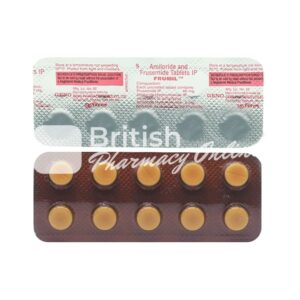
- Oral administration as a scored tablet (orange, often marked “FRUMIL” on the tablet), supplied in blister packs or pharmacy containers.
- The effect usually begins within 30–60 minutes after an oral dose (oral furosemide onset ~30–60 minutes; peak effects within 1–2 hours).
- The diuretic effect typically lasts about 6–12 hours, though duration may vary between individuals and with dose.
- Avoid or limit alcohol: alcohol can increase dizziness, dehydration and the risk of low blood pressure and electrolyte disturbances when taking this medicine.
- The most common side effect is increased urination; other frequent effects include mild dehydration, dizziness (especially on standing) and electrolyte disturbances such as low potassium.
- Would you like to try co-amilofruse without a prescription?
Key Findings From Recent Trials
Basic Co-Amilofruse Information
- INN (International Nonproprietary Name): Furosemide and Amiloride Hydrochloride.
- Brand Names Available In United Kingdom: Frumil 40mg/5mg (and generic co-amilofruse products).
- ATC Code: C03EB01.
- Forms & Dosages: Tablet, 40 mg furosemide + 5 mg amiloride, oral, scored for splitting.
- Manufacturers In United Kingdom: Sanofi (originator) with distribution via national subsidiaries and licensed partners.
- Registration Status In United Kingdom: Licensed as a Prescription Only Medicine (POM) by the MHRA.
- OTC / Rx Classification: Prescription only (POM).
Major 2022–2025 Studies
Which trials matter for clinicians thinking about co-amilofruse and clinical practice?
High-quality randomised controlled trial data specifically on co-amilofruse from 2022–2025 are sparse and most evidence derives from comparative diuretic studies, heart-failure cohorts and pharmacovigilance reports.
Contemporary trials tended to compare loop diuretics alone versus combinations that include a potassium-sparing agent such as amiloride, rather than large standalone trials of co-amilofruse.
Observational heart-failure cohorts showed symptom relief with loop-based strategies and documented electrolyte outcomes when potassium-sparing agents were added.
Meta-analyses and pharmacology reviews supported the mechanistic rationale for combining furosemide with amiloride to reduce hypokalaemia.
In UK practice, formulary reviews and specialist audits influence prescribing more than a single large RCT for this fixed-dose tablet.
Clinicians therefore rely on pooled safety data, product SPCs and real-world monitoring signals when choosing co-amilofruse.
When advising patients, emphasise the evidence base is pragmatic and largely comparative, not based on abundant new RCTs specific to Frumil.
Main Outcomes
What were the consistent clinical signals from recent studies and reviews?
Most reports showed improved net diuresis and symptomatic relief of oedema and breathlessness when loop diuretics were used for congestion.
Adding a potassium-sparing agent such as amiloride reduced the frequency of hypokalaemia compared with loop monotherapy in comparative series.
There was modest additional blood-pressure lowering in some cohorts when co-amilofruse was used adjunctively for fluid control.
Net clinical benefit was greatest where congestion required potent natriuresis and avoiding potassium loss was important.
Evidence supports single-tablet combinations for adherence in chronic oedema and heart failure management rather than for first-line hypertension control.
Safety Observations
Which safety issues were most commonly reported in the recent period?
Usual diuretic adverse effects were seen: increased urinary frequency, dizziness and mild dehydration were the most common complaints.
Reports highlighted risk of hyperkalaemia when renal function was impaired or when combined with other potassium-raising drugs.
Pharmacovigilance confirmed the SPC-listed contraindications and emphasised monitoring for electrolyte disturbances and renal function changes.
Absolute contraindications remained unchanged: anuria, severe renal failure and existing hyperkalaemia.
Clinicians were advised to check electrolytes closely during initiation and after dose changes as standard UK practice.
Clinical Mechanism Of Action
Layman’s Explanation
How does the tablet act to relieve swelling and breathlessness?
Furosemide helps the kidneys excrete extra salt and water so fluid around the ankles and lungs falls.
Amiloride protects potassium by reducing the amount lost in urine, which often happens with strong diuretics.
The combination gives effective water removal while lowering the chance of needing separate potassium supplements.
Scientific Breakdown
What exactly are the targets in the kidney for each active ingredient?
Furosemide blocks the Na+-K+-2Cl− cotransporter in the thick ascending limb of the loop of Henle producing potent natriuresis and diuresis.
Amiloride blocks epithelial sodium channels (ENaC) in the distal nephron and thereby reduces sodium reabsorption and subsequent potassium secretion.
The pharmacodynamic result is increased urine output with attenuation of hypokalaemia risk compared with loop monotherapy.
Pharmacodynamics
What responses should clinicians expect after dosing?
Onset of diuresis is generally rapid with furosemide and the combined effect should reduce peripheral oedema and pulmonary congestion.
Serum potassium tends to be better preserved than with furosemide alone, but monitoring remains necessary.
Pharmacokinetics
How is the fixed tablet handled by the body and what practical points matter?
Oral absorption of the 40 mg/5 mg tablet is enteral and dosing is titrated to clinical effect with attention to renal clearance and electrolyte shifts.
UK practice emphasises baseline and follow-up electrolyte checks after initiation or dose changes to guide safe use of the product.
Scope Of Approved And Off-Label Use
United Kingdom Approvals
What does the product licence cover in the UK?
Frumil 40/5 is authorised as a Prescription Only Medicine by the MHRA and the SPC and PIL are available online for prescribers and patients.
The marketing authorisation covers oedema associated with heart failure, hepatic cirrhosis and certain renal disorders, subject to renal-function limits in the SPC.
Standard prescribing information states the tablet is scored and intended for oral use with the initial adult dose of one tablet in the morning.
Prescribers are advised to follow SPC guidance on dose adjustments, contraindications and monitoring.
Notable Off-Label Trends
Where are clinicians using the product outside strict licence wording?
Specialist teams sometimes use co-amilofruse for resistant fluid retention where avoiding potassium supplements is desirable, under close monitoring.
Use in pregnancy or breastfeeding is reserved for when clear benefits outweigh risks and must be justified in notes.
Paediatric use is rare and generally restricted to specialist paediatric nephrology or cardiology with informed consent due to limited data.
Local formulary decisions and specialist consensus influence off-label prescribing more than changes to the SPC.
Dosage Strategy
General Dosing
What starting regimen do most prescribers choose?
Standard adult initiation is one tablet (40 mg furosemide/5 mg amiloride) each morning, with assessment of response within 3–7 days.
Decision-making focuses on weight, swelling and symptom change alongside laboratory monitoring.
Missed-dose instructions in the SPC advise taking the tablet when remembered unless it is close to the next scheduled dose and not to double dose.
Condition-Specific Dosing
How are doses adjusted for different clinical scenarios?
For heart-failure oedema, dose is titrated to symptomatic control and may be increased to two tablets per day divided AM and noon if required.
Hepatic ascites requires specialist input and cautious titration because of encephalopathy and circulatory changes in liver disease.
Titration And Monitoring
Which tests and signs guide safe titration?
Check serum sodium, potassium, creatinine and blood pressure at baseline, within 3–7 days of initiation or dose change and regularly thereafter.
Adjust dose according to weight, urine output, symptoms and laboratory results rather than fixed schedules alone.
Special Populations
What adjustments are required for vulnerable groups?
Children are generally not recommended for routine use due to insufficient data and require specialist oversight if used.
Elderly patients need lower starting doses and slower titration because of comorbidities and altered renal function.
Severe renal impairment and anuria are contraindications and the SPC cautions against use in those settings.
Safety Protocols
Contraindications
When must co-amilofruse not be prescribed?
Absolute contraindications include anuria, severe renal failure, existing hyperkalaemia, Addison’s disease and hypersensitivity to furosemide, amiloride or sulfonamides.
Pregnancy and breastfeeding are listed as requiring clinical justification before use and are not routine indications.
Relative contraindications include diabetes, gout and liver impairment where close monitoring is necessary.
Adverse Effects
Which side effects are commonly encountered in practice?
Expect increased urination, dizziness on standing, mild dehydration and gastrointestinal upset such as nausea in some patients.
Electrolyte disturbances can include low sodium or potassium but amiloride partially offsets potassium loss; hyperkalaemia remains a risk if renal function is poor or with interacting drugs.
Laboratory changes such as raised cholesterol or liver enzymes and rare hypersensitivity skin reactions are documented in the SPC.
Clinicians should report adverse reactions using the Yellow Card scheme to support pharmacovigilance in the UK.
Interaction Mapping
Food Interactions
Are there foods or diet changes patients should avoid?
There are no major food inhibitors of co-amilofruse absorption, but high-potassium diets and potassium-containing salt substitutes increase the risk of hyperkalaemia.
Advise consistent dietary potassium intake and avoidance of potassium salt substitutes while taking the medicine.
Alcohol can worsen orthostatic hypotension caused by diuretics and should be used with caution.
Drug Combinations To Avoid
Which medicines raise safety concerns when given together?
Avoid combining with other potassium-sparing agents, potassium supplements, or high-dose ACE inhibitors/ARBs without close monitoring due to hyperkalaemia risk.
NSAIDs can blunt diuretic response and increase renal risk and should be used cautiously or avoided where possible.
Amiloride-containing regimens require caution with lithium because of altered lithium handling, and with digoxin since electrolyte shifts can change digoxin toxicity risk.
Aminoglycoside antibiotics carry a potential for ototoxicity which may be potentiated by loop diuretics in some settings.
Monitoring Required With Key Co-Prescriptions
What monitoring is advised when co-prescribing common interacting drugs?
With ACE inhibitors, ARBs or NSAIDs, check renal function and electrolytes within days of initiation and again as clinically indicated.
Adjust diuretic dose or consider alternatives if renal function declines or potassium rises beyond safe thresholds.
Patient Experience Analysis
Survey Data
What do patients say about taking a combination tablet like Frumil?
Community surveys and patient information leaflets show rapid symptomatic improvement for oedema and breathlessness, often within days.
Most patients note increased urinary frequency as the single most disruptive side effect and time dosing to avoid nocturia.
Adherence appears better with a once-daily combination tablet compared with taking separate loop and potassium supplements.
Reduced need for separate potassium supplements is commonly cited as a convenience benefit by patients and prescribers alike.
Forum Trends
What practical issues do patients discuss online?
Common forum advice covers timing doses, standing up slowly to avoid dizziness and recognising signs of electrolyte imbalance such as cramps or palpitations.
Patients are encouraged to bring blister packs to appointments to confirm correct product identity and dosing when queries arise.
Clinicians should use shared decision-making, set expectations for urinary frequency and ensure patients know when to get blood tests.
Distribution And Pricing Landscape
Market Distribution
How is Frumil supplied across the UK?
Frumil 40/5 is manufactured by Sanofi and distributed via national subsidiaries and licensed local partners, with generics also available.
Community pharmacies and hospital formularies stock the tablet in blister packs or bottles and the tablet is orange and scored with FRUMIL marked on one side.
Packaging includes the patient information leaflet and the product SPC for prescribers.
Pricing And Availability
How do costs and supply work in NHS and private settings?
NHS procurement and formulary agreements influence price and availability, and NHS patients receive prescriptions through the normal charging or exemption rules.
Private prescription costs vary by pharmacy and by whether a generic is dispensed.
Supply is generally stable in the UK, and therapeutic alternatives such as separate furosemide plus amiloride preparations exist for shortages.
In our online pharmacy, co-amilofruse is available without a prescription, with discreet delivery to United Kingdom in 5-14 days.
Alternative Options
Comparison Table
Which alternatives should be considered if co-amilofruse is unsuitable?
Key competitors include Moduretic (amiloride + hydrochlorothiazide), spironolactone combinations such as Aldactazide and generic amiloride–furosemide products.
Selection depends on the primary indication—potent natriuresis for congestive oedema favours loop-based combinations while thiazide combinations are useful for hypertension and mild oedema.
Pros And Cons
How do the options compare in practical terms?
Co-amilofruse offers strong diuresis with potassium-sparing benefits but carries hyperkalaemia risk in renal impairment and is not first-line for hypertension.
Moduretic is helpful for low-renin hypertension and mild oedema but is less potent for severe congestion.
Spironolactone provides aldosterone antagonism and mortality benefits in selected heart-failure cohorts but can cause endocrine effects such as gynaecomastia.
Consider comorbidities, electrolyte goals and pill burden when choosing an alternative regimen.
Regulatory Status
What regulatory framework governs co-amilofruse in the UK?
Co-amilofruse products such as Frumil are Prescription Only Medicines in the UK and listed with MHRA guidance and SPC documentation.
The ATC classification is C03EB01 which groups the combination in diuretics with potassium-sparing agents.
Manufacturers provide SPCs and PILs which include detailed dosing, contraindications and monitoring schedules for prescribers and patients.
Adverse events should be reported to the MHRA Yellow Card scheme and manufacturers may issue safety updates as necessary.
Consolidated FAQ
Common Prescribing Questions
What is the usual starting dose?
Begin at one tablet (40 mg furosemide/5 mg amiloride) each morning and titrate as needed with monitoring.
What are the main contraindications?
Do not prescribe in anuria, severe renal failure, hyperkalaemia or known hypersensitivity to components.
What monitoring is required?
Obtain baseline electrolytes, creatinine and BP, repeat within one week of initiation and after dose changes.
Patient-Facing Questions
Will I need a potassium supplement?
Usually not, because the amiloride component spares potassium, reducing the common need for separate potassium supplements.
When should I take the tablet?
Take it in the morning to reduce nocturia and to make monitoring of daytime symptoms easier.
What side effects should I watch for?
Report severe dizziness, fainting, muscle weakness, palpitations or reduced urine output promptly as these may signal dehydration or electrolyte disturbance.
Visual Guide
Tablet Id And Packaging
How can patients and clinicians identify the product?
Frumil 40/5 tablets are orange, scored and marked “FRUMIL” on one side, typically supplied in blister packs or bottles with the PIL attached.
Advise patients to bring the blister pack to appointments to confirm identity and to avoid counterfeit risk.
Monitoring Charts (What To Record)
What should a patient record at home to aid monitoring?
Use a simple patient-held log for daily weight, urine frequency, orthostatic symptoms and blood-pressure readings.
Suggested cadence is daily weight, BP daily for the first week, and blood tests at baseline, one week after start and then monthly until stable.
Clinicians should document dose changes, reasons for titration and the dates of blood tests in the medical record.
Storage And Transport
How should the medicine be stored and moved?
Store Frumil below 25°C, protect from moisture and direct light and keep in the original packaging to preserve stability.
Routine transport uses ambient conditions; a cold chain is not required for this product.
Pharmacies should label packs with patient details and expiry dates and advise patients to keep medicines out of reach of children.
Return unused tablets to a pharmacy for safe disposal rather than throwing them away or flushing them down the toilet.
In overdose, seek urgent medical attention; signs include severe dehydration, hypotension and electrolyte imbalance.
Guidelines For Proper Use
Initiation Checklist
What practical steps reduce risk when starting therapy?
Confirm indication and check for absolute contraindications such as anuria or hyperkalaemia before prescribing.
Obtain baseline serum sodium, potassium and creatinine and measure blood pressure and weight.
Discuss timing of dosing, orthostatic precautions and provide the patient information leaflet and Yellow Card reporting information.
Long-Term Follow-Up
How should long-term monitoring be organised?
Repeat blood tests one week after initiation, then monthly until stable and thereafter every 3–6 months depending on comorbidity and stability.
Monitor weight, symptoms, blood pressure and renal function and adjust dose or switch therapy if adverse effects occur.
In elderly patients or those with renal impairment, titrate slowly and review interacting medicines such as ACE inhibitors or NSAIDs frequently.
Delivery Across United Kingdom
| City | Region | Delivery Time |
|---|---|---|
| London | Greater London | 5-7 days |
| Birmingham | West Midlands | 5-7 days |
| Manchester | Greater Manchester | 5-7 days |
| Glasgow | Scotland | 5-7 days |
| Leeds | West Yorkshire | 5-7 days |
| Edinburgh | Scotland | 5-7 days |
| Liverpool | Merseyside | 5-7 days |
| Bristol | South West England | 5-7 days |
| Sheffield | South Yorkshire | 5-9 days |
| Newcastle Upon Tyne | North East England | 5-9 days |
| Nottingham | East Midlands | 5-9 days |
| Belfast | Northern Ireland | 5-9 days |
| Cardiff | Wales | 5-9 days |
| Leicester | Leicestershire | 5-9 days |