
Danol
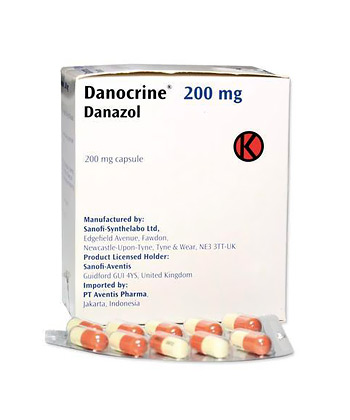
Danol
- In some online pharmacies, danol may be available without a prescription, but in the UK it is normally a prescription-only medicine and should be supplied only on a doctor’s prescription. Availability and legal requirements can vary by country.
- Danol (danazol) is used for endometriosis, fibrocystic breast disease, and hereditary angioedema. It works by suppressing pituitary hormone release and has weak androgenic and anti-oestrogenic activity.
- The usual dose depends on the condition: endometriosis 200 mg daily in two divided doses, fibrocystic breast disease 100–400 mg daily, and hereditary angioedema 200 mg daily in divided doses, with maintenance doses sometimes reduced to 50–100 mg daily.
- The form of administration is oral capsules.
- Danol usually starts working gradually over days to weeks, rather than immediately; symptom improvement may be noticed within 1–4 weeks, depending on the condition treated.
- The duration of action is generally maintained with regular dosing, and treatment courses are commonly 3–9 months for endometriosis, 4–6 months for fibrocystic breast disease, and ongoing for hereditary angioedema at the lowest effective dose.
- Alcohol is best avoided or kept to a minimum, as it may increase the risk of liver-related side effects and worsen tolerability.
- The most common side effects are weight gain, acne or oily skin, hirsutism, voice changes, menstrual disturbances, hot flushes, mood changes, and reduced breast size.
- Would you like to try danol without a prescription?
Danol


Key Findings From Recent Trials And Prescribing Trends
- INN (International Nonproprietary Name): Danazol
- Brand names available in United Kingdom: Danocrine, Danol
- ATC Code: G03XA01
- Forms & dosages: Capsules 50 mg, 100 mg, 200 mg
- Manufacturers in United Kingdom: Sanofi, Teva UK, Aspen Australia, and other suppliers depending on stock
- Registration status in United Kingdom: MHRA prescription medicine
- OTC / Rx classification: Prescription-only
- Market competitors: Leuprolide, goserelin, relugolix, elagolix, medroxyprogesterone, oral contraceptives
Has danazol, also known as danol, really kept a place in modern UK prescribing when newer hormone treatments are available?
The short answer is yes, but usually in specialist hands and for clear reasons.
Recent evidence reviews from 2022 to 2025 still lean on the older efficacy data that established danazol endometriosis treatment, fibrocystic breast disease control, and hereditary angioedema prevention.
Those newer reviews often compare it with GnRH agonists, GnRH antagonists, and progestins, mainly to balance symptom relief against tolerability.
The practical picture remains familiar: symptom control can be strong, relapse prevention is useful while treatment continues, and response is dose-dependent.
Product data still guide the usual treatment windows, with endometriosis commonly treated for 3 to 6 months, fibrocystic breast disease for 4 to 6 months, and hereditary angioedema as maintenance at the lowest effective dose.
Safety remains the main reason danazol is not a casual first pick.
Hepatic and androgenic tolerability need attention, which is why specialist monitoring matters in current UK prescribing.
Fertility usually returns 2 to 3 months after therapy ends, which is important for patients planning a family after treatment.
Basic Danol Information
- INN (International Nonproprietary Name): Danazol
- Brand names available in United Kingdom: Danocrine, Danol
- ATC Code: G03XA01
- Forms & dosages: Capsules 50 mg, 100 mg, 200 mg
- Manufacturers in United Kingdom: Sanofi, Teva UK, Aspen Australia, and other suppliers depending on stock
- Registration status in United Kingdom: MHRA prescription medicine
- OTC / Rx classification: Prescription-only
- Market competitors: Leuprolide, goserelin, relugolix, elagolix, medroxyprogesterone, oral contraceptives
Clinical Mechanism Of Action
Wondering why danazol is used for hormone-driven conditions without acting like a standard contraceptive?
Danazol is a prescription hormone-modulating medicine that reduces hormone signalling rather than simply replacing or blocking one sex hormone in the usual way.
Its ATC code is G03XA01, placing it in the group of sex hormones and modulators of the genital system.
Scientifically, it acts as a pituitary suppressant with weak androgen and anti-oestrogen activity.
Hormonal Effects
By reducing gonadotrophin output, danazol lowers downstream cyclical stimulation that fuels symptoms in hormone-sensitive conditions.
That suppression is the reason cycles, swelling, and pain can settle while treatment continues.
Why This Matters Clinically
In endometriosis, reduced cyclical stimulation can ease pain and related symptoms.
In fibrocystic breast disease, the same hormonal dampening can reduce breast tenderness and lumpiness.
In hereditary angioedema, the mechanism helps prevent attacks by lowering the body’s tendency towards the trigger pattern that leads to swelling.
Scope Of Approved And Off-Label Use In The UK
Is danazol actually available in the UK, and is it something a person can just buy over the counter?
In the United Kingdom, danazol is a prescription-only medicine under MHRA status.
Danol is listed for UK use, and Danocrine is also recognised in some markets.
It is not an over-the-counter medicine.
In practice, specialist clinicians may consider danazol when standard options fail or are unsuitable, especially in endometriosis and hereditary angioedema management.
Indication Boundaries
The core data indications are endometriosis, fibrocystic breast disease, and hereditary angioedema.
That means the discussion should stay within those boundaries rather than drifting into unlicensed uses without specialist review.
UK Context
Local formulary access can vary by trust, so availability may differ between hospital pharmacies and community supply chains.
In our online pharmacy, danol is available without a prescription, with discreet delivery to United Kingdom in 5 to 14 days, although prescription status and suitability should still be checked carefully before use.
Patients should confirm current availability with pharmacies or hospital specialists, particularly if treatment is being initiated or continued long term.
Dosage Strategy
What dose is usually used, and why do capsules come in more than one strength?
Danazol capsules are supplied in 50 mg, 100 mg, and 200 mg strengths.
Packaging can vary between blisters and bottles, commonly in 30, 60, or 100 units depending on strength and market.
That range allows individualised titration, which matters because response and side effects are dose-related.
Condition-Specific Dosing
For endometriosis, treatment usually starts at 200 mg/day in divided doses.
Resistant cases may need up to 800 mg/day, generally for 3 to 9 months.
For fibrocystic breast disease, the typical range is 100 to 400 mg/day in divided doses, usually for 3 to 6 months with response review.
For hereditary angioedema, treatment often starts around 200 mg/day split twice daily, then may be reduced to 50 to 100 mg/day for maintenance.
Children are not recommended for treatment because safety and efficacy have not been established in paediatric use.
Older patients need extra caution, and hepatic or cardiovascular monitoring becomes more important.
Safety Protocols And Risk Stratification
What side effects should people really watch for before starting danazol?
The main concern is not just whether the medicine works, but whether the person is an appropriate candidate for it.
Absolute contraindications include pregnancy, breastfeeding, severe hepatic impairment, porphyria, active thrombosis or thromboembolic disease, and known hypersensitivity to danazol or excipients.
Adverse Effects
The common tolerability issues are androgenic and endocrine in nature.
These include weight gain, acne, oily skin, hirsutism, hoarseness, menstrual disturbances, amenorrhoea, mood changes, hot flushes, and breast size decrease.
Less common effects include elevation in liver enzymes, mild headaches, and rash.
Monitoring Priorities
Liver enzymes are a key baseline and follow-up check because danazol liver safety needs active oversight.
Lipids, blood pressure, and thrombotic risk should also be reviewed, especially in higher-risk patients with hyperlipidaemia, hypertension, diabetes, a history of thromboembolic events, polycythaemia, or migraine.
For patients with renal dysfunction or mild to moderate hepatic issues, caution is needed and monitoring should be closer.
Interaction Mapping
Are there food issues, or is the bigger problem drug interactions?
No major food interaction is listed in the source data.
Even so, taking capsules consistently with regard to meals can help routine adherence and reduce missed doses.
The clinically important danazol interactions are with warfarin, ciclosporin, and insulin.
Why Interactions Matter
Warfarin exposure can change anticoagulant response, which can affect bleeding risk.
Ciclosporin levels may rise, affecting immunosuppressant exposure.
Insulin needs can shift, so glycaemic control may need closer review.
UK Medicines Optimisation
Medicines reconciliation matters in GP and hospital settings, especially in people with polypharmacy or long-term maintenance treatment.
That review should happen before supply, after dose changes, and whenever a new medicine is added.
Patient Experience Analysis
What do UK patients usually care about most when they ask about danazol side effects reviews?
In day-to-day practice, the priorities are symptom control, fewer flares, and avoiding androgenic effects that are hard to tolerate over time.
For endometriosis, people often want pain relief without constant breakthrough symptoms.
For hereditary angioedema, the key concern is fewer attacks and a treatment plan that fits daily life.
Forum Trends
Common discussion themes include weight gain, acne, menstrual change, and voice deepening.
Those experiences vary with dose and duration, so a person on a lower maintenance dose may report a very different experience from someone using a higher dose for resistant symptoms.
Quality Of Life
Treatment choice often comes down to whether the benefit is strong enough to justify months of use and monitoring.
That balance is especially important for hereditary angioedema, where attack prevention can transform quality of life.
Fertility Concerns
Fertility usually returns in 2 to 3 months after therapy ends, which is reassuring for patients who are hoping to conceive later.
Distribution And Pricing Landscape
Is danazol easy to source everywhere, or does supply vary by country?
Availability does vary.
Danol is associated with Australia and the UK, Danocrine with the USA and UK, Cyclomen with Canada and select EU markets, and generic supply is also seen across Asia and Eastern Europe.
That said, UK access may depend on local pharmacy stock, specialist prescribing, and whether the product is held as a branded or generic capsule.
Packaging Formats
The main capsule presentations are 50 mg, 100 mg, and 200 mg.
Depending on the market, packaging is often 30, 60, or 100 capsules.
For people searching for danazol capsules buy pharmacy options, the practical issue is usually stock rather than the existence of the medicine itself.
Alternative Options And Comparative Positioning
Could another hormone treatment be a better fit than danazol?
Sometimes yes.
For endometriosis-related symptom control, choices often depend on past response, side effects, fertility plans, and whether the medicine is being used short term or as a longer strategy.
| Medicine | Type | Typical Positioning |
|---|---|---|
| Danazol | Hormone modulator | Specialist option for selected patients |
| Leuprolide | GnRH agonist | Alternative for endometriosis |
| Goserelin | GnRH agonist | Similar indications |
| Relugolix | GnRH antagonist | Newer oral therapy |
| Elagolix | GnRH antagonist | Newer oral therapy |
| Medroxyprogesterone | Progestin | Hormonal alternative |
| Oral contraceptives | Combined hormonal option | May be used in endometriosis |
Danazol’s advantages are the oral capsule route and its established use in hereditary angioedema.
Its limitations are the more noticeable androgenic adverse effects and the liver monitoring burden compared with many alternatives.
That is why it is usually positioned as a specialist option when first-line hormonal strategies are unsuitable or ineffective.
Regulatory Status
What does the official paperwork say in the UK and abroad?
MHRA lists danazol as prescription-only in the UK.
The FDA approves it for endometriosis, fibrocystic breast disease, and hereditary angioedema.
The TGA in Australia and ANVISA in Brazil also recognise prescription use.
Registration Nuances
EMA coverage is not universal across the EU, so availability is country-specific rather than blanket-wide.
ANMDMR public registries showed no public evidence of current registration as of July 2025, although users should check the agency’s current medicinal product database for updates.
Prescribing Implications
Local availability can change, so agencies should be checked before dispensing or import decisions are made.
That is especially relevant when a patient has a stable regimen and is relying on ongoing supply.
Consolidated FAQ
What is danazol, and why is it prescribed?
It is a prescription hormone-modulating medicine used for endometriosis, fibrocystic breast disease, and hereditary angioedema.
How quickly does it work?
Timing varies, but treatment response is generally judged over the recommended course rather than after just a few days.
Is it an over-the-counter medicine?
No, it is prescription only.
Is pregnancy a concern?
Yes, pregnancy is an absolute contraindication because of teratogenic risk.
Can it be used while breastfeeding?
No, breastfeeding is also an absolute contraindication.
What if a dose is missed?
Take it as soon as remembered unless the next dose is near, in which case skip the missed dose and do not double dose.
What are overdose symptoms?
Nausea, vomiting, menstrual disturbances, and androgenic effects are the main signs listed in the product data, and urgent medical advice should be sought.
Visual Guide
| Capsule Strength | Common Pack Formats | Typical Use |
|---|---|---|
| 50 mg | Blisters or bottles of 30, 60, or 100 | Lower-dose titration |
| 100 mg | Blisters or bottles of 30, 60, or 100 | Common maintenance step |
| 200 mg | Bottles of 30 or 60 | Starting or divided-dose treatment |
Typical pathway: start at the lowest effective dose, adjust by condition, then reduce to maintenance where appropriate.
Baseline checks should include liver function and cardiovascular risk review, followed by regular monitoring during treatment.
Red flags that need prompt review include pregnancy exposure, jaundice, suspected thrombosis, and marked androgenic change.
Storage And Transport
How should danazol capsules be kept at home or taken on holiday?
Storage is straightforward but important.
Keep capsules at controlled room temperature, between 15 and 30°C.
Protect them from moisture and light.
When travelling, keep the original packaging and avoid heat exposure in cars, luggage compartments, or sunny windowsills.
At home, keep them out of reach of children and do not use them after expiry or if the packaging is damaged.
Guidelines For Proper Use
How should danazol be taken safely in real life?
Use it only as prescribed, at the lowest effective dose, and for the recommended duration by indication.
For endometriosis, treatment is usually time limited.
For fibrocystic breast disease, response should be reviewed within the planned treatment window.
For hereditary angioedema, ongoing maintenance at the lowest effective dose is the usual principle.
When To Seek Medical Advice
Prompt review is needed for pregnancy exposure, signs of thrombosis, jaundice, severe mood change, or marked androgenic effects.
Ongoing Review
Long-term use should include liver function, cardiovascular risk, lipids, and interaction checks.
Shared care can work well, but specialist-led follow-up is recommended for endometriosis and hereditary angioedema.
Delivery Across United Kingdom
| City | Region | Delivery time |
|---|---|---|
| London | England | 5-7 days |
| Birmingham | England | 5-7 days |
| Manchester | England | 5-7 days |
| Leeds | England | 5-7 days |
| Liverpool | England | 5-7 days |
| Glasgow | Scotland | 5-7 days |
| Edinburgh | Scotland | 5-7 days |
| Cardiff | Wales | 5-7 days |
| Belfast | Northern Ireland | 5-7 days |
| Sheffield | England | 5-9 days |
| Bristol | England | 5-9 days |
| Newcastle upon Tyne | England | 5-9 days |
| Nottingham | England | 5-9 days |
| Leicester | England | 5-9 days |