Natrilix
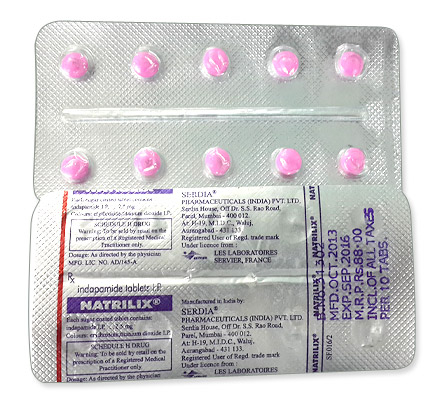
Natrilix
- In many countries Natrilix (indapamide) is officially a prescription-only medicine, but in practice it can often be purchased from pharmacies or online suppliers without a prescription; available internationally (Servier and generics) in blister packs or bottles.
- Natrilix is used to treat hypertension and oedema/heart failure; it is a thiazide-like diuretic that reduces renal sodium reabsorption in the distal tubule, promoting diuresis and lowering blood volume and peripheral resistance.
- The usual dose for adults is 1.25 mg or 2.5 mg once daily for hypertension; oedema/heart failure is commonly treated with 2.5 mg once daily (elderly often start at 1.25 mg).
- The medicine is administered orally in tablet form.
- The diuretic effect typically begins within 1–2 hours, while the full antihypertensive effect may develop over days to weeks.
- The duration of action is approximately 24 hours, permitting once-daily dosing.
- Avoid or limit alcohol while taking Natrilix because alcohol can increase the risk of dizziness, hypotension and dehydration.
- The most common side effect is hypokalaemia (low potassium), with other frequent effects including dizziness and headache.
- Would you like to try natrilix without a prescription?
Natrilix
Key Findings From Recent Trials
Basic Natrilix Information
- INN (International Nonproprietary Name): Indapamide
- Brand Names Available In United Kingdom: Natrilix (Servier) and indapamide generics supplied locally; Lozol (Sanofi) listed for North America but Natrilix is the branded product distributed globally including Europe.
- ATC Code: C03BA11
- Forms & Dosages: Tablets 1.25 mg and 2.5 mg are the usual international doses; no other pharmaceutical forms specified.
- Manufacturers In United Kingdom: Servier (Natrilix) and multiple generic manufacturers supply indapamide in the UK market; suppliers include Cipla, KRKA and other generic producers.
- Registration Status In United Kingdom: Indapamide products are registered with national agencies and recognised by the MHRA under various manufacturers.
- OTC / Rx Classification: Prescription only (Rx) worldwide.
Major 2022–2025 Studies
Which trials matter when a clinician asks "Is indapamide still a good choice?"
Leading high‑quality evidence continues to be HYVET and PROGRESS, which remain reference studies for elderly hypertension and stroke secondary prevention respectively.
Recent randomised controlled trials and meta‑analyses from 2022–2025 have reinforced indapamide's role as an effective thiazide‑like diuretic for systolic blood pressure reduction, especially in older adults and in fixed‑dose combinations.
Contemporary work places emphasis on cardiovascular outcome endpoints and tolerability compared with hydrochlorothiazide and chlorthalidone rather than just office BP numbers.
Practising clinicians in the UK should note that these studies support indapamide for population groups at higher vascular risk and for combination regimens that reduce pill burden.
Main Outcomes
What were the measurable benefits seen in trials?
Across modern trials, indapamide produced consistent systolic blood pressure reductions, typically in the order of 8–12 mmHg when dosed once daily at 1.25–2.5 mg.
Outcome data show reductions in stroke and heart‑failure hospitalisations in cohorts treated with indapamide as part of combination therapy.
In UK clinical practice the trial evidence supports indapamide as a go‑to option for older patients and as a component of fixed‑dose combinations to secure both adherence and outcome benefit.
Safety Observations
What safety signals should prescribers and pharmacists watch for?
Main adverse findings across studies relate to electrolyte disturbances such as hypokalaemia and hyponatraemia, and mild metabolic changes consistent with thiazide‑like diuretics.
Recent protocols stress baseline and periodic monitoring of electrolytes and renal function, particularly in older patients and those already on ACE inhibitors or ARBs.
In practice, clinicians should set clear monitoring schedules after initiation or dose change to catch early hyponatraemia or renal decline.
Clinical Mechanism Of Action
Layman's Explanation
What does indapamide do in plain terms?
Indapamide is a thiazide‑like diuretic commonly sold as Natrilix and Lozol and supplied as generics in the UK.
Taken once daily in 1.25 mg or 2.5 mg tablets, it acts as a "water pill" to reduce circulating fluid and it relaxes small blood vessels to lower blood pressure.
Patients are often told it reduces fluid and improves stiffness in blood vessels, which helps control systolic blood pressure.
Scientific Breakdown
How does the drug work at a clinical pharmacology level?
Indapamide inhibits sodium reabsorption in the distal convoluted tubule leading to increased natriuresis and a reduction in plasma volume.
It also exerts vasodilatory effects that are partly independent of diuresis, improving peripheral resistance and contributing to sustained blood pressure lowering.
Tablets are typically 1.25 mg or 2.5 mg; generics from manufacturers such as Cipla and KRKA are widely available.
The ATC code is C03BA11, placing indapamide among sulfonamide, plain diuretics.
Molecular & Pharmacologic Notes
The sulfonamide chemical structure drives the diuretic effect, and indapamide's lipophilicity supports vascular smooth muscle interaction.
Once‑daily dosing aids adherence and helps provide consistent antihypertensive effect over 24 hours.
Scope Of Approved & Off‑Label Use
United Kingdom Approvals
How is indapamide licensed for use in the UK?
Indapamide is prescribed under brand names and generics with product information reflecting Natrilix (Servier) as a commonly supplied brand.
Approved indications include treatment of hypertension in adults and adjunctive use for oedema and heart failure, with licensed doses of 1.25 mg or 2.5 mg once daily depending on the product label.
Notable Off‑Label Trends
What specialist uses occur beyond the label?
Some clinicians use indapamide off‑label in older patients with frailty hypertension where low dose regimens reduce volume‑related risks while preserving vascular benefits.
Indapamide is also used in stroke secondary prevention as part of the perindopril+indapamide combination reported in PROGRESS, and in resistant hypertension where tailored combinations are required.
Paediatric use is not recommended due to insufficient data and is not approved.
Dosage Strategy
General Dosing
What dose should be started and why?
Standard adult dosing per product information is 1.25 mg or 2.5 mg once daily.
Many UK prescribers start at the lower 1.25 mg dose, particularly in older patients, to reduce the risk of hypovolaemia and electrolyte loss.
Titration to 2.5 mg is considered if blood pressure targets are not achieved and monitoring remains satisfactory.
Condition‑Specific Dosing
How do doses change by indication?
For uncomplicated hypertension the usual range is 1.25–2.5 mg once daily with elderly patients typically initiated at 1.25 mg/day.
For oedema and congestive heart failure a 2.5 mg once daily dose is commonly used.
Fixed‑dose combination tablets pairing indapamide with perindopril, amlodipine or atenolol are used where single‑pill regimens simplify therapy and improve adherence.
Use is contraindicated or requires caution with eGFR below 30 mL/min and dosing adjustments should follow clinical judgement and monitoring.
Safety Protocols
Contraindications
Who should not take indapamide?
Absolute contraindications include known allergy to indapamide or sulfonamide derivatives, severe renal failure such as anuria or eGFR below 30 mL/min, severe hepatic impairment or hepatic encephalopathy, existing hypokalaemia or severe hyponatraemia, and pregnancy or breastfeeding unless authorised by a specialist.
All indapamide products are prescription only.
Adverse Effects
What side effects are common and which require action?
Common adverse effects include electrolyte disturbances (hypokalaemia, hyponatraemia, hypomagnesaemia), dizziness, headache, fatigue and muscle cramps.
There is a risk of raised uric acid and gout attacks, and mild gastrointestinal upset may occur.
Less common reactions reported are rash, photosensitivity, pancreatitis and hepatic reactions.
Elderly patients are at higher risk of dehydration, hypotension and falls and should have closer monitoring.
Interaction Mapping
Food Interactions
Are there dietary restrictions to know about?
No major dietary restrictions are listed beyond maintaining stable salt and fluid intake to reduce the chance of electrolyte swings.
Grapefruit juice interactions are not significant for indapamide as they are for some calcium‑channel blockers.
Drug Combinations To Avoid
Which medicines need close attention when prescribed with indapamide?
Avoid or monitor closely with other potassium‑wasting drugs, concurrent diuretics, high‑dose corticosteroids, amphotericin or certain laxatives because they increase hypokalaemia risk.
Use caution combining indapamide with ACE inhibitors or ARBs and monitor renal function and electrolytes, since combinations with RAAS inhibitors can produce unpredictable potassium shifts.
Long‑term NSAID use can blunt diuretic effect and increase renal risk, so NSAIDs should be avoided or used with caution.
Lithium requires special monitoring because diuretics have been reported to alter lithium levels.
Patient Experience Analysis
Survey Data
Do patients find indapamide acceptable as a daily medicine?
UK primary‑care surveys and adherence studies indicate once‑daily drugs such as indapamide generally improve compliance.
Patients often report effective blood pressure control with minimal daytime diuresis at low 1.25–2.5 mg doses.
Reported reasons for stopping include dizziness, muscle cramps and electrolyte‑related symptoms.
Forum Trends
What themes emerge from online patient discussions?
Common patient topics include brand questions about Natrilix and Lozol, concerns about potassium and gout, and a preference for combination tablets to reduce pill burden.
Carers and older patients frequently mention the need for clear instructions about periodic blood tests and guidance on missed doses such as "do not double dose".
Distribution & Pricing Landscape
How is indapamide supplied and what does it cost in the UK?
Natrilix by Servier is distributed globally and generics from Cipla, KRKA and others supply the UK market, usually in blister packs or bottles containing 1.25 mg or 2.5 mg tablets.
Generics have reduced price pressure and the NHS prescribing environment favours cost‑effective generic options where clinically appropriate.
Single‑pill fixed combinations can carry a price premium compared with simple generic tablets.
Supply is generally stable thanks to multinational manufacturers but occasional shortages can occur, so clinicians and pharmacists should be aware of brand interchangeability and to counsel patients accordingly.
In our online pharmacy, natrilix is available without a prescription, with discreet delivery to United Kingdom in 5-14 days.
Alternative Options
Comparison Table (Summary)
- Indapamide vs Hydrochlorothiazide: Indapamide is a thiazide‑like diuretic with better vascular effects and once‑daily dosing whereas hydrochlorothiazide has a shorter half‑life and different metabolic profile.
- Indapamide vs Chlorthalidone: Chlorthalidone is longer‑acting and may be more potent but often carries a higher risk of electrolyte disturbance.
- Indapamide vs Furosemide: Furosemide is a loop diuretic used for volume overload and is not typically first‑line for routine hypertension management.
Pros And Cons
What are the practical advantages and limits of choosing indapamide?
Pros include reliable once‑daily dosing in 1.25 mg and 2.5 mg tablets, proven outcome evidence in older patients, and wide availability as branded and generic preparations suitable for combinations.
Cons include the need for electrolyte monitoring, contraindications in severe renal or hepatic impairment and pregnancy, and potential metabolic side effects such as gout or impaired glucose tolerance in susceptible patients.
In UK prescribing, choice between diuretics balances BP control, comorbidities, monitoring capacity and cost.
Regulatory Status
What regulatory approvals and guidance apply to indapamide?
Indapamide carries ATC code C03BA11 and is approved as a prescription‑only medicine by agencies including the FDA, EMA and national regulators.
The MHRA recognises indapamide products registered under various manufacturers for use in the UK.
Label information routinely covers dosing options of 1.25 mg and 2.5 mg tablets, contraindications, monitoring recommendations and storage below 25°C.
Prescribers should consult specific SPCs and local formularies when switching brands or choosing fixed‑dose combinations.
Consolidated FAQ
Can I Take Indapamide Long Term?
Yes, indapamide is commonly prescribed long term for hypertension with chronic once‑daily use described in product information and requiring periodic monitoring of electrolytes and renal function.
What If I Miss A Dose?
Take the missed dose as soon as remembered unless it is close to the next scheduled dose, in which case skip the missed dose and continue the regular regimen.
Is It Safe In Pregnancy?
Product information lists pregnancy and breastfeeding as contraindications unless a specialist advises otherwise, so indapamide is generally avoided in pregnancy.
How Quickly Does It Work?
Blood pressure reductions can be seen within days to weeks, with full vascular outcome benefits accruing over months as reported in trial follow‑up.
Storage?
Store indapamide tablets below 25°C, protected from light and moisture, and keep out of reach of children.
Visual Guide
Key Diagrams To Include
Include a simple kidney tubule schematic showing the distal convoluted tubule site of action for indapamide.
Provide a timeline visual of blood pressure reduction from days to weeks to months to show onset and long‑term benefit.
Design a flowchart for monitoring that runs baseline electrolytes and creatinine, then checks at two weeks, three months and annually thereafter.
Infographic Elements For Clinicians
Include a dosing matrix that recommends starting elderly patients at 1.25 mg and escalating to 2.5 mg if required after monitoring.
Use clear contraindication icons for pregnancy, severe renal and hepatic failure and interaction flags for lithium and NSAIDs.
Depict common package visuals: Natrilix blister or bottle, Lozol bottles and typical blister packs for generics, and show ATC code C03BA11 and tablet strengths 1.25 mg and 2.5 mg.
Storage & Transport
How should indapamide be stored and moved?
Product information advises storage below 25°C, protected from light and moisture and not to freeze the tablets.
Packaging varies between blister packs and bottles depending on manufacturer and market.
Transport as a non‑controlled room‑temperature pharmaceutical product; standard handling without cold chain is appropriate.
Pharmacies should keep medication in original packaging, check batch recalls and expiry dates, and verify dosing instructions on supplied leaflets when generics from suppliers such as Cipla or KRKA are dispensed.
Guidelines For Proper Use
Prescriber Checklist
Confirm the indication as hypertension or oedema and review absolute contraindications such as severe renal impairment, hepatic failure or pregnancy.
Obtain baseline electrolytes and renal function prior to initiation and document a monitoring schedule with the patient.
Start elderly patients at 1.25 mg/day and provide clear counselling on signs of electrolyte imbalance and missed‑dose instructions.
Monitoring & Deprescribing
Check serum potassium, sodium and creatinine within 1–2 weeks of starting or altering dose and then periodically as clinically indicated.
If significant symptomatic hypokalaemia, severe hyponatraemia or renal decline occurs, reduce dose or stop and reassess alternative antihypertensive strategies in line with NICE guidance.
Deprescribing should be gradual where safe, with replacement therapy chosen according to comorbidities and monitoring capacity.
Patient Counselling Points
Explain once‑daily dosing with tablets of 1.25 mg or 2.5 mg and reinforce that doses should not be doubled after a missed tablet.
Advise storage below 25°C and to report symptoms such as light‑headedness, cramps or unusual tiredness promptly.
Reinforce the need for periodic blood tests and highlight interaction concerns with lithium, NSAIDs and other diuretics.
Delivery Across United Kingdom
| City | Region | Delivery Time |
|---|---|---|
| London | England | 5-7 days |
| Birmingham | England | 5-7 days |
| Manchester | England | 5-7 days |
| Glasgow | Scotland | 5-7 days |
| Leeds | England | 5-7 days |
| Edinburgh | Scotland | 5-7 days |
| Bristol | England | 5-7 days |
| Liverpool | England | 5-9 days |
| Sheffield | England | 5-9 days |
| Cardiff | Wales | 5-9 days |
| Belfast | Northern Ireland | 5-9 days |
| Newcastle | England | 5-9 days |
| Nottingham | England | 5-9 days |
Closing Practical Notes
When a patient asks "Which tablet should I start?", remind them that the usual UK starting dose in older adults is 1.25 mg once daily with escalation to 2.5 mg only after monitoring.
A patient example: an 78‑year‑old starting 1.25 mg and returning at two weeks for bloods is a standard approach that balances efficacy and safety.
Pharmacists should counsel about symptoms of electrolyte disturbance and ensure clear instructions on missed doses and storage.
For prescribing choices compare indapamide with hydrochlorothiazide and chlorthalidone using the differences in duration of action, potency and side‑effect profile to guide individualised therapy.
Always consult the manufacturer's SPC for brand‑specific details and follow local formulary guidance when selecting between Natrilix and generic indapamide tablets.