
A-ret
A-ret
- You can buy a-ret from pharmacies and online suppliers, and in some places it may be available without a prescription; however, in many countries it is prescription-only. Availability and legal status depend on local regulations.
- A-ret (tretinoin) is used for acne vulgaris and sometimes photoaging. It is a topical retinoid that normalises skin-cell turnover, helps unclog pores, and reduces comedone formation.
- The usual dose is a thin pea-sized amount applied once daily, usually at night. Common strengths are 0.025%, 0.05% or 0.1%, depending on skin tolerance and medical advice.
- The form of administration is topical use as a cream, gel, or lotion applied to the affected skin.
- It does not work immediately; initial improvement may be seen after 2–4 weeks, but noticeable acne improvement usually takes 6–12 weeks.
- The duration of action is about 24 hours, which is why it is typically applied once daily. Ongoing use is often needed to maintain benefit.
- Avoid alcohol in excess if you are using skin products that may increase irritation, but there is no major direct alcohol interaction with topical tretinoin. Oral tretinoin requires medical supervision.
- The most common side effects are skin irritation, redness, dryness, peeling, burning, and stinging, especially during the first few weeks of use.
- Would you like to try a-ret without a prescription?
A-ret
Basic A-Ret Information
- INN (International Nonproprietary Name): Tretinoin, also known as all-trans-retinoic acid (ATRA).
- Brand names available in United Kingdom: Retin-A is the best-known reference name; A-Ret is commonly searched online; other listed brands include Altreno, Atralin, Avita, Renova, Refissa, Tri-Luma, Biacna, Veltin, Vesanoid, and Ziana.
- ATC Code: D10AD01.
- Forms & dosages: Cream 0.025%, 0.05%, 0.1%; gel 0.01%, 0.025%, 0.05%, 0.1%; lotion 0.05%; oral capsule 10mg for cancer only.
- Manufacturers in United Kingdom: Not specified; listed manufacturers include Janssen, Valeant/Bausch Health, Menarini, Shalaks, Akums, Menaderm, Sun Pharma, and DermaConcepts.
- Registration status in United Kingdom: Prescription-led access; UK use is generally via clinician assessment rather than routine over-the-counter supply.
- OTC / Rx classification: Prescription-only (Rx) in most countries.
Why Tretinoin Still Matters In Modern Dermatology
Wondering whether tretinoin is still worth the effort when there are newer acne products on the market?
Recent evidence from 2022 to 2025 continues to place tretinoin in the front row as a benchmark topical retinoid for acne, photoageing, and post-inflammatory hyperpigmentation support.
Under ATC code D10AD01, it remains the reference prescription retinoid that pharmacists and dermatology prescribers compare against other options.
That matters in the UK because people often order after reading reviews, comparing A-Ret with Retin-A, or looking for tretinoin UK guidance before they buy.
The practical takeaway is simple: gel 0.025%, 0.05%, and 0.1%; cream 0.025%, 0.05%, and 0.1%; plus lotion 0.05% all have a place, but the right choice depends on tolerance rather than hype.
Main outcomes: acne lesion counts fall over 6 to 12 weeks, comedones clear more effectively, and skin texture usually becomes smoother with regular nightly use.
Safety observations: redness, peeling, dryness, and a short early flare are very common, so lower-dose selection is usually the smarter start for UK users self-ordering online.
How Tretinoin Works On The Skin
Are you dealing with blocked pores that seem to keep coming back, no matter how carefully you cleanse?
Tretinoin speeds up skin cell turnover, so dead cells move out of the way more efficiently and newer cells reach the surface sooner.
That helps pores clear and stops comedones forming, which is why acne can look slightly worse at the start before it improves.
In plain terms, it helps the skin “reset” itself instead of just drying out the odd spot.
On a scientific level, retinoic acid binds nuclear receptors and changes gene transcription linked to keratinocyte differentiation and inflammation.
That is why tretinoin cream and tretinoin gel are used as comedone-preventing treatments rather than simple spot treatments.
In real practice, that distinction matters when someone compares Retin-A or A-Ret and expects immediate spot shrinking after one application.
Why formulation matters: gel usually suits oilier skin, while cream is often better tolerated in dry or sensitive skin.
Where Tretinoin Fits In United Kingdom Use
Is this available over the counter in the UK, or does it need a prescription?
Tretinoin is prescription-only in most countries, and UK access is generally clinician-led rather than routine self-selection from a shelf.
It is approved in the United States for acne vulgaris, while in Europe and the UK context access usually follows prescription pathways.
That said, off-label dermatology use is common for photoageing, texture improvement, and pigmentation support when first-line options are not enough.
The oral product Vesanoid 10mg is oncology-only and should not be confused with acne treatment or skincare use.
In day-to-day UK patient enquiries, online pharmacies, private dermatology clinics, and imported brand searches all influence demand for A-Ret gel and Retin-A terms.
For shoppers comparing options, our online pharmacy offers A-Ret without a prescription with discreet delivery to United Kingdom in 5-14 days.
That does not change the clinical picture: it is still a prescription retinoid in formal regulatory terms, and it should be used with the same caution.
How It Is Usually Dosed
How much should be used, and should it go on every spot?
The standard acne approach is a pea-sized amount once nightly applied to the whole affected area, not just individual spots.
Starting low and going slow reduces irritation, especially with 0.025% or 0.05% strengths.
People often assume stronger is better, but with tretinoin cream or tretinoin gel, tolerability usually decides whether treatment continues long enough to work.
For acne vulgaris, visible benefit often appears after 6 to 12 weeks of nightly application.
For photoageing, a thin layer is typically used nightly for several months, with ongoing maintenance if the skin tolerates it.
Children aged 12 and above may use it for acne, although lower concentrations are preferred if irritation develops.
Older adults do not need a formal dose adjustment, but they may be more irritation-prone, so a cautious start is sensible.
Safety, Contraindications, And Tolerability
What should make someone pause before starting tretinoin?
Known hypersensitivity, eczema, sunburn, and broken or irritated skin are clear reasons to avoid use.
Pregnancy needs careful consideration because topical use is not recommended unless a clinician judges the benefits to outweigh the risks, while oral tretinoin is contraindicated in pregnancy.
Very common side effects include redness, peeling, dryness, burning or stinging, and an early acne flare.
Less common effects include pigmentation changes and stronger irritation or allergic reactions.
Most UK counselling focuses on irritation management, because that is what usually determines whether a patient keeps going with a topical vitamin A cream for acne.
Risk reduction measures: use a moisturiser, reduce frequency if needed, and avoid applying to damp or compromised skin.
If swelling, severe dermatitis, or blistering occurs, treatment should be stopped and reviewed promptly.
Sun protection is not optional with tretinoin UK use; photosensitivity is part of the package.
Interaction Checks That Matter
Can it be used with food, or with other acne products?
There are no clinically meaningful food interactions for topical use.
The bigger issue is irritation stacking, especially if benzoyl peroxide, exfoliating acids, alcohol-heavy toners, or abrasive scrubs are used at the same time of day.
Photosensitising medicines and UV therapy are also worth avoiding where possible.
Some combination products already include tretinoin with clindamycin or with hydroquinone and corticosteroid components, so duplication should be avoided.
That point is easy to miss when someone is comparing a tretinoin gel, a prescription retinoid, and a branded treatment like Retin-A at the same time.
What Patients Commonly Report
What do people actually say after they start?
In real-world use, the same themes come up again and again: initial purging, dryness, and gradual satisfaction if treatment is continued beyond the first month.
Improvement is often slower than expected, but acne changes are usually visible by 6 to 12 weeks.
UK forum discussions frequently ask about purging, how to layer moisturiser, and whether A-Ret or Retin-A is stronger.
That last question usually has a practical answer: strength is only part of the story, because skin type, frequency, and moisturising habits affect results just as much.
The biggest reasons people stop early are irritation, overuse, and disappointment from unrealistic expectations.
Patient-reported success improves when they use sunscreen, a gentle cleanser, and a low-frequency start such as every other night.
Adherence tip: a slow start often beats an aggressive one, especially for people who want tretinoin cream UK advice before they commit.
Availability And Pricing In The Market
Where does tretinoin come from, and why does the price vary so much?
In the UK, access is usually through prescription routes, private dermatology, or legitimate online pharmacies, while imported brand searches remain common.
Examples people look for include Retin-A, Altreno, Atralin, Avita, Renova, Refissa, A-Ret, and similar global listings.
Pack sizes are fairly consistent across the market.
Gels are typically sold in 15g to 20g tubes, creams in 20g to 30g tubes, and lotion in 30mL to 45mL bottles.
Commercial pressure also comes from South Asian generics and e-pharmacy distribution, which can make pricing feel very uneven for UK buyers.
For someone searching for A-Ret gel 0.05% online, that is often the first thing they notice: same active ingredient, very different listing price.
How Tretinoin Compares With Other Options
Is tretinoin the best retinoid for everyone?
Not necessarily, which is why comparison matters.
Adapalene is often better tolerated, tazarotene is potent but more irritating, topical isotretinoin is another retinoid option, and combination acne products may suit people who need antimicrobial support as well.
Tretinoin has strong evidence and broad utility, but it can be more irritating than adapalene in many users.
Tazarotene may be effective but brings more concern around irritation and pregnancy restrictions.
Topical isotretinoin and combination products can be useful in selected cases, although they are not the same thing as a straightforward retinoic acid cream.
How to choose: skin sensitivity, acne severity, photoageing goals, and pregnancy plans should guide the selection.
For many people, the “best” option is the one they can actually tolerate long enough to use properly.
Regulatory Reality For United Kingdom Buyers
Why does packaging from abroad look so familiar when the UK rules are stricter?
Tretinoin is prescription-only in most countries, including much of Europe and North America.
In India, local law allows wider access, but the UK should still be treated as prescription-led.
That is why importing from regulated channels matters: it reduces the risk of counterfeit or mislabelled product.
Readers should check the active ingredient, strength, pack size, batch number, and pharmacy registration before placing an order.
Oral tretinoin 10mg is for acute promyelocytic leukaemia only and has no role in acne self-care.
When people search for Retin-A or A-Ret online, they are often seeing branding that has travelled across multiple markets, not a change in UK legal status.
Frequently Asked Questions
How long does tretinoin take to work?
Improvement usually starts after several weeks, with better results by 6 to 12 weeks for acne.
Why is my acne worse at first?
That early flare is common because comedones are surfacing and the skin is adjusting to treatment.
Can it be used every night from day one?
Some people can, but starting every other night often improves tolerability, especially with tretinoin cream UK products or stronger strengths.
Is it safe in pregnancy or while breastfeeding?
Topical use is not recommended in pregnancy unless a clinician decides the benefit outweighs the risk, and breastfeeding use is also generally avoided because risk cannot be ruled out.
If a patient asks whether A-Ret gel 0.05% is “too strong”, the honest answer is that the right strength depends on skin sensitivity, not just the number on the tube.
How To Use It Correctly
What is the simplest routine that gives the best chance of success?
Apply a pea-sized amount to the whole acne-prone area once nightly.
Use it on completely dry skin to reduce irritation.
A gentle cleanser, a bland moisturiser, and daily broad-spectrum SPF are the usual supporting products.
Scrubs, harsh acids, and over-cleansing tend to make things worse rather than better.
If a dose is missed, it should be applied when remembered unless it is nearly time for the next one; doubling up is not advised.
Massive topical overdose is uncommon but can cause severe irritation, erythema, or peeling.
Oral ingestion is far more serious and needs urgent medical attention.
For visual guidance, a simple application map is easy to picture: cleanse, wait for the skin to dry, apply a pea-sized amount, then moisturise if needed.
That routine works across acne zones rather than only on active spots.
Storage And Travel Advice
Where should the tube be kept once it arrives?
Store it at room temperature, ideally between 20°C and 25°C.
Do not freeze it, and keep it away from heat, flame, and direct sunlight.
Gels are flammable, so they should be kept away from fire.
When travelling, keep the product in its original packaging, tightly closed, and out of reach of children.
A small practical point for UK users: do not leave tubes in hot cars or near radiators, especially during summer travel.
Delivery Across United Kingdom
| City | Region | Delivery time |
|---|---|---|
| London | Greater London | 5-7 days |
| Birmingham | West Midlands | 5-7 days |
| Manchester | North West England | 5-7 days |
| Glasgow | Scotland | 5-7 days |
| Edinburgh | Scotland | 5-7 days |
| Liverpool | North West England | 5-7 days |
| Leeds | West Yorkshire | 5-7 days |
| Sheffield | South Yorkshire | 5-9 days |
| Bristol | South West England | 5-7 days |
| Newcastle upon Tyne | North East England | 5-7 days |
| Nottingham | East Midlands | 5-9 days |
| Cardiff | Wales | 5-7 days |
| Belfast | Northern Ireland | 5-7 days |
| Leicester | East Midlands | 5-9 days |
Quick Visual Guide To Application
Where does the cream or gel actually go?
Use it across the acne-prone facial zones, not only on individual spots.
A simple nightly sequence is enough for most people: cleanse, wait for the skin to dry, apply a pea-sized amount, then moisturise if needed.
If the skin begins to look red, tight, flaky, or stingy, that is usually a sign that use has been too frequent or too much product has been applied.
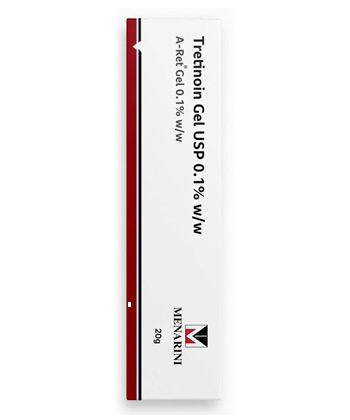
For product visuals, A-Ret Gel 20g tube, Retin-A cream tube, and tretinoin gel 0.05% are the common references people compare when shopping online.
Final Practical Points Before Starting
Tretinoin remains one of the most useful topical retinoids for acne, photoageing, and pigmentation support.
The key is to choose the right formulation, start gently, and stay consistent long enough to see the benefit.
For many UK users, that means preferring a lower strength first, protecting the skin barrier, and using daily SPF without exception.
If the goal is acne control, the first noticeable changes often come in 6 to 12 weeks rather than days.
If the goal is smoother texture or photoageing improvement, patience matters even more.
Used properly, a-ret can be a very effective prescription retinoid, but the best results usually come from steady use rather than aggressive application.