Aldara
Aldara
- In our pharmacy, you can buy Aldara without a prescription, with delivery available across the United Kingdom in discreet packaging.
- Aldara (imiquimod) is used for the treatment of external genital and perianal warts, actinic keratosis, and superficial basal cell carcinoma. It works as a topical immune response modifier, stimulating the body’s immune system to release cytokines and help destroy abnormal skin cells and virus-infected tissue.
- The usual dose depends on the condition: for actinic keratosis, apply 5% cream 2 times a week; for superficial basal cell carcinoma, apply 5 times a week; for external genital/perianal warts, apply 3 times a week. A thin layer is used each time, and the cream is typically left on for 6–10 hours before washing off.
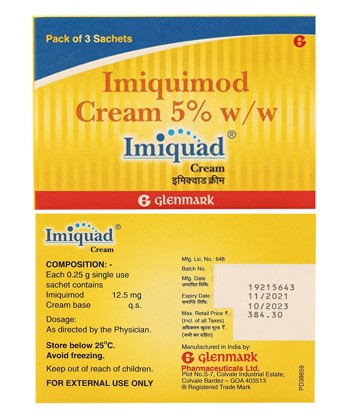
- The form of administration is a topical cream, most commonly Aldara 5% in single-use sachets; other imiquimod strengths may also be available in some markets.
- Aldara usually begins to work after the first few applications, but visible improvement often takes several weeks, depending on the condition being treated.
- The duration of action is local and limited to the application period, usually 6–10 hours before the cream is washed off; treatment courses commonly last from 6 to 16 weeks depending on the indication.
- Alcohol is not directly contraindicated, but excessive alcohol may irritate the skin or worsen discomfort; it is best to avoid alcohol if it increases sensitivity or interferes with treatment tolerance.
- The most common side effects are local skin reactions such as redness, itching, burning, dryness, irritation, swelling, and flaking at the application site.
- Would you like to try Aldara without a prescription?
Aldara
Basic Aldara Information
- INN (International Nonproprietary Name): Imiquimod
- Brand names available in United Kingdom: Aldara, Zyclara, generic imiquimod
- ATC Code: D06BB10
- Forms & dosages: Cream 5% (Aldara), Cream 3.75% (Zyclara), Cream 2.5% (Zyclara)
- Manufacturers in United Kingdom: Original manufacturer was 3M Pharmaceuticals, now linked to Meda, a Mylan/Viatris company; generic imiquimod is supplied by multiple companies
- Registration status in United Kingdom: Prescription use in regulated markets; UK supply is prescription-based and may vary by pharmacy and wholesaler
- OTC / Rx classification: Prescription only (Rx) in most markets
Key Findings From Recent Trials
Looking for the latest evidence on Aldara and wondering whether it still holds up in day-to-day dermatology practice?
Across 2022 to 2025, the overall picture has stayed consistent: imiquimod cream remains a useful prescription topical treatment for selected patients with actinic keratosis, external genital or perianal warts, and superficial basal cell carcinoma.
For actinic keratosis treatment, newer data continue to support established efficacy, especially when patients follow the regimen closely and accept that the skin reaction is part of the expected response.
In real-world use, adherence still appears to be one of the biggest drivers of outcome, because a thin layer applied at the right frequency and washed off at the right time tends to perform better than rushed or inconsistent use.
For genital warts, clearance remains good in appropriately selected cases, but recurrence can still happen, particularly when treatment is stopped early or the lesions are extensive.
Superficial basal cell carcinoma studies and follow-up data continue to support the role of topical therapy before procedures in some patients, although lesion selection matters a great deal.
UK dermatology teams often favour Rx-only topical treatment first when the lesion site, patient preference, or surgical suitability make that a sensible option.
Tolerability findings are much the same as ever: local skin reactions are the main limitation, not systemic effects.
Redness, peeling, burning, and soreness are common, and they often peak during treatment rather than after it ends.
Systemic absorption remains low, which is reassuring, although extensive application or use on large areas can increase exposure slightly.
That is why the practical message from recent dermatology evidence is straightforward: Aldara still works, but it works best when the diagnosis is right, the area is suitable, and the patient knows what to expect.
In a busy clinic, a pharmacist may hear something like, “The skin looks angrier than before, so should I stop?”
Usually, that reaction is exactly why close counselling matters, because local inflammation is often linked to the medicine’s action rather than a sign of harm.
How Aldara Works In The Skin
Is Aldara an antibiotic?
No, it is not.
Imiquimod is a topical immune response modifier, which means it helps the skin’s own defences recognise and clear abnormal cells or viral lesions.
Rather than killing bacteria, it alters local immune activity in the treated area.
That is why it can be used in conditions such as actinic keratosis, genital warts, and superficial basal cell carcinoma.
On a scientific level, imiquimod acts as a topical immunomodulator and is classified under ATC code D06BB10.
This places it within dermatological chemotherapeutic use rather than systemic antibiotic therapy.
Its local immune effects involve cytokine induction and related immune signalling pathways, which increase the body’s ability to mount a response against abnormal skin cells and viral lesions.
The practical result is inflammation in the treated skin, followed by gradual clearance in responders.
That inflammatory response is important: patients often assume the skin becoming red means something has gone wrong, but in many cases it is a predictable part of treatment.
Because Aldara cream works locally, it is usually described as a topical immunomodulator rather than a traditional cream for infection or fungus.
It is also why the medicine must be used only where prescribed and not spread over unaffected skin.
When patients understand the immune pathway, they are often less alarmed by the treatment reaction and more likely to complete the course.
Approved And Off-Label Use In The United Kingdom
Can Aldara be bought and used freely in the UK?
No, Aldara is a prescription-only medicine in the UK context.
The main approved uses reflected in product information are actinic keratosis, superficial basal cell carcinoma, and external genital or perianal warts.
That makes imiquimod prescription treatment an established option in dermatology and sexual health care.
For people asking about Aldara cream for genital warts, the answer is that it is used under clinician supervision, not as an over-the-counter purchase.
Specialist-led off-label use may be considered in selected cases, but this is a clinical decision, not something patients should self-direct.
In UK practice, access can vary by local formulary and by NHS trust, so not every service handles it in exactly the same way.
That variability matters when a patient is comparing a cream for actinic keratosis UK options with a procedure-based route such as cryotherapy.
It also matters when a clinician chooses between topical therapy and a more interventional approach.
Our online pharmacy is available without a prescription, with discreet delivery to United Kingdom in 5-14 days, which is useful for patients comparing access and convenience.
Even so, it remains important to use Aldara only as directed, because off-label use should be clinician-directed and based on the individual lesion and history.
For patients who have been told they may be suitable for a topical first step, the biggest benefit is often avoiding or delaying a procedure while still treating the lesion effectively.
Dosage And Application Strategy
How much should be used, and how often?
The basic rule is simple: apply a thin layer to the prescribed area, rub it in fully, and wash it off after the advised interval.
Adherence is a major predictor of response, so the schedule matters as much as the cream itself.
For actinic keratosis, the usual regimen is twice weekly, left on for around eight hours, for up to 16 weeks.
For superficial basal cell carcinoma, the usual schedule is five times weekly, again for around eight hours, for six weeks.
For external genital or perianal warts, the standard schedule is three times weekly for six to ten hours, for up to 16 weeks.
That means imiquimod 5% cream is not a “more is better” treatment.
Using extra cream, applying it more often, or leaving it on too long can increase irritation without improving results.
Missed doses are handled pragmatically.
If a dose is remembered on the same day, it can usually be applied then.
If not, it should be skipped rather than doubled up.
Children can use it for external genital or perianal warts only from 12 years of age, and younger data are limited.
Elderly patients do not need a formal dose adjustment and have been well tolerated in studies.
No specific liver or kidney dose adjustment is recommended, but caution is sensible because systemic absorption is minimal yet may rise with extensive application.
Patients often ask for a shortcut, especially when managing a busy week, but the correct schedule is what gives Aldara 5% cream the best chance of working.
Safety Protocols And Side Effects
What should patients be warned about before starting?
The most important safety issue is local skin reaction.
Redness, itching, burning, dryness, pain, and rash at the application site are the common side effects of imiquimod side effects reporting.
These are expected, especially if the cream is working as intended.
More significant reactions can include swelling, oozing, scabbing, flaking, crusting, erosions, ulceration, lymphadenopathy, and rare flu-like symptoms.
Severe swelling or ulceration is a reason to review treatment promptly.
Absolute contraindication is hypersensitivity to imiquimod or any excipient.
Relative cautions include autoimmune disease, immunosuppression, significant inflammatory skin disease at the treatment site, and extensive open or ulcerated lesions.
It is also essential to avoid eyes, nostrils, mouth, vagina, and rectum.
The cream should not be applied to broken skin or mucosal surfaces.
That point is especially important for genital wart cream safety, because accidental spread to sensitive areas can cause marked irritation.
Systemic toxicity is rare because absorption is low, but patients should still be told to seek advice if they develop a spreading rash, unusual swelling, or flu-like symptoms.
A quick practical rule works well: local redness alone is common; severe pain, oozing, or feeling generally unwell needs a check.
Interactions And Co-Use Cautions
Are there food interactions with Aldara?
No meaningful food interactions are expected because this is a topical medicine.
The key part of safe use is washing it off after the prescribed interval, not timing it around meals.
Topical interactions matter more than classic tablet-style drug interactions here.
Other irritant creams or medicated products on the same area can make the skin reaction harder to judge.
That includes strong exfoliants, other topical treatments that sting, or active inflammatory skin treatments on the same patch of skin.
Immunosuppressive therapies also deserve caution, because they may complicate the treatment response and the interpretation of local inflammation.
If another prescription topical treatment is being used nearby, the prescriber should know.
This is especially relevant for patients trying to combine imiquimod cream with actinic keratosis treatment products or with creams used for a separate dermatology problem.
In practice, the safest approach is to keep the treated area as simple as possible and follow the clinician’s instructions exactly.
That reduces unnecessary skin irritation and helps the pharmacy team explain whether a reaction is expected or excessive.
What Patients Usually Report
Do people find Aldara easy to use?
Most patient reports point to one clear advantage: home treatment.
Patients like avoiding a procedure, especially when they can manage the course themselves with simple instructions.
That convenience is one reason Aldara remains popular in selected dermatology cases.
The main barrier is discomfort during treatment.
Redness, peeling, burning, and soreness are the most common reasons people struggle to continue.
Forum-style discussions often show the same worry repeated in different ways: “It looks worse, so is it actually working?”
In many cases, the answer is yes, because the local reaction is part of the expected response.
Patients also tend to worry when the skin becomes flaky or crusted, particularly if they are treating genital warts UK cases and have not been prepared for the appearance changes.
A clear explanation before starting treatment makes a big difference.
Most local reactions improve after treatment stops, which is reassuring for patients who are in the middle of a course and worried they have overdone it.
UK care works best when follow-up is easy and the patient knows when to ask for help.
That is one reason pharmacists and prescribers should give simple counselling rather than technical jargon.
Packaging, Supply, And Pricing
What does Aldara come in, and why does packaging matter?
The standard global format is Aldara 5% cream in 250 mg single-use sachets.
That sachet format helps with dose control and reduces contamination risk.
Zyclara is also available in 2.5% and 3.75% strengths, commonly in pump bottles or sachets depending on market.
Across Europe, packaging can vary between sachets and tubes, and generic imiquimod may be supplied in different presentations.
For patients ordering imiquimod sachets, the sachet format is often easier to travel with and simpler to use one application at a time.
Supply in the UK is usually prescription-based and may depend on the wholesaler and the individual pharmacy.
Generic availability can also affect access and price, which is useful for patients comparing Aldara alternatives with a prescription route.
Single-use sachets are particularly relevant when only a small area needs treatment, because they support dose accuracy and hygiene.
That practical detail often matters more to patients than the brand name itself.
How Aldara Compares With Other Options
Is Aldara always the best choice?
No, and that is why alternative options matter.
For genital warts, podofilox, sinecatechins, and cryotherapy are common comparators.
For actinic keratosis, 5-fluorouracil creams, diclofenac gel, Solaraze, and photodynamic therapy may be used.
For superficial basal cell carcinoma, procedure-based options such as surgical excision, curettage, and Mohs surgery are often appropriate when topical therapy is unsuitable.
| Option | Main Use | Strengths | Limitations |
|---|---|---|---|
| Aldara | Genital warts, actinic keratosis, superficial basal cell carcinoma | At-home use, immune-mediated approach | Slower onset, local irritation |
| Podofilox | Genital warts | Topical option | Not suitable for all lesions |
| Sinecatechins | Genital warts | Another home treatment option | Irritation may still occur |
| Cryotherapy | Warts and actinic keratosis | Quick procedure | Requires an appointment |
| 5-Fluorouracil creams | Actinic keratosis | Established field treatment | Can also irritate skin |
| Diclofenac gel | Actinic keratosis | Topical non-procedural option | May be slower or less suitable for some cases |
| Photodynamic therapy | Actinic keratosis | Specialist option | Procedure-based |
| Surgery or Mohs surgery | Superficial basal cell carcinoma | Definitive for selected lesions | Not a cream-based option |
Aldara’s strengths are convenience, a non-procedural route, and usefulness in selected lesions.
Its downside is that it can be slower than procedures and less comfortable than patients expect.
That balance is why treatment choice should be matched to the lesion type, location, and patient preference.
Regulatory Status And Market Context
Where does Aldara sit legally and medically?
Imiquimod is widely approved in Europe and remains prescription only in the UK context.
Its ATC classification is D06BB10.
That classification reflects dermatological chemotherapeutic use, not antibiotic treatment.
The original manufacturer was 3M Pharmaceuticals, and the product line is now linked to Meda, a Mylan/Viatris company.
Generic imiquimod is common across the EU and other markets, which explains the variety of packaging and brand names seen by pharmacies and prescribers.
Romania’s ANMDMR listing is a useful example of how the product is handled as an Rx topical cream in regulated markets.
For UK patients, the practical message is simple: Aldara UK access depends on prescription pathways and local supply, not open retail sale.
That is the standard position for a topical immunomodulator with established clinical use.
Common Questions About Aldara
What is Aldara used for?
It is used for actinic keratosis, superficial basal cell carcinoma, and external genital or perianal warts.
Is Aldara the same as imiquimod?
Aldara is a brand name for imiquimod cream.
How long does treatment take for genital warts or actinic keratosis?
For genital wart treatment cream use, the usual course is up to 16 weeks.
For actinic keratosis, the usual course is also up to 16 weeks.
What if a dose is missed?
Use it the same day if remembered, otherwise skip it and do not double up.
Can it be used on broken skin?
No, broken skin and mucosal surfaces should be avoided.
Why does the treated area become red?
Redness is a common local reaction and often reflects the medicine’s immune effect.
Is it available over the counter in the UK?
No, it is prescription only in the UK context.
Can children use it?
It is approved for external genital or perianal warts in patients aged 12 years and above, with limited data in younger children.
What should be done if too much is applied?
The area should be washed off, and supportive advice sought if the reaction is severe.
How To Use Aldara Correctly
Step one is to clean and dry the area before application.
Step two is to apply a thin layer only to the prescribed area.
Step three is to rub the cream in until fully absorbed.
Step four is to wash it off after the advised interval.
For a visual guide, the most useful images show the sachet format, the thin layer on the treated area, the exact boundaries of the application zone, and the point at which the cream is washed off.
Those pictures help patients avoid the common mistakes: overapplication, using it on mucosal surfaces, putting it on broken skin, and forgetting to wash it off.
Single-use sachets are especially helpful because they make correct application easier to understand.
Patients often do better when they see that the cream is meant to be applied sparingly rather than generously.
That simple teaching point can prevent irritation and improve adherence.
Storage And Transport
How should Aldara be kept at home or when travelling?
Store it at room temperature, between 15 and 25°C.
Protect it from heat, freezing, and light.
It should not be refrigerated.
Keeping the cream in its original packaging helps with safe handling and transport.
Single-use sachets are convenient for travel because they are portable and hygienic.
For patients using imiquimod storage advice while away from home, the main rule is to avoid temperature extremes rather than to worry about special cooling.
Delivery Across United Kingdom
| City | Region | Delivery time |
|---|---|---|
| London | England | 5-7 days |
| Birmingham | England | 5-7 days |
| Manchester | England | 5-7 days |
| Leeds | England | 5-7 days |
| Liverpool | England | 5-7 days |
| Sheffield | England | 5-7 days |
| Bristol | England | 5-7 days |
| Edinburgh | Scotland | 5-7 days |
| Glasgow | Scotland | 5-7 days |
| Cardiff | Wales | 5-7 days |
| Belfast | Northern Ireland | 5-7 days |
| Nottingham | England | 5-9 days |
| Newcastle upon Tyne | England | 5-9 days |
| Leicester | England | 5-9 days |
| Aberdeen | Scotland | 5-9 days |
Using Aldara Safely In Practice
The safest way to use Aldara is to follow the prescribed area, duration, and schedule exactly.
Patients should be told in advance that redness and irritation are common and usually expected.
That counselling is especially important in the UK, where follow-up and adherence are central to treatment success.
If severe reactions occur, treatment should be reviewed rather than simply pushed through.
Completion of the full course matters, but so does stopping or seeking help when the reaction is more than mild or moderate.
In short, imiquimod 5% prescription treatment is effective when used properly, but it is not a casual self-care cream.
Used with the right diagnosis, clear counselling, and sensible monitoring, Aldara remains a valuable option in dermatology and sexual health care.