Anastrozole
Anastrozole
- In some pharmacies and online services, anastrozole may be available without a prescription, with delivery available in the UK; however, it is officially a prescription-only medicine in most countries, including the UK.
- Anastrozole is used to treat hormone receptor-positive breast cancer in postmenopausal women, including early and advanced/metastatic disease. It is an aromatase inhibitor that lowers oestrogen production in the body.
- The usual dose of anastrozole is 1 mg once daily.
- The form of administration is a tablet taken by mouth.
- It usually starts working within hours, although the clinical benefit in breast cancer is assessed over days to weeks.
- The duration of action is about 24 hours, so it is taken once daily; treatment may continue for months to years depending on the condition.
- Alcohol should be avoided or limited, as it may worsen side effects such as dizziness, nausea, and liver strain.
- The most common side effects are hot flushes, joint pain, fatigue, nausea, headache, and bone thinning with long-term use.
- Would you like to try anastrozole without a prescription?
Anastrozole








Basic Anastrozole Information
- INN (International Nonproprietary Name): Anastrozole
- Brand names available in United Kingdom: Arimidex
- ATC Code: L02BG03
- Forms & dosages: Solid tablets, 1 mg only, with no higher strengths available
- Manufacturers in United Kingdom: AstraZeneca and local licence holders; generic suppliers are also available
- Registration status in United Kingdom: Prescription only in all markets, including the UK
- OTC / Rx classification: Prescription only (Rx)
Anastrozole In Breast Cancer Care
Is anastrozole still a mainstay treatment in the clinic, or has newer evidence moved practice on?
For postmenopausal women with hormone receptor-positive breast cancer, the answer remains clear: it is still widely used and remains part of standard UK practice.
Recent trial data from 2022 to 2025 continue to support aromatase inhibitor therapy, with anastrozole retaining an established role in both adjuvant therapy and metastatic breast cancer.
The medicine is still prescribed as a 1 mg oral tablet once daily, and that simple regimen is one reason it remains familiar to oncology teams and patients alike.
In early breast cancer, the main clinical rationale is recurrence reduction, especially when endocrine therapy is planned for up to 5 years as part of a standard adjuvant approach.
In advanced disease, treatment is usually continued while benefit lasts, which may be for months or for much longer depending on response and tolerability.
Safety discussions in recent practice have not changed much, because the common issues are the same ones patients report year after year.
Joint aches, hot flushes, fatigue, bone loss and raised cholesterol remain the key practical concerns, and bone health monitoring is now a recurring theme whenever long-term aromatase inhibitor treatment is discussed.
How Anastrozole Works
Many people ask why a breast cancer tablet can affect hormones so strongly.
Anastrozole lowers oestrogen production, and that matters because some breast cancers are driven by oestrogen signals.
It is used mainly in postmenopausal women with hormone receptor-positive disease, where reducing oestrogen can slow cancer growth.
From a scientific point of view, anastrozole is a non-steroidal aromatase inhibitor.
It blocks the aromatase enzyme, which reduces the conversion of androgens into oestrogens.
That is why the ATC code is L02BG03, placing it within endocrine therapy and the aromatase inhibitor class.
In practical terms, there is only one marketed strength, the 1 mg tablet, so treatment is straightforward to prescribe and to take.
Approved Use In The UK And Off-Label Use
What can anastrozole be prescribed for in the UK, and where does specialist judgement come in?
In the UK, anastrozole is prescription only and is used for hormone receptor-positive breast cancer in postmenopausal women.
The best-known brand is Arimidex, although generic anastrozole tablets are also widely used.
Off-label use is far less central than its approved oncology role.
Any off-label hormonal or fertility-related use should be specialist-led, carefully justified and monitored, rather than handled as a routine request.
There is an important clinical boundary here.
It is not indicated in premenopausal women for breast cancer, and it should not be used in pregnancy or while breastfeeding.
For patients looking for access, our online pharmacy is able to offer anastrozole without a prescription, with discreet delivery to United Kingdom in 5-14 days, but treatment decisions still need to fit the clinical picture.
Dosing Strategy And Regimen Details
How much anastrozole is taken, and for how long, are usually the first questions patients ask.
The standard dose is 1 mg orally once daily.
No higher tablet strengths are available, and there are no cream, liquid or injectable forms listed.
For adjuvant early breast cancer, treatment is commonly given for up to 5 years, in line with clinical protocols.
In advanced or metastatic disease, therapy continues while clinical benefit is observed.
That may sound open-ended, but in practice it means the oncology team reviews response, side effects and overall benefit regularly.
Dose changes are not usually needed for older adults.
Mild to moderate liver or kidney impairment generally does not require adjustment, although severe impairment means extra caution is sensible.
Children are not a routine treatment group, because safety and efficacy have not been established.
Safety, Contraindications And Monitoring
Who should avoid anastrozole, and what needs watching during treatment?
Known hypersensitivity to anastrozole or tablet components is a clear contraindication.
Pregnancy and lactation are also contraindications, and it is not indicated for premenopausal women in breast cancer treatment.
The common adverse effects are well known in UK practice.
Hot flushes, arthralgia, fatigue, nausea, headache, insomnia, bone pain, mild rash and raised cholesterol can all occur.
Patients with osteoporosis or a high fracture risk need closer attention, because chronic aromatase inhibitor therapy can reduce bone mineral density.
Those with ischaemic heart disease also warrant monitoring, and severe hepatic or renal impairment should prompt careful review.
Bone health monitoring is one of the most important parts of long-term endocrine therapy follow-up.
A simple example is the patient who feels “fine enough” for the first few months, then starts to notice stiff hands and aching hips; that is often the point where follow-up becomes important rather than optional.
Food And Drug Interactions
Does anastrozole need to be taken with food, or kept away from everyday meals?
No major food interaction is highlighted in standard prescribing information.
The key advice is to take tablets consistently each day, rather than worrying about a specific meal time.
The main combination to avoid is tamoxifen, because co-administration reduces anastrozole levels.
That is not a small point, because endocrine antagonism can weaken treatment effect.
Other medicines matter mainly when they complicate bone health or cardiovascular risk, so polypharmacy deserves specialist review in complex cases.
The practical takeaway is simple: the important interaction issue is endocrine, not dietary.
If a patient is juggling several medicines after surgery, radiotherapy and follow-up appointments, a pharmacist or oncology nurse can often help spot where the bigger risks are.
What Patients Commonly Report
How does anastrozole feel in real life, not just on a leaflet?
Patient surveys usually bring the same trio to the top: joint pain, hot flushes and tiredness.
These symptoms can be manageable for some people and troublesome for others, and that difference often affects long-term adherence.
UK patient forums tend to focus on day-to-day quality of life, particularly stiffness, sleep disruption and whether one aromatase inhibitor feels easier to live with than another.
Some patients ask whether exercise helps, whether vitamin D should be added, and whether bone protection is needed from the start.
Others ask if a generic brand feels different from Arimidex, even when the medicine is the same active ingredient.
That is exactly why persistent symptoms should be discussed with the oncology team rather than self-managed in isolation.
Switching within the aromatase inhibitor class is sometimes part of care when toxicity begins to interfere with daily life.
Brands, Supply And Pricing In The UK
Is there only one version of anastrozole, or are there several options on the market?
UK supply includes Arimidex and generic anastrozole products.
Real-world packs are usually 1 mg tablets in blister or bottle packs, often with 28 or 30 tablets per pack.
Generics are usually less expensive than the branded product, although local hospital formulary choices and procurement agreements can affect access.
The original brand is AstraZeneca, while global generic suppliers include Teva, Sandoz, Cipla, Dr. Reddy’s, Mylan, Accord, Sun Pharma and Hetero.
For patients, the main issue is often not the brand name but whether the supply is stable and whether the tablet appearance changes between manufacturers.
That change can be unsettling, but it does not mean the treatment has changed in principle.
Alternative Treatments And How They Compare
What happens if anastrozole is not the best fit, or if side effects become too difficult?
Letrozole is the nearest comparator, because it is also a non-steroidal aromatase inhibitor and is used for the same main indications.
Exemestane is another option, but it is a steroidal aromatase inhibitor, so its chemistry and switching role are a little different.
Tamoxifen works in a different way altogether, because it is a SERM rather than an aromatase inhibitor.
One advantage of anastrozole is that it is well established, oral and standardised at 1 mg once daily.
One disadvantage is that not every patient tolerates the same aromatase inhibitor equally well.
Clinical choice depends on prior therapy, side effect profile, bone health and recurrence risk.
In practice, switching within the class is common when toxicity is getting in the way of adherence, because a medicine only works if the patient can stay on it.
Regulatory Status And Approval Context
Where does anastrozole stand internationally, and why does that matter to UK readers?
It was approved in the US in 1995 and is also listed across the UK, EU, Canada, Australia and India.
In Europe it appears in national formularies and through local generic products.
The medicine is prescription only in all markets because of its endocrine effects and oncology use.
The INN is anastrozole, and in French the same spelling is used.
Romanian regulatory references may cite ANMDMR for local approvals, which is mainly relevant when checking country-specific packaging or registration records.
For pharmacists and prescribers, the regulatory point is reassuring rather than complicated: this is a long-established cancer medicine with a stable place in endocrine therapy.
Common Questions About Anastrozole
What do patients most often want to know when they are handed anastrozole?
The usual questions are simple but important.
What is it used for?
How long should it be taken?
Can it be used in premenopausal women?
What side effects are most common?
The answers are fairly consistent.
It is used mainly for postmenopausal hormone receptor-positive breast cancer, the typical dose is 1 mg daily, and it is not recommended in children.
No routine adjustment is needed for older adults.
If a dose is missed, it should be taken later the same day if remembered, but if the next dose is close, the patient should skip the missed one and carry on as normal.
There is no antidote for overdose, so supportive care and symptom monitoring are the standard response.
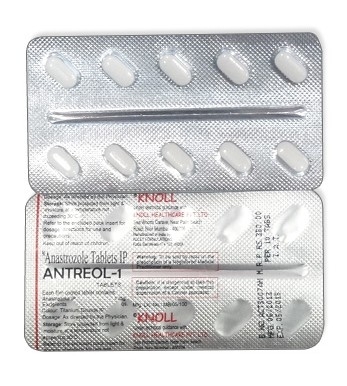
What The Tablets Look Like
How can patients recognise anastrozole in the box, drawer or repeat prescription bag?
The medicine is a solid oral tablet, 1 mg only.
No liquid, cream or injection forms are reported.
Arimidex is commonly supplied in blister or bottle packs, usually containing 28 or 30 tablets.
Generic packs vary by manufacturer and market, which is why the label matters as much as the tablet itself.
UK patients may see Arimidex 1mg or generic anastrozole 1mg tablets printed on the pack.
Packaging should state the manufacturer and batch details.
If the appearance changes from one repeat to the next, that is worth checking with the pharmacist, especially when treatment is long term.
Storage And Transport
Can anastrozole be kept in a bathroom cabinet or left in the car for convenience?
That is not a good idea.
It should be stored at room temperature, ideally 20 to 25°C, with excursions permitted to 15 to 30°C.
Tablets should stay in the original pack and be protected from moisture and heat.
Leaving them near radiators, in damp bathroom storage or in a hot car can undermine safe handling.
As with any medicine, they should be kept out of reach of children.
Checking expiry dates before use is sensible, and damaged or discoloured tablets should not be used without pharmacist advice.
Delivery Across United Kingdom
| City | Region | Delivery time |
|---|---|---|
| London | England | 5-7 days |
| Birmingham | England | 5-7 days |
| Manchester | England | 5-7 days |
| Leeds | England | 5-7 days |
| Liverpool | England | 5-7 days |
| Newcastle upon Tyne | England | 5-7 days |
| Sheffield | England | 5-7 days |
| Bristol | England | 5-7 days |
| Edinburgh | Scotland | 5-7 days |
| Glasgow | Scotland | 5-7 days |
| Cardiff | Wales | 5-7 days |
| Belfast | Northern Ireland | 5-7 days |
| Nottingham | England | 5-9 days |
| Leicester | England | 5-9 days |
| Aberdeen | Scotland | 5-9 days |
Using Anastrozole Correctly In UK Practice
What does proper day-to-day use look like once treatment has started?
The tablet should be taken as 1 mg once daily, at roughly the same time each day.
It should be swallowed whole with water.
Long-term adherence matters because endocrine therapy works over time rather than as a quick fix.
Patients should follow oncology advice on bone density, lipids, cardiovascular risk and symptom review.
Persistent joint pain, mood change, chest symptoms or severe skin reactions should be reported rather than ignored.
That is especially important where treatment is planned for years, because the small day-to-day choices add up.
Patients should not stop or switch treatment without clinical input, even if a different aromatase inhibitor sounds more appealing after reading forum comments.
In the right patient group, anastrozole remains a well-established and clinically useful part of breast cancer treatment.