
Testosterone Topical
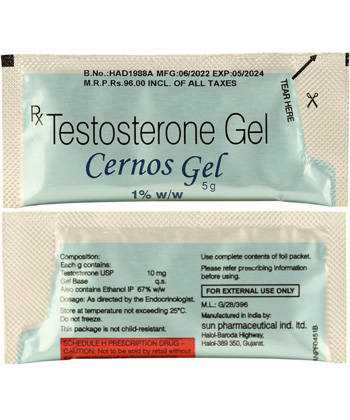
Testosterone Topical
- In our pharmacy, you can buy testosterone topical without a prescription, with discreet delivery across the United Kingdom. It is also a prescription-only medicine in standard clinical use in many countries, so medical supervision is usually recommended.
- Testosterone topical is used for testosterone replacement in adult men with confirmed hypogonadism and low testosterone levels. It works by supplying testosterone, the primary male androgen, which helps restore normal hormone levels and supports sexual function, energy, muscle mass, mood, and bone health.
- The usual dose depends on the product and strength, but a common starting dose for gel is 50 mg applied once daily, adjusted to around 40–100 mg per day based on blood tests and clinical response. Patches are usually 2 mg or 4 mg daily, and nasal gel is typically 11 mg three times daily.
- The form of administration is a topical cutaneous gel applied to the shoulders, upper arms, or abdomen; other testosterone forms include transdermal patches, nasal gel, intramuscular injections, oral capsules, and implants.
- The effect usually starts gradually, with some improvement often noticed within a few days to a few weeks, while full benefit is typically assessed after serum testosterone monitoring at around 2 weeks or later.
- The duration of action is about 24 hours for most once-daily gels and patches, which is why they are usually used every day. Treatment for confirmed hypogonadism is often long term and may be lifelong.
- Avoid heavy alcohol use, as it may worsen side effects and can affect hormone levels, liver function, and overall treatment safety.
- The most common side effects are skin irritation at the application site, acne, increased hair growth, mood changes, headache, breast tenderness or enlargement, and fluid retention.
- Would you like to try testosterone topical without a prescription?
Testosterone Topical
Basic Testosterone Topical Information
- INN (International Nonproprietary Name): Testosterone
- Brand Names Available In United Kingdom: Testogel, Tostran; international topical and related brands include AndroGel, Testim, Vogelxo, Androtop, Androderm, Natesto, Fortesta and Testopel, though availability varies by market and formulary.
- ATC Code: G03BA03 – Testosterone
- Forms & Dosages: Transdermal gel 1% (50 mg/5 g), 1.62% and 2%; patch 2 mg/24h and 4 mg/24h; nasal gel 4.5 mg/actuation; intramuscular injections vary; oral undecanoate capsules 158 mg and 200 mg; pellet 75 mg.
- Manufacturers In United Kingdom: Besins Healthcare, Kyowa Kirin, Abbvie, Endo International, Pfizer, Bayer, Eli Lilly, Teva, Ferring Pharmaceuticals, Acerus, Viatris, Antares Pharma, Sandoz, Dr. Reddy’s, Sun Pharma, Cipla, Lupin, Upsher-Smith and Biote Medical.
- Registration Status In United Kingdom: Prescription-only medicine.
- OTC / Rx Classification: Rx only worldwide because of misuse potential and the need for monitoring.
What Recent Evidence Says About Topical Testosterone
Major 2022–2025 Studies
Many people ask whether a testosterone gel actually does what it promises, or whether injections still work better.
Recent topical testosterone evidence continues to show that testosterone replacement therapy reliably raises serum testosterone in men with confirmed hypogonadism.
Across comparative studies, gels have tended to produce steadier absorption than intermittent injections, with fewer peak–trough swings and a more physiological replacement pattern when used correctly.
Main Outcomes
The outcomes that matter most in clinic are the ones patients notice first.
Studies most often report improvements in libido, energy, mood and body composition, although the size of benefit is strongest when baseline testosterone is genuinely low.
That point matters, because men with borderline or normal levels usually do not see the same response, even if they were hoping for a quick fix.
For men with clear biochemical hypogonadism, testosterone gel remains a common first choice when adherence is good and skin tolerance is acceptable.
Safety Observations
Safety findings have been broadly consistent.
Topical treatment avoids injection-related pain and some of the swings seen with longer-interval dosing, but it still needs careful follow-up for skin reactions, polycythaemia and prostate-related concerns.
Study quality does vary, and some reports are affected by selection bias and short follow-up, so the numbers should not be read as a promise for every patient.
What The Evidence Means For UK Practice
Monitoring Response
In UK practice, response is not judged on symptoms alone.
Serum testosterone monitoring after initiation, dose titration and periodic review are standard, especially when treatment is started through specialist care or shared-care arrangements.
If the blood level is still low and symptoms remain, the dose may be adjusted within the recommended range.
When Study Results Do Not Translate Well
Trial results often do not translate neatly to older men, those with cardiovascular risk, or men who enter studies because they were already keen on treatment.
That is why UK endocrinology practice stays cautious in older patients and in anyone with a history of myocardial infarction, stroke or other significant risk factors.
In short, the evidence supports topical testosterone for properly diagnosed hypogonadism, but not as a shortcut for vague fatigue or “low energy” without testing.
How Topical Testosterone Works Through The Skin
Layman’s Explanation
The simple version is this: a testosterone gel, cream or patch puts testosterone through the skin and into the bloodstream to replace what the body is not making in enough quantity.
That is why daily use tends to keep levels steadier than one-off or intermittent dosing.
Scientific Breakdown
Topical testosterone is a transdermal form of male hormone replacement and belongs to ATC code G03BA03.
It is a prescription medicine in the UK, so the dose and product choice should match the diagnosis, the blood results and the patient’s risk profile.
Cutaneous Absorption
Absorption happens from the skin at the application site, usually the shoulders, upper arms or abdomen depending on the product.
Once absorbed, testosterone enters the circulation and reaches target tissues without the need for an injection.
Systemic Androgen Effects
After binding to the androgen receptor, testosterone supports sexual function, muscle mass, bone density, mood and haemoglobin regulation.
That is why treatment can improve more than just libido, although the degree of benefit depends on how low the testosterone was at baseline.
Transdermal delivery reduces the burden of injections, but it still needs dose adjustment based on serum testosterone concentrations and clinical response.
Where Topical Testosterone Fits In UK Prescribing
United Kingdom Approvals
In the UK, topical testosterone is mainly used for male hypogonadism under specialist or shared-care arrangements.
Brand availability varies by market and formulary, so the exact product offered by one service may not be the same as the one used elsewhere.
Notable Off-Label Trends
The most accepted indication is testosterone deficiency treatment in adult men with confirmed biochemical and clinical hypogonadism.
That is where products such as Testogel and Tostran are most often discussed in practice.
International names such as Testim, AndroGel, Vogelxo, Androtop and Androderm help when comparing literature or travelling between systems, but they do not change UK prescribing rules.
Approved Therapeutic Use
Approved use means replacement in adult men with proven testosterone deficiency, not casual supplementation.
Prescribers will usually check symptoms, morning testosterone levels and relevant safety bloods before starting.
Off-Label Interest
Off-label interest around younger patients, fertility concerns and non-medical “optimisation” needs to be handled very carefully.
Those situations are not routine pharmacy or primary-care decisions and should involve specialist review.
Because of misuse and adverse effect risk, all topical testosterone products remain prescription-only medicines.
For patients who are trying to order discreetly, our online pharmacy offers testosterone topical without a prescription, with discreet delivery to the United Kingdom in 5–14 days.
How Dosing And Monitoring Usually Work
General Dosing
People often want a simple starting dose, but testosterone therapy is adjusted to the person rather than handed out as a fixed number.
For gel, the usual adult starting point is 50 mg once daily, with adjustment around 40–100 mg/day according to serum testosterone and symptoms.
Patches are commonly 2 mg or 4 mg nightly, and nasal gel is typically 4.5 mg per actuation.
Condition-Specific Dosing
The main adult indication is confirmed hypogonadism, so the aim is to bring testosterone into the mid-normal physiological range, not to push it above normal.
Older men are usually started at the lowest effective dose, because they need closer surveillance for prostate and cardiovascular effects.
Children should not routinely receive topical testosterone, and it is contraindicated in prepubertal children because of premature puberty and bone maturation.
Titration Principles
Dose changes should follow blood results and symptom response, not guesswork.
If the serum level is too low, the dose may be increased; if it is too high or side effects appear, it may be reduced.
Monitoring Schedule
In UK practice, the first serum testosterone check is generally taken more than 14 days after starting, then repeated periodically.
Timing matters, because the blood test should be taken in relation to application as instructed by the prescriber or the product leaflet.
Liver and kidney impairment need caution, because studies are limited and formal adjustment rules are not well established.
Safety Checks Before And During Treatment
Contraindications
The key absolute contraindications are known or suspected prostate cancer, breast cancer, pregnancy or breastfeeding exposure risk, and hypersensitivity to the product.
Those are the situations where topical testosterone should not be used.
Adverse Effects
Common side effects include application-site redness, itching or rash, plus acne, increased hair growth, mood changes, headache, gynaecomastia, oedema and fluid retention.
These are often mild to moderate, but they should still be documented and reviewed.
Common Adverse Effects
Skin irritation is the issue most people mention first, especially in the first few weeks.
Some men also notice acne or a change in mood, which is why follow-up is not just about numbers on a lab report.
Higher-Risk Groups
Men with benign prostatic hyperplasia, severe heart, liver or kidney disease, a history of myocardial infarction or stroke, polycythaemia, sleep apnoea or diabetes need closer monitoring.
Older patients often require more prostate and haematology surveillance than younger adults.
If overdose or excessive exposure occurs, wash the skin to remove unabsorbed gel and seek urgent help if nausea, vomiting, swelling or trouble breathing develops.
Accidental transfer to women and children is a real risk, so treated skin needs to be covered and handled carefully.
Interactions, Skin Products And Absorption Issues
Food Interactions
There is no major food interaction with topical testosterone because it is not taken by mouth.
That makes it much simpler than many oral medicines, especially for people who take tablets at different times of day.
Drug Combinations To Avoid
Some combinations need caution, particularly anticoagulants, insulin and any other androgenic therapy.
Anticoagulants may need closer monitoring, and insulin sensitivity can change in some patients.
Medicines That Need Caution
Anyone already on hormonal treatment should tell the prescriber before starting a testosterone gel or cream.
That includes any treatment that might increase side-effect risk or complicate interpretation of blood tests.
Skin And Lifestyle Factors
Absorption can be influenced by skin products, washing habits, sweat, occlusion and sunscreen.
In practical terms, the routine has to be consistent, and the product instructions on bathing or swimming should be followed carefully.
Staying away from irritating topical agents, including steroid creams at the same site unless advised, can also help reduce local problems.
What Patients Say About Gels Compared With Other Forms
Survey Data
Many patients value topical testosterone because it avoids injections, feels easier to fit into a daily routine and often gives steadier symptom control.
That is a big reason testosterone replacement therapy with gels remains popular.
Forum Trends
In online discussions, some men say gel gives less mood fluctuation than injections, while others prefer injections for convenience.
Both views are understandable, because the best option is often the one a patient can use consistently.
Adherence And Convenience
People who are already used to a morning routine often like the simplicity of a testosterone gel.
For others, remembering a daily application can become tedious over time.
Common Complaints
The usual complaints are waiting for the gel to dry, skin irritation and the need to avoid transfer to partners or children.
Patients also mention that daily use can feel inconvenient compared with longer-acting options.
Brand names such as AndroGel, Testim, Fortesta, Vogelxo, Testogel and Tostran come up often in patient stories, although the exact product on the market depends on country and supply.
Brand Access, Supply And Pricing Realities
Brand Availability
The wider topical portfolio includes AndroGel, Testim, Fortesta, Vogelxo, Testogel, Tostran, Androtop and Androderm, with manufacturers such as AbbVie, Endo, Besins Healthcare and others.
In practice, not every brand is available in every country.
Pricing And Access
UK access depends on licensing, formulary status and local procurement, so substitution between brands can happen.
That can matter because gel packs, pump dispensers, sachets and canisters do not all feel the same to use.
UK Access Considerations
Topical testosterone is usually supplied after specialist review, and ongoing blood monitoring adds to the practical cost of treatment.
Patients should also plan for repeat prescriptions and follow-up appointments rather than treating it as a one-off purchase.
Supply And Prescribing Trends
Packaging differences can influence adherence and waste, especially when someone prefers a pump but is dispensed sachets, or the other way round.
Brand changes can be frustrating, but they are sometimes unavoidable because of national availability and procurement.
Topical Testosterone Compared With Other Options
Comparison Table
| Formulation | Main Advantages | Main Drawbacks |
|---|---|---|
| Topical gel or cream | Physiological replacement, easy to stop, no injection burden | Daily use, transfer risk, variable absorption, skin reactions |
| Injection | Less frequent dosing, familiar to some patients | Peaks and troughs, injection burden |
| Patch | Steady delivery | Can irritate skin |
| Pellet | Long-lasting | Invasive procedure |
| Oral undecanoate capsule | No skin transfer | Suitability limits and different monitoring considerations |
Pros And Cons
Topical therapy is often chosen first when clinicians want steady physiological testosterone levels and the option to stop quickly if adverse effects appear.
That flexibility is a real advantage in early treatment.
Topical Pros
The main strengths are ease of stopping, no needle burden and relatively smooth hormone delivery.
For men who dislike injections, that can make all the difference to adherence.
Topical Cons
The drawbacks are variable absorption, daily adherence requirements, skin reactions and the need to manage transfer risk.
Compared with injections, gels can be less dramatic in how they feel, but that is often exactly why they are preferred.
Regulation And Prescription Status
UK Regulatory Framing
Topical testosterone is a prescription-only medicine in the UK because of androgenic adverse effects, misuse potential and the need for monitoring.
That is why prescribers are expected to follow bloods, symptoms and safety checks rather than simply issuing a repeat supply.
International Reference Points
EMA-authorised products include Testogel, Testim and Tostran in parts of Europe, while FDA-approved options in the US include AndroGel, Testim, Natesto and Fortesta.
Those names help when comparing evidence and market access, but UK prescribing still needs to follow domestic licensing and specialist guidance.
UK Oversight
The ATC code is G03BA03, and public product availability can change over time.
That is one reason product checks matter before prescribing or dispensing.
External Regulators
Regulatory databases such as ANMDMR can confirm topical testosterone listings in other countries, which is useful for international reference but not a substitute for UK status.
For UK patients, the simple rule is still the same: topical testosterone should be used under proper clinical supervision.
Common Questions About Topical Testosterone
Practical Questions
How long does gel take to work?
Blood levels change early, but symptom improvement is usually judged over weeks rather than days.
When should blood tests be repeated?
The first check is usually more than 14 days after starting, then at intervals agreed with the prescriber.
What if a dose is missed?
Apply it as soon as remembered unless the next dose is close, and do not double up.
Missed Dose
If a dose is missed, use it when remembered unless it is nearly time for the next one.
Doubling up is not advised.
Overdose
If too much gel is applied, wash off the unabsorbed product and seek urgent advice if toxicity symptoms develop.
Children and pregnant people must avoid contact with treated skin.
Where Topical Testosterone Goes And How It Is Absorbed
Application Map
A simple way to picture treatment is to start with clean, dry skin on the shoulders, upper arms or abdomen, then let the product dry, wash hands and avoid transfer.
After that, the clinician checks blood levels and adjusts the dose if needed.
Absorption Pathway
Topical forms are cutaneous or transdermal, unlike intramuscular injections or pellets.
A useful diagram would show sachets, pumps, tubes, patches, canisters and nasal actuation as different delivery formats across the market.
Best Application Sites
The usual sites are the shoulders, upper arms and abdomen, depending on the product instructions.
Using the prescribed site helps keep absorption more predictable.
What Not To Do
Do not apply to broken skin unless the leaflet says it is acceptable.
Do not let other people touch the area before it has dried and been covered as instructed.
Delivery Across United Kingdom
| City | Region | Delivery Time |
|---|---|---|
| London | Greater London | 5-7 days |
| Birmingham | West Midlands | 5-7 days |
| Manchester | North West England | 5-7 days |
| Leeds | West Yorkshire | 5-7 days |
| Glasgow | Scotland | 5-7 days |
| Edinburgh | Scotland | 5-7 days |
| Liverpool | North West England | 5-7 days |
| Newcastle upon Tyne | North East England | 5-7 days |
| Cardiff | Wales | 5-7 days |
| Bristol | South West England | 5-7 days |
| Sheffield | South Yorkshire | 5-9 days |
| Nottingham | East Midlands | 5-9 days |
| Leicester | East Midlands | 5-9 days |
| Coventry | West Midlands | 5-9 days |
| Aberdeen | Scotland | 5-9 days |
How To Use Testosterone Gel Safely Every Day
Daily Application Routine
Apply the prescribed amount once daily to clean, dry skin on the recommended site.
Let it dry fully before dressing.
Wash your hands afterwards.
Keep the treated area away from skin-to-skin contact until the product has dried and been covered as directed.
Escalation And Follow-Up
Use the same time each day so the routine becomes automatic.
That matters more than people think, especially when treatment is intended to run long term in confirmed hypogonadism.
After Application
After applying topical testosterone, avoid bathing or swimming until the product instructions say it is safe.
Keep children and pregnant people away from the treated area.
When To Contact A Clinician
Contact a clinician if skin reactions are persistent, symptoms are not improving, blood pressure or fluid retention becomes an issue, or there are concerns about prostate, cardiovascular disease, polycythaemia or sleep apnoea.
Long-term treatment may be appropriate, but it should always be reviewed regularly rather than left unchecked.
Storage And Transport
Storage Conditions
Store gels and patches at room temperature, around 15–30°C.
Do not refrigerate gel packets.
Avoid freezing and excessive heat.
Transport And Household Safety
Keep the medicine away from children and women to prevent accidental exposure.
Discard opened or damaged packaging.
Childproofing
A locked cupboard is best if there are children in the house.
That small step can prevent a serious accidental exposure.
Travel Tips
When travelling, keep the medicine in its original packaging, dry and secure.
That makes it easier to store, identify and protect during the journey.