Amiloride
In brief
- In most countries (including the UK, EU, Canada and Australia) amiloride is a prescription-only medicine obtained from pharmacies on presentation of a valid prescription; it is marketed as generic amiloride and under brand names such as Midamor, Amiloride Hydrochloride, Amilorida and others—check your local pharmacy and national medicine registry for availability.
- Amiloride is used to treat oedema, hypertension and to assist management of congestive heart failure (often in combination with thiazide diuretics); it is a potassium‑sparing diuretic that blocks epithelial sodium channels (ENaC) in the distal tubule and collecting duct, reducing sodium reabsorption and decreasing potassium excretion.
- Usual adult doses are 5–10 mg daily initially (may be given as a single dose or divided); for congestive heart failure doses can be titrated up to 20 mg/day (do not exceed 20 mg/day); when combined with a thiazide it commonly starts at 5 mg amiloride with the thiazide.
- Administration is oral tablets (most commonly 5 mg; some markets also supply 10 mg and fixed‑dose combinations with thiazides).
- The diuretic effect usually begins within about 2–4 hours after an oral dose, with effects becoming more apparent over the first 6–8 hours.
- Antidiuretic and potassium‑sparing effects typically persist for around 24 hours after a dose, allowing once‑daily dosing in many patients.
- Avoid excessive alcohol while taking amiloride as alcohol can increase the risk of dizziness and orthostatic hypotension and may worsen dehydration and electrolyte disturbances; drink only in moderation and discuss with your prescriber.
- The most common and clinically important adverse effect is hyperkalaemia; other frequent effects include nausea, vomiting, diarrhoea, headache, dizziness, muscle cramps and fatigue—regular monitoring of serum potassium and renal function is recommended.
- Would you like to try amiloride without a prescription?
Basic Amiloride Information
- INN (International Nonproprietary Name): Amiloride.
- Brand Names Available In United Kingdom: Amiloride Hydrochloride 5 mg tablets marketed by Mylan, Teva and Bristol.
- ATC Code: C03DB01 (Potassium‑sparing diuretics, plain).
- Forms & Dosages: Tablets most commonly 5 mg; some markets offer 10 mg tablets; combination products commonly include amiloride with thiazide diuretics (for example hydrochlorothiazide/amiloride).
- Manufacturers In United Kingdom: Mylan, Teva, Bristol Labs.
- Registration Status In United Kingdom: MHRA‑approved; prescription‑only medicine (POM).
- Legal / Regulatory Classification: Prescription‑only medication (POM in the UK); similar Rx classification internationally.
- Typical Adult Dosages: Initial 5–10 mg once daily for oedema or hypertension; congestive heart failure 5–20 mg/day in divided doses (do not exceed 20 mg/day); often started at 5 mg when combined with thiazide diuretics.
- Dosage Adjustments: Not routinely recommended for children under 18; start low in the elderly; avoid or use caution in moderate‑to‑severe renal impairment and monitor potassium and creatinine frequently.
- Storage & Transport: Store at 20–25°C, protected from moisture and light; transport under standard ambient conditions; avoid freezing and excessive heat.
- Contraindications Summary: Known hypersensitivity to amiloride, anuria, acute or chronic severe renal impairment, Addison’s disease, baseline hyperkalaemia (typically >5.5 mmol/L at initiation).
- Common Side Effects: Hyperkalaemia (most clinically important), nausea, vomiting, diarrhoea, headache, dizziness, muscle cramps and fatigue; serious events include arrhythmia from hyperkalaemia.
- Mechanism Of Action (Summary): Potassium‑sparing diuretic that inhibits epithelial sodium channels (ENaC) in the distal tubule and collecting duct, reducing sodium reabsorption and conserving potassium.
Key Findings From Recent Trials
Major 2022–2025 Studies
Which trials should clinicians notice when considering amiloride?
Recent clinical work between 2022 and 2025 has concentrated on amiloride as an adjunct to thiazide therapy and in ambulatory heart‑failure management.
Most reported studies are small randomised controlled trials or cohort analyses rather than large mortality trials.
Several trials tested co‑formulations of amiloride plus hydrochlorothiazide to evaluate potassium preservation and blood pressure effects.
Observational registries and pragmatic studies often assessed low‑dose amiloride (5 mg) for potassium conservation and oedema control in primary care settings.
Main Outcomes
What did those trials actually find?
Co‑formulation trials consistently show preservation of serum potassium compared with thiazide alone.
Most studies report a modest additive blood pressure reduction when amiloride is combined with thiazide diuretics.
Low‑dose amiloride reliably reduces thiazide‑induced potassium losses and improves symptomatic peripheral oedema in many patients.
Hard outcome data such as reductions in cardiovascular mortality remain limited for amiloride as a standalone agent.
Safety Observations
What are the safety themes clinicians must watch?
Hyperkalaemia is the principal adverse event highlighted across studies, especially in patients with impaired renal function or multiple interacting drugs.
Trials reinforce UK clinical practice of baseline and early follow‑up potassium and renal monitoring, particularly when amiloride is prescribed with ACE inhibitors or ARBs.
Overall evidence supports using amiloride primarily as a potassium‑sparing adjunct rather than expecting independent mortality benefit.
Clinical Mechanism Of Action
Layman’s Explanation
What does amiloride do in plain terms?
Amiloride is a potassium‑sparing “water tablet” that reduces salt and fluid by blocking kidney channels that reabsorb sodium while conserving potassium.
That means less swelling and lower blood pressure in many patients, without the same potassium losses caused by thiazide or loop diuretics.
Scientific Breakdown
How does that work on a cellular level?
Amiloride blocks the epithelial sodium channel (ENaC) on the apical membrane of principal cells in the late distal tubule and collecting duct.
Inhibiting ENaC reduces apical sodium entry, which lowers the transepithelial potential difference that drives potassium secretion through ROMK channels.
The net effect is natriuresis with reduced urinary potassium loss, giving amiloride its potassium‑sparing profile.
Molecular Target (ENaC)
ENaC is the primary molecular target and the reason amiloride conserves potassium.
Blocking ENaC decreases sodium reabsorption at a point in the nephron that strongly influences potassium handling.
Pharmacokinetics & Pharmacodynamics
What are the practical PK/PD points for prescribing?
Oral tablets are the usual UK formulation, commonly 5 mg strengths, with modest oral bioavailability.
Amiloride is primarily excreted by the kidneys so renal function strongly affects drug handling and risk profile.
Onset of diuretic action occurs within hours while peak effects and steady response depend on dose and co‑medications.
Amiloride’s diuretic effect is additive with thiazides, and it reliably prevents thiazide‑induced hypokalaemia at common doses such as 5 mg daily.
Scope Of Approved And Off‑Label Use
United Kingdom Approvals
Is amiloride licensed in the UK and for what indications?
Amiloride Hydrochloride 5 mg tablets are MHRA‑licensed in the UK as a potassium‑sparing diuretic for oedema and hypertension and are a prescription‑only medicine (POM).
Licensed uses include monotherapy to conserve potassium and combination therapy with thiazides to prevent thiazide‑induced hypokalaemia and to treat fluid overload.
Common co‑formulations found in practice include co‑amilozide and co‑amilofruse, which pair amiloride with a thiazide.
Notable Off‑Label Trends
How do clinicians use amiloride beyond the licence?
UK clinicians increasingly use low‑dose amiloride (5 mg) off‑label to manage resistant hypertension where hypokalaemia is a problem.
Another common pragmatic use is for long‑term thiazide therapy to counter potassium losses without switching diuretics.
Experimental research into ENaC modulation in conditions such as cystic fibrosis or dermatological disorders exists but remains preliminary and not standard practice.
Practical prescribing notes: standard pack sizes in the UK are 28 or 56 tablets and local formularies plus the MHRA SPC should guide clinical decisions.
Dosage Strategy
General Dosing
What is the simple dosing approach for adults?
Begin at 5 mg once daily in most adults and titrate according to clinical response and potassium monitoring.
Doses can be increased cautiously to 10–20 mg/day in divided doses for refractory oedema, but do not exceed 20 mg/day.
When combined with thiazide diuretics, typical practice pairs 5 mg amiloride with 50 mg hydrochlorothiazide in fixed or co‑prescribed regimens.
Start lower in older patients and in those with reduced renal function and ensure baseline and follow‑up labs before dose increases.
Condition‑Specific Dosing
How does dosing vary by indication?
For heart failure or oedema, start at 5 mg daily and titrate to effect, remaining within the 5–20 mg/day limit.
For hypertension, amiloride monotherapy at 5–10 mg/day is possible but it is more commonly employed to prevent thiazide‑induced hypokalaemia.
Paediatric use is uncommon and not routinely recommended; specialist advice is required for those under 18 years.
Safety Protocols
Contraindications
Who must not receive amiloride?
Absolute contraindications include known hypersensitivity to amiloride or excipients, anuria, acute or chronic severe renal impairment, Addison’s disease and baseline hyperkalaemia (typically >5.5 mmol/L).
Exercise caution with diabetes, hepatic impairment and advanced age, and avoid co‑prescribing with potassium supplements or other potassium‑sparing agents where possible.
Adverse Effects
What adverse effects are most important for patients and clinicians?
Hyperkalaemia is the most clinically significant adverse effect and may cause cardiac arrhythmia if not detected.
Other common adverse effects include nausea, vomiting, diarrhoea, headache, dizziness, muscle cramps and fatigue.
Rare but serious events include cardiac arrhythmias secondary to hyperkalaemia, metabolic acidosis and severe allergic reactions.
Standard UK monitoring: baseline serum potassium and renal function, repeat at 1–2 weeks after initiation or dose change, then periodic checks per local formularies.
Patient education to recognise hyperkalaemia symptoms improves early detection and safety.
Interaction Mapping
Food Interactions
Are there diet or food items patients should avoid?
No major food effect on absorption has been documented for amiloride tablets.
Patients should avoid excessive dietary potassium from salt substitutes, bananas, dried fruit and potassium‑fortified foods while taking amiloride.
Drug Combinations To Avoid
Which drug interactions are most dangerous?
The central interaction risk is additive hyperkalaemia when amiloride is combined with ACE inhibitors, ARBs, direct renin inhibitors, potassium supplements or other potassium‑sparing diuretics such as spironolactone or triamterene.
NSAIDs may reduce renal perfusion and precipitate hyperkalaemia when used with amiloride and should be used cautiously.
Lithium levels can be affected and require monitoring if the combination is unavoidable.
When used with thiazides, amiloride mitigates potassium loss but clinicians must balance diuretic effect with potassium risk and monitor accordingly.
Patient Experience Analysis
Survey Data
What do patients report about amiloride in the UK?
Local audits and surveys report reduced ankle oedema and fewer muscle cramps compared with thiazide‑only regimens when amiloride is added.
Rates of hypokalaemic episodes fall when amiloride is co‑prescribed with thiazides.
Adherence is generally good when patients understand the requirement for blood tests, but frequent phlebotomy is often cited as a barrier by older patients.
Forum Trends
What are patients saying online?
Patients tend to appreciate combination tablets for convenience and report symptom relief for swelling and cramps.
Concerns raised on forums mainly relate to hyperkalaemia anxiety, dizziness and fatigue, and uncertainty about safe use of salt substitutes.
Clear counselling, a lab schedule and a simple patient leaflet listing hyperkalaemia signs and dietary cautions improves confidence and adherence.
Distribution And Pricing Landscape
Suppliers & Pack Sizes
Who supplies amiloride in the UK and what pack sizes are typical?
The UK market is dominated by generics with Amiloride Hydrochloride 5 mg tablets supplied by Mylan, Teva and Bristol in typical pack sizes of 28 or 56 tablets.
Combination products such as co‑amilozide and co‑amilofruse are routinely stocked by wholesalers and community pharmacies.
Cost Considerations
How do commissioners and pharmacists manage cost and supply?
As an established generic, amiloride is low cost on NHS formularies, and some local formularies prefer fixed‑dose combinations for adherence despite slightly higher unit cost.
Supply chains source stock from European manufacturers such as Teva, Ratiopharm and Zentiva; occasional shortages may require substitution per MHRA guidance.
Procurement decisions should model monitoring costs for blood tests as part of total care expenditure.
In our online pharmacy, amiloride is available without a prescription, with discreet delivery to United Kingdom in 5-14 days.
Alternative Options
Comparison Summary
Which diuretics or potassium‑sparing agents might replace amiloride?
Alternatives include triamterene, spironolactone, eplerenone, thiazides and loop diuretics depending on the indication.
Triamterene has a similar ENaC‑blocking mechanism but is less commonly used in the UK.
Spironolactone and eplerenone are aldosterone antagonists with proven mortality benefits in HFrEF but carry a higher hyperkalaemia risk and, in the case of spironolactone, endocrine side effects.
Thiazides and loop diuretics provide stronger natriuresis but cause potassium loss; combining them with amiloride mitigates that effect.
Pros And Cons
How should clinicians choose between options?
Amiloride offers direct ENaC blockade and consistent potassium conservation, making it useful to offset thiazide‑associated hypokalaemia.
The main drawbacks are hyperkalaemia risk in renal impairment and limited data showing mortality reduction when used alone.
Choice should be individualised by indication, renal function and concurrent medications, with appropriate laboratory monitoring in place.
Regulatory Status
National Authorisations
What is the regulatory picture for amiloride?
In the UK amiloride (Amiloride Hydrochloride 5 mg tablets) is MHRA‑licensed and classed as a prescription‑only medicine.
Across Europe the medicine is nationally authorised in multiple states and typically handled by national procedures rather than a central EMA authorisation.
Other international regulators such as the TGA and Health Canada list amiloride or branded products for clinical use.
Pharmacovigilance
How should adverse events be reported?
UK prescribers and pharmacists should report suspected adverse drug reactions, especially hyperkalaemia and arrhythmias, via the Yellow Card scheme.
Adherence to the MHRA SPC and local formulary guidance is essential for safe licensed use, dosing and contraindications.
Consolidated FAQ
Common Clinical Questions
How often should serum potassium and renal function be checked?
Baseline tests are required, repeat at 1–2 weeks after initiation or dose change, then around 3 months and periodically thereafter, with more frequent checks for elderly patients or reduced eGFR.
Can amiloride be used with ACE inhibitors or ARBs?
Use extreme caution or avoid combining where possible because of increased hyperkalaemia risk; if combined, close monitoring is mandatory.
What about pregnancy and breastfeeding?
Data are limited and the usual stance is to avoid amiloride unless the potential benefit justifies any risks; consult obstetrics and specialist guidance.
What should patients do for a missed dose or overdose?
If a dose is missed, take it when remembered unless it is almost time for the next dose; do not double up.
In overdose, seek urgent medical attention; monitor and treat hyperkalaemia and arrhythmia as required.
Can salt substitutes or potassium supplements be used?
Avoid salt substitutes and potassium supplements unless explicitly supervised by the prescriber and laboratory monitoring is in place.
Visual Guide
Tablet And Packaging
What do UK tablets and packaging look like?
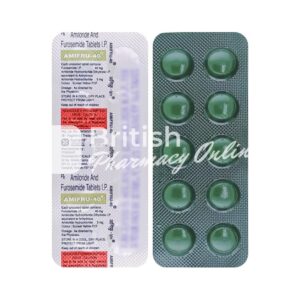
Typical UK 5 mg tablets are white or off‑white and supplied in blister packs or bottles in 28 or 56 tablet pack sizes branded as Amiloride Hydrochloride by generics manufacturers.
Monitoring Flowcharts
What monitoring schedule should be displayed in clinics?
A practical flowchart: baseline potassium and creatinine → repeat at 1–2 weeks after start or dose change → review at 4–6 weeks → 3‑month review → periodic monitoring thereafter, with earlier checks if interacting drugs are added.
Patient‑Facing Visuals
What should patient materials include?
Provide a simple symptom card listing hyperkalaemia signs (weakness, palpitations), dietary cautions (avoid salt substitutes), and missed‑dose guidance.
Clinical Aids
Which clinical aids help prescribers?
Decision trees for switching agents based on eGFR and serum potassium, and interaction matrices flagging ACEi/ARB/NSAID risks, are useful additions to EHR templates and pharmacy handouts.
Storage And Transport
Ambient Storage Guidance
How should amiloride be stored in practice?
Store at 20–25°C and keep away from moisture and light; standard community pharmacy storage in original packaging is appropriate.
Pharmacy And Clinical‑Trial Handling
Are there special transport rules for trials?
Tablet formulations do not require refrigeration and may be transported under normal ambient shipping conditions; clinical trial shipments should follow sponsor SOPs and regulatory documentation for exports.
Dispose of expired stock per NHS and local waste policies.
Guidelines For Proper Use
Initiation & Monitoring Checklist
What checklist ensures safe initiation?
Confirm baseline potassium and renal function before starting.
Avoid starting if potassium is >5.5 mmol/L or in severe renal impairment.
Start at 5 mg once daily and plan laboratory checks at 1–2 weeks post‑start, then at 3 months and periodically thereafter.
Counselling & Deprescribing
What should be discussed with the patient?
Advise on diet (avoid potassium supplements and salt substitutes), how to recognise hyperkalaemia, missed‑dose rules and the importance of scheduled blood tests.
When deprescribing, check electrolytes before and after stopping, document the reason in clinical records, and notify the patient of the change.
Report adverse events through the Yellow Card scheme.
Delivery Across United Kingdom
| City | Region | Delivery Time |
|---|---|---|
| London | Greater London | 5-7 days |
| Birmingham | West Midlands | 5-7 days |
| Manchester | Greater Manchester | 5-7 days |
| Glasgow | Scotland | 5-7 days |
| Leeds | West Yorkshire | 5-7 days |
| Edinburgh | Scotland | 5-7 days |
| Cardiff | Wales | 5-7 days |
| Belfast | Northern Ireland | 5-7 days |
| Bristol | South West | 5-9 days |
| Liverpool | Merseyside | 5-9 days |
| Newcastle Upon Tyne | North East | 5-9 days |
| Sheffield | South Yorkshire | 5-9 days |
| Nottingham | East Midlands | 5-9 days |
| Plymouth | Devon | 5-9 days |
| Reading | Berkshire | 5-9 days |
Final Practical Notes For Clinicians
Rapid Reference Checks
Which quick rules should be in every clinic pocket?
Start amiloride at 5 mg daily for most patients and plan labs at baseline and 1–2 weeks after initiation or dose change.
Avoid starting when potassium is >5.5 mmol/L or in anuric or severely renally impaired patients.
Exercise caution with ACEi/ARB, NSAIDs and potassium supplements and consider alternative agents like spironolactone if indications warrant and monitoring is available.
Reporting And Documentation
How should changes be recorded and adverse events managed?
Document the indication, baseline labs and monitoring plan in the record whenever initiating or changing amiloride therapy.
Report suspected serious adverse reactions such as life‑threatening hyperkalaemia to the MHRA Yellow Card scheme.
Keep patient leaflets and monitoring cards available to improve adherence and safety.
References And Resources
Where can clinicians find the official product details?
Refer to the MHRA SPC for Amiloride Hydrochloride 5 mg tablets and local formulary guidance for up‑to‑date licensing, dosing and contraindication details.