Femara
In brief
- Femara (letrozole) is supplied through hospitals and licensed pharmacies and via registered online/wholesale pharmacies worldwide; it is prescription-only (Rx) in all jurisdictions and requires a prescription from a qualified clinician.
- Femara is used to treat hormone receptor‑positive breast cancer in postmenopausal women (adjuvant, extended adjuvant and advanced/metastatic disease). It is a non‑steroidal aromatase inhibitor that blocks the aromatase enzyme, lowering peripheral conversion of androgens to oestrogens and thereby reducing oestrogen stimulation of hormone‑sensitive tumours.
- The usual adult dose is 2.5 mg once daily taken orally; children are not indicated and no routine dose adjustment is required for the elderly—adjustment or caution may be needed in severe hepatic or renal impairment per physician advice.
- Administration is by oral film‑coated tablet (2.5 mg); no injectable, topical or other forms are authorised.
- Oestrogen suppression begins rapidly (within 24 hours) with further reduction over days; clinical antitumour effects may take weeks to become apparent.
- Femara is taken once daily and its pharmacodynamic effect is maintained with daily dosing; a single dose’s systemic exposure declines over days (terminal half‑life ~2 days), so continuous daily dosing is used to sustain suppression.
- Avoid excessive alcohol while taking Femara — alcohol may worsen fatigue, its side effects and have implications for liver health; discuss alcohol use with your prescriber.
- The most common side effect is hot flushes; other frequent effects include musculoskeletal pain/arthralgia, fatigue, nausea, headache and long‑term reduction in bone mineral density (osteoporosis risk).
- Would you like to try femara without a prescription?
Basic Femara Information
- INN (International Nonproprietary Name): Letrozole
- Brand Names Available In United Kingdom: Femara — 2.5 mg tablets, 14 or 30 per pack
- ATC Code: L02BG04 — Aromatase Inhibitors
- Forms & Dosages: Oral film-coated tablets 2.5 mg in blisters or bottles (7, 10, 14, 28, 30 or 100 tablets)
- Manufacturers In United Kingdom: Novartis Pharma AG (originator) and licensed generics such as Sandoz for UK supply
- Registration Status In United Kingdom: Approved for hormone receptor-positive breast cancer in postmenopausal women (licensed packaging includes 2.5 mg tablets)
- OTC / Rx Classification: Prescription Only (Rx). Letrozole/Femara is never available over the counter in any jurisdiction.
Key Findings From Recent Trials
Are you wondering how modern data affect the choice between femara and other endocrine drugs?
Major 2022–2025 studies continue to support letrozole as an effective adjuvant option in postmenopausal hormone receptor‑positive breast cancer.
Recent large randomised and real‑world analyses reaffirmed modest absolute reductions in recurrence when letrozole is used either upfront or following 2–3 years of tamoxifen.
Trials emphasise disease‑free survival gains and improved distant recurrence rates, particularly in node‑positive subgroups.
Main outcomes show that letrozole 2.5 mg daily produced a consistent disease‑free survival advantage in multiple cohorts.
Overall survival signals were comparable in higher‑risk groups, supporting extended endocrine strategies up to 5–10 years total therapy.
Safety observations across 2022–2025 meta‑analyses point to higher rates of arthralgia and bone density loss compared with tamoxifen.
Modest rises in cholesterol were reported versus tamoxifen, while cardiac and hepatic events remained uncommon but monitored in follow‑up.
Usage in UK practice aligns with the evidence: the 2.5 mg daily dose is standard for postmenopausal adjuvant and advanced use.
Market impact: Femara keeps a leading share while generics from Sandoz and Cipla are widely used in NHS prescribing.
Patients commonly report reduced anxiety about recurrence, though musculoskeletal side effects are a frequent adherence barrier.
Clinical Mechanism Of Action
How does femara work, and why does it matter for postmenopausal breast cancer?
Layman’s Explanation
Letrozole is a non‑steroidal aromatase inhibitor that lowers peripheral oestrogen synthesis in postmenopausal women.
By reducing circulating oestrogen, letrozole cuts the fuel that oestrogen‑receptor positive breast cancer cells use to grow.
Scientific Breakdown
Biochemically, letrozole binds competitively to the aromatase enzyme (CYP19A1) and prevents the conversion of androgens into oestrogens.
Pharmacodynamic studies show plasma oestradiol falls by more than 80–90% in patients on letrozole, reducing ER stimulation.
Pharmacokinetics (Useful Detail)
Letrozole is supplied as 2.5 mg oral film‑coated tablets intended for once‑daily dosing with or without food.
It has good oral bioavailability and is metabolised in the liver with renal excretion of metabolites.
No routine dose adjustment is required in the elderly, and mild‑to‑moderate hepatic or renal impairment usually does not require change.
Caution is advised in severe hepatic or renal dysfunction as per the product information.
The mechanism explains why letrozole is reserved for postmenopausal women and is not used without ovarian suppression in premenopausal patients.
Scope Of Approved & Off‑Label Use
What is femara licensed for, and where is it used off‑label?
United Kingdom Approvals
Regulatory pathways in Europe and the UK approve letrozole (Femara) 2.5 mg tablets for hormone receptor‑positive breast cancer in postmenopausal women.
Licensed indications include early, adjuvant, extended adjuvant and advanced/metastatic settings.
Letrozole is a prescription‑only medicine across UK pharmacies and hospital formularies.
Notable Off‑Label Trends
Low‑dose letrozole is used off‑label in some fertility clinics for ovulation induction, with evidence showing comparable ovulation rates to clomiphene in selected patients.
This use is largely off‑label in the UK and must be managed only under specialist oversight in reproductive medicine.
Clinicians follow NICE and oncology guidance for adjuvant and extended courses, while fertility use is handled by dedicated specialists.
Market context: Femara remains the dominant brand, with generics supplying the NHS for cost containment.
Patients are often curious about fertility use online and must be counselled about licensing and reproductive contraindications.
Dosage Strategy
How is femara dosed for different breast cancer stages and special populations?
General Dosing
Clinical trials and the summary of product characteristics standardise a once‑daily 2.5 mg oral dose for letrozole.
Patients are advised to take the tablet at the same time each day and to follow missed‑dose guidance: take when remembered but do not double up.
Condition‑Specific Dosing
For adjuvant or early breast cancer the standard is 2.5 mg once daily, commonly for five years.
Extended strategies of up to ten years total endocrine therapy — including prior tamoxifen — are supported by trial data for selected higher‑risk patients.
In advanced or metastatic disease, 2.5 mg daily is continued until disease progression or unacceptable toxicity.
Special Populations
Elderly patients do not usually require dose changes as exposure is similar to younger adults.
Liver impairment: mild to moderate requires no change; severe impairment warrants clinical caution and specialist judgement.
Renal impairment: mild to moderate requires no change; severe renal dysfunction has limited data so use caution.
In the UK, tablets are available as 2.5 mg film‑coated products from Femara and multiple generics in 14‑ and 30‑count packs.
Once‑daily dosing helps adherence, although side effects remain a common reason for discontinuation for some patients.
Safety Protocols
What checks should be done before and during treatment with femara?
Contraindications
Absolute contraindications include pre‑menopausal status, pregnancy and lactation, and hypersensitivity to letrozole or excipients.
Femara is contraindicated in women who are or may become pregnant because of teratogenic risk.
Adverse Effects
Common side effects from trial data include hot flushes, arthralgia and myalgia, fatigue, nausea and headache.
Long‑term use is associated with reductions in bone mineral density and a higher risk of osteoporosis, and modest increases in cholesterol have been observed.
Monitoring And Mitigation
Baseline and periodic bone density assessment (DEXA) is recommended for long‑term users to manage fracture risk.
Serum lipids should be checked, and calcium plus vitamin D optimisation is advised where appropriate.
Fracture risk assessment and coordination with primary care for cardiovascular risk management are practical steps in UK follow‑up.
These safety protocols are integrated into oncology follow‑up and survivorship clinics across the NHS.
Interaction Mapping
Which medicines and foods affect femara, and what should patients avoid?
Food Interactions
Letrozole absorption is not materially affected by food and may be taken with or without meals.
Beyond standard dietary advice for cholesterol and bone health, no major food restrictions apply.
Drug Combinations To Avoid
Letrozole is metabolised hepatically and can be affected by potent CYP450 inducers, such as rifampicin and some anticonvulsants, which may reduce exposure and efficacy.
Concomitant oestrogen therapies counteract letrozole’s effect and are contraindicated.
Caution is needed with drugs that exacerbate bone loss or increase fracture risk.
Clinical Management
Pharmacists should check concomitant medicines and advise on alternatives or monitoring where interacting drugs are essential.
UK hospital electronic prescribing systems often flag important interactions, and community pharmacists play a role in preventing over‑the‑counter oestrogen use.
Patient Experience Analysis
What do patients say about life on femara and how can clinicians help them stay on therapy?
Survey Data
Patient‑reported outcome studies and registries show high perceived efficacy in lowering recurrence anxiety among users.
Common complaints center on musculoskeletal pain and menopausal symptoms, and adherence often drops in the first 12–24 months for a subset of patients.
Forum Trends
Social listening in UK forums highlights frequent practical concerns: managing arthralgia, worries about osteoporosis, questions on fertility use, and requests for lifestyle guidance.
- What helps: exercise referral, physiotherapy, and bone health plans improve tolerability and persistence.
- What hinders: persistent joint pain and lack of structured follow‑up often lead to early discontinuation.
Structured clinician counselling that links DEXA monitoring, supplementation and exercise plans is associated with better treatment persistence.
Distribution & Pricing Landscape
How available is femara in the UK and who supplies it?
Supply Chain & Manufacturers
Femara originates from Novartis while licensed generics from Sandoz, Cipla and Sun Pharma supply UK and global markets.
Tablets are distributed as 2.5 mg film‑coated units in blister packs of 14 or 30 in the UK.
Pricing & NHS Context
The NHS typically procures generic letrozole for cost efficiency, which reduces unit cost compared with the originator brand.
Local formularies determine whether hospital or community prescribing uses the originator or a generic equivalent.
Availability Issues & Mitigation
Shortages are uncommon but managed by therapeutic substitution using the same INN across pharmacy networks.
Storage and transport require no cold chain — store below 30°C — so distribution is straightforward for hospital and community pharmacies.
Patients generally obtain letrozole easily on an NHS prescription, and private purchase is uncommon and regulated.
Alternative Options
What are the main alternatives to femara, and how do they compare?
Comparison Table (Descriptive)
Principal competitors are anastrozole and exemestane, with tamoxifen as a historical comparator.
Clinical trials show comparable efficacy among aromatase inhibitors for many endpoints, with differences in side‑effect profiles.
Pros And Cons
Letrozole pros include potent oestrogen suppression, simple once‑daily dosing and strong trial evidence in postmenopausal HR+ disease.
Cons are increased musculoskeletal symptoms and bone density concerns and absolute contraindication in premenopausal women and pregnancy.
Choosing Therapy In UK Practice
Choice depends on menopausal status, baseline fracture risk, prior tamoxifen exposure, comorbidities and patient preference, guided by NICE and MDT recommendations.
Some patients switch agents if adverse effects are intolerable, and osteoporosis prevention often drives longer‑term strategy decisions.
Regulatory Status
Is femara approved in the UK and how is post‑marketing safety handled?
Global & UK Approvals
Letrozole (Femara) is approved by EMA and FDA and is registered across the EEA and many global markets for HR+ postmenopausal breast cancer.
In the UK Femara/letrozole is authorised for hormone receptor‑positive postmenopausal breast cancer as a prescription‑only medicine supplied in 2.5 mg tablets.
Pharmacovigilance And SPC
Post‑marketing surveillance collects adverse event reports and SPCs advise on contraindications such as pregnancy and premenopausal status.
SPC recommendations include baseline and periodic bone density and lipid monitoring, and UK prescribers follow MHRA reporting systems for safety updates.
Prescribers and pharmacists must adhere to the SPC and local trust protocols for dispensing and counselling.
Consolidated FAQ
What do patients ask most about femara, and what are the clear answers?
Common Clinical Questions
Is Femara For Me? Femara is licensed for postmenopausal women with hormone receptor‑positive breast cancer and requires a prescription.
Can I Take Femara With Food? Yes, letrozole may be taken with or without food.
What If I Miss A Dose? Take the missed dose as soon as remembered, unless it is near the next scheduled dose; never double doses.
How Long Will I Take It? Typically five years, with extension considered to a total of ten years for certain higher‑risk patients.
Safety & Practical Queries
Is It Safe In Pregnancy Or For Fertility? Femara is contraindicated in pregnancy and lactation; any off‑label fertility use must be managed by specialists and is not a licensed indication.
What About Bone Health? Baseline DEXA and bone‑protective measures are recommended for long‑term users to reduce fracture risk.
Where To Get Help? Patients should consult NHS leaflets and their oncology team for personalised advice and report adverse events to the MHRA Yellow Card scheme.
Visual Guide
Can a simple chart or picture help keep daily dosing and monitoring on track?
Pill Identification & Dosing Calendar
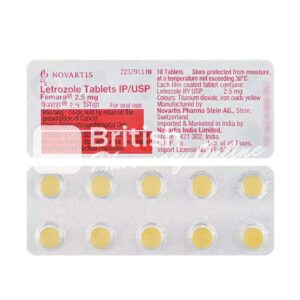
Typical Femara tablets are 2.5 mg film‑coated pills supplied in blisters, and in some markets the original yellow round tablet is engraved “FV”.
Provide patients with a printable once‑daily dosing calendar and a symptom tracker logging arthralgia and hot flushes to discuss at clinic reviews.
Include a DEXA schedule chart showing baseline, then periodic intervals based on risk to prompt action on bone health.
Monitoring Flowcharts
Flowcharts that map baseline assessment (confirm postmenopausal status, DEXA, lipids) to follow‑up intervals help clinicians and patients stick to surveillance plans.
Visual aids reduce confusion, support shared decision‑making in clinics and are consistent with SPC and NICE guidance where referenced.
Patients rate simple visuals highly for understanding side‑effect timelines and contraception warnings.
Storage & Transport
How should femara be stored at home and handled during travel?
Recommended Conditions
The SPC specifies storage below 30°C and protection from moisture and heat.
Keep tablets in their original blister packaging where possible to reduce degradation risk.
Pharmacy & Home Advice
Pharmacies dispense in labelled blister packs or bottles according to UK pharmacy standards and will advise patients to avoid bathrooms and heat sources for storage.
Handling During Shortages Or Travel
If switching packs or travelling, retain the medication in its original packaging and avoid prolonged exposure above 30°C.
Seek pharmacist advice if a supply substitution occurs to confirm the product and dosing are unchanged.
Guidelines For Proper Use
What checks should prescribers and pharmacists complete before issuing femara?
Prescribing Checklist
Confirm postmenopausal status and hormone receptor positivity prior to initiation.
Perform required baseline investigations: pregnancy test as indicated, DEXA scan and serum lipids, and review concomitant medicines for CYP interactions.
Counsel patients on contraception and the prohibition on breastfeeding while on treatment.
Follow‑Up Schedule
Arrange a review within three months of starting therapy to check tolerability, then 6–12 monthly oncology or GP follow‑up with periodic DEXA and lipid monitoring according to individual risk.
Patient Support & Adherence
Offer written information, nurse‑led telephone support, and exercise and bone health programmes to support adherence.
Clear pathways for switching therapy if adverse effects are intolerable should be established within MDT workflows.
Encourage MHRA Yellow Card reporting for suspected adverse reactions to maintain pharmacovigilance.
Delivery Across United Kingdom
| City | Region | Delivery Time |
|---|---|---|
| London | Greater London | 5-7 days |
| Birmingham | West Midlands | 5-7 days |
| Manchester | Greater Manchester | 5-7 days |
| Glasgow | Scotland | 5-7 days |
| Leeds | West Yorkshire | 5-7 days |
| Liverpool | Merseyside | 5-7 days |
| Edinburgh | Scotland | 5-7 days |
| Bristol | South West | 5-7 days |
| Cardiff | Wales | 5-7 days |
| Belfast | Northern Ireland | 5-7 days |
| Newcastle | North East | 5-9 days |
| Sheffield | South Yorkshire | 5-9 days |
| Nottingham | Nottinghamshire | 5-9 days |
| Leicester | Leicestershire | 5-9 days |
| Coventry | West Midlands | 5-9 days |
Final Notes And Practical Tips
Patients commonly ask where to buy femara and what to expect at their first clinic visit.
Remember that letrozole is a prescription‑only medicine supplied in 2.5 mg tablets; consult your oncology team for a tailored plan.
Keep a symptom diary to discuss joint pain and hot flushes at follow‑up appointments and bring a list of all medicines to every review to check interactions.
Pharmacists can help with adherence aids, counselling on bone health and checking for inadvertent oestrogen use in over‑the‑counter products.
For accuracy and full prescribing details, refer to the product SPC and local trust formularies when making treatment decisions.