Regaine
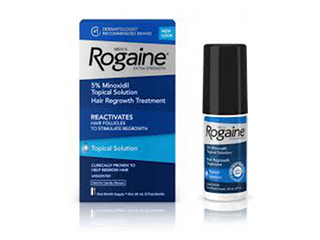
Regaine
- In our pharmacy, you can buy Regaine without a prescription, with delivery in 5–14 days throughout the United Kingdom. It is also widely available over the counter in the UK, as well as in many other countries in topical form.
- Regaine (minoxidil) is used for the treatment of androgenetic alopecia, helping to slow hair loss and promote hair regrowth. Its mechanism of action is not fully understood, but it is believed to widen blood vessels and prolong the growth phase of hair follicles, which encourages new hair growth.
- The usual dose is 1 mL of 2% or 5% topical solution applied twice daily, or half a capful of foam twice daily. It is generally not recommended for people under 18 years of age.
- The form of administration is a topical solution or topical foam. Oral minoxidil exists, but it is prescription only and is not used for routine hair loss treatment.
- The effect usually starts gradually, with visible hair regrowth often taking 4 to 6 months to appear.
- The duration of action is ongoing only while treatment continues; if you stop using it, any regrown hair may be lost within about 3 to 4 months.
- Alcohol does not have a direct interaction with topical Regaine, but excessive alcohol may worsen dehydration or dizziness in people who are sensitive. Avoid drinking heavily if you are using oral minoxidil, and seek medical advice if you notice palpitations or light-headedness.
- The most common side effects are scalp irritation, redness, dryness, flaking, itching, and temporary increased shedding when treatment begins. Some people may also develop unwanted facial hair growth.
- Would you like to try Regaine without a prescription?
Regaine
Basic Regaine Information
- INN (International Nonproprietary Name): Minoxidil
- Brand names available in United Kingdom: Rogaine, Regaine
- ATC Code: D11AX01; C02DC01
- Forms & dosages: Topical solution 2% and 5%; topical foam 5%; oral tablet 2.5 mg and 10 mg
- Manufacturers in United Kingdom: Kenvue Brands, Perrigo, Aurobindo Pharma, Taro, Apotex, Teva, Sun Pharma, Watson Labs, Pfizer, Bausch & Lomb, Hikma
- Registration status in United Kingdom: Topical minoxidil is OTC; oral minoxidil is prescription only
- OTC / Rx classification: Topical minoxidil is OTC; oral minoxidil is Rx
Key Findings From Recent Trials
Major 2022–2025 Studies
People usually want to know one thing first: does Regaine actually help, and how long does it take?
Recent comparative evidence from 2022 to 2025 continues to support topical minoxidil for androgenetic alopecia in adults, with both 2% and 5% strengths used in routine care.
Regaine remains an OTC standard in the UK, and the newer trial data have not displaced it as a practical first-line option for uncomplicated hair loss.
Comparisons of foam versus solution generally point to similar hair-regrowth outcomes, so the main difference is usually tolerability and ease of use rather than effectiveness.
Where head-to-head comparisons with other hair-loss treatments exist, minoxidil hair loss treatment remains broadly useful for visible hair regrowth, but it does not work equally well for everyone.
Clinically visible change usually takes 4 to 6 months, which is why stopping after a few weeks is a common mistake.
Main Outcomes
The most consistent benefits are improvements in hair density, shaft thickness, and patient-reported satisfaction.
Adults with androgenetic alopecia are the best-supported population, especially those willing to use minoxidil 5% or Regaine 5% regularly over time.
If treatment is stopped, any regrowth is usually lost gradually within 3 to 4 months.
Safety Observations
The commonest problems are scalp irritation, dryness, flaking, and the early shedding phase that can make people think the treatment is failing.
Rare systemic effects may happen if topical minoxidil is used in excess or accidentally taken by mouth.
Clinical Mechanism Of Action
Layman’s Explanation
Minoxidil helps hair follicles stay active for longer, which can encourage hairs to grow thicker and remain in the growth phase for more time.
It supports regrowth while it is used continuously, but it does not cure hair loss.
Scientific Breakdown
Topical minoxidil is classified as D11AX01 for hair loss treatment.
It was originally developed as an oral antihypertensive under C02DC01, and hair growth was noticed as a side effect.
Its likely actions include prolonging the anagen phase, improving follicular blood flow, and affecting potassium channels.
Why Results Vary
Response depends on how advanced the hair loss is, how well the person follows the routine, the condition of the scalp, and the dose or formulation used.
Minoxidil solution and minoxidil foam may differ more in tolerability than in efficacy, so the best format is often the one the patient will actually use every day.
Scope Of Approved And Off-Label Use
United Kingdom Approvals
In the UK, topical minoxidil is an over-the-counter medicine for androgenetic alopecia in adults.
Regaine is available as 2% and 5% topical solution and foam, depending on the product line and how it is presented for men or women.
Oral minoxidil is prescription only and is used for severe hypertension, not as routine hair-loss self-care.
Notable Off-Label Trends
There is growing interest in oral minoxidil for hair loss, but this remains off-label and needs clinician supervision.
Women’s products and unisex formulations are common in retail channels, and many UK customers search for Regaine for Men, Regaine for Women, or Regaine 5% when comparing strengths.
In our online pharmacy, Regaine is available without a prescription, with discreet delivery to United Kingdom in 5-14 days.
Practical Interpretation
OTC use is usually suitable for uncomplicated hair loss.
Extra caution is needed with cardiovascular disease, pregnancy, or scalp damage.
Dose And Application Strategy
General Dosing
The standard topical regimen is 1 mL twice daily for solution, or half a capful twice daily for foam.
It should be applied to a dry scalp, and handwashing afterwards helps reduce unwanted transfer to other areas.
Consistency matters more than occasional larger amounts, and missed doses should not be doubled.
Condition-Specific Dosing
For androgenetic alopecia, adults generally use 2% or 5% topical minoxidil.
Visible improvement may take at least 4 months, and maintenance is usually indefinite if benefit is seen.
Oral minoxidil is reserved for severe hypertension at prescription doses and is not the standard approach for hair-loss self-care.
Special Populations
Topical use is not recommended under 18 years for alopecia treatment.
Elderly patients may need closer monitoring because thinner skin can increase absorption.
Severe liver or kidney impairment needs extra caution if there is any possibility of systemic exposure.
Safety Protocols
Contraindications
Do not use minoxidil if there is a known allergy to minoxidil or any excipient in the formulation.
Topical products should be avoided on sunburnt, infected, inflamed, or broken scalp skin.
Oral minoxidil is contraindicated in untreated pheochromocytoma, severe heart failure, recent myocardial infarction, and pericardial effusion.
Adverse Effects
Common side effects include itching, dryness, flaking, redness, and irritation at the application site.
Early shedding is expected by many users and can be upsetting, even though it does not always mean treatment failure.
Less common effects include unwanted facial hair growth, and rare systemic effects such as dizziness, tachycardia, or oedema may occur, especially with oral exposure or excess topical use.
When To Stop And Seek Help
Chest pain, palpitations, faintness, marked swelling, or a severe rash need medical advice promptly.
Accidental ingestion of topical products requires urgent medical attention.
Interaction Mapping
Food Interactions
No clinically important food interactions are expected with topical minoxidil.
With oral minoxidil, blood pressure monitoring and overall cardiovascular risk matter more than food timing.
Drug Combinations To Avoid
Using other scalp irritants at the same time can worsen dermatitis and make Regaine solution or foam harder to tolerate.
Systemic antihypertensives can compound hypotension risk if oral minoxidil is used.
It is best not to apply minoxidil immediately after harsh chemical treatments or onto an inflamed scalp.
Practical Advice
Tell a clinician about all hair-loss products, including serums and medicated shampoos.
Patch testing can help some sensitive users avoid unnecessary irritation.
Patient Experience Analysis
Survey Data
Patients usually prioritise speed of visible regrowth, ease of use, and avoiding a greasy residue.
Foam is often preferred for convenience, while solution may suit people who want more precise scalp application.
Forum Trends
Common themes are initial shedding, slow onset, difficulty keeping up with twice-daily routines, and the need to manage expectations.
Users also compare Regaine with generic minoxidil for cost, packaging, and tolerability.
Women frequently ask whether facial hair risk is a real concern and which strengths are suitable.
E-E-A-T Angle
Personal stories can be useful, but they should be kept separate from evidence-based outcomes.
Hair regrowth should be judged after 4 to 6 months, not after a few weeks.
Pricing And Availability Landscape
UK Retail Availability
Regaine and generic minoxidil are widely sold through pharmacies, online chemists, and supermarket health ranges.
Common pack sizes include one-, three-, and six-month supplies, which helps people choose a format that fits their routine and budget.
Packaging And Value
Solution and foam formats are usually sold in gender-labelled or unisex boxes.
Generics often offer a lower cost per month than branded Regaine, which is why many customers compare both before ordering.
Across the UK market, 2% and 5% options are the strengths people see most often.
Supplier Context
Minoxidil is manufactured by multiple international suppliers, and patent expiry has allowed broad generic competition.
Alternative Options
Comparison Table
| Treatment | Main Use | Strengths | Limitations |
|---|---|---|---|
| Regaine / Minoxidil | Androgenetic alopecia | OTC, widely available, suitable for adults | Needs ongoing use, slow onset, variable response |
| Finasteride | Hair loss in men | Different pathway, effective for some men | Prescription only, not appropriate for all patients |
| Cosmetic growth serums | Hair care support | Easy to use, often well tolerated | Usually less evidence for regrowth |
| Stemoxydine | Cosmetic hair support | Available in some retail channels | Not the same level of evidence as minoxidil |
| Non-medicinal approaches | Cosmetic support | Low medical risk | Do not target follicle activity in the same way |
Pros And Cons
Minoxidil is easy to access, reasonably well studied, and suitable for many adults with androgenetic alopecia.
The downside is that it must be used continuously, it works slowly, and not everyone responds to the same degree.
Finasteride may help some men, but it is prescription based and has a different safety and suitability profile.
Decision Factors
Scalp sensitivity, sex, pregnancy status, cardiovascular history, and treatment preference all matter.
Some patients combine evidence-based therapies under medical guidance, rather than relying on one product alone.
Regulatory Status
UK And International Classification
Topical minoxidil is OTC in the UK, Canada, Australia, and much of the EU.
Oral minoxidil is prescription only and reserved for severe hypertension.
Practical Regulatory Implications
Regaine topical products are sold without prescription for adult hair-loss treatment.
Pharmacy advice still matters for contraindications, pregnancy, scalp disease, and symptoms that do not settle.
Country-Specific Note
Brand names vary internationally, but the INN remains minoxidil.
UK consumers should always check the exact strength and format before buying.
Consolidated Frequently Asked Questions
Core Questions
How long does Regaine take to work?
Is shedding normal at the start?
Can women use 5% minoxidil?
What happens if treatment stops?
Evidence-Based Answers
Visible change often takes 4 to 6 months.
Early shedding can happen and does not always mean the treatment has failed.
Stopping usually leads to gradual loss of regrown hair within a few months.
Women may use certain formulations, but suitability depends on the product instructions and clinical advice.
Safety Reminders
Do not use on broken scalp.
Seek advice if palpitations, swelling, or severe irritation occur.
Visual Guide
Suggested Visuals
A comparison chart can help people weigh 2% versus 5% solution, foam versus solution, and branded versus generic options.
A simple timeline graphic is useful for showing week 1 shedding, month 3 to 4 early response, and month 4 to 6 as the key assessment point.
A scalp application diagram can also reduce mistakes by showing the dry-scalp steps clearly.
Purpose Of Visuals
Visuals improve adherence and reduce misuse, especially for people who are new to OTC hair-loss treatment.
Accessibility Notes
Use clear labels, large type, and UK spelling.
Safety icons should highlight contraindications and when to seek medical advice.
Storage And Transport
Storage Advice
Store minoxidil at room temperature.
Keep it tightly closed, away from moisture and heat, and do not freeze it or leave it in direct sunlight.
Transport Tips
Keep the product in its original packaging when travelling to reduce leakage and preserve labelling.
Make sure caps are secure if the item is placed in luggage.
Safety Point
Keep out of reach of children.
If there is accidental ingestion, urgent medical advice is needed.
Guidelines For Proper Use
Step-By-Step Application
Apply Regaine to a clean, dry scalp.
Measure the correct amount: 1 mL for solution or half a capful for foam.
Spread it over thinning areas rather than just coating the hair shaft.
Wash hands afterwards and avoid wetting the scalp immediately.
Good Adherence Habits
Use it at the same times each day.
Do not double-dose after a missed application.
Continue for at least 4 months before judging response.
Stop only with advice if adverse effects are significant.
Patient Counselling Points
Change is usually gradual rather than dramatic.
Foam is often the easiest option for busy routines, while solution may suit people who want precision.
If there is no benefit after 4 to 6 months, a clinician should review the plan.
Delivery Across United Kingdom
| City | Region | Delivery time |
|---|---|---|
| London | Greater London | 5-7 days |
| Birmingham | West Midlands | 5-7 days |
| Manchester | North West England | 5-7 days |
| Glasgow | Scotland | 5-7 days |
| Edinburgh | Scotland | 5-7 days |
| Leeds | West Yorkshire | 5-7 days |
| Liverpool | Merseyside | 5-7 days |
| Bristol | South West England | 5-7 days |
| Cardiff | Wales | 5-7 days |
| Belfast | Northern Ireland | 5-7 days |
| Newcastle upon Tyne | North East England | 5-7 days |
| Nottingham | East Midlands | 5-9 days |
| Sheffield | South Yorkshire | 5-9 days |
| Leicester | East Midlands | 5-9 days |
| Aberdeen | Scotland | 5-9 days |