Rifampin
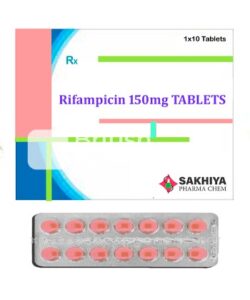
In brief
- Rifampin (rifampicin) is legally a prescription-only medicine in the countries listed (registered with EMA/FDA/Health Canada/TGA etc.); however, in some settings individual pharmacies may dispense it without a prescription — this is not recommended and may be unlawful in your jurisdiction.
- Rifampin is used as a first-line treatment for tuberculosis, for leprosy and for prophylaxis of meningococcal and Haemophilus influenzae type b infections; it is bactericidal by inhibiting bacterial DNA-dependent RNA polymerase (binding the β-subunit, rpoB), thereby suppressing RNA synthesis.
- Usual adult dosing for TB is 10 mg/kg once daily (maximum 600 mg once daily); short-course regimens commonly use 600 mg once daily; leprosy regimens often use 600 mg once monthly (with other drugs); meningococcal prophylaxis is typically 600 mg twice daily for two days; children 10–20 mg/kg (max 600 mg).
- Administered orally as capsules or tablets (150 mg, 300 mg, sometimes 600 mg), as an oral suspension (100 mg/5 ml paediatric), or by intravenous injection from 600 mg vials (powder for solution); take on an empty stomach (1 hour before or 2 hours after food) for best absorption.
- Rifampin is absorbed and achieves therapeutic blood levels within a few hours (peak plasma concentrations typically 2–4 hours); bactericidal activity begins once therapeutic levels are reached, though clinical improvement is generally seen over days to weeks.
- Clinically effective with once-daily dosing (effects intended to persist over 24 hours); the plasma half-life is about 2–5 hours initially and shortens with continued therapy due to hepatic enzyme autoinduction.
- Avoid heavy alcohol consumption while taking rifampin because of increased risk of hepatotoxicity; alcohol use should be minimised and liver function monitored, especially with other hepatotoxic drugs or pre-existing liver disease.
- The most common side effect is nausea (also abdominal pain and diarrhoea); other frequent findings include asymptomatic rises in liver enzymes, pruritus or rash and harmless red–orange discoloration of urine, sweat and tears.
- Would you like to try rifampin without a prescription?
Basic Rifampin Information
- INN (International Nonproprietary Name): Rifampicin (also known as rifampin in US/Canada).
- Brand Names Available In United Kingdom: Rifadin, Rimactane — capsules 150 mg and 300 mg, 600 mg vials and syrup.
- ATC Code: J04AB02.
- Forms & Dosages: Tablets/capsules 150 mg and 300 mg; oral suspension 100 mg/5 ml (paediatric where supplied); injectable/vial 600 mg (powder for solution or lyophilised form).
- Manufacturers In United Kingdom: Major international makers listed in supplier data include Sanofi (operations covering the UK), Sandoz, Novartis, Remedica, Medochemie and several generics suppliers such as Macleods Pharmaceuticals and EuroAPI.
- Registration Status In United Kingdom: Registered and marketed (prescription only) with licensed presentations Rifadin and Rimactane; fixed‑dose combinations such as Rifater and Rifinah are also in use under TB programme guidance.
- OTC / Rx Classification: Prescription only (Rx).
Key Findings From Recent Trials
Major 2022–2025 Studies
Concerned that standard rifampicin dosing might be leaving time on the table for treating tuberculosis?
Several randomised phase II and phase III studies between 2022 and 2025 tested higher daily rifampicin doses than the traditional 10 mg/kg, with many trials exploring doses in the 20–35 mg/kg range.
Those studies generally paired high‑dose rifampicin with optimised companion drugs such as isoniazid, pyrazinamide and ethambutol to evaluate regimen shortening potential.
The trials included dedicated pharmacokinetic substudies to compare exposure in people with HIV, older adults and those with variable absorption.
Main Outcomes
Primary signals from the recent research showed faster sputum culture conversion and improved early bactericidal activity with higher rifampicin exposures.
Higher daily doses gave the strongest evidence for intensifying sterilising activity in the early intensive phase of treatment, supporting dose‑finding work aimed at shortening total regimen length.
Trials combining high‑dose rifampicin with optimised companion drugs provided the clearest potential for safely reducing the duration of intensive therapy without loss of potency.
Safety Observations
Safety patterns were consistent across studies: transient elevations in transaminases were the most commonly observed adverse finding.
Clinically significant hepatitis remained rare, but liver function monitoring was a recurrent requirement in trial protocols.
Higher doses were also associated with increased gastrointestinal intolerance and more frequent orange‑red discolouration of bodily fluids, which is benign but notable for adherence.
The drug interaction profile remained a limiting factor, particularly where antiretrovirals and protease inhibitors were involved, reinforcing the clinical use of rifabutin when interaction risk is unacceptable.
UK and EMA‑aligned trial designs emphasised careful hepatic monitoring and inclusion of pharmacokinetic substudies in people with HIV and in older adults.
Clinical Mechanism Of Action
Layman’s Explanation
What does rifampicin actually do to the TB bug?
Rifampicin is a potent antibiotic that stops tuberculosis bacteria from making essential RNA so they cannot grow and are killed when active.
It is a cornerstone first‑line drug for TB and is always given in combination to prevent resistance.
Scientific Breakdown
Rifampicin (INN: rifampicin; ATC J04AB02) binds the β subunit of bacterial DNA‑dependent RNA polymerase and inhibits transcription initiation.
The bactericidal effect of rifampicin is concentration‑dependent and produces strong early bactericidal activity, which is why it is central to short‑course regimens.
Beyond Mycobacterium tuberculosis, rifampicin has activity against some Gram‑positive organisms and is used adjunctively for staphylococcal prosthetic infections where biofilm penetration is needed, always in combination with another active agent.
Molecular Resistance Mechanisms
Resistance most commonly arises from single‑point mutations in the rpoB gene that encodes the RNA polymerase β subunit.
Those rpoB mutations confer high‑level resistance and form the basis for many rapid molecular tests used in clinical practice.
Pharmacokinetics: oral preparations (150 mg, 300 mg, suspension 100 mg/5 ml and injectable 600 mg vial) achieve systemic exposure that is influenced by food — rifampicin should be taken on an empty stomach for optimal absorption.
Rifampicin is a potent enzyme inducer, which affects many concomitant medicines through CYP induction and P‑glycoprotein modulation.
Scope Of Approved And Off‑Label Use
United Kingdom Approvals
What is rifampicin licensed for in the UK?
Rifampicin is licensed and marketed in the UK as Rifadin and Rimactane with formulations including 150 mg and 300 mg capsules, 600 mg vials and syrup for paediatric use.
It is licensed as a first‑line antimycobacterial for tuberculosis, for leprosy and for prophylaxis of meningococcal and Hib exposure in contacts.
The ATC classification is J04AB02 and the product is prescription‑only and registered with major regulators.
Notable Off‑Label Trends
Clinically in the UK and Europe, rifampicin is commonly used off‑label for prosthetic joint and device‑associated staphylococcal infections because of its biofilm activity.
Such use is always as part of combination therapy with another active agent to avoid resistance.
Fixed‑dose combinations (Rifater, Rifinah, Rimactazid) are widely employed in TB programmes to improve adherence, though clinicians must individualise dosing for hepatic impairment, pregnancy counselling and drug–drug interaction risk.
Dosage Strategy
General Dosing
How should rifampicin be taken for best effect?
Standard adult dosing commonly used in the UK is 10 mg/kg once daily up to a usual adult maximum of 600 mg once daily.
To maximise absorption, take rifampicin on an empty stomach — 1 hour before or 2 hours after food.
Paediatric formulations include an oral suspension 100 mg/5 ml with weight‑based dosing 10–20 mg/kg (maximum 600 mg).
Condition‑Specific Dosing
For pulmonary TB the standard regimen includes rifampicin 10 mg/kg (maximum 600 mg) daily as part of the multi‑drug regimen for 6–12 months depending on disease site and resistance.
Investigational shortened regimens tested higher rifampicin doses in the 20–35 mg/kg range paired with optimised companion drugs to shorten the intensive phase.
Leprosy regimens commonly include 600 mg once monthly in combination with other agents where indicated.
For meningococcal or Hib prophylaxis adults typically receive 600 mg twice daily for two days.
No routine adjustment is required for renal impairment, but hepatic impairment requires dose or frequency reduction and close LFT monitoring; rifampicin is contraindicated in severe hepatic impairment.
Safety Protocols
Contraindications
Who should not take rifampicin?
Absolute contraindications include known hypersensitivity to rifamycins and severe hepatic impairment.
Concomitant use with certain protease inhibitors and specific antiretrovirals is contraindicated due to marked CYP interactions.
Exercise caution in pregnancy and lactation, porphyria, significant alcohol‑related liver disease and in frail elderly patients, and monitor closely if combined with other hepatotoxic medicines.
Adverse Effects
What side effects should patients expect and how do we monitor them?
Common adverse effects include gastrointestinal upset, fatigue, pruritus and rash, together with the benign red‑orange discolouration of urine, sweat and tears.
Hepatotoxicity usually appears as asymptomatic transaminase elevations; severe hepatitis is rare but possible.
Baseline liver function tests are essential and follow‑up frequency should be tailored to baseline risk — monthly monitoring is common for higher‑risk patients or when combined with hepatotoxic drugs.
Rare haematological effects such as thrombocytopenia, renal dysfunction and hypersensitivity reactions can occur and warrant clinical review.
Advise patients about urine and tear colour changes and counsel contact lens users appropriately.
Interaction Mapping
Food Interactions
Does food change rifampicin absorption?
Yes — rifampicin absorption is reduced by food, so advise patients to take it on an empty stomach for maximal bioavailability.
This is particularly relevant when using fixed‑dose combinations where timing with meals may affect both absorption and adherence.
Drug Combinations To Avoid
Which medicines are most affected by rifampicin?
Rifampicin is a strong inducer of CYP450 enzymes and P‑glycoprotein, and it reduces plasma concentrations of many drugs of clinical importance.
Reduced efficacy is well documented with oral contraceptives, warfarin, many anti‑epileptics, certain statins and most protease inhibitor‑based antiretrovirals.
Concomitant use with some HIV protease inhibitors is contraindicated; where interaction risk is high consider rifabutin as an alternative.
Rifampicin also lowers levels of ciclosporin, tacrolimus and some direct oral anticoagulants, so dose adjustments and monitoring or alternative agents are required.
Always check current UK formularies and seek specialist advice when co‑prescribing complex regimens.
Patient Experience Analysis
Survey Data
What do patients say about taking rifampicin?
Clinic audits, UK TB service surveys and patient forums report adherence challenges linked to long treatment durations, side effects and concern over drug interactions.
Patients commonly find the orange‑red discolouration of urine and tears alarming if not warned beforehand.
Gastrointestinal upset and fatigue rank among the most frequently cited tolerability issues.
Practical barriers include pill burden and the empty‑stomach dosing requirement, which complicates daily routines.
Forum Trends
Online forums tend to echo clinical findings and emphasise the value of clear counselling.
Patients appreciate written information about expected side effects, reassurance on regular hepatic monitoring and the simplicity of fixed‑dose combinations such as Rifater and Rifinah for adherence.
Many UK patients favour supervised or hybrid supervised dosing models for the first weeks of treatment and want direct advice about contraception efficacy and lens staining.
Distribution And Pricing Landscape
Market Structure And Suppliers
Who makes and supplies rifampicin in the UK market?
Rifampicin is manufactured by several major international producers and generics manufacturers including Sanofi, Sandoz, Novartis, Remedica and Medochemie, with multiple generic suppliers supplying APIs and finished product.
In the UK rifampicin is available as Rifadin and Rimactane and supplied through NHS procurement channels, wholesalers and hospital pharmacies.
Fixed‑dose combination packs such as Rifater and Rifinah are frequently used in TB programmes to support adherence.
Pricing And Availability
What should commissioning pharmacists expect on price and supply?
Rifampicin is a long‑standing generic essential medicine and unit prices vary across suppliers and tender cycles.
Combination packs are often cost‑effective for public TB programmes but require careful stock management because of multi‑component supply chains.
Injectable 600 mg vials are typically reserved for hospital use and are procured separately from oral supplies.
Historical shortages have occurred when API supply or manufacturing changes disrupted production, so NHS Trust pharmacy teams should maintain contingency sourcing plans.
Storage is ambient — store below 25°C and protect from light.
Alternative Options
Comparison Table
- Isoniazid — pros: potent early activity and low cost; cons: peripheral neuropathy risk (pyridoxine required) and hepatotoxicity.
- Ethambutol — pros: lower hepatic toxicity; cons: risk of optic neuritis requiring vision monitoring.
- Pyrazinamide — pros: sterilising in acidic lesions and regimen‑shortening ability; cons: hepatotoxicity and hyperuricaemia.
- Rifabutin — pros: similar mechanism with less CYP induction and preferred with protease inhibitors; cons: higher cost and limited availability.
- Rifaximin — pros: non‑systemic high GI concentrations; cons: not suitable for systemic TB.
Pros And Cons
Rifampicin’s main advantages are its potent bactericidal and sterilising activity, proven role in short‑course regimens and availability in fixed‑dose combinations.
Key limitations are its strong CYP induction leading to widespread drug interactions and its hepatotoxic potential.
When interactions are problematic, rifabutin is the main pharmacological alternative while isoniazid, pyrazinamide and ethambutol remain core companions in standard TB regimens.
Regulatory Status
Global And UK Regulatory Position
Rifampicin (INN: rifampicin; ATC J04AB02) is licensed and registered with major regulators including EMA and other national agencies.
In the UK the product is marketed as Rifadin and Rimactane in the licensed strengths and forms indicated earlier.
Fixed‑dose combinations like Rifater and Rifinah are commercially available and frequently used under national TB programme guidance.
Regulatory Considerations
Pharmacovigilance focuses on hepatotoxicity, serious hypersensitivity and clinically important drug interactions.
SmPCs and regulatory labels include hepatic monitoring recommendations and contraindications with specific antiretroviral protease inhibitors.
Procurement and prescribing on the NHS follow formulary guidance and local TB service protocols and importation controls may apply for non‑licensed presentations.
Consolidated FAQ
Q: Can rifampicin be taken with the contraceptive pill?
A: Rifampicin markedly reduces hormonal contraceptive efficacy — advise an alternative or additional barrier method and specialist contraception review.
Q: How often should LFTs be checked?
A: Baseline LFTs are recommended before starting; frequency thereafter depends on risk — monthly monitoring is common in high‑risk or symptomatic patients and otherwise clinically triggered.
Q: Is rifampicin safe in pregnancy?
A: Rifampicin may be used when benefits outweigh risks; discuss with obstetrics and infectious disease teams and consider a multidisciplinary decision.
Q: What causes orange‑red tears/urine?
A: A known, benign effect of rifamycins; contact lens users should be warned in advance.
Q: What should I do about a missed dose?
A: Take as soon as you remember (on an empty stomach if possible); do not double the next dose. For TB regimens follow local DOT guidance.
Visual Guide
Suggested Diagrams And Captions
Include a tablet and capsule gallery showing 150 mg and 300 mg capsules and a 600 mg vial.
Caption: “Rifadin/Rimactane available as 150 mg and 300 mg capsules and 600 mg vial.”
Include a mechanism diagram showing bacterial RNA polymerase with the rifampicin binding site and rpoB mutation hotspot.
Caption: “Rifampicin binds the RNA polymerase β subunit; rpoB mutations cause resistance.”
Provide a dosing flowchart: adult 10 mg/kg (max 600 mg) once daily; paediatric 10–20 mg/kg; meningitis prophylaxis 600 mg twice daily for two days.
Caption: “Common rifampicin dosing regimens.”
Create an interaction infographic showing CYP induction and commonly affected drugs such as oral contraceptives, warfarin and protease inhibitors.
Caption: “Check for major drug interactions before prescribing.”
Patient Leaflets And Pharmacy Labels
Patient leaflets should highlight empty‑stomach dosing, warning about urine/tear discolouration, the need for baseline LFTs and contraception counselling.
Provide high‑contrast charts, clear alt‑text for images and a printable A4 dosing sheet for clinic use.
Storage And Transport
Storage Instructions
Store rifampicin below 25°C and protect from light and moisture.
Keep in the original packaging until use.
Oral suspensions and syrups should be handled according to the manufacturer labelling.
Injectable 600 mg vials are stored at ambient conditions but should be protected from prolonged heat and humidity during transport.
Pharmacy And Supply Chain Notes
Rifampicin is managed as ambient stock within NHS pharmacy supply chains and does not require cold chain.
NHS procurement teams should track batch recalls and supplier changes to mitigate shortage risks.
Dispense in child‑resistant, light‑protective containers when appropriate and ensure correct reconstitution guidance is available for vials.
Guidelines For Proper Use
UK Clinical Workflow
Initiate rifampicin as part of recommended TB regimens under TB service and specialist oversight.
Prescribe licensed preparations (Rifadin/Rimactane) and consider fixed‑dose combinations where adherence is a priority.
Document baseline LFTs, HIV status, concomitant medications and pregnancy potential before starting therapy.
Counsel patients on empty‑stomach dosing, expected urine/tear colour changes, contraception impacts and the need for adherence.
Monitoring And Specialist Referral
Baseline and periodic LFTs are required, with symptom‑based review for hepatotoxicity and INR checks for patients on warfarin.
Refer to infectious disease, hepatology or TB specialist services if transaminases rise above 3× ULN with symptoms or above 5× ULN if asymptomatic.
Use rifabutin substitution when clinically indicated to mitigate drug–drug interaction risk.
In paediatrics involve specialist paediatric TB teams for weight‑based calculations using the 100 mg/5 ml suspension where available.
In our online pharmacy, rifampin is available without a prescription, with discreet delivery to the United Kingdom in 5–14 days.
Delivery Across United Kingdom
| City | Region | Delivery Time |
|---|---|---|
| London | Greater London | 5-7 days |
| Birmingham | West Midlands | 5-7 days |
| Glasgow | Scotland | 5-7 days |
| Manchester | Greater Manchester | 5-7 days |
| Leeds | West Yorkshire | 5-7 days |
| Edinburgh | Scotland | 5-7 days |
| Belfast | Northern Ireland | 5-7 days |
| Bristol | South West England | 5-9 days |
| Newcastle | North East England | 5-9 days |
| Sheffield | South Yorkshire | 5-9 days |
| Liverpool | Merseyside | 5-9 days |
| Nottingham | Nottinghamshire | 5-9 days |
| Southampton | Hampshire | 5-9 days |
| Plymouth | Devon | 5-9 days |