Voltaren
Voltaren
- Voltaren (diclofenac) is available in many countries through pharmacies and online pharmacies; topical gel is often sold over the counter, while oral tablets, injections, and eye drops are usually prescription only. In your pharmacy, it is possible to buy Voltaren without a prescription, subject to local regulations and product form.
- Voltaren is used for pain and inflammation, including osteoarthritis, rheumatoid arthritis, ankylosing spondylitis, acute musculoskeletal pain, and some eye or post-operative inflammatory conditions. It works as a non-steroidal anti-inflammatory drug (NSAID) by inhibiting cyclo-oxygenase (COX-1 and COX-2), which reduces prostaglandin production and helps relieve pain, swelling, and stiffness.
- The usual dosage depends on the condition and form: oral adults commonly take 100–150 mg per day in divided doses, with a maximum of 200 mg per day; for acute pain, 50 mg every 8 hours as needed; topical gel is usually applied as 2–4 g to the affected area 4 times daily.
- Voltaren is available as enteric-coated tablets, extended-release tablets, topical gel, ophthalmic solution, powder for oral solution, injection, and suppositories.
- The effect of Voltaren usually begins within 30–60 minutes for oral forms, while topical gel may start to ease symptoms within a few hours; ophthalmic and injectable forms may work more quickly depending on the indication.
- The duration of action is typically around 4–8 hours for standard oral doses, while extended-release formulations last longer, often up to 12–24 hours; topical relief may last several hours and is used repeatedly during the day.
- Alcohol should be avoided or kept to a minimum, as it can increase the risk of stomach irritation, ulcers, and bleeding when taken with diclofenac.
- The most common side effects are nausea, indigestion, abdominal pain, diarrhoea, headache, dizziness, and, with topical use, skin irritation, rash, itching, or redness.
- Would you like to try Voltaren without a prescription?
Voltaren
Basic Voltarol Information
- INN (International Nonproprietary Name): Diclofenac
- Brand Names Available in United Kingdom: Voltaren, Voltarol
- ATC Code: M01AB05
- Forms & Dosages: Enteric-coated tablet 25mg, 50mg, 75mg, 100mg; extended-release tablet 75mg, 100mg; gel 1%, 2%; ophthalmic solution 0.1%; powder for oral solution 50mg; solution for injection 75mg/3mL ampoule; suppository 50mg, 100mg
- Manufacturers in United Kingdom: GlaxoSmithKline, Novartis, Pharmaceutica Remedia, Terapia, KRKA, Sun Pharma
- Registration Status in United Kingdom: Topical gel is mostly OTC; tablet, injection, and eye drops are prescription only in most countries
- OTC / Rx Classification: Topical gel mostly OTC; tablet, injection, eye drops prescription only in most countries
What Recent Trials Say About Voltaren
Major 2022–2025 Studies
Looking for something that works quickly without moving straight to opioids?
That is exactly where diclofenac still earns its place in day-to-day pharmacy care.
Recent systematic reviews and pragmatic trials have continued to support diclofenac, especially in topical gel form, for osteoarthritis, sprains, and localised musculoskeletal pain.
In practical terms, Voltaren and Voltarol remain among the most effective NSAID options for short-term pain reduction, particularly when the pain is clearly localised and the gel can be applied directly to the painful area.
Topical diclofenac gel, usually sold in 1% and 2% strengths, gives lower systemic exposure than oral dosing, which is one reason it is often preferred in the UK for aches where a local anti-inflammatory gel is enough.
Main Outcomes
Across recent studies, the biggest gains have been seen in pain scores, day-to-day function, and ease of movement.
Patients with osteoarthritis often report less stiffness and better walking or hand use after regular application, while those with sprains may notice relief within the first few days.
Topical products also tend to start working sooner for localised pain than tablets, because the medicine is placed where it is needed rather than circulating widely through the body.
Safety Observations
Fewer gastrointestinal events are seen with topical gel than with oral diclofenac, which is important for anyone who has had indigestion, ulcers, or bleeding in the past.
Oral forms still carry the usual NSAID risks, including gastrointestinal, renal, and cardiovascular problems, so they are best used at the lowest effective dose for the shortest possible time.
That balance between good pain relief and a more cautious safety profile is why anti-inflammatory gels UK patients often reach for are still so popular.
Why The Evidence Still Matters Clinically
In UK primary care, these findings shape first-line treatment for localised pain and osteoarthritis every day.
When a patient wants a non-opioid option, topical diclofenac is often one of the first medicines considered because it can target the painful joint or soft tissue without exposing the whole body to the same level of NSAID risk as tablets.
For a person asking about Voltarol for back pain or a flare of knee arthritis, that local approach can be more sensible than jumping to an oral NSAID straight away.
It also fits the practical needs of people who want simple self-care and clear directions, rather than a medicine that needs more monitoring.
Layman’s Explanation
Voltaren helps calm pain, swelling, and stiffness by taking the edge off the body’s inflammatory response.
That matters when a joint is sore after overuse, or when osteoarthritis makes everyday tasks feel harder than they should.
Many people know it simply as diclofenac, whether they see it as Voltarol tablets, a gel, or another form.
The idea is straightforward: reduce inflammation control, and the pain often settles with it.
Scientific Breakdown
Diclofenac works by inhibiting cyclo-oxygenase enzymes, which lowers prostaglandin synthesis and reduces inflammatory signalling.
Its ATC code is M01AB05, placing it within anti-inflammatory and anti-rheumatic products, non-steroids.
This is why diclofenac sodium tablets and diclofenac gel behave differently in the body.
Oral products circulate systemically and are more likely to affect the stomach, kidneys, and heart, while diclofenac topical products deliver much lower systemic exposure.
That difference is clinically important when deciding between diclofenac pain relief UK patients can buy over the counter and prescription-only oral treatment.
Formulation Differences
Diclofenac is marketed in several forms, including enteric-coated tablets, extended-release tablets, gel, ophthalmic solution, powder for oral solution, injection, and suppositories.
The choice of form changes both the speed of relief and the risk profile.
A gel may suit a painful knee, while a tablet may be reserved for a more widespread flare under medical supervision.
United Kingdom Approvals
In the UK, Voltarol gel is widely used for local aches and pains, and it is the form most people recognise on pharmacy shelves.
Oral and injectable diclofenac are generally prescription-only because they carry a higher risk profile than topical treatment.
That distinction is important when people compare OTC access with the needs of someone who has persistent arthritis pain or more complex medical history.
For patients looking for fast local relief, diclofenac topical treatment often sits neatly between self-care and prescription management.
Notable Off-Label Trends
Real-world use commonly includes back pain, neck pain, sports injuries, and short-term flare management.
Those uses are familiar in community pharmacy, especially when someone has strained a shoulder at the gym or twisted an ankle on a weekend walk.
Even so, the strongest evidence remains for localised musculoskeletal pain rather than diffuse or unexplained pain.
That is why advice should stay focused on the symptom pattern, not just on the brand name on the box.
General Dosing
For adults with osteoarthritis or rheumatoid arthritis, oral diclofenac is typically used at 100–150mg per day in divided doses, with a maximum of 200mg per day.
For acute mild-to-moderate pain, 50mg every 8 hours as needed is the usual oral pattern.
For topical use, the gel is applied at 2–4g to the affected area four times daily.
These are the standard reference points pharmacists use when checking a diclofenac sodium tablets request or talking through diclofenac gel application.
In practice, the goal is always the same: use the lowest effective dose that still controls pain well enough to keep moving.
Condition-Specific Dosing
Osteoarthritis And Ankylosing Spondylitis
For ankylosing spondylitis, the usual adult dose is 100–125mg per day in divided doses.
People with osteoarthritis may need a longer-term plan, but that should always be under medical supervision rather than left to chance.
Voltarol tablets are not a good fit for casual, open-ended use, especially when the pain is really local and a topical option would do the job.
Topical Use
Minor musculoskeletal injuries are usually treated for 7–21 days with topical diclofenac.
If there is no improvement after 7 days, reassessment is sensible.
That is the sort of advice many customers appreciate when they are choosing Voltarol Joint Pain Relief Gel for a sprain, overuse injury, or a sore lower back.
Contraindications
Diclofenac should not be used in people with hypersensitivity to diclofenac or other NSAIDs, including those who have had aspirin-related asthma or allergic-type reactions.
It is also contraindicated in active gastrointestinal ulcers or bleeding, after coronary artery bypass graft surgery in the perioperative period, and in severe renal or hepatic insufficiency.
These are not small details.
They are the reason Voltaren side effects and warnings matter even when the product is familiar and easy to buy.
Adverse Effects
Common side effects include nausea, dyspepsia, diarrhoea, abdominal pain, headache, dizziness, and flatulence.
With gels, skin irritation, rash, itching, and erythema are the main issues people mention.
Less commonly, oedema and raised blood pressure can occur, and rare but serious reactions include gastrointestinal bleeding, allergic reactions with bronchospasm, and liver enzyme elevation.
Older adults, people with cardiovascular disease, and those with renal or hepatic impairment should use the lowest effective dose and be monitored more closely.
That cautious approach is especially important with diclofenac sodium, because risk can build quietly in patients who already have multiple health conditions.
Food Interactions
Taking diclofenac with food may help reduce stomach upset, which is useful for anyone who has felt queasy on NSAIDs before.
Even so, food does not remove the underlying risk of ulceration or bleeding.
So while a meal can improve tolerance, it should never be treated as a safety shield for Voltarol tablets or any other oral NSAID.
Drug Combinations To Avoid
Extra caution is needed with anticoagulants, other NSAIDs, corticosteroids, SSRIs, lithium, methotrexate, and antihypertensives.
Those combinations can raise bleeding risk, affect the kidneys, or blunt blood pressure control.
People often ask about Voltarol vs ibuprofen, but the bigger issue is whether another medicine is already in the mix.
Even diclofenac topical use should be checked carefully if a person is already taking a significant medicine burden.
Survey Data
Patients often choose Voltaren because they want fast local relief without a complicated routine.
Gel application is easy to understand, and OTC access makes it convenient for a lot of common aches.
That is one reason people with a painful knee or strained back often pick Voltarol gel before they think about tablets.
At our online pharmacy, voltaren is available without a prescription, with discreet delivery to United Kingdom in 5-14 days.
Forum Trends
In day-to-day discussion, users often praise the way diclofenac gel helps joint pain and soft tissue soreness.
Common complaints tend to be skin irritation, the smell of some products, and confusion between gel strengths.
That confusion is easy to understand when both 1% and 2% gels are on the market, so checking the pack carefully matters.
Voltarol Joint Pain Relief Gel is a good example of a product that people recognise quickly, but still need simple use instructions for.
UK Pharmacy Availability
Topical Voltaren and Voltarol products are widely stocked in UK pharmacies and online retailers.
Oral forms are usually prescription-controlled, which reflects the higher risk profile of systemic NSAID treatment.
If someone is asking where to buy Voltaren OTC, the answer in the UK usually means looking at topical products rather than tablets.
That is why pharmacy teams spend so much time steering customers towards the right form for the right pain.
Pack Sizes And Market Positioning
Oral tablet packs commonly come in 20, 30, 60, and 100 counts.
Topical gels are typically sold in 20g, 50g, and 100g tubes.
Those formats reflect how diclofenac is used in real life: tablets for shorter prescription-based courses, and gels for practical home treatment of local pain.
Comparison Table
| Medicine | Speed Of Relief | GI Risk | Suitability For Localised Pain |
|---|---|---|---|
| Ibuprofen | Fast | Moderate | Good |
| Naproxen | Moderate | Moderate to higher | Good |
| Ketoprofen | Fast | Moderate | Good |
| Meloxicam | Slower | Moderate | Less suited |
| Celecoxib | Moderate | Lower than many traditional NSAIDs | Less suited |
| Piroxicam | Slower | Higher | Less suited |
Pros And Cons
Diclofenac can outperform alternatives when inflammation is clearly local and a topical route is practical.
That is why diclofenac vs ibuprofen efficacy remains a common question, especially for joint pain and sports injuries.
On the other hand, a person with cardiovascular history or a strong GI history may be better suited to a different NSAID, or to a non-NSAID option altogether.
The best treatment is the one that balances pain control with long-term safety.
UK And EU Status
Topical diclofenac is often available over the counter, while oral, injectable, and higher-dose topical products are prescription-only in many regions.
That risk-based split broadly matches UK practice.
The US market follows a similar pattern, where 1% topical gel is OTC but oral and injectable forms are Rx only.
For travellers and online shoppers, local regulatory checks still matter, because status can change between countries.
Product Naming Across Markets
In the UK and EU, the main brand names are Voltaren and Voltarol.
Other countries use different labels, and generic diclofenac products are also common worldwide.
That is why a customer who recognises Voltarol tablets abroad may still see diclofenac sodium tablets listed under a different brand at home.
Core Patient Questions
Is Voltaren suitable for arthritis pain?
Yes, particularly topical products for localised arthritis pain, and oral forms when prescribed for more general inflammatory pain.
How long should topical gel be used?
Minor injuries are usually treated for 7–21 days, with reassessment if there is no improvement after 7 days.
Can it be used with other NSAIDs?
That is usually best avoided unless a clinician has specifically advised it.
When should medical help be sought?
Seek help if pain worsens, side effects appear, or there are signs of stomach bleeding, allergy, or kidney problems.
Short Practical Answers
If a dose is missed, take it as soon as remembered unless it is nearly time for the next dose, and do not double up.
If too much diclofenac has been taken, urgent medical attention is needed.
Overdose can cause gastrointestinal bleeding, somnolence, hypotension, and renal failure.
Those warning signs should never be ignored, even if the medicine was taken for a familiar problem like back pain.
What Each Formulation Looks Like
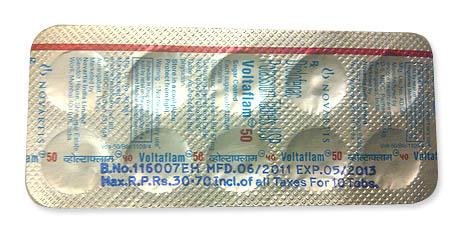
Oral tablets are usually small, film-coated or enteric-coated tablets in standard blister packs.
Gel products come in tubes, often in 20g, 50g, or 100g sizes.
Injectable diclofenac is supplied in ampoules, suppositories are solid rectal forms, ophthalmic drops come in small dropper bottles, and oral solution sachets are single-dose or small-pack liquid preparations.
Being able to spot the right pack matters, especially when several NSAID products sit side by side on the shelf.
Simple Comparison Graphic Ideas
A clear infographic could show dose, route, OTC or prescription status, and the typical use case for each diclofenac form.
It would also help to compare Voltarol medicated plaster with gel and tablets, so customers can see which format suits a sprain, a joint flare, or a longer prescribed course.
Visual guides reduce mistakes, especially when people are choosing between a gel and a tablet under time pressure.
Storage Conditions
Diclofenac should be stored at room temperature, between 20–25°C.
Tablets need protection from moisture, while gels should be kept away from heat and direct sunlight.
Topical and ophthalmic forms should not be frozen.
Good storage keeps the medicine stable and helps the pack last properly until the end of the course.
Travel Considerations
When travelling, keep the original packaging and carry the medicine in hand luggage if possible.
That makes airport checks simpler and helps avoid damage in checked baggage.
Holiday heat can matter too, so gels should not be left in a hot car or near a sunny window.
For pharmacy checks and border control, intact packaging is always safer than loose tablets in an unlabelled container.
Delivery Across United Kingdom
| City | Region | Delivery Time |
|---|---|---|
| London | Greater London | 5-7 days |
| Birmingham | West Midlands | 5-7 days |
| Manchester | North West England | 5-7 days |
| Leeds | West Yorkshire | 5-7 days |
| Glasgow | Scotland | 5-7 days |
| Edinburgh | Scotland | 5-7 days |
| Liverpool | North West England | 5-7 days |
| Newcastle upon Tyne | North East England | 5-7 days |
| Bristol | South West England | 5-7 days |
| Cardiff | Wales | 5-7 days |
| Nottingham | East Midlands | 5-9 days |
| Sheffield | South Yorkshire | 5-9 days |
| Leicester | East Midlands | 5-9 days |
| Coventry | West Midlands | 5-9 days |
| Preston | Lancashire | 5-9 days |
Best-Practice Use
The safest approach is always the shortest effective duration.
That means applying diclofenac gel correctly, following pack directions, and getting medical review if pain is persistent or getting worse.
For back pain or a flare of osteoarthritis, topical treatment may be enough at first, but ongoing symptoms should not be left to linger without proper assessment.
Good pain control should help daily life, not mask a problem that needs a different plan.
Who Needs Extra Caution
Children under 18 are generally not recommended diclofenac unless specialist guidance has been given.
Elderly patients, and anyone with renal, hepatic, or cardiovascular risk factors, need closer monitoring and the lowest effective dose.
That applies to both Voltarol gel and oral diclofenac, even though the topical route is usually gentler on the stomach.
If side effects appear, or if there is uncertainty about whether the pain is suitable for self-treatment, it is sensible to speak to a pharmacist or prescriber promptly.