
Bempedoic Acid
In brief
- Available from community pharmacies and licensed online retailers in many countries; officially bempedoic acid is prescription-only (Rx) in major markets (USA, EU, UK, Australia), although some online vendors or pharmacies may offer it without a prescription.
- Bempedoic acid is used to lower LDL‑cholesterol in adults with primary hypercholesterolaemia or mixed dyslipidaemia and as an adjunct to maximally tolerated statin therapy or for statin‑intolerant patients; it works as an ATP citrate lyase (ACL) inhibitor, reducing cholesterol synthesis upstream of HMG‑CoA reductase.
- The usual dose is 180 mg taken orally once daily; a fixed‑dose combination with ezetimibe (180 mg/10 mg) is also given once daily for greater LDL‑C reduction.
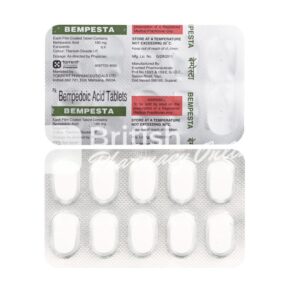
- Administered orally as a film‑coated tablet (180 mg monotherapy or 180 mg/10 mg fixed combination with ezetimibe).
- Reductions in LDL‑C can be measurable within about 2–4 weeks, with typical reassessment and fuller effect expected at 4–12 weeks.
- Given once daily with each dose providing about 24 hours of effect; intended for chronic long‑term use to maintain LDL‑C lowering.
- There is no specific alcohol contraindication, but avoid excessive alcohol intake as this can worsen liver function and lipid control; monitor liver enzymes and avoid alcohol if liver disease or heavy drinking.
- The most common side effect is increased uric acid (hyperuricaemia), which can precipitate gout; other common adverse effects include muscle spasms, back or limb pain, upper respiratory infections and elevated liver enzymes.
- Would you like to try bempedoic acid without a prescription?
Key Findings From Recent Trials
Basic Bempedoic Acid Information
- INN (International Nonproprietary Name): Bempedoic acid.
- Brand Names Available In United Kingdom: Nilemdo (bempedoic acid 180 mg) and Nustendi (bempedoic acid 180 mg/ezetimibe 10 mg fixed dose) are marketed in Europe including the UK.
- ATC Code: C10AX21.
- Forms & Dosages: Film-coated tablets available as 180 mg monotherapy and 180 mg/10 mg fixed‑dose combination with ezetimibe.
- Manufacturers In United Kingdom: Daiichi Sankyo Europe supplies Nilemdo and Nustendi in the EU/EEA and UK, with Esperion Therapeutics identified as the originator globally.
- Registration Status In United Kingdom: Nilemdo and the fixed‑dose combination were authorised in Europe in April 2020 and are available in the UK under the European/UK distribution arrangements noted by the manufacturers.
- OTC / Rx Classification: Prescription only (Rx) in major markets, including the UK.
Major 2022–2025 Studies
What recent research should clinicians and patients notice about bempedoic acid?
Phase 3 programmes and post‑marketing analyses from 2022 to 2024 focused on two clinical settings: statin‑intolerant patients and add‑on therapy to maximally tolerated statins.
Several large trials compared bempedoic acid with placebo and assessed combinations with ezetimibe to quantify incremental LDL‑C lowering and safety signals.
The trial designs typically enrolled adults with primary hypercholesterolaemia or mixed dyslipidaemia who required additional LDL‑C lowering.
Main Outcomes
What did the trials show about effectiveness?
Across studies, bempedoic acid produced clinically meaningful reductions in LDL‑C versus placebo when given alone or as add‑on therapy.
Combining bempedoic acid with ezetimibe provided an additive LDL‑C reduction compared with either agent alone.
The collective evidence supports bempedoic acid as a non‑statin option to help patients reach guideline LDL‑C targets when statins are insufficient or not tolerated.
Safety Observations
Which safety signals recurred in trials and real‑world data?
Repeated pharmacovigilance findings identified hyperuricaemia and modest musculoskeletal symptoms as the most frequent signals.
Transient liver enzyme elevations were observed but were generally reversible on discontinuation or monitoring.
Large cardiovascular outcomes programmes have accrued hard endpoint data that are informing guideline uptake and payer decisions in Europe and the UK.
Clinical Mechanism Of Action
Layman’s Explanation
How does bempedoic acid lower cholesterol in plain language?
Bempedoic acid is a once‑daily tablet that lowers LDL cholesterol by blocking a liver enzyme earlier in the cholesterol synthesis pathway than statins.
Think of it as an “upstream” brake that reduces the liver’s cholesterol production and prompts the liver to clear more LDL from the blood.
Scientific Breakdown
What is the pharmacology behind bempedoic acid?
Bempedoic acid is an oral ATP citrate lyase (ACL) inhibitor that acts in the hepatic cholesterol biosynthesis pathway.
ACL sits upstream of HMG‑CoA reductase, and inhibiting ACL reduces acetyl‑CoA availability for cholesterol synthesis.
This reduction lowers hepatic cholesterol synthesis and upregulates LDL receptors, increasing LDL‑C clearance from circulation.
ATP Citrate Lyase (ACL) Inhibition
Why does ACL inhibition matter clinically?
Blocking ACL reduces a substrate needed for cholesterol formation earlier than statins, so the effect is complementary rather than identical to HMG‑CoA reductase inhibition.
Because activation of the bempedoic acid prodrug occurs mainly in the liver and not skeletal muscle, the drug has a lower mechanistic propensity to cause statin‑like myopathy.
Downstream Lipid Effects
What happens to LDL‑C and other lipids?
In trials, bempedoic acid lowers LDL‑C and, when combined with ezetimibe, achieves greater reductions than monotherapy with either agent.
The complementary mechanisms—liver ACL inhibition and intestinal cholesterol absorption blockade—explain the additive LDL‑C lowering.
Scope Of Approved And Off‑Label Use
United Kingdom Approvals
Who is licensed to receive bempedoic acid in the UK?
In the UK, Nilemdo (bempedoic acid 180 mg) and Nustendi (fixed‑dose bempedoic acid/ezetimibe) are authorised for adults with primary hypercholesterolaemia or mixed dyslipidaemia as an adjunct to diet.
The products are prescription only and intended for chronic use alongside clinical lifestyle measures and other lipid‑lowering therapy as appropriate.
Notable Off‑Label Trends
How are clinicians using bempedoic acid beyond the licence wording?
In real‑world practice, clinicians sometimes initiate bempedoic acid earlier for statin‑intolerant patients or add it to maximally tolerated statins in high‑risk patients who fail to reach LDL‑C goals.
Use in severe renal or hepatic impairment is cautious and limited because data in eGFR <30 mL/min/1.73 m² or severe hepatic disease are sparse.
The medicine is not approved for children or for use in pregnancy and breastfeeding, and UK prescribers consider history of gout or tendon problems before starting treatment.
Dosage Strategy
General Dosing
What is the standard dose patients will usually receive?
The standard dose is 180 mg taken orally once daily, and it may be taken with or without food.
Fixed‑dose combination tablets that contain 180 mg bempedoic acid plus 10 mg ezetimibe are also available to simplify adherence.
Condition‑Specific Dosing
Are there any special dosing rules for different groups?
Adults with primary hypercholesterolaemia or mixed dyslipidaemia use the same once‑daily dosing, and there is no paediatric licence.
No routine dose change is required for elderly patients, and no adjustment is recommended for mild to moderate renal impairment (eGFR ≥30 mL/min/1.73 m²).
Combination With Ezetimibe
How should clinicians combine bempedoic acid with ezetimibe?
The fixed‑dose combination tablet (180 mg/10 mg) is preferred where an oral single‑tablet regimen will aid adherence and deliver additive LDL‑C lowering.
Where separate agents are used, the same monitoring principles apply and clinicians should document therapy choices in shared care records.
Monitoring And Reassessment
When should treatment response and safety be reviewed?
Clinical review and lipid reassessment are typically scheduled at 4–12 weeks after initiation to confirm LDL‑C response and to check safety labs including uric acid and liver enzymes.
Ongoing periodic monitoring is tailored to patient risk and comorbidity.
Safety Protocols
Contraindications
Who must not take bempedoic acid?
Absolute contraindications are known hypersensitivity to the active substance or excipients and pregnancy or breastfeeding.
Women of childbearing potential should be counselled on contraception while taking the medicine.
Adverse Effects
What are the common side effects to warn patients about?
Common adverse effects include increased uric acid levels, gout flares, musculoskeletal complaints such as muscle spasms and back pain, upper respiratory tract infection symptoms, abdominal pain, diarrhoea and fatigue.
Transient elevations in hepatic enzymes have also been reported and should be monitored.
Special Monitoring (Uric Acid, LFTs)
Which laboratory checks are essential?
Baseline renal and hepatic function tests are recommended, with baseline uric acid if the patient has gout or risk factors for hyperuricaemia.
Repeat testing at 4–12 weeks after starting treatment is advised, and further periodic checks depend on clinical findings.
Pregnancy And Reproductive Advice
What reproductive guidance should patients receive?
Bempedoic acid is contraindicated in pregnancy and breastfeeding due to lack of safety data.
Document contraception counselling for women of childbearing potential, and advise stopping the drug if pregnancy is planned or confirmed.
Interaction Mapping
Food Interactions
Is there anything patients should avoid eating with their tablet?
Bempedoic acid may be taken with or without food, and no clinically relevant food–drug interactions have been described.
Drug Combinations To Avoid
What drug combinations raise concern?
The pharmacokinetic interaction burden is modest due to liver‑targeted activation, but clinicians must consider additive adverse risks rather than classic metabolic interactions.
Drugs that raise uric acid or increase tendon rupture risk deserve particular caution when co‑prescribed.
Statins And Combination Therapy
How do statins interact with bempedoic acid?
LDL‑C reductions are additive when bempedoic acid is used with statins, and the fixed‑dose combination with ezetimibe gives extra lowering when required.
Standard statin safety monitoring should continue because muscle symptoms may still occur despite the liver‑selective activation of bempedoic acid.
Other Common UK Medicines
Which common medicines should be reviewed before prescribing?
Review antibiotics or other agents associated with tendon risk, and check gout treatments such as allopurinol or febuxostat when patients have raised uric acid.
Local formularies often provide additional guidance on region‑specific combinations and prior‑authorisation requirements.
Patient Experience Analysis
Survey Data
What do published surveys and practice audits say about patient views?
Real‑world surveys in the UK and EU show improved lipid control and satisfaction where bempedoic acid reduces reliance on higher‑dose statins.
Patients with prior statin intolerance often report perceived improvement in muscle symptoms after switching or adding bempedoic acid.
Forum Trends
What topics do patients commonly raise online?
Forums and patient groups frequently ask about gout risk, cost, NHS access and how soon to expect LDL‑C reductions.
Patients also seek guidance on monitoring schedules and what to do if side effects appear.
Adherence And Tolerability
Does once‑daily dosing help people stick with treatment?
Once‑daily tablets and the availability of fixed‑dose combinations improve convenience and adherence compared with multi‑tablet regimens.
Many patients find the oral route preferable to injectable options such as PCSK9 inhibitors.
Patient Information Needs
What do patients want from clinicians and pharmacists?
Clear, plain‑language explanations of mechanism, expected timelines for LDL‑C change, side‑effect management steps and pregnancy advice are commonly requested.
Shared decision aids and written leaflets help set expectations and reinforce monitoring responsibilities in UK clinics.
Distribution And Pricing Landscape
Brand Availability By Region
Where can patients find bempedoic acid brands in the UK and beyond?
In the UK and Europe the brands in market are Nilemdo (monotherapy) and Nustendi (fixed‑dose combination with ezetimibe).
Other regional brands include Nexletol and Nexlizet in the USA, Australia and New Zealand under Esperion and distributor arrangements.
NHS And Private Prescribing Considerations
How do prescribing routes affect access in the UK?
Uptake on NHS formularies varies by local commissioning and NICE guidance, and secondary care initiation or private prescribing are common when rapid LDL‑C lowering is clinically indicated.
Clinicians should check local formularies and prior‑authorisation requirements before prescribing.
Manufacturers And Supply Chains
Who supplies the UK market and how is stock managed?
Daiichi Sankyo Europe distributes Nilemdo and Nustendi in the EU/EEA and UK, with Esperion as the originator manufacturer supporting global supply chains.
Tablets are standard oral solids and do not require cold‑chain transport; manufacturers advise normal ambient shipping precautions.
Pricing Trends And Access
What affects cost and availability for patients?
Price varies by procurement agreements and whether the product is accessed via NHS commissioning or private prescription.
Fixed‑dose combinations can improve cost‑effectiveness by simplifying regimens and reducing pill burden.
In our online pharmacy, bempedoic acid is available without a prescription, with discreet delivery to United Kingdom in 5–14 days.
Alternative Options
Comparison Table
What are the principal alternatives for LDL‑C lowering in UK practice?
Alternatives include high‑intensity statins (atorvastatin, rosuvastatin), ezetimibe and PCSK9 inhibitors such as alirocumab and evolocumab.
Pros And Cons
How does bempedoic acid compare with other options?
Statins remain first line for most patients because of proven outcome benefit, potency and low cost.
Ezetimibe is an oral, low‑cost option that synergises with statins and can be combined with bempedoic acid where needed.
PCSK9 inhibitors give very large LDL‑C reductions by injection but are costlier and are reserved for very high‑risk cases or familial hypercholesterolaemia.
PCSK9 Inhibitors Vs Bempedoic Acid
When might a clinician choose one over the other?
Use PCSK9 inhibitors for patients needing major LDL‑C reductions or when oral options fail or are unsuitable due to clinical criteria.
Choose bempedoic acid when an oral, liver‑targeted non‑statin option is preferred, particularly in statin‑intolerant patients or as add‑on to maximally tolerated statin therapy.
Statins, Ezetimibe And Combination Strategies
What combination strategies are commonly used?
Typical strategies use statin as foundation therapy, add ezetimibe for moderate further lowering, and consider bempedoic acid or PCSK9 inhibitors when targets are unmet.
Fixed‑dose combinations such as Nustendi combine complementary mechanisms and can simplify prescribing and adherence.
Regulatory Status
Authorisations (FDA, EMA, UK)
Where is bempedoic acid authorised?
The FDA approved bempedoic acid in February 2020 as Nexletol in the United States.
The EMA and European Commission approved Nilemdo and Nustendi in April 2020 for use in adults with primary hypercholesterolaemia or mixed dyslipidaemia.
Authorisations have since been extended to multiple other jurisdictions through manufacturer and licensing partners.
Prescription Classification And Labelling
How is the medicine classified and labelled?
Bempedoic acid is classified as prescription only across major markets, with standard adult dosing of 180 mg once daily and contraindications including pregnancy and known hypersensitivity.
SmPCs advise caution in severe renal or hepatic impairment and in patients with a gout history because of raised uric acid risk.
International Licensing Notes
Which companies handle market entry across regions?
Distribution partners such as Daiichi Sankyo Europe, Esperion, Otsuka and CSL Seqirus determine regional market entry and supply arrangements across countries including South Korea, Taiwan, Brazil, Australia and New Zealand.
UK clinicians should consult the UK SmPC for the most up‑to‑date prescribing information.
Consolidated FAQ
Who Is Bempedoic Acid For?
Which patients are suitable candidates?
Adults with primary hypercholesterolaemia or mixed dyslipidaemia who require additional LDL‑C lowering despite diet and maximally tolerated statin therapy, or those with documented statin intolerance, are the primary candidates.
How Quickly Does It Work?
When will LDL‑C changes be seen?
Clinicians usually reassess lipids and safety labs at 4–12 weeks after initiation to determine LDL‑C response.
Monitoring And Safety Questions
What monitoring should patients expect?
Baseline renal and hepatic blood tests and uric acid if there are gout risk factors are recommended, with repeat checks at 4–12 weeks and periodic monitoring thereafter.
Patients should report signs of tendon pain, severe muscle symptoms or gout flares promptly and stop the drug pending clinical review if major adverse events occur.
Visual Guide
Suggested Infographic Elements
What visual aids make the drug easier to explain?
Create an infographic showing ACL inhibition upstream of statins, a ladder of LDL‑C lowering (statins → ezetimibe → bempedoic acid → PCSK9 inhibitors) and highlighted adverse effects such as hyperuricaemia and liver enzyme checks.
Clinical Flowchart For UK Prescribers
How can prescribers streamline decision making?
Use a flowchart that moves from candidate identification to baseline tests, start of 180 mg daily dosing, review at 4–12 weeks and onward monitoring or escalation to PCSK9 inhibitors if targets remain unmet.
Patient Leaflets And Adherence Aids
Which patient materials are most useful?
Provide plain‑language leaflets covering what to expect, when to seek help for gout or tendon pain, contraception advice for women of childbearing potential, and tips for taking a once‑daily tablet.
Laboratory Monitoring Timeline
What is a practical monitoring schedule?
Recommend baseline tests, a check at 4–12 weeks, and then periodic monitoring tailored to individual risk and comorbidities.
Storage And Transport
Manufacturer Recommendations
How should Nilemdo and Nustendi be stored?
Store film‑coated tablets at room temperature between 15–30°C and protect them from moisture while kept in the original packaging.
Pharmacy Handling In The UK
What should pharmacists advise when dispensing?
Dispense with the labelled expiry date, counsel patients on storage away from humidity and on missed‑dose rules such as not doubling up if a dose is missed.
Patient Storage Guidance
How should patients store their tablets at home?
Advise keeping the blister intact until use, storing tablets in a dry place away from children and extremes of temperature, and bringing remaining medication to clinic appointments to confirm adherence.
Overdose And Lost‑Dose Instructions
What to do if a patient takes too much or misses a dose?
For an overdose there is no specific antidote; provide supportive care and monitor for adverse effects such as muscle symptoms.
If a dose is missed, the patient should take it as soon as they remember unless the next dose is due soon, and they should never double the dose.
Guidelines For Proper Use
Initiation Checklist
What steps should a clinician follow before starting treatment?
Confirm indication, review statin tolerance and prior therapy, check baseline lipids, renal and liver function and uric acid where risk factors exist, and record pregnancy avoidance counselling for women of childbearing potential.
Follow‑Up And Deprescribing Criteria
When should therapy be reassessed or stopped?
Reassess at 4–12 weeks for LDL‑C response and adverse effects, and consider stopping for severe adverse events such as uncontrolled gout, tendon rupture, or severe hepatic or renal deterioration.
Shared Decision‑Making Template
How can clinicians document patient involvement?
Use a simple template that records risks and benefits, treatment alternatives such as statins, ezetimibe and PCSK9 inhibitors, and the patient’s preferences and consent to monitoring.
Documentation And Coding For UK Practice
What administrative steps aid continuity of care?
Record treatment decisions in primary and secondary care correspondence, include diagnosis codes and local Quality and Outcomes Framework (QoF) or formulary codes where relevant for audit and commissioning compliance.
Delivery Across United Kingdom
| City | Region | Delivery Time |
|---|---|---|
| London | England | 5–7 days |
| Birmingham | West Midlands | 5–7 days |
| Manchester | North West | 5–7 days |
| Glasgow | Scotland | 5–7 days |
| Edinburgh | Scotland | 5–7 days |
| Leeds | West Yorkshire | 5–7 days |
| Liverpool | North West | 5–7 days |
| Bristol | South West | 5–9 days |
| Newcastle Upon Tyne | North East | 5–9 days |
| Sheffield | South Yorkshire | 5–9 days |
| Nottingham | East Midlands | 5–9 days |
| Southampton | South East | 5–9 days |
| Leicester | East Midlands | 5–9 days |
| Cardiff | Wales | 5–9 days |
| Belfast | Northern Ireland | 5–9 days |
Storage And Transport
Manufacturer Recommendations
How are the tablets shipped and stored by manufacturers?
Manufacturers ship film‑coated tablets under standard ambient conditions and recommend storage at 15–30°C, protected from moisture.
Pharmacy Handling In The UK
What steps should UK pharmacies follow at dispensing?
Dispensers should check expiry dates, provide clear storage advice, and counsel on missed doses and what to do in case of suspected overdose.
Patient Storage Guidance
What are the top‑line messages for patients?
Keep the medication in the original packaging, store in a dry area out of reach of children and avoid exposing tablets to high humidity or freezing temperatures.
Overdose And Lost‑Dose Instructions
What to advise patients who take too many tablets or miss a dose?
Advise supportive care for suspected overdose and instruct patients to take a missed dose as soon as they remember unless it is almost time for the next dose.
Guidelines For Proper Use
Initiation Checklist
What should be completed at initiation to ensure safe prescribing?
Confirm indication, review prior lipid therapy and statin tolerance, perform baseline labs and document pregnancy avoidance counselling.
Follow‑Up And Deprescribing Criteria
When is it appropriate to stop bempedoic acid?
Discontinue for severe adverse events such as tendon rupture, severe uncontrolled gout, or clinically significant hepatic or renal deterioration.
Shared Decision‑Making Template
How can clinicians ensure patients are informed partners in the decision?
Record alternatives, risks and benefits, expected monitoring and the patient’s preferences and consent in the clinical record.
Documentation And Coding For UK Practice
Which documentation supports audit and commissioning in the UK?
Include diagnostic codes, indication, baseline test results and monitoring dates in correspondence between primary and secondary care, and follow local formulary requirements.
Frequently Asked Questions
Who Is Bempedoic Acid For?
Adults who need additional LDL‑C lowering despite diet and maximally tolerated statins, or those with statin intolerance, are the primary candidates for bempedoic acid.
How Quickly Does It Work?
Lipid responses are usually checked at 4–12 weeks to confirm LDL‑C reduction and to assess safety.
Monitoring And Safety Questions
Patients should expect baseline renal and liver tests and uric acid where indicated, a repeat at 4–12 weeks and further monitoring tailored to individual risk.