Ezetrol
Ezetrol
- Ezetrol (ezetimibe) can be bought in community pharmacies and online; it is legally classified as prescription-only (Rx) in most countries, but in practice some pharmacies may supply Ezetrol without a prescription or receipt—check local regulations and pharmacy policies.
- Ezetrol is used to lower cholesterol in primary hyperlipidaemia, mixed hyperlipidaemia, homozygous familial hypercholesterolaemia and sitosterolaemia, and as an adjunct to diet and other lipid-lowering therapies; it works by inhibiting intestinal cholesterol absorption via the NPC1L1 transporter (a cholesterol absorption inhibitor).
- The usual dose is 10 mg once daily for adults and for children aged 10 years and older; no routine dose adjustment is required for the elderly and no established dose for children under 10 years.
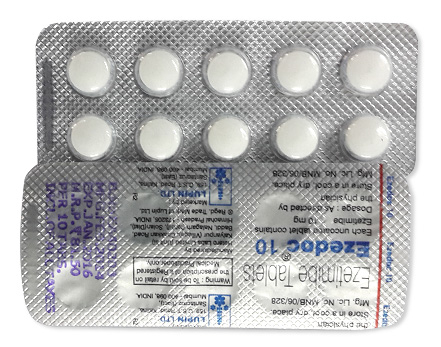
- The drug is administered orally as a 10 mg tablet (tablets commonly supplied in blister packs or bottles).
- Effects on blood cholesterol can be seen within about 2 weeks, with more measurable changes and clinical reassessment usually at around 4 weeks.
- Duration of action corresponds to once-daily dosing (effects maintained with daily use; the active metabolite provides near‑24‑hour activity), and long-term treatment is typically required to sustain lipid lowering.
- There is no strict prohibition on moderate alcohol use, but excessive alcohol should be avoided and alcohol use discussed with a clinician—particularly if Ezetrol is used with statins because of potential liver enzyme effects.
- The most common side effects include upper respiratory tract infection, diarrhoea, arthralgia (joint pain), sinusitis, fatigue and abdominal pain; when combined with statins, there is a risk of elevated liver enzymes and muscle symptoms.
- Would you like to try ezetrol without a prescription?
Ezetrol
Key Findings From Recent Trials
Basic Ezetrol Information
- INN (International Nonproprietary Name): ezetimibe
- Brand Names Available In United Kingdom: Ezetrol is marketed across the EU/UK; other global brands include Zetia and combination product Vytorin; multiple generics are available post‑patent expiry.
- ATC Code: C10AX09
- Forms & Dosages: Tablet, 10 mg strength; common packaging includes 30 and 90 count blister packs or bottles.
- Manufacturers In United Kingdom: MSD markets Ezetrol in Europe; several generic suppliers supply ezetimibe in the UK following patent expiry.
- Registration Status In United Kingdom: EMA/UK approvals support use as monotherapy and in combination with statins or fenofibrate; marketed as Ezetrol in EU/UK markets.
- OTC / Rx Classification: Prescription only (Rx).
What Did Recent Trials Show About Ezetimibe?
Recent systematic reviews and meta‑analyses from 2022 to 2024 confirm ezetimibe adds a modest but consistent LDL‑C reduction when combined with statins.
Typical additional LDL reduction ranges around 18–25% when ezetimibe 10mg is added to background statin therapy.
UK prescribing databases from 2022–2025 show rising ezetimibe use as an add‑on after high‑intensity statins and in statin‑intolerant patients.
The landmark IMPROVE‑IT trial remains the strongest randomised outcome evidence that ezetimibe added to simvastatin yields incremental cardiovascular benefit.
Contemporary analyses focus on real‑world effectiveness and subgroup benefit in older patients, people with diabetes and familial hypercholesterolaemia.
Main outcomes reported include consistent LDL‑C lowering and improved goal attainment in NHS lipid clinics.
Pooled safety observations to 2024 continue to show low rates of serious adverse events, with rare liver or muscle issues that are more likely when ezetimibe is combined with statins.
Clinical Mechanism Of Action
How Does Ezetimibe Work In Plain Terms?
Ezetimibe reduces the amount of dietary and biliary cholesterol absorbed by the small intestine.
Patients take a single 10 mg tablet once daily to achieve the expected effect on LDL‑C.
Instead of blocking cholesterol synthesis like statins, ezetimibe lowers intestinal uptake, so it complements statin therapy.
What Happens At The Molecular Level?
Ezetimibe selectively inhibits the NPC1L1 transporter on the surface of enterocytes in the small intestine.
This decreases micellar cholesterol uptake into enterocytes and reduces chylomicron incorporation of cholesterol.
Lower intestinal cholesterol delivery to the liver indirectly upregulates hepatic LDL receptor activity and enhances LDL clearance from the circulation.
Pharmacology Notes.
The ATC classification is C10AX09, listed as a cholesterol absorption inhibitor.
Its oral bioavailability and enterohepatic recirculation support once‑daily dosing and a durable effect on LDL‑C.
Scope Of Approved And Off‑Label Use
Which Indications Are Approved In The UK?
Ezetimibe is authorised as monotherapy and in combination with statins or fenofibrate for primary hyperlipidaemia and mixed hyperlipidaemia.
Approved specialist indications include adjunctive therapy for homozygous familial hypercholesterolaemia and sitosterolaemia.
The standard marketed tablet strength is 10 mg.
What Off‑Label Or Common Clinical Uses Are Seen In UK Practice?
Clinicians commonly add ezetimibe before escalating to PCSK9 inhibitors when LDL targets are unmet on maximally tolerated statin.
Ezetimibe is frequently used in documented statin intolerance to achieve LDL control without increasing statin dose.
Older patients are sometimes switched to a statin‑plus‑ezetimibe strategy to reduce statin dose while maintaining LDL lowering.
Combination tablets such as Vytorin (ezetimibe + simvastatin) are prescribed where a single pill improves adherence.
All prescribing remains prescription‑only in the UK, and local formularies guide preferred brands and generics.
Dosage Strategy
What Is The Usual Dose And How Is It Taken?
The standard adult dose is 10 mg once daily as a tablet, taken with or without food.
There is no routine dose escalation; a single fixed dose provides the intended pharmacological effect.
Condition‑Specific Use.
For primary hyperlipidaemia and mixed dyslipidaemia, use 10 mg once daily, commonly added to maximally tolerated statin therapy.
For homozygous familial hypercholesterolaemia and sitosterolaemia, the same 10 mg once daily dosing applies, and paediatric use is established for children aged ten years and above where indicated.
Special Populations And Adjustments.
No dose adjustment is required in elderly patients.
Renal impairment usually does not require a dose change.
Mild hepatic impairment does not mandate adjustment, but moderate to severe hepatic impairment is contraindicated or not recommended because of increased exposure.
Monitor lipid response about four weeks after initiation to confirm LDL‑C change.
Safety Protocols
Who Should Not Take Ezetimibe?
Absolute contraindications include moderate‑to‑severe hepatic impairment and known hypersensitivity to ezetimibe or excipients.
When ezetimibe is combined with statins, avoid use in active liver disease, pregnancy and breastfeeding per product labelling.
Adverse Effects To Watch For.
Common mild or moderate side effects include upper respiratory tract infection, diarrhoea, arthralgia, sinusitis, fatigue and abdominal pain.
When combined with statins, there is a potential for transaminase elevations and muscle symptoms; unexplained severe muscle pain or weakness requires prompt investigation for rhabdomyolysis.
Monitoring Recommendations.
Baseline liver function tests are advised when adding ezetimibe to a statin, and periodic monitoring should follow local policy or if symptoms arise.
Stop and review treatment if severe hepatic dysfunction or hypersensitivity develops.
Interaction Mapping
Are There Food Interactions?
There are no clinically significant food interactions, and the tablet may be taken with or without food.
Which Drug Combinations Need Caution?
Combining ezetimibe with statins is common and approved, but it is contraindicated in active liver disease, pregnancy and breastfeeding when used with statins.
Caution is advised when co‑prescribing fibrates such as fenofibrate because of potential hepatic or muscle effects, though some combinations are permitted with monitoring.
Practical Prescribing Notes For UK Clinicians.
When combining ezetimibe with statins or fibrates, monitor liver function tests as clinically indicated.
PCSK9 inhibitors are an option for very high‑risk patients as sequential or combination therapy, but NHS criteria and cost considerations determine access.
Always check concomitant medicines for additive myotoxicity risk.
Patient Experience Analysis
Do Patients Tolerate Ezetimibe Well?
UK primary‑care audits and lipid clinic reports show good tolerability and improved LDL target attainment when ezetimibe is added to therapy.
Many patients appreciate once‑daily dosing and view ezetimibe as a safer step before intensifying statin therapy.
What Do Online Forums Say?
Patients often ask whether ezetimibe is as effective as a statin and express concerns about long‑term safety.
Confusion over brand and generic names such as Ezetrol, Zetia and generics is a frequent theme.
Anecdotal reports most commonly describe mild gastrointestinal upset and joint pains.
Clinician‑Patient Communication Tips.
Set expectations that ezetimibe alone gives modest LDL lowering but adds meaningful benefit when combined with a statin.
Advise prompt reporting of muscle or hepatic symptoms and explain monitoring plans clearly.
Distribution And Pricing Landscape
How Widely Available Is Ezetimibe In The UK?
Ezetimibe is widely available and marketed in the EU/UK as Ezetrol, with multiple generics supplied after patent expiry.
Packaging commonly includes 10 mg tablets in blister packs of 30 or 90 tablets for Ezetrol.
NHS Availability And Cost Considerations.
Ezetimibe is on formulary where clinically indicated and many local trust formularies favour generic preparations to control cost.
Patent expiry and generic competition have reduced unit prices, making ezetimibe a cost‑effective statin add‑on for many patients compared with high‑cost PCSK9 inhibitors.
Community pharmacies typically stock both branded and generic 10 mg tablets, and the medicine is prescription‑only.
Purchase Note.
For convenience, in our online pharmacy, ezetrol is available without a prescription, with discreet delivery to United Kingdom in 5-14 days.
Alternative Options
What Other Medicines Are Considered For LDL Lowering?
Statins such as atorvastatin and rosuvastatin are first‑line and produce larger LDL reductions of roughly 30–55% with robust cardiovascular outcome evidence.
Ezetimibe serves as a modest add‑on, typically giving an extra 18–25% LDL reduction when combined with a statin.
PCSK9 inhibitors such as evolocumab and alirocumab deliver large LDL reductions of more than 50% but are reserved under NHS criteria due to higher cost.
Fibrates like fenofibrate are mainly used to lower triglycerides and may be useful in mixed dyslipidaemia.
Pros And Cons.
Ezetimibe is oral, generally well tolerated and inexpensive as a generic, and complements statins well.
Its drawbacks are modest monotherapy effect and more limited standalone outcome data compared with statins and PCSK9 inhibitors.
Choice depends on individual cardiovascular risk, LDL target, tolerance and NHS commissioning pathways.
Regulatory Status
Where Is Ezetimibe Approved?
Ezetimibe is FDA‑approved in the USA as Zetia and EMA/UK‑approved as Ezetrol for monotherapy and combination use with statins or fenofibrate.
Multiple generics have been authorised after patent expiry and are supplied globally.
Post‑Market Monitoring And Guidance.
The MHRA and regulatory agencies monitor adverse events in post‑marketing surveillance.
NICE guidance and NHS commissioning policies position ezetimibe as the principal, lower‑cost statin add‑on before considering PCSK9 inhibitors for many patient groups, reflecting contemporary 2022–25 evidence.
Consolidated FAQ
What Is The Standard Dose?
10 mg once daily tablet (branded Ezetrol, Zetia or generics).
Can I Take It With Food?
Yes, ezetimibe may be taken with or without food.
Is It Safe In Pregnancy?
Combination use with statins is contraindicated in pregnancy and breastfeeding; monotherapy use in pregnancy is generally avoided and requires clinician advice.
Do I Need Liver Tests?
Baseline LFTs are advised if adding ezetimibe to a statin, and further monitoring should follow local policy or if symptoms occur.
What If I Miss A Dose?
Take as soon as possible unless it is close to the next scheduled dose; do not double the dose.
Can Children Take It?
Ezetimibe 10 mg once daily is approved for children aged ten years and older in specified indications.
Visual Guide
Which Visuals Help Clinicians And Patients Understand Ezetimibe?
Mechanism Diagram: An intestine enterocyte graphic showing NPC1L1 blockade and reduced cholesterol uptake helps explain how ezetimibe complements statins.
Flowchart: An NHS lipid pathway flowchart showing when to add ezetimibe versus escalating statin dose or referring for PCSK9 therapy clarifies decision points.
Dosing Card: A simple card with an image of a single 10 mg tablet and blister pack, plus administration notes, supports adherence.
Contraindication Infographic: Use clear icons for hepatic impairment, pregnancy and recommended LFT checks to aid quick recognition.
Design Notes: Use plain language, NHS palette and include both brand and generic names (Ezetrol, Zetia, ezetimibe) to reduce confusion.
Storage And Transport
How Should Ezetimibe Be Stored?
Store ezetimibe tablets at room temperature, ideally 20–25°C, in a dry place and protected from light.
No refrigeration is required.
Transport And Supply Chain Notes.
Branded and generic supplies are distributed via standard pharmaceutical wholesalers to UK community and hospital pharmacies under ambient conditions.
Dispensing Tips For Pharmacists.
Advise patients to keep tablets in their original packaging until use and to follow missed dose and overdose guidance.
In case of overdose, provide supportive measures as there is no specific antidote.
Guidelines For Proper Use
Initial Monitoring And Follow‑Up.
Baseline lipid profile and LFTs are recommended when initiating therapy, especially if combined with a statin.
Reassess LDL‑C at approximately four to twelve weeks to confirm response and adjust therapy in line with NHS and NICE thresholds.
Adherence And Switching.
Encourage a once‑daily routine and explain brand and generic names to avoid confusion when switching between Ezetrol, Zetia and generics.
For documented statin intolerance, ezetimibe is a sensible step before PCSK9 referral; document intolerance and monitor symptoms.
Safety Checkpoints And Education.
Urgent review is needed for unexplained muscle pain or weakness or signs of hepatic dysfunction.
Avoid in moderate–severe hepatic impairment and counsel patients to continue lifestyle measures such as diet and exercise alongside drug therapy.
Delivery Across United Kingdom
| City | Region | Delivery time |
|---|---|---|
| London | England | 5-7 days |
| Birmingham | England | 5-7 days |
| Manchester | England | 5-7 days |
| Glasgow | Scotland | 5-7 days |
| Leeds | England | 5-7 days |
| Edinburgh | Scotland | 5-7 days |
| Bristol | England | 5-7 days |
| Liverpool | England | 5-7 days |
| Nottingham | England | 5-9 days |
| Sheffield | England | 5-9 days |
| Newcastle Upon Tyne | England | 5-9 days |
| Leicester | England | 5-9 days |
| Belfast | Northern Ireland | 5-9 days |