
Semaglutide
Semaglutide
- You can buy semaglutide from licensed pharmacies and authorised medical suppliers, and it is generally a prescription-only medicine in the UK and other represented markets. However, availability may vary by country and product, and local rules should always be checked.
- Semaglutide is used for the treatment of type 2 diabetes and, in higher-dose formulations, for chronic weight management. It is a glucagon-like peptide-1 (GLP-1) receptor agonist, which helps lower blood glucose, slows gastric emptying, and reduces appetite.
- The usual dose depends on the brand and indication: Ozempic is started at 0.25 mg once weekly and titrated to 0.5 mg, 1 mg, or 2 mg; Wegovy is started at 0.25 mg once weekly and increased gradually to 2.4 mg; Rybelsus is started at 3 mg once daily and increased to 7 mg or 14 mg.
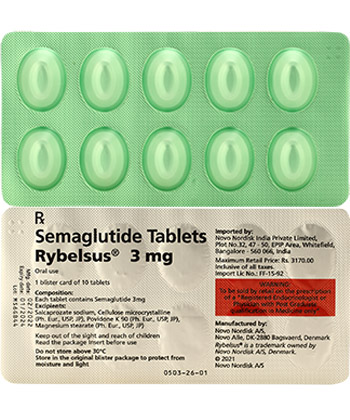
- Semaglutide is available as a subcutaneous injection in prefilled pens or as an oral tablet in blister packs. The injection is usually given once weekly, whilst the tablet is taken by mouth once daily.
- Semaglutide does not work instantly; appetite reduction and blood glucose improvements may begin within days to weeks, while the full therapeutic effect is usually seen after dose titration over several weeks.
- The duration of action is long: the injectable form is designed to last for about one week per dose, and the oral tablet provides once-daily coverage.
- Alcohol should be limited or avoided, particularly if you have diabetes, as it may increase the risk of low blood glucose and worsen gastrointestinal side effects such as nausea or vomiting.
- The most common side effects are nausea, vomiting, diarrhoea, abdominal pain, and constipation. Some people may also experience hypoglycaemia, especially if semaglutide is used with insulin or sulfonylureas.
- Would you like to try semaglutide without a prescription?
Semaglutide
Basic Semaglutide Information
- INN (International Nonproprietary Name): Semaglutide
- Brand Names Available In United Kingdom: Ozempic, Wegovy, Rybelsus
- ATC Code: A10BJ06
- Forms & Dosages: Ozempic subcutaneous injection 0.25 mg, 0.5 mg, 1 mg, 2 mg; Wegovy subcutaneous injection 0.25 mg, 0.5 mg, 1 mg, 1.7 mg, 2.4 mg; Rybelsus oral tablets 3 mg, 7 mg, 14 mg
- Manufacturers In United Kingdom: Novo Nordisk
- Registration Status In United Kingdom: Prescription-only medicine
- OTC / Rx Classification: Rx only
- Regulatory Status: Approved by the US FDA; EMA-approved; local prescribing pathways apply in the UK
Thinking about semaglutide because the numbers on the scales or the glucose meter are not moving in the right direction?
That is usually where the questions start.
People want to know whether Ozempic, Wegovy, or Rybelsus is the right choice, how quickly it works, and whether the side effects are worth it.
They also want straight answers on availability, because stock can be patchy and patients do not want to start something they cannot continue.
Semaglutide is one of the best-known GLP-1 medicines used in diabetes care and weight management, but it needs careful prescribing, sensible dose titration, and realistic expectations.
Recent Trial Findings And What They Mean
Major 2022–2025 Studies
What have the newer semaglutide trials actually shown?
The STEP programme, SELECT outcomes, and diabetes-obesity crossover data have strengthened the evidence base for semaglutide studies in both weight and cardiometabolic care.
In obesity, semaglutide 2.4 mg weekly as Wegovy has produced clinically meaningful weight loss outcomes compared with placebo.
In type 2 diabetes, Ozempic at 1 mg and 2 mg weekly has shown strong HbA1c reduction alongside weight loss.
SELECT added an important cardiovascular signal, showing risk reduction in people with overweight or obesity who already had cardiovascular disease.
Real-world semaglutide trial results also show that some people stop treatment because of gastrointestinal adverse effects or access problems, and that matters in UK practice.
Main Outcomes
For many patients, the headline is simple: semaglutide works.
Wegovy weight loss data from the STEP programme showed substantially better weight reduction than placebo, and that is why semaglutide for weight loss became such a major talking point.
Ozempic diabetes injection studies have shown meaningful improvements in HbA1c, with additional reductions in body weight and signals for cardiometabolic benefit.
The broad picture is that semaglutide helps people eat less, lose weight, and improve glucose control, while also supporting cardiovascular risk reduction in selected patients.
Safety Observations
Are the side effects manageable?
Usually yes, but not for everyone.
The most common issues are gastrointestinal: nausea, vomiting, diarrhoea, abdominal pain, and constipation.
Tolerability is often best when treatment starts low and increases gradually, which is why dose titration is standard.
In studies and routine care, some patients discontinue because nausea or vomiting becomes too much, particularly during escalation.
Supply shortages have also been a real-world issue in the UK, especially for Wegovy, and this has affected continuity of treatment even when the medicine is otherwise working well.
How Semaglutide Works In The Body
Layman’s Explanation
What is semaglutide, in plain English?
It is a GLP-1 analogue that mimics a natural gut hormone.
That hormone helps the body release insulin more effectively after meals and tells the brain that you have had enough to eat.
For many patients, that means steadier blood glucose and less appetite.
Scientific Breakdown
Semaglutide belongs to ATC code A10BJ06, the GLP-1 receptor agonist group.
As a GLP-1 receptor agonist, it acts on the same pathway as endogenous GLP-1, but with a longer duration of action that suits weekly injection or once-daily oral dosing.
How It Works In The Body
In the gut and pancreas, semaglutide slows gastric emptying, improves glucose-dependent insulin secretion, and suppresses glucagon release.
That combination helps lower blood glucose without forcing insulin release regardless of glucose level.
It is one reason semaglutide injection UK searches often lead people to both diabetes and weight-loss information.
Why It Supports Weight Loss
When gastric emptying is slower and satiety is stronger, hunger tends to fall.
People often notice smaller portions feel sufficient, snack cravings ease, and total energy intake drops.
That appetite suppression is central to Wegovy how it works, and it also explains why Ozempic mechanism of action is discussed so often in weight-management conversations.
Who Can Use It In The United Kingdom
United Kingdom Approvals
What is actually authorised here?
Semaglutide is prescription-only in the UK market.
Ozempic is used for type 2 diabetes.
Wegovy is used for weight management where locally available and prescribed appropriately.
Rybelsus is the oral semaglutide option, available in 3 mg, 7 mg, and 14 mg strengths for diabetes care.
That means semaglutide prescription UK decisions should always be based on the patient’s diagnosis, BMI, comorbidities, and previous treatment history.
Notable Off-Label Trends
Why is it in such high demand?
Partly because demand has outstripped supply, and partly because people are looking beyond standard diabetes care.
Some ask about obesity treatment, some ask about diabetes prevention, and some are simply hoping for cosmetic weight loss.
That last group is where misuse becomes a concern, because semaglutide is not a lifestyle shortcut.
It is not authorised for type 1 diabetes, and it is not first-line monotherapy in every setting.
In our online pharmacy, semaglutide is available without a prescription, with discreet delivery to United Kingdom in 5-14 days.
How Dosing Is Usually Set Up
General Dosing
What dose do people start on?
Ozempic usually begins at 0.25 mg, then moves to 0.5 mg, then 1 mg, with 2 mg used in some markets.
Wegovy begins at 0.25 mg and is titrated step by step to 2.4 mg.
Rybelsus starts at 3 mg and may increase to 7 mg or 14 mg.
That gradual semaglutide dosage approach is what makes the treatment more tolerable for many patients.
Titration Rationale
Why the slow start?
The usual four-week low-dose phase helps reduce nausea and vomiting.
Jumping too quickly to a high dose often makes side effects worse and increases the chance of stopping early.
So, whether someone is using a Wegovy injection, an Ozempic injection, or Rybelsus 14 mg, the principle is the same: start low, go slowly, and review response.
Condition-Specific Dosing
For type 2 diabetes, semaglutide is given as once-weekly subcutaneous injection or once-daily oral dosing.
For weight management, the goal is gradual escalation to the maintenance dose that delivers benefit while keeping adverse effects manageable.
Children are not approved for all indications, and older adults do not usually need a dose change just because of age, although they may be more sensitive to side effects.
Safety, Contraindications, And Warning Signs
Contraindications
Who should avoid semaglutide?
It should not be used in people with a personal or family history of medullary thyroid carcinoma or multiple endocrine neoplasia syndrome type 2.
It is also contraindicated in known hypersensitivity to semaglutide or any formulation excipients.
Extra caution is needed in pancreatitis, diabetic retinopathy, gastroparesis, and severe renal or hepatic impairment.
Adverse Effects
The most common semaglutide side effects are nausea, vomiting, diarrhoea, abdominal pain, and constipation.
Hypoglycaemia is more likely if it is combined with insulin or sulphonylureas.
Some patients also notice a transient increase in heart rate or mild injection-site reactions.
Red Flags
When should help be sought urgently?
Persistent vomiting, severe dehydration, visual changes, or symptoms that could suggest pancreatitis need prompt medical review.
If a patient becomes unable to keep fluids down, that should not be managed casually at home.
How It Interacts With Food And Other Medicines
Food Interactions
Does semaglutide need to be taken with food?
That depends on the formulation.
For oral semaglutide, timing is critical and tablets should be taken exactly as directed, away from food and drink.
For the injection, food interactions are less direct, but reduced appetite often changes meal size and eating habits.
Drug Combinations To Avoid
The main interaction concern is hypoglycaemia when semaglutide is used with insulin or sulphonylureas.
Because gastric emptying is delayed, absorption of some oral medicines may also be affected.
That is why a proper medicines review matters before starting Rybelsus tablets or any semaglutide injection UK prescription.
What Patients Say In Real Life
Survey Data
Do people feel the difference quickly?
Many report appetite reduction early on, along with earlier satiety and better glucose control.
Those benefits are often what keep people going through the first few weeks of titration.
At the same time, side effect reports frequently mention nausea or bowel changes, especially when the dose rises.
Forum Trends
What comes up again and again online?
UK patients often discuss availability, cost, and whether they can obtain private prescribing when NHS access is limited.
Some also ask whether results plateau over time, which can happen if lifestyle measures drift or the target dose is not maintained.
The most balanced view is that semaglutide for weight loss can be highly effective, but it is not magic and it works best with ongoing support.
Supply, Pricing, And Availability
Supply Chain Overview
Who makes it?
Novo Nordisk is the exclusive global developer, manufacturer, and supplier of semaglutide.
Distribution runs through licensed pharmaceutical wholesalers and pharmacy chains, but access can still be uneven when demand spikes.
Wegovy shortages have been particularly noticeable, and this has been frustrating for patients who are stable on treatment.
United Kingdom Pricing Factors
What affects what patients pay?
Private prescription costs, stock variability, and whether NHS access is available all play a part.
That is why buy semaglutide UK searches often lead to price comparisons as well as clinical questions.
For anyone considering semaglutide prescription cost, the key point is to check current stock, confirm the correct product, and make sure the medicine is supplied through a legitimate pharmacy channel.
How Semaglutide Compares With Other Options
Comparison Table
| Medicine | Usual Dosing | Main Use | Key Points |
|---|---|---|---|
| Semaglutide | Weekly injection or daily tablet | Type 2 diabetes, weight management | Strong efficacy, oral option, GI effects can limit use |
| Liraglutide | Daily injection | Type 2 diabetes, obesity treatment | Established option, but less convenient dosing |
| Dulaglutide | Weekly injection | Type 2 diabetes | Weekly dosing, diabetes-focused positioning |
| Tirzepatide | Weekly injection | Diabetes and obesity treatment | Dual GLP-1/GIP agonist, not a semaglutide analogue |
Clinical Positioning
Semaglutide stands out because it combines weekly injection convenience with strong weight and glucose data, plus an oral option in Rybelsus.
Liraglutide, dulaglutide, and tirzepatide each have their place, but the tolerability profile, dosing schedule, and access issues are different.
Pros And Cons
The main strengths are strong efficacy, a weekly injection option, and oral semaglutide for selected patients.
The main limits are gastrointestinal adverse effects, contraindications in certain thyroid conditions, and supply problems.
For some patients, Wegovy vs Saxenda or Ozempic vs Mounjaro becomes a practical conversation about dose frequency, expected results, and stock availability rather than just brand preference.
Regulatory Status And Prescribing Rules
United Kingdom And Wider Approvals
Semaglutide has approved status in major markets, with US FDA approvals for Ozempic in 2017, Rybelsus in 2019, and Wegovy in 2021.
EMA approval is also in place, which is relevant to UK prescribing pathways and product information.
In all represented markets, it is prescription-only.
For the safest prescribing decisions, official UK and MHRA-facing sources should always be checked for current product information.
Prescription Rules
Because this is an Rx-only medicine, treatment should be matched to diagnosis, dose history, and ongoing response.
That matters whether a patient is asking about Ozempic regulation, Wegovy UK status, or Rybelsus tablets for diabetes.
Common Questions About Semaglutide
Common Patient Questions
What is semaglutide?
It is a GLP-1 receptor agonist used in diabetes care and, in certain products, weight management.
Is Wegovy the same as Ozempic?
They contain the same active substance, but they are licensed for different uses and have different dose schedules.
How long does it take to work?
Some people notice appetite changes early, while HbA1c and weight outcomes build over weeks to months.
Can it be used long term?
Yes, treatment is generally ongoing and reviewed every three to six months for benefit and tolerability.
Safety And Access Questions
Who should avoid it?
Anyone with medullary thyroid carcinoma history, MEN2, or a serious hypersensitivity issue should not use it.
What if a dose is missed?
Weekly doses can usually be taken within five days if remembered in time, while oral doses should simply be resumed at the next scheduled time without doubling.
Can it be used with other diabetes medicines?
Yes, but insulin and sulphonylureas raise the risk of hypoglycaemia, so monitoring is important.
What The Packaging Looks Like
What The Medicines Look Like
Ozempic and Wegovy are supplied as prefilled pens.
Rybelsus comes as blister packs of tablets.
That difference matters because the administration technique is completely different between the injection and the oral product.
How Packaging Differs
Graduated pens support titration, which is especially useful during the step-up phase.
Labelling may be multilingual or local-language specific, depending on market and supply chain.
Tablet strengths are clearly marked for 3 mg, 7 mg, and 14 mg oral dosing.
Storage And Transport
Storage Requirements
How should semaglutide be kept at home?
Unopened pens should be refrigerated at 2–8°C and protected from light.
Once in use, pens can be kept at 30°C or below for up to 56 days.
They should not be frozen or exposed to heat.
Tablets should be stored below 30°C in their original packaging.
Travel Considerations
Before travelling, check the expiry date, keep medicines away from light, and make sure the pen or blister pack is protected in transit.
If flying, a small cool bag can help, but freezing must still be avoided.
That is particularly important for travel with injections when there may be a long journey or weekend delay.
How To Use It Properly
Administration Essentials
Weekly injections should be taken on the same day each week, as close to the planned time as possible.
Oral semaglutide needs the specific tablet-dosing routine to be followed exactly.
If a weekly dose is missed, it can usually be taken as soon as remembered within five days, otherwise wait until the next scheduled dose.
Oral doses should not be doubled if a dose is forgotten.
Practical Adherence Tips
Rotating injection sites helps reduce local irritation.
Sticking to the titration plan is the best way to limit nausea and vomiting.
Patients should keep an eye on appetite, bowel changes, hydration, and glucose readings if they have diabetes.
Periodic review every three to six months helps confirm whether the current dose is still doing its job.
When To Seek Advice
Persistent gastrointestinal symptoms, signs of dehydration, visual changes, or poor glycaemic control need professional review.
That is especially true if the patient is using insulin, a sulphonylurea, or has a history of retinopathy or pancreatitis.
A short pharmacy conversation can prevent a small problem from becoming a treatment stop.
Delivery Across United Kingdom
| City | Region | Delivery Time |
|---|---|---|
| London | Greater London | 5-7 days |
| Birmingham | West Midlands | 5-7 days |
| Manchester | North West England | 5-7 days |
| Leeds | West Yorkshire | 5-7 days |
| Glasgow | Scotland | 5-7 days |
| Liverpool | North West England | 5-7 days |
| Newcastle upon Tyne | North East England | 5-7 days |
| Edinburgh | Scotland | 5-7 days |
| Bristol | South West England | 5-7 days |
| Cardiff | Wales | 5-7 days |
| Nottingham | East Midlands | 5-9 days |
| Sheffield | South Yorkshire | 5-9 days |
| Leicester | East Midlands | 5-9 days |
| Coventry | West Midlands | 5-9 days |
| Portsmouth | South East England | 5-9 days |
Final Takeaway
Semaglutide has earned its place because the evidence is strong, the mechanism is clear, and the clinical uses are well established.
For the right patient, it can improve HbA1c, reduce appetite, support meaningful weight loss, and lower cardiometabolic risk.
For the wrong patient, or the wrong dose, it can cause avoidable side effects and disappointment.
That is why the best results come from matching the right product to the right indication, keeping an eye on supply, and using proper titration and follow-up.
If you are comparing Ozempic, Wegovy, or Rybelsus, the safest next step is to check suitability, current stock, and dose instructions before starting.