Efavirenz
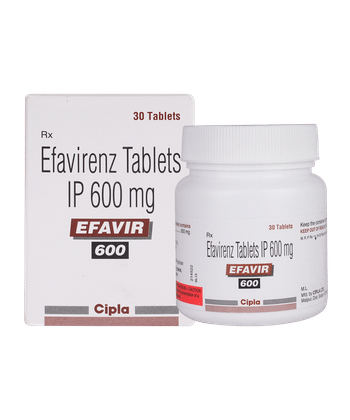
Efavirenz
- In our pharmacy, you can buy efavirenz without a prescription, with delivery in 5–14 days throughout the United Kingdom and discreet, anonymous packaging; please note that efavirenz is generally a prescription-only medicine and use under medical supervision is recommended.
- Efavirenz is an antiretroviral used for the treatment and prevention of HIV‑1 infection; it is a non‑nucleoside reverse transcriptase inhibitor (NNRTI) that binds to and inhibits reverse transcriptase, preventing viral replication.
- The usual adult dose is 600 mg orally once daily (taken with or after food); paediatric dosing is weight‑based (e.g. ≥35 kg: 600 mg once daily), and WHO DDD is 0.6 g per day; for PEP it is typically used as 600 mg daily as part of a combination regimen for 28 days.
- Efavirenz is administered orally as tablets (commonly 600 mg and 200 mg) or as capsules for paediatric use (50 mg); it is also available in fixed‑dose combination tablets (eg Atripla: efavirenz 600 mg + emtricitabine 200 mg + tenofovir disoproxil 300 mg).
- Antiviral activity (reduction in viral load) begins within days and is generally measurable within 1–2 weeks, with further decreases over 2–4 weeks; CNS adverse effects often appear within the first days to weeks of treatment.
- Efavirenz is given once daily and provides effective antiviral coverage over 24 hours; the terminal half‑life is prolonged (about 40–55 hours), so the drug persists in the body for several days after stopping.
- Avoid or limit alcohol while taking efavirenz as alcohol can worsen central nervous system side effects (dizziness, drowsiness, impaired concentration) and may aggravate sleep disturbances; exercise caution especially during the first weeks of treatment.
- The most common side effects are central nervous system symptoms (insomnia, vivid dreams, dizziness, impaired concentration, headache, anxiety or depression); other common effects include nausea, diarrhoea, rash, fatigue, elevated liver enzymes and lipid changes; severe rash and psychiatric effects are possible and require prompt medical attention.
- Would you like to try efavirenz without a prescription?
Efavirenz


Basic Efavirenz Information
- INN (International Nonproprietary Name): Efavirenz.
- Brand Names Available In United Kingdom: Stocrin, Atripla, Efavirenz Mylan, Efavirenz Teva, Efavirenz Zentiva; typical forms include 200 mg and 600 mg tablets supplied by Teva UK and Mylan.
- ATC Code: J05AG03 for efavirenz monotherapy; combination classification J05AR06 for emtricitabine/tenofovir/efavirenz.
- Forms & Dosages: Tablets 600 mg and 200 mg in blister or bottle; capsules 50 mg paediatric and 200 mg; fixed‑dose combination Atripla contains 600 mg efavirenz + 200 mg emtricitabine + 300 mg tenofovir disoproxil.
- Manufacturers In United Kingdom: Generic suppliers include Teva UK and Mylan, with additional generics marketed by Zentiva and others internationally.
- Registration Status In United Kingdom: Registered and marketed; MHRA oversight aligns with EMA approvals (FDA approved 1998, EMA 1999) and WHO prequalification supports generic procurement.
- OTC / Rx Classification: Prescription only (Rx); not available over the counter.
Major 2022–2024 Studies
Worried that efavirenz is out of date compared with newer HIV drugs?
Recent randomised trials, pooled analyses and observational cohorts from 2022 to 2024 have not focused on efavirenz as a new blockbuster, but they make two clear points that matter for UK clinicians and patients.
First, lower‑dose efavirenz — 400 mg once daily — continues to show virological suppression comparable to the traditional 600 mg dose in selected adult populations, a finding that builds on the ENCORE1-era evidence base.
Second, programme‑level moves to dolutegravir‑based regimens have driven efavirenz out of many first‑line slots in national formularies, particularly where integrase inhibitors are affordable and available.
High‑quality cohort data from sub‑Saharan African and European registries show that patients already tolerating efavirenz maintain viral suppression when therapy is continued.
UK hospital and electronic record datasets from 2022–2024 mirror the safety preference for dolutegravir for new starts, though efavirenz remains in use where supply, fixed‑dose combinations such as Atripla, or patient history make it sensible.
Regulatory approvals from FDA (1998), EMA (1999) and WHO essential medicine listing underpin the continued clinical relevance of efavirenz despite the shift to integrase‑based first line.
Main Outcomes
- Viral suppression non‑inferiority demonstrated for efavirenz 400 mg in selected adult groups compared with 600 mg in recent analyses.
- Programmatic switches to dolutegravir reduced efavirenz initiation rates in national treatment programmes between 2022 and 2024.
Safety Observations
- Persistent neuropsychiatric signal relative to integrase inhibitors, with higher early rates of vivid dreams, insomnia and mood symptoms.
- Hepatic monitoring remains advisable because transaminase elevations are a recognised laboratory risk.
Layman’s Explanation
Concerned about how efavirenz actually works in the body?
Efavirenz belongs to the NNRTI class and works by binding to the HIV‑1 reverse transcriptase enzyme in a way that blocks the virus from copying its RNA into DNA.
Put simply, efavirenz jams a key viral copying machine so HIV cannot replicate effectively.
Scientific Breakdown
Want the clinical detail for prescribing decisions?
Efavirenz binds to a hydrophobic pocket adjacent to the polymerase active site of HIV‑1 reverse transcriptase and prevents DNA chain elongation, reducing viral replication.
The drug is administered once daily and the WHO defined daily dose is 0.6 g per day, reflecting typical adult dosing of 600 mg once daily with or after food.
Efavirenz is highly protein bound and is cleared primarily via hepatic metabolism through CYP2B6 and CYP3A4 pathways, which explains its interaction potential and variable exposure in different patients.
Known genetic polymorphisms — notably CYP2B6*6 — increase plasma efavirenz levels and are associated with a higher risk of central nervous system adverse events; pharmacogenetic consideration may be useful where patients have prolonged neuropsychiatric symptoms.
The drug appears in fixed‑dose combination tablets such as Atripla (efavirenz 600 mg + emtricitabine + tenofovir) to improve adherence through once‑daily single‑tablet regimens.
Pharmacogenetics (Brief)
- CYP2B6 variants can lead to higher efavirenz exposure and increased CNS toxicity risk.
- Consider pharmacogenetic discussion in patients with prolonged or severe neuropsychiatric effects in UK specialist clinics.
United Kingdom Approvals
Worried whether efavirenz is officially authorised for use in the UK?
Efavirenz is authorised in the UK as a prescription‑only antiretroviral for HIV‑1 infection and is marketed under names such as Stocrin and Atripla, with generics available from Mylan, Teva and Zentiva.
It remains listed in national formularies and is available through NHS prescribing and specialist HIV clinics under MHRA oversight, consistent with EMA authorisation history.
Notable Off‑Label Trends
Curious about practical uses beyond the licence?
Off‑label or pragmatic uses are limited, but historical use of efavirenz in post‑exposure prophylaxis (PEP) appeared as part of triple therapy for 28 days.
Lower‑dose regimens (400 mg once daily) have been used in resource‑limited or research settings, though 400 mg is not a universal NHS standard.
In UK practice efavirenz is increasingly reserved for patients already stable on therapy, for those unable to take alternatives, or where drug–drug interactions favour an NNRTI.
General Dosing
Want a clear dosing rule to write on the dispensing label?
Standard adult dosing is 600 mg orally once daily with or after food.
The WHO defined daily dose is 0.6 g per day.
Paediatric dosing is weight‑band based with 50 mg capsules available for children and a 600 mg dose for those ≥35 kg; lower weight bands use 200 mg or 300 mg tablets or 50 mg capsules as appropriate.
No routine renal adjustment is required for mild–moderate renal impairment, and efavirenz should be avoided in moderate to severe hepatic impairment.
Condition‑Specific Dosing
Do clinicians still use efavirenz for PEP or lower‑dose regimens?
- HIV‑1 Infection (Treatment): 600 mg once daily as part of combination antiretroviral therapy, typically with two NRTIs.
- Post‑Exposure Prophylaxis: Historically 600 mg daily in triple therapy for 28 days; UK guidance now generally prefers integrase‑based PEP where available.
- Lower‑Dose Regimens: 400 mg once daily has evidence of efficacy in selected adults, but is not uniformly adopted across NHS guidance.
Missed Dose & Overdose
Need to advise patients about missed doses or overdose?
If a dose is missed, take it as soon as remembered unless the next dose is imminent; do not double dose to catch up.
In overdose, supportive care is the mainstay; severe CNS effects including confusion or hallucinations may occur and activated charcoal can be considered if ingestion was recent.
Contraindications
Worried about who must not take efavirenz?
Absolute contraindications include known hypersensitivity to efavirenz and severe hepatic impairment.
Certain medicines are contraindicated because of major interactions, for example voriconazole, elbasvir/grazoprevir and St John’s Wort.
Women of child‑bearing potential should use effective contraception or consider alternatives because of teratogenicity concerns; pregnancy planning requires specialist discussion.
Adverse Effects
Afraid of side effects and what to warn patients about?
The most commonly reported adverse effects are central nervous system symptoms such as vivid dreams, insomnia, dizziness, impaired concentration, anxiety and depression.
Other common effects include gastrointestinal upset, rash (rarely severe reactions such as Stevens–Johnson syndrome), elevated liver enzymes and lipid disturbances.
Baseline and periodic liver function tests are recommended, and a mental health history should be screened before starting efavirenz with early review to detect neuropsychiatric worsening.
Where seizure disorders exist, consider alternatives because efavirenz can lower the seizure threshold.
Food Interactions
Ask whether efavirenz should be taken with meals?
Taking efavirenz with food — especially high‑fat meals — increases bioavailability and peak concentrations, which may heighten CNS effects.
Advice is therefore to take efavirenz with or after food consistently to reduce variability in plasma levels, and to counsel patients about potential increased vivid dreams if dosing with a heavy evening meal.
Drug Combinations To Avoid
Need a practical interaction checklist at the clinic?
Efavirenz is both a substrate and inducer of CYP enzymes (CYP2B6 and CYP3A4) and interacts with many medicines.
Avoid co‑administration with voriconazole, elbasvir/grazoprevir, St John’s Wort, some benzodiazepines and ergot derivatives due to clinically significant interactions.
Efavirenz can reduce plasma concentrations of systemic contraceptives, so counsel patients about using additional contraception methods.
Always check the BNF, MHRA interaction tables or specialist antiretroviral interaction tools when co‑prescribing in the UK setting.
Survey Data
Wonder how patients actually feel on efavirenz?
UK and international patient surveys and clinic audits report higher early discontinuation rates driven by CNS adverse effects such as insomnia, vivid dreams and mood changes.
Many symptoms settle within weeks, but a minority of patients experience persistent neuropsychiatric effects that prompt a switch of regimen.
Older patients who have been stable on efavirenz for years often praise the once‑daily convenience and reliable viral suppression.
Forum Trends
Curious what peer groups and forums say about efavirenz?
Online HIV community groups show mixed sentiment: newer patients commonly favour dolutegravir for tolerability and fewer CNS effects.
Stigma and adherence challenges are sometimes linked to vivid dreams and mood symptoms, so clinicians emphasise pre‑treatment counselling and an early review within 2–4 weeks.
UK resources such as NHS HIV clinics, community pharmacists and mental health liaison services support adherence and switching pathways when needed.
Distribution & Pricing Landscape
Wondering whether efavirenz is easy to source and affordable in the UK?
Efavirenz is available in the UK as branded products (Stocrin, Atripla) and multiple generics from Teva, Mylan, Zentiva and Sandoz.
Typical strengths are 600 mg and 200 mg tablets with paediatric 50 mg capsules for children.
Generics have reduced unit cost and support use in procurement and global supply, and WHO‑prequalified generics are available for international programmes.
For NHS prescribing cost is rarely a barrier, but national formularies have increasingly prioritised integrase‑based fixed‑dose combinations for first‑line use.
In our online pharmacy, efavirenz is available without a prescription, with discreet delivery to United Kingdom in 5-14 days.
Pros And Cons Compared With Alternatives
Deciding between efavirenz and newer agents?
- Efavirenz (NNRTI): once‑daily dosing and long track record, but notable CNS adverse‑effect signal and many CYP interactions.
- Dolutegravir (INSTI): generally better tolerability, fewer CNS effects and now widely recommended as first line in the UK.
- Rilpivirine (NNRTI): improved tolerability but constrained by requirements such as lower viral loads and interaction issues with rifampicin.
- Etravirine (NNRTI): reserved for NNRTI‑experienced patients and not a routine substitute for first line.
Pros And Cons
Need a short clinical pros/cons summary?
Pros of efavirenz include a long evidence base, once‑daily dosing and availability in fixed‑dose combinations such as Atripla and cost advantages from generics.
Cons are the risk of neuropsychiatric adverse events, teratogenicity considerations in women of child‑bearing potential, extensive drug interactions and progressive de‑prioritisation as first line in UK guidance in favour of dolutegravir.
Choice of regimen should be personalised to comorbidity, pregnancy plans, interaction risks and supply; always follow NICE, MHRA and specialist HIV clinic advice.
Regulatory Status
Want the official regulatory timeline?
Efavirenz was approved by FDA in 1998 and by EMA in 1999 and remains on the WHO Model List of Essential Medicines.
The MHRA monitors efavirenz in the UK and branded and generic formulations including Stocrin and Atripla remain registered.
Regulatory communications emphasise neuropsychiatric adverse events and interaction warnings, and product information mandates hepatic monitoring and pregnancy counselling.
Recent regulatory trends and national guidance shifts reflect a move away from efavirenz as first line towards integrase inhibitors where available.
Common Questions
What do patients and prescribers ask most about efavirenz?
- Is efavirenz still used in the UK? Yes — primarily for patients already stable or when alternatives are unsuitable; first‑line use has declined.
- Can women of child‑bearing potential take efavirenz? Effective contraception is advised or consider alternative agents because of teratogenicity concerns; discuss on a case‑by‑case basis.
- How are CNS side effects managed? Early clinical review, dose timing and counselling may help; a switch to dolutegravir is considered if symptoms persist.
- Does efavirenz require liver monitoring? Yes — baseline and periodic transaminases are recommended; avoid in moderate–severe hepatic impairment.
- Can efavirenz be used in children? Yes — weight‑based dosing applies and 50 mg capsules are available for paediatric use.
Prescriber Resources
Where should clinicians look for authoritative guidance?
Refer to the BNF, MHRA product information and local specialist HIV clinic protocols when prescribing efavirenz and check antiretroviral interaction checkers for co‑medications.
Key Visuals To Include
Preparing patient leaflets or clinic slides?
Suggested visuals include a simple mechanism schematic showing efavirenz binding a pocket on reverse transcriptase, and a dosing flowchart that contrasts adult 600 mg dosing with paediatric weight bands and the 400 mg option for selected adults.
Infographic elements should show a safety timeline for CNS effects (days–weeks), rash risk window (early), and a monitoring schedule (baseline, 4–8 weeks, periodic thereafter).
For UK patient leaflets include brand options (Stocrin, Atripla, generics), storage icons for <30°C and MHRA contact details; include alt text and clinician references such as BNF and MHRA.
Storage & Transport
How should efavirenz be stored at the pharmacy and home?
Store efavirenz below 30°C and protect it from moisture and light during storage and transport.
Tablets are supplied in blister packs or bottles, and paediatric capsules in bottles; follow standard non‑cold chain transport precautions.
Pharmacies should practise stock rotation and counsel patients to keep medicine in a dry place away from heat at home.
Dispose of unused efavirenz according to NHS/local pharmacy waste guidance.
During supply chain interruptions, fixed‑dose combinations such as Atripla may be used to support stable patients and reduce logistic complexity.
Prescriber Checklist (UK)
What are the minimum checks before starting efavirenz?
- Confirm HIV‑1 indication and plan combination antiretroviral therapy — never prescribe efavirenz as monotherapy.
- Baseline tests: viral load, CD4 count, liver function tests, pregnancy test if applicable, and a mental health screen.
- Review co‑medications for interactions using BNF/MHRA and specialist tools.
- Prescribe standard dosing 600 mg once daily with or after food, and discuss the 400 mg option only per specialist guidance.
- Counsel patients about CNS effects, contraception, adherence and missed‑dose instructions, and arrange early follow‑up at 2–4 weeks.
Switching & Discontinuation
When should efavirenz be stopped or changed?
Switch or discontinue efavirenz for severe CNS effects, significant rash, pregnancy planning or major drug interactions and do so under specialist guidance.
In overdose or severe reactions, arrange urgent hospital assessment and provide supportive care; there is no specific antidote.
Consolidated FAQ
Still have quick questions patients ask repeatedly?
Is efavirenz still used in the UK? Yes — mainly for patients already stable or when alternatives are unsuitable; first‑line use has declined.
Can women of child‑bearing potential take efavirenz? Use contraception or consider alternatives due to teratogenicity concerns; assess risk versus benefit.
How to manage CNS side effects? Early review, counsel about dose timing with food and consider switching to an alternative such as dolutegravir if symptoms persist.
Does efavirenz require liver monitoring? Yes — baseline and periodic liver enzyme checks; avoid in moderate–severe hepatic impairment.
Can it be used in children? Yes — use weight‑based dosing and paediatric 50 mg capsules where indicated.
Prescribers should refer to BNF, MHRA and specialist HIV clinic protocols and use interaction checkers for co‑medications.
Key Visuals To Include (For Content Creators)
Which images make the article more user‑friendly?
Include a mechanism schematic of efavirenz binding the reverse transcriptase pocket and a dosing flowchart that clearly separates adult 600 mg dosing, the 400 mg option and paediatric weight bands.
Create an interaction map showing CYP2B6/CYP3A4 induction and a safety timeline covering CNS effects and rash onset with monitoring points annotated.
Storage And Transport Practicalities
How should pharmacists handle stock and patient counselling?
Store below 30°C and protect from moisture and light, with standard non‑cold chain transport and storage precautions.
Packaging commonly includes blister packs for tablets and bottles for capsules; ensure clear patient advice about home storage and disposal through NHS guidance.
In procurement, WHO‑prequalified generics follow the same storage parameters and support supply planning for global programmes.
Prescribing Guidelines Summary
Need a quick prescriber action list to keep at the clinic?
- Confirm combination therapy plan and perform baseline viral load and LFTs.
- Screen mental health and pregnancy status where relevant and review all co‑medications for CYP interactions.
- Start standard dosing 600 mg once daily with/after food; advise on adherence and missed‑dose rules.
- Arrange early follow‑up at 2–4 weeks to check for CNS effects and LFT changes.
- Switch promptly to an alternative such as dolutegravir for severe CNS toxicity, pregnancy planning or critical interactions.
Delivery Across United Kingdom
| City | Region | Delivery Time |
|---|---|---|
| London | England | 5-7 days |
| Birmingham | West Midlands | 5-7 days |
| Manchester | Greater Manchester | 5-7 days |
| Glasgow | Scotland | 5-7 days |
| Leeds | West Yorkshire | 5-7 days |
| Liverpool | Merseyside | 5-7 days |
| Edinburgh | Scotland | 5-7 days |
| Bristol | South West | 5-7 days |
| Cardiff | Wales | 5-7 days |
| Newcastle | North East | 5-9 days |
| Nottingham | East Midlands | 5-9 days |
| Leicester | East Midlands | 5-9 days |
| Coventry | West Midlands | 5-9 days |
| Swansea | Wales | 5-9 days |