
Rebetol
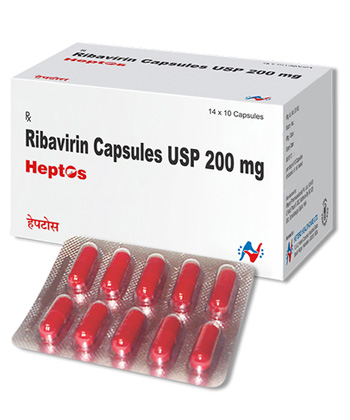
Rebetol
- In our pharmacy you can buy rebetol; however, ribavirin (Rebetol) is classified as prescription-only (Rx) in most countries and normally requires a prescription — some pharmacies may dispense it without presenting a receipt, but this is not recommended and may be unlawful or unsafe.
- Rebetol (ribavirin) is used primarily in combination with interferon or peginterferon for chronic hepatitis C; it is a nucleoside analogue antiviral that interferes with viral RNA synthesis (inhibits viral polymerase and alters nucleotide pools, contributing to lethal mutagenesis of the virus).
- Usual adult dosage for chronic hepatitis C: weight-based — <75 kg: 1,000 mg/day (commonly 400 mg morning, 600 mg evening); ≥75 kg: 1,200 mg/day (600 mg twice daily). Paediatric dosing is weight-based (about 15 mg/kg/day divided BID); dose adjustments are required in renal impairment.
- Forms of administration: oral (capsules or tablets, e.g. 200 mg; oral solution 40 mg/mL) and, for specific indications, inhalation solution (Virazole) — oral dosing is the usual route for hepatitis C.
- Onset time: plasma concentrations are reached within a few hours after oral dosing, but virological effects are measured over days to weeks — clinical antiviral effect is not immediate.
- Duration of action: ribavirin has a long terminal half-life (prolonged tissue retention), and treatment courses for hepatitis C are usually 24 weeks (genotypes 2–3) or 48 weeks (genotypes 1, 4, 5, 6) when combined with interferon/peginterferon.
- Alcohol warning: avoid alcohol during treatment — alcohol can worsen liver disease and reduce treatment safety and effectiveness; patients with hepatitis C should abstain or minimise alcohol intake and follow medical advice.
- The most common side effect is haemolytic anaemia, often presenting with fatigue; other frequent adverse effects include headache, insomnia, gastrointestinal upset (nausea, loss of appetite), cough and psychiatric symptoms such as irritability or depression.
- Would you like to try rebetol without a prescription?
Rebetol

Basic Rebetol Information
- INN (International Nonproprietary Name): Ribavirin
- Brand Names Available In United Kingdom: Rebetol (capsules 200 mg; oral solution 40 mg/mL), Copegus (tablets 200 mg), Virazole (inhalation solution), Ibavyr (tablets 200 mg/400 mg in other markets)
- ATC Code: J05AP01
- Forms & Dosages: Capsules/tablets 200 mg (also 400 mg in some brands); oral solution 40 mg/mL; inhalation solution formulations exist for Virazole
- Manufacturers In United Kingdom: MSD (Merck Sharp & Dohme) supplies Rebetol in the EU/UK market; Roche supplies Copegus; generics available from manufacturers such as Apotex, Teva and Mylan
- Registration Status In United Kingdom: Approved by the Medicines and Healthcare products Regulatory Agency for use in combination with interferon/peginterferon for chronic hepatitis C
- OTC / Rx Classification: Prescription only (Rx)
Key Findings From Recent Trials
Major 2022–2025 Studies
Which patients still benefit from ribavirin is the top question clinicians ask.
Recent cohort studies and retrospective analyses from 2022 to 2025 focused on ribavirin added to modern direct-acting antiviral (DAA) regimens for difficult-to-treat hepatitis C cases.
High-quality observational series from UK tertiary centres and European registries examined salvage treatment after DAA failure, management of decompensated cirrhosis, and prevention of recurrence post-liver transplant.
These studies used Rebetol or generic ribavirin formulations alongside DAAs or in combination rescue regimens where genotype-specific DAAs had underperformed.
Main Outcomes
Across multiple series the consistent finding is that ribavirin can increase sustained virological response (SVR) rates in selected patients when added to DAA salvage regimens.
Benefit is most notable in those with prior DAA failure, advanced liver disease such as decompensated cirrhosis, and in recurrence after transplant.
SVR improvements are incremental rather than dramatic, and gains depend on individual factors including genotype, resistance‐associated substitutions and prior treatment history.
Modern DAAs remain the backbone of therapy, with ribavirin used as an adjunct rather than a primary agent.
Safety Observations
Haemolytic anaemia remains the most frequent serious laboratory toxicity and is the principal reason for dose reduction or drug discontinuation.
Registry data from the UK and Europe described increased monitoring needs and more supportive care interventions when ribavirin was used with DAAs in salvage regimens.
Older patients and those with multiple comorbidities demonstrated higher rates of treatment interruption.
Teratogenic risk continues to require rigorous contraception counselling for both women and male partners for six months after treatment cessation.
Clinical Mechanism Of Action
Layman’s Explanation
People often ask how Rebetol actually works.
Ribavirin is a synthetic antiviral helper that makes it harder for hepatitis C virus to copy itself.
It is not usually effective on its own and is used with other antivirals to improve the chance of cure.
Scientific Breakdown
Intracellular Activation
Ribavirin is a guanosine nucleoside analogue that requires intracellular phosphorylation to its mono-, di- and triphosphate metabolites.
Those phosphate forms mediate its antiviral effects inside infected cells.
Viral Mutagenesis And GTP Depletion
The active metabolites act by several mechanisms: inhibition of IMP dehydrogenase leading to depletion of intracellular GTP pools; direct interference with viral RNA polymerase and priming activities; and induction of lethal mutagenesis in the viral genome.
This multimodal activity explains ribavirin’s broad antiviral potential but also why it rarely cures hepatitis C when used alone.
Scope Of Approved And Off-Label Use
United Kingdom Approvals
Ribavirin is approved in the UK for the treatment of chronic hepatitis C only in combination with interferon or peginterferon.
The MHRA and EMA approvals reflect this combination use rather than monotherapy.
NHS and NICE pathways now favour direct-acting antivirals for most patients, and historical interferon-era regimens are largely superseded.
Notable Off-Label Trends
Specialist hepatology units in the UK sometimes prescribe ribavirin off-label as an add-on to DAAs for salvage therapy.
Use is most common in genotype 3, in retreatment after DAA failure, and in decompensated cirrhosis where SVR rates are harder to achieve.
When used off-label, weight-based dosing per the product information is typically followed and close haematological monitoring is employed.
Dosage Strategy
General Dosing
Standard adult dosing is weight-based: 1000 mg daily for patients under 75 kg and 1200 mg daily for those 75 kg and above, divided into two doses.
A common split is 400 mg in the morning and 600 mg in the evening for the 1000 mg total, and 600 mg twice daily for 1200 mg total.
Children receive 15 mg/kg/day divided in two doses and taken with food.
Exercise caution and reduce dose in renal impairment and in elderly patients with comorbidities.
Condition-Specific Dosing
Historically, genotype 1, 4, 5 and 6 infections were treated for 48 weeks when ribavirin was combined with interferon, while genotypes 2 and 3 were treated for 24 weeks.
With DAAs the duration of ribavirin when used as an add-on is individualised and often ranges from 12 to 24 weeks in salvage or cirrhotic patients.
In HIV coinfection tablets rather than oral solution are preferred, using the same weight‑based schema.
Safety Protocols
Contraindications
Ribavirin is absolutely contraindicated in pregnancy because of severe teratogenic risk.
Both women of childbearing potential and male partners must use effective contraception during treatment and for six months afterwards.
Nursing mothers, patients with autoimmune hepatitis, severe renal impairment (CrCl <50 mL/min), haemoglobinopathies and those on didanosine are also contraindicated.
Relative contraindications include unstable cardiac disease, significant psychiatric disorders and severe pre-existing anaemia.
Adverse Effects
Common mild to moderate effects include fatigue, headache, nausea and insomnia.
Haemolytic anaemia is the key haematologic toxicity and requires regular full blood count monitoring.
Dose reductions, temporary interruptions, erythropoietic support or transfusion may be required if clinically significant anaemia develops.
Severe psychiatric or cardiac deterioration linked to therapy should prompt urgent specialist review.
Interaction Mapping
Food Interactions
Taking ribavirin with food improves absorption and reduces the likelihood of gastrointestinal upset.
The oral solution and 200 mg capsule formulations allow flexibility for tailored dosing schedules.
Drug Combinations To Avoid
Didanosine is an absolute contraindication because of documented severe toxicity when co-administered with ribavirin.
Zidovudine co-administration increases anaemia risk and should be avoided where possible.
Concurrent use with other myelosuppressive agents such as azathioprine increases cytopenia risk and warrants close haematological monitoring.
Interactions with DAAs are regimen-specific and should be checked by a specialist pharmacist before prescribing.
Patient Experience Analysis
Survey Data
Patients who achieve sustained virological response generally report strong clinical satisfaction despite the treatment challenges.
Common patient-reported burdens include persistent fatigue, reduced exercise tolerance and mood changes during therapy.
Clinic-based surveys in the UK show adherence improves when multidisciplinary teams provide structured monitoring and anticipatory support.
Forum Trends
Discussion forums and patient support groups highlight the importance of contraception counselling and practical tips for managing fatigue.
Many patients report that clear expectations, frequent blood tests and easy access to nursing support made the treatment period manageable.
Severe anaemia or psychiatric adverse effects are the most frequent causes of early discontinuation described by patients online.
Distribution And Pricing Landscape
Rebetol is manufactured by MSD and is available in the UK market alongside competitors such as Copegus and generic ribavirin products from Apotex, Teva and Mylan.
Rebetol is supplied commonly as 200 mg capsules and as a 40 mg/mL oral solution.
With the rise of DAAs, NHS purchasing volumes for ribavirin have declined but maintaining supply is important for transplant and decompensated cases.
Branded products typically carry higher acquisition costs than generics, but monitoring and support costs remain similar regardless of brand.
In our online pharmacy, rebetol is available without a prescription, with discreet delivery to United Kingdom in 5-14 days.
Alternative Options
Comparison Table
Sofosbuvir (Sovaldi) delivers high SVR rates with excellent tolerability and minimal haematologic toxicity.
Ledipasvir/sofosbuvir (Harvoni) allows shorter courses and robust cure rates for many genotypes.
Glecaprevir/pibrentasvir (Mavyret) is pangenotypic and effective with short treatment durations.
Ribavirin (Rebetol) remains useful as an adjuvant in specific salvage and decompensated scenarios but carries anaemia and teratogenic risks.
Pros And Cons
- Ribavirin Pros: Generic availability, cost-effective for niche use, flexible dosing with capsules and oral solution.
- Ribavirin Cons: Haematologic toxicity, strict contraception rules, intensive monitoring burden, limited efficacy alone.
Regulatory Status
Ribavirin products such as Rebetol hold approvals from major regulators including the FDA, EMA and the MHRA for combination use with interferon formulations in chronic hepatitis C.
National registries across Europe, including the ANMDMR in Romania, list Rebetol 200 mg capsule as a registered product.
Product labels emphasise teratogenicity, the need for renal dose adjustment and haemolytic anaemia monitoring as key post-marketing safety messages.
Consolidated FAQ
Quick Answers For Clinicians & Patients
Q: Is Rebetol still used?
A: Yes, principally as an adjunct in salvage therapy, for decompensated cirrhosis and to reduce post-transplant recurrence risk.
Q: Can pregnant people take it?
A: No; strict contraception is required for patients and their male partners during treatment and for six months after stopping.
Q: How should monitoring be arranged?
A: Baseline and periodic full blood counts and renal function tests are essential; increase frequency if haemoglobin falls.
Q: What formulations are available?
A: Capsules/tablets 200 mg and oral solution 40 mg/mL; inhalation forms such as Virazole are for other indications.
Q: How are dose adjustments handled?
A: Halve or avoid dosing if creatinine clearance is below 50 mL/min and follow paediatric dosing of 15 mg/kg/day as needed.
Visual Guide
Mechanism Schematic
Suggested figure: intracellular phosphorylation cascade from ribavirin to ribavirin triphosphate showing IMP dehydrogenase inhibition and mutagenesis pathways.
Dosing & Monitoring Flowchart
Suggested figure: weight-based starting dose → renal adjustment rules → baseline checks → FBC at weeks 2 and 4 → monthly monitoring thereafter.
Risk/Benefit Infographic
Suggested figure: expected haemoglobin change curve with thresholds for dose reduction and contraception timeline for six months post-therapy.
Storage And Transport
Store capsules, tablets and oral solution at controlled room temperature between 20–25°C and protect from excessive moisture and heat.
Follow manufacturer guidance and the package insert for cold-chain requirements of inhalation products such as Virazole.
Pharmacies should maintain original packaging, keep oral solution tightly closed and monitor temperature during distribution for pharmacovigilance purposes.
Guidelines For Proper Use
Initiation Checklist
Confirm pregnancy testing and contraception plans prior to starting therapy.
Obtain baseline full blood count, renal and liver function tests, and perform psychiatric and cardiac review where indicated.
Select capsule or oral solution based on dosing needs and swallowing ability.
Monitoring Schedule
Full blood count at baseline, at weeks 2 and 4, then monthly while on treatment or more frequently if anaemia develops.
Assess renal function at baseline and periodically during therapy.
Perform monthly pregnancy testing for women of childbearing potential and reinforce contraception counselling for male partners.
Dose Modification & Cessation Rules
Reduce or interrupt ribavirin for symptomatic anaemia or predefined haemoglobin thresholds per local protocol.
Halve the dose in creatinine clearance under 50 mL/min, and discontinue immediately if there is exposure during pregnancy.
Always use ribavirin within combination regimens directed by a specialist clinician.
Delivery Across United Kingdom
| City | Region | Delivery Time |
|---|---|---|
| London | Greater London | 5-7 days |
| Birmingham | West Midlands | 5-7 days |
| Manchester | Greater Manchester | 5-7 days |
| Glasgow | Scotland | 5-7 days |
| Leeds | West Yorkshire | 5-7 days |
| Edinburgh | Scotland | 5-7 days |
| Bristol | South West England | 5-7 days |
| Liverpool | Merseyside | 5-7 days |
| Sheffield | South Yorkshire | 5-9 days |
| Newcastle Upon Tyne | North East England | 5-9 days |
| Leicester | Leicestershire | 5-9 days |
| Coventry | West Midlands | 5-9 days |
| Belfast | Northern Ireland | 5-9 days |
Practical Pharmacy Notes
Always confirm the exact product strength and formulation—Rebetol is typically 200 mg capsules and a 40 mg/mL oral solution.
Flag prescriptions for pregnancy contraindication and ensure documentation of contraception counselling is in the patient record.
Coordinate blood-test scheduling with nursing teams and hepatology clinics to support adherence and rapid dose changes if needed.
Closing Practical Tips
Use the oral solution for precise paediatric dosing or for patients who struggle with capsules.
When pairing ribavirin with modern DAAs, document the rationale for off-label ribavirin use on the prescription and in the clinic notes.
Keep a low threshold for haematology advice if haemoglobin falls quickly or if there are signs of cardiac or psychiatric compromise.