Pepcid
Pepcid
- In our pharmacy, you can buy pepcid without a prescription (lower strengths are available OTC in many countries); some higher‑strength formulations and liquid suspensions may require a prescription. Delivery available across the United Kingdom with discreet packaging.
- Pepcid (famotidine) is used to treat heartburn, gastro‑oesophageal reflux disease (GERD), and peptic ulcers; it works as a histamine H2‑receptor antagonist, reducing gastric acid secretion by blocking H2 receptors on stomach parietal cells.
- Usual adult doses include 20 mg twice daily for heartburn/GERD, 20 mg twice daily or 40 mg once daily for duodenal ulcer, and 40 mg once daily (often at bedtime) for gastric ulcer; doses are adjusted for renal impairment and paediatric use by weight.
- Administration is oral: tablets (10, 20, 40 mg), chewable tablets, orally disintegrating tablets and a powder for suspension (reconstituted liquid).
- Onset of effect is typically within 30–60 minutes, with many users experiencing relief in about an hour.
- Duration of acid suppression commonly lasts around 10–12 hours, which is why dosing is often once or twice daily depending on the indication.
- Avoid excessive alcohol while taking pepcid, as alcohol can aggravate stomach symptoms and may increase side‑effects; consult a clinician if you drink heavily.
- The most common side effect is headache; other mild effects include dizziness, constipation, diarrhoea and fatigue.
- Would you like to try pepcid without a prescription?
Pepcid

Basic Pepcid Information
- INN (International Nonproprietary Name): famotidine
- Brand Names Available In United Kingdom: not specified
- ATC Code: A02BA03 (Histamine H2-Receptor Antagonists)
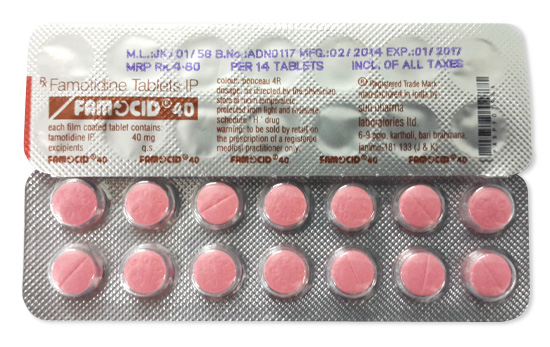
- Forms & Dosages: Tablets 10 mg, 20 mg, 40 mg; Powder for suspension 40 mg/5 mL (Rx only); Chewable tablets 10 mg, 20 mg; Orally disintegrating tablets 20 mg.
- Manufacturers In United Kingdom: not specified
- Registration Status In United Kingdom: not specified
- OTC / Rx Classification: Lower strengths (for example 10 mg and 20 mg) commonly available over the counter; higher strengths (for example 40 mg) and suspensions are prescription only.
Key Findings From Recent Trials
Major 2022–2025 Studies
Do the recent trials change how famotidine is used in practice?
Meta-analyses through 2024 are the main source of post-2022 data on famotidine, mostly pooling observational cohort studies and a small number of randomised trials.
A subset of these trials tested famotidine in acute repurposing contexts, notably for COVID-19, while others revisited traditional acid-related indications such as uncomplicated GERD and heartburn.
High-quality randomised controlled trials for routine acid indications remain small but consistent with expected efficacy versus placebo for symptom relief.
Main Outcomes
What benefits should patients expect from famotidine based on recent evidence?
Recent meta-analyses show inconsistent clinical benefit for non-acid indications, so routine off-label use outside trials is not supported by strong data.
For acid-related disease, the clearest signals are modest symptom reduction in uncomplicated GERD and episodic heartburn at over-the-counter doses.
Trials repurposing famotidine for COVID-19 failed to show a mortality benefit when analyses adjusted for confounders.
Safety Observations
Are there fresh safety concerns to worry about?
Pharmacovigilance reports since 2022 highlight neurocognitive events such as confusion and delirium in older or renally impaired patients.
Regulatory adverse-event reporting has not led to class-wide restrictions, but the reports reinforce the need for renal dose adjustment and careful monitoring in elderly patients.
Clinical implication for UK practice is to continue famotidine for selected acid disorders while ensuring renal dosing and monitoring in older adults.
Clinical Mechanism Of Action
Layman’s Explanation
How does famotidine ease heartburn in plain terms?
Famotidine tells the stomach to produce less acid, which eases the burning feeling of heartburn and gives ulcers a better chance to heal.
People taking chewable or orally disintegrating tablets often notice relief faster than with standard tablets.
Scientific Breakdown
What is the pharmacology behind famotidine?
Famotidine is an H2-receptor antagonist that competitively blocks histamine H2 receptors on gastric parietal cells.
Blocking H2 receptors lowers intracellular cyclic AMP in parietal cells and reduces activation of the H+/K+ ATPase pump responsible for acid secretion.
Typical oral doses (10–40 mg) begin to reduce gastric acid within about one hour, with chewable and ODT forms often absorbed more quickly.
Receptor Specificity
Why choose famotidine over older H2 blockers?
High H2 Selectivity → Famotidine has strong selectivity for H2 receptors and therefore fewer cytochrome P450-mediated interactions than cimetidine.
Clearance And Renal Handling → Famotidine is primarily excreted by the kidneys, which is why dose adjustments are required in renal impairment.
Product information advises halving the usual dose when creatinine clearance is under 50 mL/min.
Clinical consequence in the UK is that famotidine is suitable when proton pump inhibitors are unwanted or when short-term acid suppression is appropriate, while being preferable to cimetidine for patients on multiple drugs.
Scope Of Approved & Off-Label Use
United Kingdom Approvals
Am I allowed to buy pepcid for heartburn over the counter in the UK?
Raw product listings show that lower strengths of famotidine are commonly sold OTC in many markets and higher strengths or suspensions remain prescription only.
The specific brand and pack status in the United Kingdom is not specified in the available product data.
Worldwide regulatory listings include FDA approval and EMA or country-level approvals for generics and branded alternatives, but UK-specific registration details are not specified in the raw dataset.
Notable Off-Label Trends
Where is famotidine being tried outside its licence?
Recent off-label activity includes intermittent use in trials for functional dyspepsia and adjunctive use for stress-ulcer prophylaxis in selected inpatients, where infection risk is considered.
Repurposing research, for example in antiviral or COVID-19 contexts, has not led to licensing changes.
Practical takeaway is to use famotidine for licensed indications such as ulcer disease and GERD and to document any off-label rationale carefully in the pharmacy record.
Dosage Strategy
General Dosing
What is the usual starting dose for adults?
Common tablet strengths are 10 mg, 20 mg and 40 mg with typical regimens described in product information.
For uncomplicated GERD or heartburn, a standard OTC-style regimen is 20 mg twice daily.
For nocturnal ulcer healing and some ulcer regimens, 40 mg once daily at bedtime is used.
Condition-Specific Dosing
How do doses vary by condition?
- Gastric Ulcer (Active): 40 mg once daily at bedtime for 6–8 weeks.
- Duodenal Ulcer (Active): 20 mg twice daily or 40 mg once daily.
- GERD/Heartburn: 20 mg twice daily for 6–12 weeks.
- Zollinger-Ellison Syndrome: Individualised dosing, typically 20–160 mg every 6 hours; specialist supervision required.
Adjustments and special populations.
Children under three months are not recommended to use famotidine and dosing should be weight-based in younger children, with adult doses for those over 40 kg.
In renal impairment, halve the general dose if creatinine clearance is under 50 mL/min, according to product information.
OTC users should follow package guidance and consult a GP for prolonged symptoms or need for higher-dose prescription treatment.
Safety Protocols
Contraindications
Who should not take famotidine?
Absolute contraindication is a known allergy to famotidine or other H2 blockers such as ranitidine, cimetidine or nizatidine.
Relative cautions include severe renal or hepatic impairment, known QT prolongation or significant cardiac arrhythmia, and pregnancy or breastfeeding where use should be judged necessary by a clinician.
Adverse Effects
What side effects should patients expect and report?
Common mild adverse effects include headache, dizziness, constipation, diarrhoea and fatigue.
Less common reactions are muscle cramps, dry mouth and nausea.
Recent safety signals stress neuropsychiatric events—confusion and delirium—particularly in elderly or renally impaired patients, reinforcing the need for dose adjustment and monitoring.
Overdose can present with confusion, fainting or low blood pressure and requires urgent medical attention.
Monitoring recommendations include checking renal function in older adults, considering ECG monitoring when combined with QT-prolonging drugs, and reassessing long-term need in hospitalised patients to limit infection risk.
Interaction Mapping
Food Interactions
Do I need to take famotidine with or without food?
Famotidine has minimal food interactions; food may delay absorption but does not usually reduce the clinical effect for OTC heartburn relief.
Chewable and orally disintegrating formulations may provide faster onset and are practical when rapid symptom control is wanted.
Drug Combinations To Avoid
Which drug combinations need attention?
Famotidine produces fewer cytochrome P450 interactions than cimetidine, but pharmacodynamic interactions remain important.
Exercise caution with QT-prolonging medicines such as certain antiarrhythmics and macrolide antibiotics, especially in elderly patients or those with electrolyte disturbances.
Consider interactions with drugs whose absorption depends on gastric pH, for example some antivirals like atazanavir, and check therapeutic levels where relevant.
Co-prescribing with proton pump inhibitors is not contraindicated but is rarely necessary; consider a step-down strategy where appropriate.
When in doubt, consult the British National Formulary for specific co-prescribing flags and counsel patients to space famotidine from antacids if advised by product instructions.
Patient Experience Analysis
Survey Data
What do patients say about taking pepcid?
Aggregated pharmacy reviews and national surveys show that many users report symptom relief within 30–60 minutes for episodic heartburn.
Satisfaction is high for short-term use, particularly with chewable or fast-acting forms.
Durability is variable compared with proton pump inhibitors when reflux is chronic or severe, where PPIs are often preferred.
Forum Trends
What do online discussions reveal?
Forum posts and consumer reviews commonly praise the rapid onset and convenience of chewable tablets, with many OTC buyers preferring 20 mg formulations for intermittent use.
Some elderly users report episodes of confusion that usually correlate with reduced renal function or multiple medicines, matching pharmacovigilance reports.
Prescriptions tend to favour 40 mg for ulcer healing while OTC buyers prefer lower strengths for occasional heartburn.
Advice to patients is to set expectations for onset and duration, warn about renal safety in older adults, and recommend GP review if symptoms persist.
Distribution & Pricing Landscape
Manufacturers And Market
Who makes famotidine and how is it sold in the UK market?
Famotidine is widely produced by generics such as ratiopharm, Hexal, Krka and Actavis, while branded manufacturers include Johnson & Johnson and Takeda in other markets.
In the United Kingdom the market is dominated by generics, with pack sizes and formats varying by supplier.
Pricing And Supply Notes
How does price affect availability online?
Generic competition keeps unit prices low, and common online search phrases include "famotidine 20mg tablets" and "Pepcid 40mg bottle".
Lower strengths are widely available OTC, while higher strengths and suspensions are typically prescription-only and may appear in pharmacy Rx listings.
For procurement, ensure suppliers hold the correct licences and provide batch release documentation, and confirm storage instructions such as keeping product below 25°C.
In our online pharmacy, pepcid is available without a prescription, with discreet delivery to United Kingdom in 5-14 days.
Alternative Options
Comparison Overview
What else can patients use instead of famotidine?
Primary alternatives are proton pump inhibitors such as omeprazole and other H2 blockers including cimetidine and nizatidine.
Each option has trade-offs in onset, interaction profile and suitability for long-term therapy.
Pros And Cons
- Famotidine 20–40 mg: Rapid onset for heartburn and fewer CYP interactions than cimetidine; less effective than PPIs for healing erosive oesophagitis and carries neurocognitive risk in elderly/renal impairment.
- PPIs (e.g., omeprazole): Superior acid suppression and ulcer healing but have rebound acidity risk and potential infection risk with long-term use.
- Cimetidine: Effective H2 blocker but with more drug–drug interactions due to CYP inhibition and therefore less preferred.
Positioning in UK practice is to use famotidine for intermittent symptomatic relief and step up to a PPI for chronic or complicated reflux disease.
After ranitidine recalls, famotidine has become a common H2-blocker alternative in many settings.
Regulatory Status
Is pepcid authorised by major regulators?
Famotidine (INN) carries ATC code A02BA03 and is approved by major regulators such as the FDA and in EU member states via EMA or national approvals.
The raw product data shows famotidine listed in the ANMDMR public registry for Romania and indicates country-level approvals across Europe.
In the United Kingdom, specific registration entries were not provided in the raw dataset, but classification information shows lower strengths are commonly OTC while higher strengths and suspensions are prescription-only.
Pharmacovigilance continues to monitor renal dosing and neurocognitive reports but has not resulted in withdrawal of famotidine products.
E-shop and procurement listings should reflect whether a given pack is OTC or Rx in accordance with MHRA rules.
Consolidated FAQ
What are the quick answers patients ask most often?
Is famotidine the same as Pepcid? Yes; famotidine is the International Nonproprietary Name and Pepcid is a common brand name in some markets.
OTC or prescription in the UK? Lower strengths such as 10 mg and 20 mg are typically OTC; 40 mg and suspensions are generally prescription-only according to product classifications.
How fast does it work? Many people see relief within 30–60 minutes, with chewable and ODT forms often faster.
Is it safe in kidney disease? Dose reduction is required in renal impairment; product information advises halving the usual dose if creatinine clearance is under 50 mL/min.
Can I take it long term? Long-term use should be based on benefit–risk assessment and monitoring, especially in elderly patients because of neurocognitive risks.
Alternatives? Proton pump inhibitors like omeprazole are preferred for chronic GERD; cimetidine and nizatidine are other H2 blockers but differ in interaction profiles.
Visual Guide
What should a quick infographic include for patients and staff?
Suggested panels are:
- Quick Facts: INN famotidine, ATC A02BA03, brands such as Pepcid where used.
- Dose Chart: Adult dosing for GERD, duodenal and gastric ulcers, and a line noting Z-E syndrome requires specialist dosing.
- Renal Adjustment Algorithm: Halve dose if CrCl <50 mL/min and monitor in elderly patients.
- Safety Checklist: Allergy, renal caution, QT risk, and older adult neurocognitive watchpoints.
Include imagery for common formulations: 10 mg, 20 mg and 40 mg tablets, chewables, and 40 mg/5 mL suspension.
Add MHRA-style patient counselling points for UK audiences such as onset, when to see a GP, and storage advice.
Storage & Transport
How should pepcid be stored at the pharmacy and at home?
Store below 25°C in a dry place and protect from direct light.
Do not freeze liquid suspensions and avoid high humidity during transport and storage.
Pharmacies should rotate stock by expiry date and keep tablets away from sources of strong odours and moisture.
International shipments must include appropriate batch paperwork and supplier licences, verifying EMA/MHRA or equivalent approvals where required.
Patients should store at room temperature, keep medicines out of reach of children and return unused prescription-only products for safe disposal.
Guidelines For Proper Use
How should patients and pharmacists ensure safe, effective use of pepcid?
Start with indicated uses such as episodic heartburn or prescribed ulcer treatment and follow standard regimens: for example 20 mg twice daily for GERD or 40 mg once daily for ulcer healing.
Counsel patients to take chewable or ODT forms as instructed and to space dosing from antacids if the product label recommends this.
Advise patients to see a GP if OTC symptoms persist beyond 14 days or if a prescribed course does not improve symptoms within the expected 6–12 week window for GERD.
Safety checklist before supply: confirm no allergy to H2 blockers, assess renal function for dose adjustment, review QT-prolonging co-medications, and plan to reassess long-term need to minimise adverse events.
For procurement and dispensing, ensure correct strength labelling and MHRA/EMA-compliant pack licences are followed, and record patient counselling in the pharmacy record.
Delivery Across United Kingdom
| City | Region | Delivery Time |
|---|---|---|
| London | Greater London | 5-7 days |
| Birmingham | West Midlands | 5-7 days |
| Manchester | Greater Manchester | 5-7 days |
| Glasgow | Scotland | 5-7 days |
| Leeds | West Yorkshire | 5-7 days |
| Liverpool | Merseyside | 5-7 days |
| Bristol | South West England | 5-7 days |
| Belfast | Northern Ireland | 5-7 days |
| Sheffield | South Yorkshire | 5-9 days |
| Newcastle Upon Tyne | North East England | 5-9 days |
| Nottingham | East Midlands | 5-9 days |
| Southampton | South East England | 5-9 days |
| Plymouth | Devon | 5-9 days |
| Stoke-On-Trent | Staffordshire | 5-9 days |
| Leicester | Leicestershire | 5-9 days |