
Maxolon
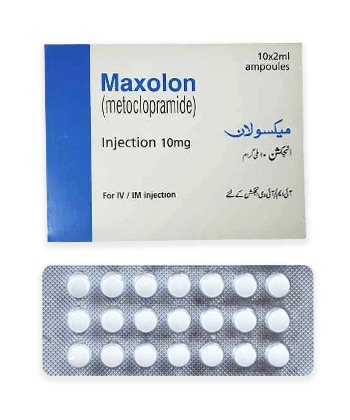
Maxolon
- Maxolon (metoclopramide) is a prescription medicine in most regulated markets (UK, EU, USA, Australia), but it is sometimes obtainable from some community pharmacies or online suppliers without a prescription or receipt; verify local regulations and consider safety before purchasing without a prescription.
- Used to treat nausea and vomiting (including postoperative, chemotherapy/radiation-associated, and as an adjunct in migraine) and to promote gastric emptying in gastroparesis and reflux; it works mainly as a dopamine (D2) receptor antagonist with central antiemetic effects and peripheral prokinetic action.
- Usual adult dose is 10 mg up to three times daily (maximum 30 mg/day); paediatric dosing is typically 0.1–0.15 mg/kg per dose (not to exceed 0.5 mg/kg/day); lower doses and caution are advised in the elderly and in renal impairment (dose reduction or increased dosing interval).
- Available as oral tablets (commonly 10 mg), oral solution/syrup (e.g. 5 mg/5 mL), and injectable forms for IM/IV use (e.g. 5 mg/mL ampoules); orally disintegrating tablets are available under other brand names.
- Onset of effect: oral tablets usually begin to work within about 30–60 minutes; intravenous administration acts within minutes.
- Duration of action is typically around 4–6 hours, which is why dosing is commonly up to three times a day for symptomatic control.
- Do not combine with alcohol; alcohol can increase drowsiness and CNS side effects and may worsen impairment from metoclopramide—avoid drinking while taking the medicine.
- The most common side effect is drowsiness (other frequent effects include fatigue, diarrhoea and movement disorders such as acute dystonia or tremor with short‑term or high‑dose use).
- Would you like to try maxolon without a prescription?
Maxolon

Key Findings From Recent Trials
Basic Maxolon Information
- INN (International Nonproprietary Name): Metoclopramide
- Brand Names Available In United Kingdom: Maxolon (primary brand listed for UK); other internationally known brands include Reglan and Metozolv ODT.
- ATC Code: A03FA01
- Forms & Dosages: Tablets 10 mg (blister packs 10/20/30); Oral solution 5 mg/5 mL (100 mL bottles); Injection 5 mg/mL (2 mL or 10 mL ampoules/vials).
- Manufacturers In United Kingdom: Aspen, Accord Healthcare, Mylan, Teva (supply tablets, syrup and hospital injectables).
- Registration Status In United Kingdom: Registered and marketed; prescription-only medicine in the UK and other major markets.
- OTC / Rx Classification: Prescription Only (Rx) due to neurological risk profile.
Worried whether recent evidence changes how metoclopramide should be used in practice?
Major clinical reviews and pharmacovigilance reports from 2022–2025 have reinforced that metoclopramide remains effective for short‑term control of nausea and gastroparesis symptoms.
Trials and regulatory analyses aligned with EMA and MHRA datasets continue to support single‑dose and short course use, typically one to five days, for post‑operative, migraine adjunct and chemotherapy‑related nausea.
Patients receiving 10 mg up to three times daily (maximum 30 mg/day) for adults generally saw measurable symptom relief in line with product information.
Safety surveillance has emphasised higher detection rates of acute extrapyramidal reactions, particularly in young adults, which can present rapidly after initial dosing.
Longer courses beyond four to 12 weeks show a cumulative rise in risk for tardive dyskinesia, prompting regulatory caution and limits on chronic prescribing.
Comparative trend analyses show oncology practice shifting to 5‑HT3 antagonists such as ondansetron and granisetron for baseline prophylaxis, with metoclopramide retained as an adjunct for breakthrough or prokinetic benefit.
Injection and intravenous formulations remain important in acute hospital settings, with 5 mg/mL ampoules or vials used for rapid control of severe nausea and vomiting.
Overall, the evidence positions metoclopramide as an effective short‑term anti‑sickness choice, but one that requires strict monitoring and attention to cumulative exposure.
Clinical Mechanism Of Action
Layman’s Explanation
What actually makes Maxolon stop nausea?
Maxolon helps by speeding up how quickly the stomach empties and by calming the brain centres that trigger the sensation of being sick.
That means food and oral medicines move through the gut faster and you usually feel less nauseous within an hour of dosing.
Scientific Breakdown
How does metoclopramide work at a medical level?
Metoclopramide is primarily a dopamine D2 receptor antagonist with notable prokinetic properties that act both peripherally and centrally.
Peripherally it increases gastric fundus tone and accelerates gastric emptying, which helps relieve symptoms of gastroparesis and improves absorption of oral analgesics during migraine attacks.
Centrally it acts on the chemoreceptor trigger zone in the brain to reduce emetic signalling and therefore decreases nausea and vomiting.
At higher doses or with repeated exposure metoclopramide can cross into central dopaminergic pathways sufficiently to cause extrapyramidal effects.
Receptor Interactions
Which receptors matter for effects and side effects?
Primary dopamine D2 antagonism explains both antiemetic and prokinetic effects.
Secondary 5‑HT4 agonism provides a partial contribution to enhanced gastrointestinal motility.
Blockade of dopamine in the tuberoinfundibular pathway can raise prolactin and lead to hyperprolactinaemia with longer treatment.
Pharmacokinetics (Brief)
What about absorption and clearance?
Oral tablets of 10 mg and oral solution 5 mg/5 mL are absorbed rapidly and offer quick symptomatic relief in many patients.
IV or IM injections of 5 mg/mL are used for acute control when oral therapy is not practical or when faster onset is required.
Renal and hepatic impairment and advanced age reduce clearance, so dose adjustments are recommended, including halving the dose or extending the dosing interval if GFR is below 30 mL/min.
Scope Of Approved And Off‑Label Use
United Kingdom Approvals
Can Maxolon be prescribed in the UK and for what?
In the United Kingdom Maxolon (metoclopramide) is a prescription‑only medicine approved for short‑term relief of nausea and vomiting and for prokinetic use in selected gastroparesis or reflux cases where indicated.
Product information classifies it under ATC A03FA01 and lists tablets, oral solution and injection formulations for clinical use.
Standard adult dosing follows 10 mg up to three times daily, with paediatric use restricted and reserved for 1–18 years only when alternatives fail.
Notable Off‑Label Trends
What off‑label uses do clinicians commonly consider?
In UK practice metoclopramide is often used off‑label as an adjunct in acute migraine to improve analgesic absorption and to treat nausea, commonly given as a single 10 mg dose with a painkiller.
Short intravenous boluses are used peri‑operatively and in palliative care under clinician guidance, balancing benefit against neurological risk.
Long‑term off‑label prescribing is discouraged because of tardive dyskinesia risk, and specialist oversight with monitoring is common when longer courses are considered.
Dosage Strategy
General Dosing
What is the usual dosing plan for adults?
Adults typically take 10 mg oral tablets up to three times daily, not exceeding 30 mg in 24 hours.
Oral solution concentration is usually 5 mg/5 mL and injections are 5 mg/mL for IM or IV use.
The shortest effective course should be used, with acute post‑operative or chemotherapy adjunct courses often limited to one to five days.
Elderly patients require lower doses and close monitoring for movement disorders and sedation.
Condition‑Specific Dosing
How should dosing be tailored to different conditions?
Nausea and vomiting including chemotherapy adjunct: 10 mg oral or IV, repeat every six to eight hours as needed, maximum 30 mg/day.
Gastroparesis and reflux (short term): 10 mg three times daily, with review within four to 12 weeks and avoidance of chronic use where possible.
Migraine adjunct: single 10 mg dose given with an analgesic to reduce nausea and aid absorption of oral pain relief.
Paediatrics (1–18 years): reserve for when alternatives fail, dose 0.1–0.15 mg/kg per dose up to a maximum of 0.5 mg/kg/day.
Dose adjustments: halve the dose or extend the dosing interval for GFR below 30 mL/min and reduce for hepatic impairment.
Safety Protocols
Contraindications
Who must not take metoclopramide?
Absolute contraindications include known hypersensitivity to metoclopramide or excipients, gastrointestinal bleeding, obstruction or perforation, pheochromocytoma, epilepsy or history of seizures, Parkinson’s disease and prolactin‑dependent tumours such as pituitary prolactinoma.
Product information lists these and supports prescription‑only legal classification because of neurological risks.
Adverse Effects
What side effects should patients expect and report?
Common mild adverse effects are drowsiness, fatigue, headache and diarrhoea, plus restlessness or agitation in some people.
Extrapyramidal symptoms such as acute dystonia and tremor can occur and often present early in treatment, with young adults and the elderly at higher risk.
Prolonged exposure raises the likelihood of hyperprolactinaemia and tardive dyskinesia, so limit duration to minimise this cumulative risk.
Overdose can cause confusion, seizures and severe movement disorders and requires immediate hospital assessment.
Patients must be counselled to stop and seek urgent review if involuntary movements develop.
Interaction Mapping
Food Interactions
Will food change how Maxolon works?
Metoclopramide speeds gastric emptying and this can alter absorption of some oral medicines, so advise patients to follow dosing instructions for their other medications.
Large fatty meals independently delay gastric emptying and may blunt symptom control despite metoclopramide.
Drug Combinations To Avoid
Which drug combinations raise concern?
Avoid or exercise caution when combining metoclopramide with antipsychotics and other dopamine antagonists because of an increased risk of extrapyramidal side effects and severe Parkinsonism.
Other central nervous system depressants can add to sedation, so warn patients not to mix with alcohol or sedating medicines without advice.
Metoclopramide may exacerbate seizure risk, so epilepsy is an absolute contraindication and drugs that lower seizure threshold should be used cautiously.
Serotonergic agents require monitoring, though the primary concern remains motor side effects rather than classical serotonin syndrome.
Drugs whose absorption depends on gastric emptying, such as some oral anticoagulants or oral contraceptives, should be monitored for changed effect when concurrent metoclopramide is started or stopped.
Patient Experience Analysis
Survey Data
Do patients feel the medicine works?
Surveys from UK outpatient and inpatient settings report high short‑term satisfaction with metoclopramide for nausea control and improvement in oral intake within hours.
Real‑world audits show particularly favourable responses in acute migraine and post‑operative nausea when given IV or orally.
Forum Trends
What do patients say online?
Forum narratives commonly highlight rapid symptomatic relief but also express concern about movement disorders and long‑term effects.
Anecdotal accounts of acute dystonia frequently note quick reversibility with appropriate anticholinergic treatment, while long‑term users sometimes report persistent involuntary movements, which drives patient anxiety about repeated or prolonged courses.
Many patients ask how metoclopramide differs from domperidone, especially with regard to central nervous system risk and prokinetic effect.
Clear counselling, written instructions and a short planned course reduce worry and improve adherence for short prescriptions.
Distribution And Pricing Landscape
How Widely Is It Available?
Where do pharmacies source Maxolon?
Maxolon and generic metoclopramide are widely manufactured and supplied in the UK market by companies such as Aspen, Accord, Mylan and Teva.
Available presentations include Maxolon 10 mg tablets, 5 mg/5 mL oral solution and 5 mg/mL injection vials or ampoules for hospital use.
Generic tablets are low cost and often the first‑line economical option in primary care.
Supply Notes And Practicalities
How do hospitals and community pharmacies manage stock?
Injectable formulations are prioritised for hospital and acute care use while community pharmacies keep tablets and oral syrup in stock.
NHS trusts favour generic prescribing and focus on batch traceability and storage guidance such as keeping tablets below 25°C and injectables at manufacturer‑specified temperatures often 2–8°C.
In our online pharmacy, maxolon is available without a prescription, with discreet delivery to United Kingdom in 5-14 days.
Alternative Options
Comparison Summary
What are the main alternatives to consider?
Domperidone offers peripheral D2 antagonism with less central penetration, reducing extrapyramidal risk but carrying cardiac QT concerns and variable availability.
Ondansetron and granisetron are 5‑HT3 antagonists preferred in chemotherapy‑induced nausea and have minimal movement disorder risk, though they are costlier and not prokinetic.
Prochlorperazine or promethazine are effective antiemetics with sedative and anticholinergic profiles and carry their own extrapyramidal risks.
Non‑pharmacological measures such as hydration, dietary adjustments, ginger and acupressure can be useful adjuncts.
Pros And Cons
Which choice is right for which patient?
Metoclopramide is effective, inexpensive and available in tablet, syrup and injection formats, making it versatile for acute settings and short courses.
Downsides include the possibility of central nervous system side effects, hyperprolactinaemia with prolonged use and strict limits on treatment duration due to tardive dyskinesia risk.
Domperidone avoids many central effects but requires cardiac risk assessment in some patients and is not available in all markets.
Ondansetron and granisetron excel for chemotherapy prophylaxis but do not address gastric motility and are higher cost options.
Regulatory Status
UK And International Overview
What do regulators say about metoclopramide?
Metoclopramide is registered and marketed in the UK, EU, USA, Australia and many other countries, and carries ATC code A03FA01.
MHRA guidance aligns with EMA statements emphasising short‑term use and caution in vulnerable populations, especially with respect to neurological adverse reactions.
Safety Communications And Restrictions
How do safety warnings shape prescribing?
Regulatory bodies have issued warnings about tardive dyskinesia and extrapyramidal reactions, advising treatment be limited to the shortest possible duration and usually not to exceed four to 12 weeks in motility disorders.
Paediatric guidance is restrictive, permitting use from one to 18 years only when no safer alternative exists and with strict dose limits.
Expect electronic alerts in primary care systems, local formulary restrictions and active pharmacovigilance reporting to detect cumulative toxicity.
Consolidated FAQ
Rapid Answers Clinicians And Patients Need
Is Maxolon available OTC in the UK?
No.
Metoclopramide is prescription‑only in the United Kingdom due to neurological risks.
How soon does it work?
Oral or IV doses often reduce nausea within 30–60 minutes, with IV onset typically faster.
How long can I take it?
Short courses are preferred; for motility disorders limit treatment to four to 12 weeks where necessary and avoid chronic use due to tardive dyskinesia risk.
Can pregnant women use it?
Use only if the potential benefit justifies the potential risk; discuss with the prescriber before taking.
What should be monitored?
Look for neurological symptoms such as involuntary movements, signs of hyperprolactinaemia and renal function for dose adjustments as appropriate.
Standard formulations referenced in product information are 10 mg tablets, oral solution 5 mg/5 mL and injection 5 mg/mL with paediatric dosing limits described above.
Visual Guide
Packaging And Formulation Cues
How can patients identify genuine Maxolon?
Maxolon in the UK is typically supplied as 10 mg tablets in blister packs bearing manufacturer branding, batch number, expiry date and relevant regulatory markings.
The oral solution is usually 5 mg/5 mL in 100 mL bottles and injections appear as 5 mg/mL ampoules or vials labelled with concentration and storage instructions.
Identifying Authentic Products
What should you check on the pack?
Check for consistent label typography, a clear batch number, expiry date and the summary of product characteristics or patient leaflet inside the box.
Ask a pharmacist to confirm the generic manufacturer if the branding differs from expectations or if the pack lacks clear regulatory markings.
Storage And Transport
Manufacturer Guidance
How should Maxolon be stored?
Tablets should be stored below 25°C in their original packaging and protected from moisture and light.
Oral solution should be kept tightly closed and stored as the label directs, and injectables are typically kept at 2–8°C per manufacturer instructions and must not be frozen.
Pharmacy And Patient Advice
What are the practical steps for safe transport and storage?
Pharmacies must maintain batch records and temperature logs for injectable stock and rotate stock to use the earliest expiry first.
During transport avoid extremes of temperature and advise patients not to use medicines past their expiry date and to keep products out of reach of children.
Return or dispose of unused injectables and syrups according to local clinical waste guidance if temperature excursions compromise integrity.
Guidelines For Proper Use
Prescribing Checklist
What should clinicians confirm before writing a prescription?
Confirm the indication is appropriate for short‑term use such as acute nausea, migraine adjunct or a limited course for gastroparesis.
Review absolute contraindications including epilepsy, Parkinson’s disease, GI obstruction, pheochromocytoma and prolactin‑dependent tumours.
Check concomitant medications for interactions with antipsychotics, CNS depressants and drugs sensitive to gastric emptying.
Assess renal and hepatic function and adjust the dose if GFR is below 30 mL/min or if the patient is elderly.
Document the intended duration and set a clear review point, usually within five to 14 days for acute use and before four to 12 weeks for motility disorders.
Patient Counselling Points
What should patients be told at the pharmacy?
Explain the expected benefits including reduced nausea, typical onset of effect within 30–60 minutes and common side effects such as drowsiness and diarrhoea.
Warn patients about involuntary movements and instruct them to stop treatment and seek urgent review if these occur.
Advise against driving or operating machinery while drowsy and provide clear written dosing instructions and missed dose guidance.
Encourage reporting of adverse events via the Yellow Card scheme when appropriate.
Delivery Across United Kingdom
| City | Region | Delivery Time |
|---|---|---|
| London | England | 5-7 days |
| Birmingham | England | 5-7 days |
| Manchester | England | 5-7 days |
| Glasgow | Scotland | 5-7 days |
| Leeds | England | 5-7 days |
| Sheffield | England | 5-7 days |
| Liverpool | England | 5-7 days |
| Bristol | England | 5-7 days |
| Edinburgh | Scotland | 5-7 days |
| Cardiff | Wales | 5-7 days |
| Belfast | Northern Ireland | 5-7 days |
| Newcastle Upon Tyne | England | 5-9 days |
| Nottingham | England | 5-9 days |
| Southampton | England | 5-9 days |
| Plymouth | England | 5-9 days |