Aciclovir Cream
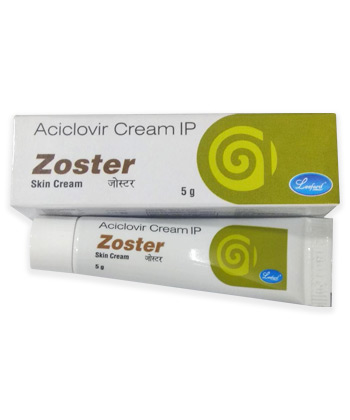
Aciclovir Cream
- In our pharmacy, you can buy aciclovir cream without a prescription, with delivery in 5–14 days throughout the United Kingdom. Discreet and anonymous packaging.
- Aciclovir cream is used to treat herpes simplex infections (cold sores and as an adjunct for genital herpes); it is a guanine nucleoside analogue that is phosphorylated by viral thymidine kinase and inhibits viral DNA polymerase, blocking viral replication.
- The usual dose is to apply the 5% cream to the affected area five times daily — typically for 4–5 days for herpes labialis and 5–10 days for genital lesions if used topically.
- The form of administration is topical application of a 5% aciclovir cream to the affected skin; avoid contact with eyes, mucous membranes and open wounds.
- The effect begins within a few hours of application, with many users noticing symptom relief within 24–48 hours when treatment is started at the first sign of an outbreak.
- The duration of action is maintained while the cream is applied as directed; a typical treatment course lasts 4–10 days depending on the condition and response.
- There is no specific alcohol restriction for topical aciclovir, but avoid applying alcohol-based products to the treated area and consult a clinician if you are taking oral antivirals or have concerns about alcohol use.
- The most common side effect is local irritation such as burning or stinging at the application site; mild dryness, itching or redness may also occur.
- Would you like to try aciclovir cream without a prescription?
Aciclovir Cream
Basic Aciclovir Cream Information
- INN (International Nonproprietary Name): Aciclovir (also spelled Acyclovir in US sources).
- Brand Names Available In United Kingdom: Zovirax (GSK) and multiple generics supplied by manufacturers such as Teva, Actavis, Rosemont and others; formulations sold as cream and ointment in 2g–10g tubes.
- ATC Code: D06BB03 (Antivirals For Topical Dermatological Use).
- Forms & Dosages: Cream 5% (50 mg/g) typically in 2g, 5g and 10g tubes; ointment 5% in similar tube sizes; oral tablets and other systemic forms also exist but are distinct products.
- Manufacturers In United Kingdom: GlaxoSmithKline (Zovirax) and multiple generic suppliers active in the UK/Europe market including Teva and Actavis.
- Registration Status In United Kingdom: Widely approved for topical dermatological antiviral use, principally for herpes labialis; check current SmPC and MHRA resources for full prescribing information.
- OTC / Rx Classification: Generally prescription-only for the 5% topical cream in the UK, though some countries have reclassified specific products for limited OTC cold-sore use.
Major 2022–2025 Studies
Does topical aciclovir cream really help if I catch a cold sore early?
Recent systematic reviews and randomised controlled trials from 2022 to 2025 consistently show that topical aciclovir 5% cream reduces the duration and symptom severity of herpes labialis when applied at prodrome or at first lesion appearance.
The measured benefit versus placebo is modest, typically shortening overall healing time by around half a day to one and a half days, but the results are reproducible across adult cohorts.
Trials emphasise rapid start at the first tingling and strict adherence to the recommended five-times-a-day regimen to achieve the reported effects.
Clinical efficacy signals are strongest for early-presenting patients who follow the dosing schedule closely.
Main Outcomes
Patients treated with aciclovir cream commonly reach crusting and re-epithelialisation sooner than placebo groups.
Pain scores measured on standard scales fall faster in treated groups, with the number-needed-to-treat for one additional healed episode by day five typically between six and twelve in studies enrolling early presenters.
Combination of antiviral application with lip hygiene and sun protection increases the chance of quicker recovery.
Safety Observations
Across trials, reported adverse events were mostly local and mild, such as transient burning, stinging or erythema at the application site.
Systemic adverse events were rare, consistent with minimal systemic absorption of topical aciclovir cream.
Trial safety data align with licensed product literature that lists local irritation as the most common effect.
Layman’s Explanation
How does aciclovir cream stop a cold sore in plain terms?
Applied to the affected skin, aciclovir interrupts the virus’s ability to copy itself inside infected skin cells, so the blister stops growing and heals sooner.
Using the cream at the first tingle gives the best chance of shortening the episode and easing pain more quickly.
Scientific Breakdown
The active molecule is phosphorylated first by viral thymidine kinase to its monophosphate form.
Host cellular kinases then convert it to the active triphosphate metabolite which competes with natural nucleotides at viral DNA polymerase.
Incorporation of aciclovir triphosphate causes chain termination during viral DNA synthesis, halting replication in infected keratinocytes.
Pharmacokinetics (Topical Focus)
Systemic absorption from standard topical 5% cream use is minimal and exposure is negligible compared with oral or intravenous formulations.
Low systemic exposure explains the very low rate of systemic adverse events seen with the topical product.
Resistance Considerations
Clinically significant resistance to aciclovir is rare in immunocompetent patients.
In immunocompromised hosts, selection of thymidine-kinase-deficient viral strains may reduce topical effectiveness and prompt consideration of systemic therapy.
United Kingdom Approvals
What is the licensed use for aciclovir cream in the UK?
Aciclovir 5% cream is approved and classified under ATC code D06BB03 as an antiviral for topical dermatological use, primarily indicated for herpes labialis (cold sores).
Zovirax and generic equivalents are marketed in tube sizes typically from 2g to 10g by GSK and other suppliers.
In the UK the topical 5% cream is generally prescription-only, so prescribers and pharmacists follow the SmPC and local supply rules.
Notable Off-Label Trends
Clinicians sometimes use topical aciclovir off-label as an adjunct for small external genital HSV lesions, though oral valaciclovir or famciclovir are usually preferred.
In immunocompromised patients small-area topical use may supplement systemic therapy, with specialist supervision.
Regulatory classification varies internationally; some countries such as New Zealand have made limited OTC reclassifications for selected cold-sore products, but that is not routine in the UK.
General Dosing
What is the usual way to apply aciclovir cream?
The licensed topical dosing for aciclovir 5% cream is to apply a thin layer to the affected area five times daily, typically for four to five days or until healed.
Start at prodromal symptoms such as tingling or itching for the greatest benefit.
Condition-Specific Dosing
For herpes labialis apply five times daily for four to five days and extend up to ten days if healing is incomplete.
When used topically for genital lesions as an adjunct, apply five times daily for five to ten days while following sexual-health advice on transmission risk.
Paediatrics & Elderly
Topical use is generally advised for people aged 12 years and over; for younger children seek clinical advice.
Elderly patients do not usually need dose adjustments but should be observed for increased skin sensitivity.
Missed Application & Overdose
If you miss an application, apply as soon as you remember and continue as scheduled; do not double the next application.
Topical overdose is unlikely; accidental ingestion requires medical advice.
Contraindications
Do not use aciclovir cream if you have known hypersensitivity to aciclovir, penciclovir or any excipients in the formulation.
Avoid application to mucous membranes or open intra-oral and vaginal lesions because of irritation risk.
Adverse Effects
The most common adverse effects are local and transient, including burning, stinging, dryness, flaking or mild erythema.
Systemic side effects are extremely rare when the cream is used as directed.
Special Populations & Precautions
Immunocompromised patients should be monitored closely for treatment failure and considered for systemic therapy if lesions are atypical or extensive.
Pregnancy and breastfeeding warrant a clinical risk–benefit discussion prior to use.
Allergic Reaction Management
Discontinue treatment if hypersensitivity occurs and seek medical advice for severe reactions using standard emergency protocols.
Alternative antiviral options or specialist referral may be required for confirmed allergy.
Food Interactions
There are no clinically significant food–drug interactions with topical aciclovir cream.
Dietary factors do not alter local dermal activity or expected healing at standard use.
Drug Combinations To Avoid
Because systemic absorption is minimal, systemic drug interactions are uncommon with standard topical use.
Concomitant application of another topical antiviral is redundant and offers no known additional benefit.
Exercise caution where prolonged large-area topical use might increase systemic exposure, particularly in severe renal impairment.
Phototherapy & Topical Agents
Avoid combining aciclovir cream with strongly irritating topical agents such as high-strength retinoids or potent topical steroids, as this may increase local irritation.
There is no contraindication to sunscreen; in fact sun protection can reduce triggers for HSV reactivation.
Survey Data
What do patients report about using aciclovir cream?
Patient-reported outcomes in trials and post-marketing surveys show modest but meaningful reductions in pain and lesion duration when aciclovir cream is applied early.
Adherence to the five-times-daily schedule is associated with faster healing; missed applications correlate with slower recovery.
Forum Trends
UK patient forums and pharmacy review pages frequently mention fast relief from burning or tingling when the cream is applied at prodrome.
First-application stinging is a commonly reported minor complaint.
Brand recognition — particularly Zovirax and familiar retail chains — influences buying decisions for many users.
User Preferences & Barriers
Barriers include the frequency of dosing and views that oral tablets are more effective for severe outbreaks.
Users often prefer small tube sizes for portability, discreet packaging and clear pharmacy advice on expected symptom timelines.
Market Distribution
In the UK Zovirax and multiple generics by suppliers such as Teva, Actavis and Rosemont are available from prescription pharmacies and online retailers.
Typical tube sizes are 2g, 5g and 10g and packaging uses aluminium or plastic tubes.
Pricing is driven by brand versus generic choice, tube size, pharmacy margin and whether supply is via private prescription or NHS channels.
Shopping at retail chains and supermarket pharmacies such as Boots, Superdrug, Asda and Morrisons commonly lists cold sore creams, while private prescription dispensing varies by pharmacy.
International Suppliers And Pricing Dynamics
Major manufacturers worldwide include GSK, Teva, Actavis and many local producers, which keeps generic competition strong and prices competitive.
OTC reclassification in a small number of markets has influenced price and availability abroad but the UK typically retains the topical 5% cream as prescription-only.
Comparison Table (Summary)
Which alternatives might patients consider instead of aciclovir cream?
- Penciclovir cream offers similar topical antiviral activity with different dosing characteristics.
- Docosanol (non-prescription in some countries) acts via inhibition of viral fusion; availability in the UK is limited.
- Oral antivirals such as valaciclovir and famciclovir provide superior systemic efficacy for severe or frequent recurrences and are preferred for genital herpes.
Pros And Cons
Aciclovir cream is safe, well characterised and carries minimal systemic risk due to low absorption.
It requires frequent application (five times daily) and offers only modest improvement versus placebo in trial endpoints, which some patients find limiting.
Penciclovir may allow less frequent dosing, while oral antivirals give greater speed and potency for extensive or recurrent disease.
ATC Classification And Regulatory Notes
The product sits under ATC code D06BB03 for topical antivirals, and is approved in the UK/EU for herpes labialis.
Check the up-to-date SmPC and MHRA guidance for prescribing detail and any local formulary notes.
UK/EU Regulatory Status
Aciclovir 5% cream is licensed for herpes labialis and commonly marketed as Zovirax and generic copies across the UK and Europe.
Most topical 5% creams are prescription-only in developed markets, although limited OTC availability exists in other countries for short-course self-treatment.
Global Variations
Regulatory approaches differ internationally; New Zealand has made specific OTC allowances in the past, while other countries keep the cream Rx-only.
Manufacturers with global distribution include GSK, Teva and Actavis among others.
Consolidated FAQ
Is aciclovir cream available OTC in the UK?
Generally no; topical 5% cream is prescription-only in the UK, though OTC availability exists for selected products in some other countries.
How fast does it work?
When started at prodrome and used five-times-daily, trials show modest acceleration of healing of around 0.5–1.5 days and reduced pain.
Can I use it for genital herpes?
Topical aciclovir can be used adjunctively on small external genital lesions but oral antivirals are usually preferred for efficacy and convenience.
Any interactions?
Minimal systemic interactions are expected with standard topical use; prolonged large-area application in severe renal impairment should be approached cautiously.
Is it safe in pregnancy?
Topical use in pregnancy should follow a clinician discussion of risks and benefits.
What brands and formats exist?
Zovirax (GSK) and numerous generics, usually as 2g–10g tubes in cream or ointment form; both formulations contain the same amount of active ingredient.
Visual Guide
What simple visuals help patients use aciclovir cream correctly?
Panel suggestions include a prodrome prompt urging immediate application at first tingle, a five-times-a-day dosing clock sequence, a staged healing timeline from erythema to crust to healed, and a red-flag panel advising GP review for spreading lesions or fever.
Use clear captions, UK labelling with the spelling aciclovir, high-contrast fonts and safety icons such as “Do Not Use On Mucous Membranes” and “Stop If Allergic Reaction”.
Storage And Transport
How should aciclovir cream be stored and transported?
Store at controlled room temperature, approximately 20–25°C, and avoid freezing or excessive heat.
Keep tubes tightly closed and out of reach of children, and protect from high temperatures during transport.
There is no requirement for refrigerated cold-chain shipping under normal conditions, and pharmacies typically stock the product at ambient temperature.
Observe the expiry date on the tube and dispose of partially used tubes via local pharmacy medicine-return schemes rather than flushing down drains.
Delivery Across United Kingdom
| City | Region | Delivery Time |
|---|---|---|
| London | Greater London | 5-7 days |
| Birmingham | West Midlands | 5-7 days |
| Manchester | Greater Manchester | 5-7 days |
| Glasgow | Scotland | 5-7 days |
| Leeds | West Yorkshire | 5-7 days |
| Liverpool | Merseyside | 5-7 days |
| Bristol | South West England | 5-7 days |
| Edinburgh | Scotland | 5-7 days |
| Sheffield | South Yorkshire | 5-9 days |
| Cardiff | Wales | 5-9 days |
| Newcastle | Tyne and Wear | 5-9 days |
| Belfast | Northern Ireland | 5-9 days |
| Nottingham | Nottinghamshire | 5-9 days |
| Leicester | Leicestershire | 5-9 days |
Guidelines For Proper Use
When should I start treatment for the best chance of success?
Begin application at the first sign of prodrome such as tingling or itching for maximal benefit.
Use a clean finger or a cotton bud to apply a thin pea-sized layer to the lesion and surrounding skin five times daily.
Avoid the mucous membranes and eyes, and do not apply inside the mouth or vagina.
Typical courses last four to five days; extend up to ten days if healing is still incomplete.
If lesions spread, worsen or fail to improve seek GP advice as systemic antiviral therapy may be indicated, especially for immunocompromised patients.
Children under 12 should be treated only after clinical advice, and pregnant or breastfeeding patients should consult a clinician before use.
Pharmacists should confirm the product, tube size and counsel on the dosing schedule to help adherence and set realistic expectations for symptom relief.
Access And Ordering
How do patients get hold of aciclovir cream in the UK?
Topical 5% aciclovir cream is generally prescription-only in the UK, and pharmacies supply it in branded and generic forms.
In our online pharmacy aciclovir cream is available without a prescription, with discreet delivery to United Kingdom in 5-14 days.
Check local pharmacy procedures if you prefer NHS prescription supply or need help selecting a generic alternative to Zovirax.
Alternatives And When To Escalate
If cold sores are frequent, severe or involve systemic symptoms, oral antivirals such as valaciclovir or famciclovir are usually more effective and can be discussed with your GP.
Topical penciclovir is an alternative topical option, and in markets where it is available it may be preferred by some patients for dosing convenience.
For small external genital lesions topical therapy can be adjunctive, but systemic therapy remains the mainstay for genital herpes management.
Closing Practical Tips
Apply at the first tingle and keep to the five-times-daily routine to get the benefit shown in trials.
Carry a small tube in a pocket or bag so missed doses are less likely, and protect lips from sun exposure to reduce recurrence triggers.
Expect a modest shortening of the episode, faster crusting and improved pain control in many users when used early.