Cabergoline
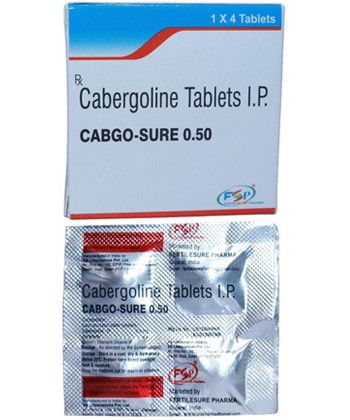
Cabergoline
- Although cabergoline is officially prescription-only in most countries (POM/S4/Rx), some local pharmacies and online suppliers may supply it without a prescription; availability and legality vary by country, so check local regulations before purchase.
- Cabergoline is used to treat hyperprolactinaemia and prolactinomas, to suppress lactation and as a dopaminergic agent in Parkinson’s disease; it is a dopamine D2 receptor agonist that inhibits pituitary prolactin secretion and stimulates dopaminergic pathways.
- Usual dosages: for hyperprolactinaemia start 0.25 mg twice weekly, titrating up (commonly to 0.5–1 mg twice weekly); for Parkinson’s disease 0.5–1 mg daily, titrating as needed (up to ~3 mg/day); for lactation cessation a single 1 mg dose or 0.25 mg every 12 hours for 2 days.
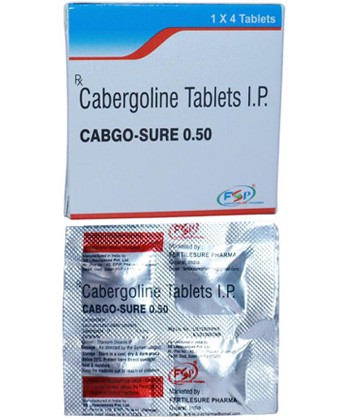
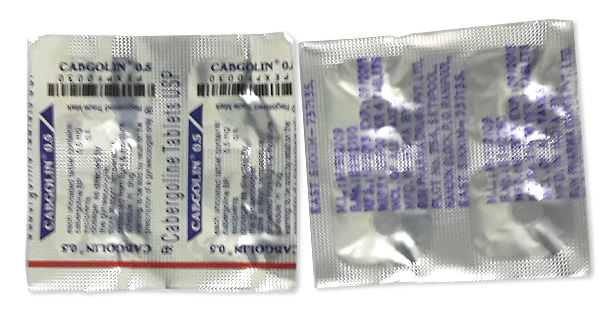
- Cabergoline is administered orally as tablets, commonly 0.5 mg or 1 mg, supplied in blister packs or bottles.
- Biochemical effects on prolactin can begin within a few hours (typically 2–4 hours); clinical symptom improvement may take days to weeks depending on the indication.
- Cabergoline has a long duration of action (plasma half-life ≈ 63–68 hours), allowing intermittent dosing (often twice weekly) with effects lasting several days.
- Avoid alcohol while taking cabergoline — alcohol can worsen dizziness, orthostatic hypotension and other central nervous system side effects.
- The most common side effect is nausea; others include dizziness, headache, orthostatic hypotension, fatigue, constipation and peripheral oedema.
- Would you like to try cabergoline without a prescription?
Cabergoline

Basic Cabergoline Information
- INN (International Nonproprietary Name): Cabergoline.
- Brand Names Available In United Kingdom: Cabergoline Accord 0.5 mg (blister 8 tablets) is listed in UK distributions; other international brands include Dostinex and Cabaser.
- ATC Code: G02CB03 (prolactin inhibitor) and N04BC06 (dopaminergic, anti‑Parkinsonian agent).
- Forms & Dosages: Tablets 0.5 mg are most common; 1 mg tablets are used in some markets, especially for Parkinson’s disease; pack sizes commonly 2, 8 or 20 tablets in blister or bottle formats.
- Manufacturers In United Kingdom: Accord Healthcare supplies Cabergoline Accord in the UK; other global suppliers include Pfizer, Mylan, Sandoz and Teva.
- Registration Status In United Kingdom: Registered and supplied under MHRA oversight; listed as prescription‑only medicine (POM) in UK formularies.
- OTC / Rx Classification: Prescription‑only (POM) across the UK and most international markets.
Key Findings From Recent Trials
Which results should patients and clinicians trust most right now?
Recent high‑quality pharmacoepidemiology and observational cohort analyses from 2022–2024 are the primary contemporary evidence for cabergoline’s benefit–risk profile.
Across large hyperprolactinaemia cohorts, cabergoline consistently normalised prolactin and reduced tumour size in the majority of patients within three to twelve months.
Tumour shrinkage rates and biochemical remission reported in these series generally exceed those historically recorded for bromocriptine.
Comparative clinic series also show lower discontinuation rates for cabergoline versus bromocriptine, largely because of better tolerability.
Post‑marketing surveillance and Parkinson’s registries reaffirm an exposure‑dependent signal for valvular heart disease and fibrotic complications at high cumulative doses.
Those cardiac and fibrotic risks occur mainly with Parkinson’s regimens that use higher daily dosing for long durations rather than with standard endocrine schedules.
Main outcomes in modern analyses are rapid prolactin normalisation, reliable tumour size reduction and improved tolerability versus older ergots.
Safety observations emphasise a small but present valvulopathy risk with long‑term or high‑dose exposure and recommend baseline and periodic cardiac assessment when therapy is prolonged.
Main Outcomes
Rapid PRL normalisation and tumour size reduction are the principal clinical benefits seen in endocrine indications.
Clinical series demonstrate remission and tumour shrinkage within months in most patients treated with cabergoline.
Comparative data favour cabergoline over bromocriptine for both biochemical response and patient retention on treatment.
Safety Observations
Cardiac valvulopathy risk increases mainly at high cumulative exposure and longer durations typically used in Parkinson’s disease.
Risk at low, intermittent endocrine dosing appears small, but baseline and periodic cardiac assessment is advised for long‑term use.
Clinical Mechanism Of Action
How does cabergoline work in plain language?
Cabergoline is a long‑acting dopamine D2 receptor agonist that mimics dopamine at pituitary D2 receptors to suppress prolactin secretion.
Lower prolactin reduces amenorrhoea and galactorrhoea and often causes shrinkage of prolactin‑secreting pituitary tumours.
For Parkinson’s disease, cabergoline stimulates nigrostriatal dopamine receptors to improve motor symptoms.
Scientific Breakdown
What is happening at the receptor level?
Cabergoline has high affinity for dopamine D2 receptors and partial activity at D3 receptors, with minimal D1 affinity.
Activation of D2 receptors in lactotrophs reduces adenylate cyclase activity and lowers prolactin gene expression.
The pharmacological profile explains both the endocrine effects and the neuroactive actions used in Parkinsonism.
Pharmacokinetics & Dosing Relevance
The long half‑life of cabergoline supports once‑ or twice‑weekly dosing for endocrine indications, which improves convenience and adherence.
Typical endocrine tablets are 0.5 mg and clinicians titrate slowly to effect while monitoring prolactin and tolerability.
ATC Classification
ATC codes reflect dual usage: G02CB03 for prolactin inhibition and N04BC06 for dopaminergic anti‑Parkinsonian activity.
Scope Of Approved And Off‑Label Use
What is cabergoline licensed for in the UK and how do clinicians use it off‑label?
In the United Kingdom cabergoline (for example Cabergoline Accord 0.5 mg) is licensed primarily for hyperprolactinaemia and prolactinomas and is supplied as a prescription‑only medicine.
Some formulations and pack sizes differ by market, and 1 mg tablets are available in several countries for neurological indications.
Off‑label trends include single‑dose protocols for lactation suppression used in certain specialist settings, though breastfeeding implications mean this remains a specialist decision.
In reproductive medicine, adjunctive use in assisted reproduction and to reduce ovarian hyperstimulation syndrome risk has been reported in fertility practice.
There are limited reports of non‑medical use, such as in bodybuilding, and clinicians should counsel patients on these risks.
Regulatory status remains prescription‑only across the UK and EU and all use should be clinically supervised.
Dosage Strategy
What dosing approach do clinicians use for safety and effectiveness?
Standard regimens differ by indication and are selected to balance efficacy with tolerability and long‑term safety.
For hyperprolactinaemia most clinicians favour low‑frequency dosing because cabergoline’s long half‑life and potency allow infrequent administration.
Titration is slow and guided by prolactin measurements and symptom response rather than by fixed high dosing.
Condition‑Specific Dosing
What are the usual starting and maintenance regimens?
For hyperprolactinaemia and prolactinoma a typical start is 0.25 mg twice per week, increasing by 0.25 mg increments to a maintenance dose commonly up to 1 mg twice weekly as required for PRL normalisation and tumour response.
For Parkinson’s disease starting doses are higher (0.5–1 mg daily with titration) and some regimens may approach a cited maximum of about 3 mg/day divided, which is associated with greater fibrotic and valvular risk.
Protocols for cessation of lactation reported in practice include a single 1 mg dose or 0.25 mg every 12 hours for two days in some services.
Practical advice: take with food to reduce nausea and if a dose is missed take when remembered unless it is near the next scheduled dose; do not double doses.
Safety Protocols
Who should not take cabergoline and what adverse effects should be expected?
Absolute contraindications include hypersensitivity to cabergoline or other ergot derivatives, existing pulmonary, pericardial or retroperitoneal fibrosis, uncontrolled hypertension and confirmed valvular heart disease on echocardiography.
Pregnancy is a contraindication except under specialist supervision when treating hyperprolactinaemia, and lactation is an exclusion for non‑cessation indications.
Common side effects are nausea, vomiting, abdominal pain, constipation, dizziness, headache, orthostatic hypotension and peripheral oedema.
Mood changes including depression and sleep disturbances are also reported and require active monitoring.
Severe but rare outcomes include fibrotic reactions and cardiac valvulopathy; these risks rise with higher cumulative doses and long durations.
Baseline cardiac assessment is typically advised for prolonged or high‑dose therapy and clinicians should monitor blood pressure and mood during treatment.
Interaction Mapping
Which drugs and foods change how cabergoline works or increase side effects?
There are no major food interactions that reduce efficacy, but taking cabergoline with food commonly reduces gastrointestinal side effects and improves tolerability.
Dopamine antagonists such as antipsychotics or metoclopramide will antagonise cabergoline’s effects and may require alternative management strategies.
Strong CYP3A4 inhibitors can increase cabergoline exposure, so caution is advised with some macrolide antibiotics and certain azole antifungals.
Concurrent use of other ergot derivatives should be avoided because of additive fibrotic risk.
Care is also needed with antihypertensives due to additive hypotensive and orthostatic effects; review the full medication list and monitor blood pressure and mental state when starting therapy.
Patient Experience Analysis
What do patients report about benefits and tolerability in the UK?
Survey data and clinic series report high efficacy for symptom resolution in hyperprolactinaemia, including restoration of menses, reduced galactorrhoea and improved fertility outcomes.
Patients commonly prefer cabergoline to older agents because weekly dosing is more convenient and side effects are generally milder.
Common reasons for discontinuation include persistent nausea, orthostatic symptoms and worries about long‑term cardiac risk rather than lack of efficacy.
UK fertility and patient forums frequently note rapid reductions in prolactin and improved conception chances on cabergoline, along with practical tips like taking doses with food.
Concerns posted online tend to centre on supply, price and anxieties driven by valvulopathy reports from Parkinson’s literature; clinicians should proactively discuss dose‑dependent risk and monitoring to support adherence.
Distribution And Pricing Landscape
How accessible is cabergoline and what affects price in the UK?
Cabergoline is widely available as both branded products such as Dostinex or Cabaser and multiple generics including Accord, Mylan, Sandoz and Teva, with 0.5 mg tablets commonly supplied in blister packs.
The UK market is mature and competitive, which typically lowers unit cost for generics compared with original brands, though supply shortages and local procurement can influence availability and price.
Online pharmacy searches are frequent SEO queries for cabergoline tablets and generic cabergoline prices, but procurement must comply with UK prescribing regulations.
For clinic formularies consider local supplier reliability, preferred generics and patient counselling about cost and pack size to match prescription frequency.
In our online pharmacy, cabergoline is available without a prescription, with discreet delivery to United Kingdom in 5-14 days.
Alternative Options
What are reasonable alternatives if cabergoline is unsuitable?
Bromocriptine is an older ergot D2 agonist that may be cheaper in some settings but commonly causes more gastrointestinal side effects and requires daily dosing.
Quinagolide is a non‑ergot D2 agonist used in some countries as a daily alternative for patients intolerant of cabergoline.
For large or medically resistant prolactinomas, neurosurgery or radiotherapy remain important non‑dopaminergic options.
For Parkinson’s disease, non‑ergot dopamine agonists such as pramipexole or ropinirole are often used to avoid ergot‑related fibrotic risks.
Choosing between agents should be individualised, taking into account pregnancy plans, side‑effect profiles, cardiac history and monitoring capacity.
Regulatory Status
What do regulators say and what monitoring is recommended?
Cabergoline is registered worldwide for endocrine indications, with EMA approval in Europe and historical FDA registration for Dostinex in the US; in the UK supply is overseen by the MHRA and the medicine is POM.
Regulatory advisories since the early 2000s highlight cumulative‑dose cardiac valvulopathy risk at Parkinson’s dosing and recommend baseline and periodic echocardiography for high‑dose or long‑term use.
Contemporary guidance in the UK asks clinicians to follow MHRA safety alerts and specialist society statements for monitoring frequency and risk stratification.
Prescribing should always be by a clinician with informed consent covering benefits, alternatives and dose‑dependent cardiac risk.
Consolidated FAQ
What practical questions do patients ask most often?
How is cabergoline monitored: baseline pregnancy test and fasting prolactin, blood pressure checks and consider baseline echocardiogram for planned long‑term or high‑dose therapy.
Can it be used during pregnancy: generally avoided, but specialist supervision is needed for selected hyperprolactinaemia cases and individual counselling is essential.
How quickly does it work: biochemical changes often appear within weeks and symptomatic or tumour responses typically occur over months.
Missed dose or overdose: if a dose is missed take it when remembered unless close to the next dose; in overdose seek emergency care for symptoms such as hallucination, hypotension and severe nausea.
Who needs echocardiography for cardiac risk: patients on higher cumulative doses, long durations or those with cardiac symptoms should be discussed with cardiology or endocrinology.
Visual Guide
What graphics help explain cabergoline to patients and staff?
Proposed visuals include a simple diagram of D2 receptor action in lactotrophs with alt text explaining prolactin suppression.
A dosing calendar template showing a twice‑weekly schedule for 0.25–0.5 mg examples alongside a Parkinson’s daily dosing column provides clear contrast.
A monitoring flowchart listing baseline checks (pregnancy test, BP, prolactin, ECG/echo where indicated) and follow‑up intervals (4–12 weeks, then 6‑monthly or yearly as risk dictates) aids clinic workflows.
A safety infographic highlighting signs of fibrotic complications—new dyspnoea, peripheral oedema or new murmur—with action prompts supports patient safety.
Design notes: use colour‑blind friendly palettes, clear sans‑serif fonts and succinct captions to meet accessibility needs.
Storage And Transport
How should cabergoline be kept and carried?
Per product guidance store cabergoline below 25°C and protect from light and moisture to prevent degradation.
Blister packs, common in UK supplies such as Cabergoline Accord 0.5 mg blister 8, help protect individual tablets during storage.
No cold chain is required, but avoid prolonged exposure to high heat or humidity during patient transport, for example in hot car interiors.
Advise patients to keep tablets in the original blister until use and to avoid storing them in bathrooms or direct sunlight.
Expired or unwanted tablets should be returned to pharmacy take‑back schemes in line with UK waste guidance; do not flush or discard in household refuse.
Guidelines For Proper Use
What checklist should prescribers follow before starting cabergoline in the UK?
Prescribing checklist: confirm the indication, perform baseline investigations including pregnancy test and fasting prolactin, check blood pressure and consider baseline echocardiography for planned long‑term or high‑dose therapy.
Discuss informed consent covering benefits, the usual starting dose (0.25 mg twice weekly for many endocrine starts), possible adverse events and cardiac risk.
Monitoring schedule: check prolactin at four to twelve weeks after initiation and then every three to six months until stable, with MRI at three to twelve months for tumour response as indicated.
BP and mental state should be reviewed at early visits and echocardiography considered for prolonged or high‑dose therapy or if new cardiac symptoms arise.
Discontinuation triggers include development of significant valvular disease, severe fibrosis, intolerable adverse effects or pregnancy unless advised otherwise by a specialist; stopping should be discussed with the endocrine team and tapered where appropriate.
Delivery Across United Kingdom
| City | Region | Delivery Time |
|---|---|---|
| London | England | 5-7 days |
| Birmingham | England | 5-7 days |
| Manchester | England | 5-7 days |
| Glasgow | Scotland | 5-7 days |
| Edinburgh | Scotland | 5-7 days |
| Leeds | England | 5-7 days |
| Liverpool | England | 5-7 days |
| Bristol | England | 5-9 days |
| Sheffield | England | 5-9 days |
| Newcastle Upon Tyne | England | 5-9 days |
| Belfast | Northern Ireland | 5-9 days |
| Cardiff | Wales | 5-9 days |
| Nottingham | England | 5-9 days |
| Leicester | England | 5-9 days |
| Plymouth | England | 5-9 days |
Closing Practical Notes
What should a patient expect when starting cabergoline at a UK pharmacy?
Expect a prescription review, baseline blood tests where indicated and discussion of dose schedule and monitoring during dispensing.
Pharmacists will advise on taking tablets with food to reduce nausea, safe storage below 25°C and returning unused medicine to the pharmacy for disposal.
Patients planning pregnancy or who become pregnant should notify their clinician promptly to review therapy.
If patients have concerns about cardiac risk, discuss echocardiography indications with the prescriber; risk is dose‑ and duration‑related and context matters.
For clinic administrators, ensure local formularies list approved suppliers such as Accord Healthcare and that patient information leaflets reflect UK MHRA guidance and monitoring schedules.